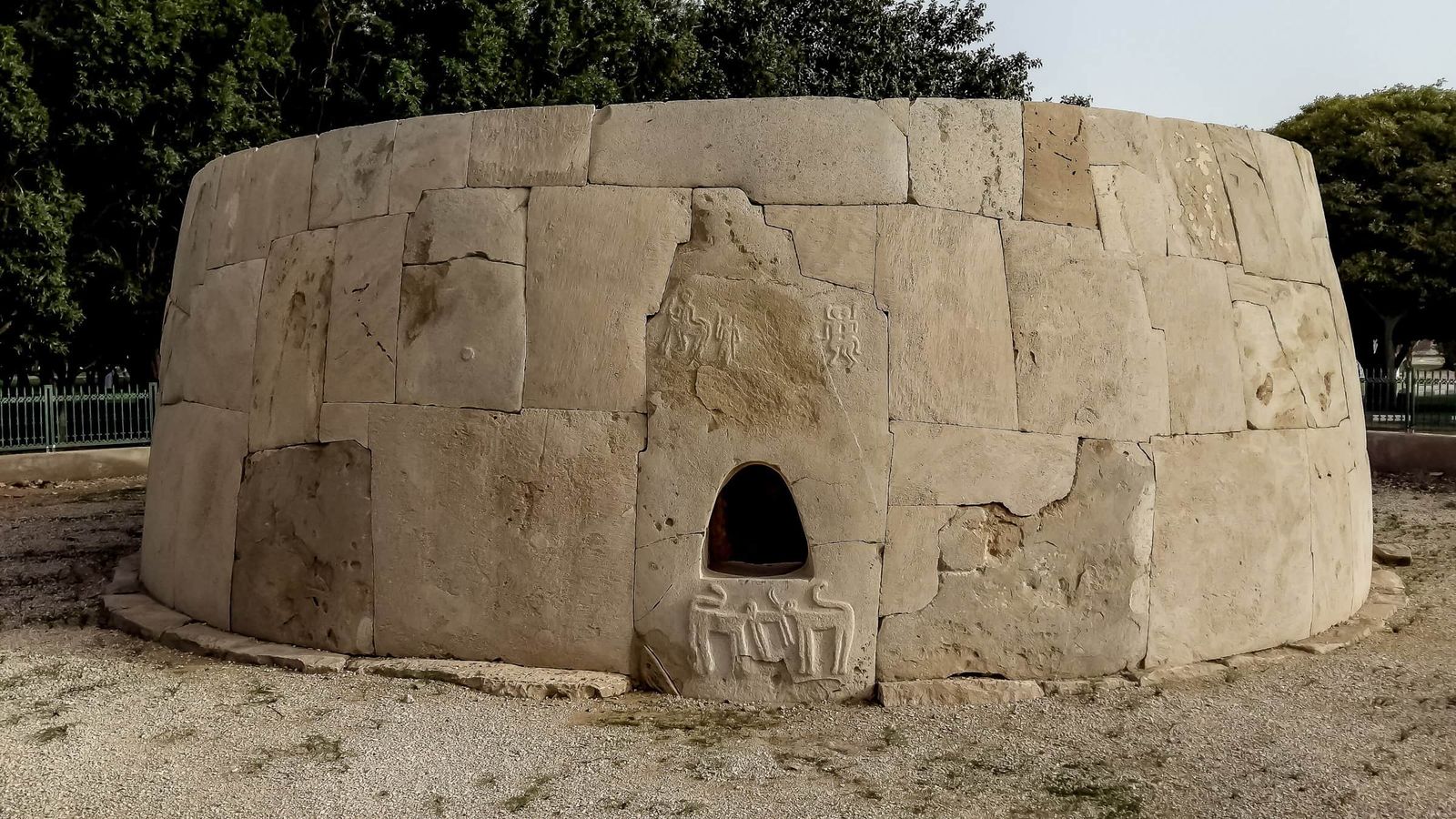
Hili Grand Tomb, Hili Archaeological Park
A round stone tomb of the Bronze Age in Al Ain, its two doorways carved with people and antelopes some 4,000 years ago.
A Bronze Age tomb in a garden
The Hili Grand Tomb stands in the middle of Hili Archaeological Park, on the northern edge of Al Ain, about 12 km from the city centre. Al Ain is the great oasis city of the Abu Dhabi emirate, about 160 km inland from the capital. The tomb belongs to the Umm an-Nar culture, which flourished in what is now the UAE and Oman in the Bronze Age, roughly between 2500 and 2000 BC.
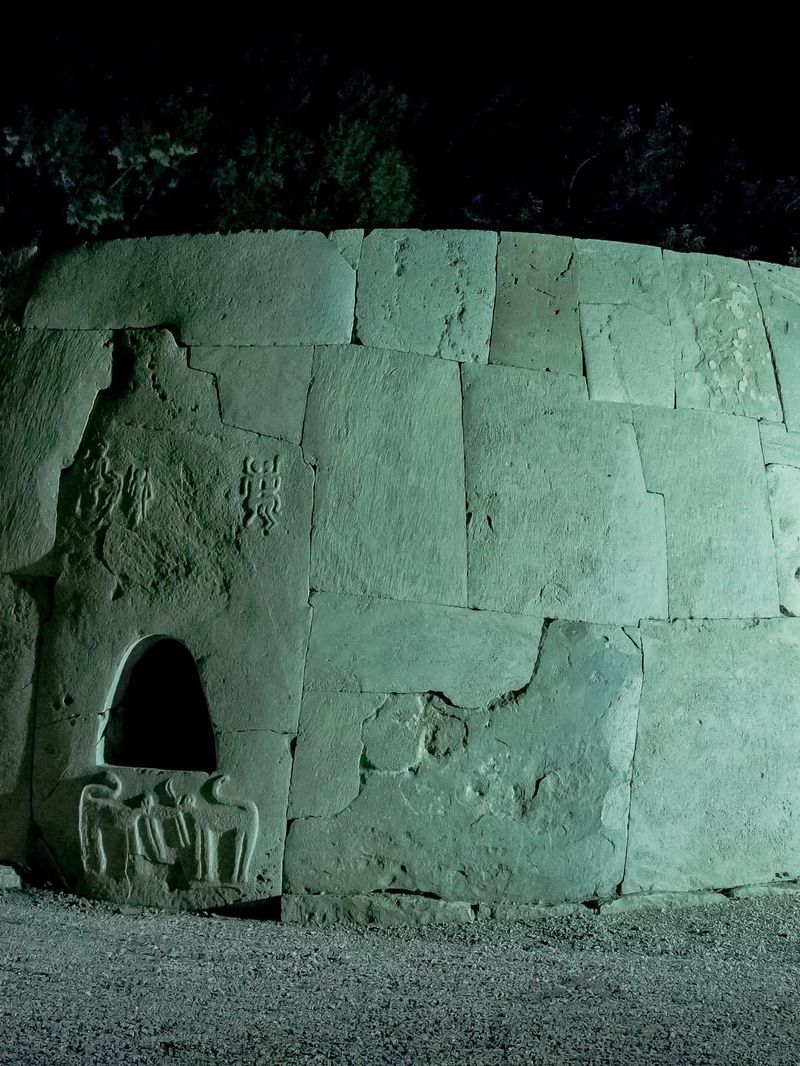
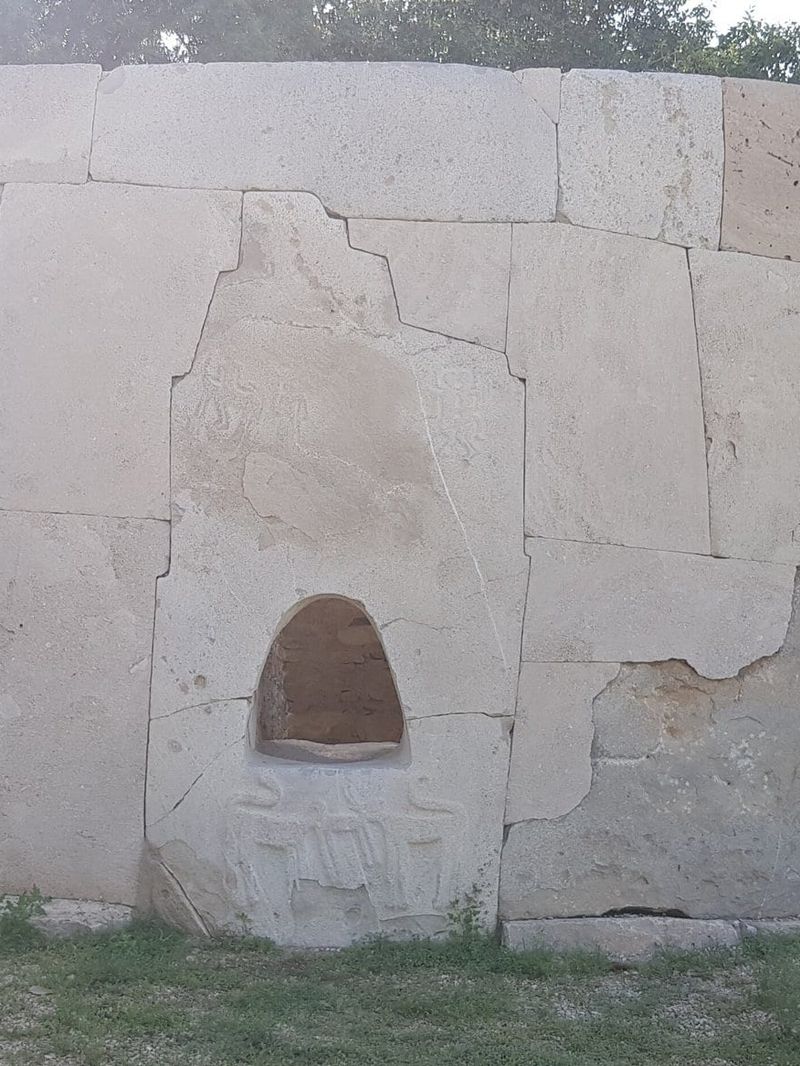
It is a large circular tomb built of finely cut stone blocks. Two low doorways lead inside. Beside them the facing stones carry carvings in relief: human figures and animals, among them antelopes. Tombs of this round Umm an-Nar type are found across the region.
Excavation and the park
Danish archaeologists excavated Hili in the 1960s at the invitation of Sheikh Zayed bin Sultan Al Nahyan, the future founder of the UAE. The Grand Tomb was restored on its original foundations. Around it lie the remains of a Bronze Age settlement and other tombs. Hili also has one of the oldest known examples of the falaj, the underground water channels that still feed the oases of Al Ain.
In 2011 Hili became part of the UNESCO World Heritage Site Cultural Sites of Al Ain, together with Jebel Hafit, Bidaa Bint Saud and the oases. Finds from Hili are shown in the Al Ain Museum. For the living version of the same water system, walk through Al Ain Oasis.
Exhibo editorial
It looks almost too neat to be four thousand years old: a pale stone drum in a public garden, with lawns all around it. Then you find the carvings by the doorways, worn people and long-legged animals. The age arrives all at once.
This is one of the best places to see the UAE's deep past in stone. Come in the cool of a winter afternoon and give the carvings time.
Gallery
How to find it
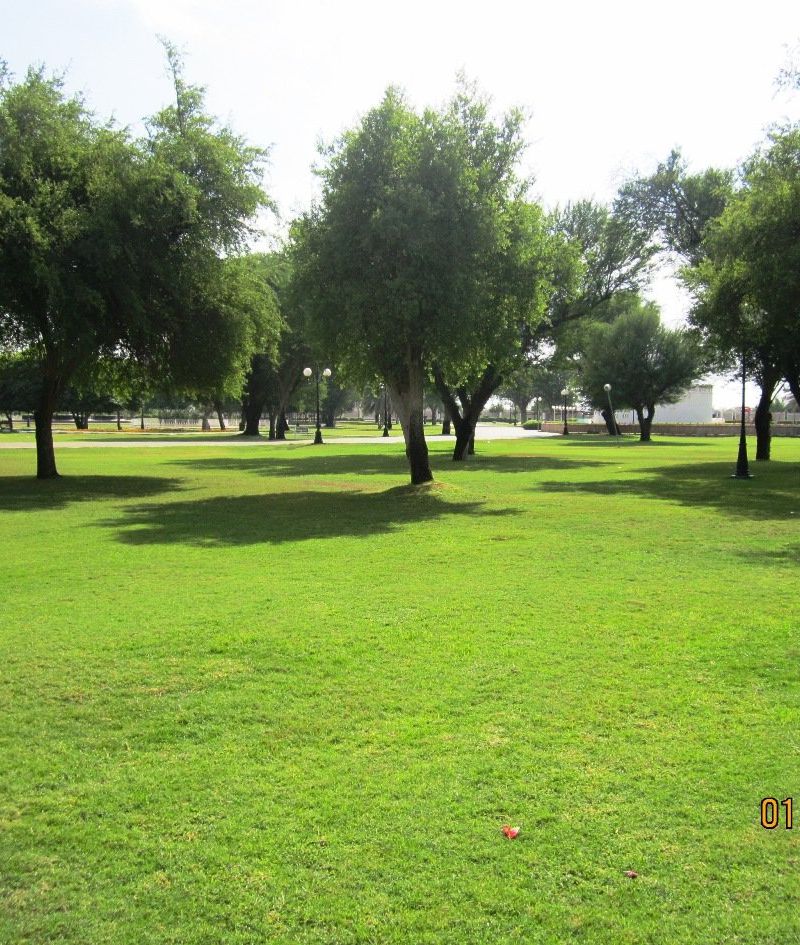
Hili Archaeological Park is on the north side of Al Ain, in the Hili district, about 12 km from the city centre. The Grand Tomb stands in the middle of the park lawns, a short walk from the entrance. Al Ain is about 160 km from Abu Dhabi city by road.
Similar places
All places
News by Exhibo
Editorial coverage on Exhibo
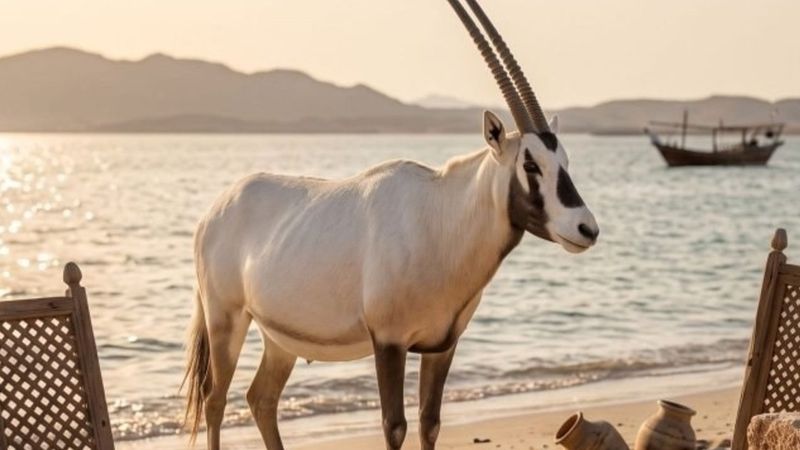
The Animal We Drew Everywhere Once It Was Gone
From Neolithic rock to airline tailfin — how the Arabian oryx vanished from the desert, came back from nine animals, and multiplied everywhere as a symbol in the very decades it was gone.
The last wild Arabian oryx was shot in 1972. By then it was already a picture — carved on Bronze Age tombs, mistaken by the ancients for a unicorn, praised by poets as the eyes of the beloved. This is the story of an animal that went extinct in the wild and was brought back from nine survivors, and of the strange gap between the creature and the emblem it became: fast, sharp and ascendant on a nation's tailfin, while the animal itself survives by standing still in the shade.
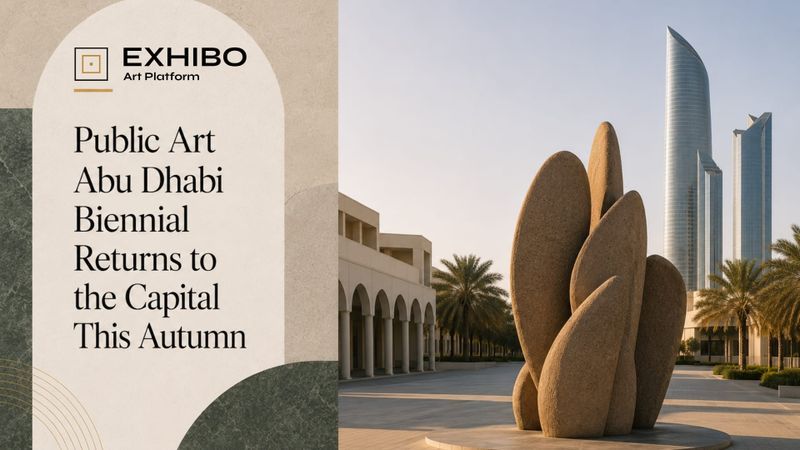
Public Art Abu Dhabi Biennial Returns to the Capital This Autumn
The second edition of the emirate-wide public art event opens in Al Ain in October and Abu Dhabi in November, led by former MACBA director Elvira Dyangani Ose under the theme "Home: A Glossary for a Communal Sense of Place."
The second edition of the Public Art Abu Dhabi Biennial opens in Al Ain on 23 October 2026 and in the capital on 15 November, running into February 2027. Curated by former MACBA director Elvira Dyangani Ose under the theme "Home: A Glossary for a Communal Sense of Place," the free, citywide programme builds on the acclaimed inaugural edition, several of whose works have since become permanent public installations.
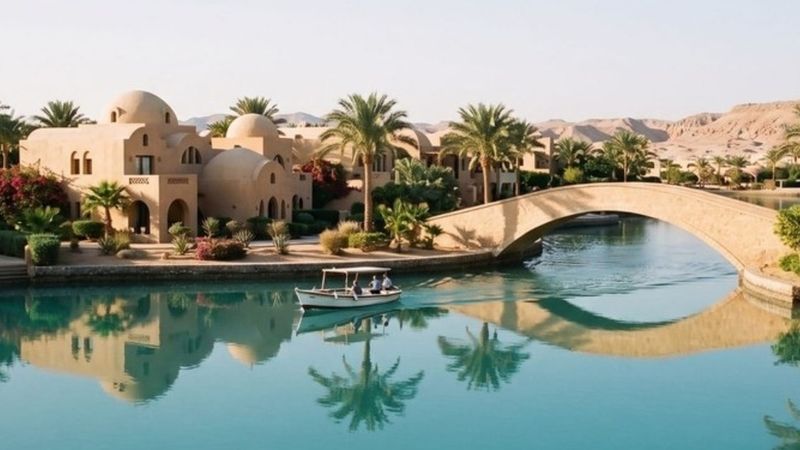
Why the Middle East Keeps Building Venice
From the Red Sea to the Gulf, canal towns keep getting called Venice. The water was usually about something else — and Venice was never quite Venice either.
The Middle East is full of “Venices”. Most began as a way to manufacture shoreline; the name usually arrived later, in English, from the people selling it.