
Abu Dhabi · United Arab Emirates
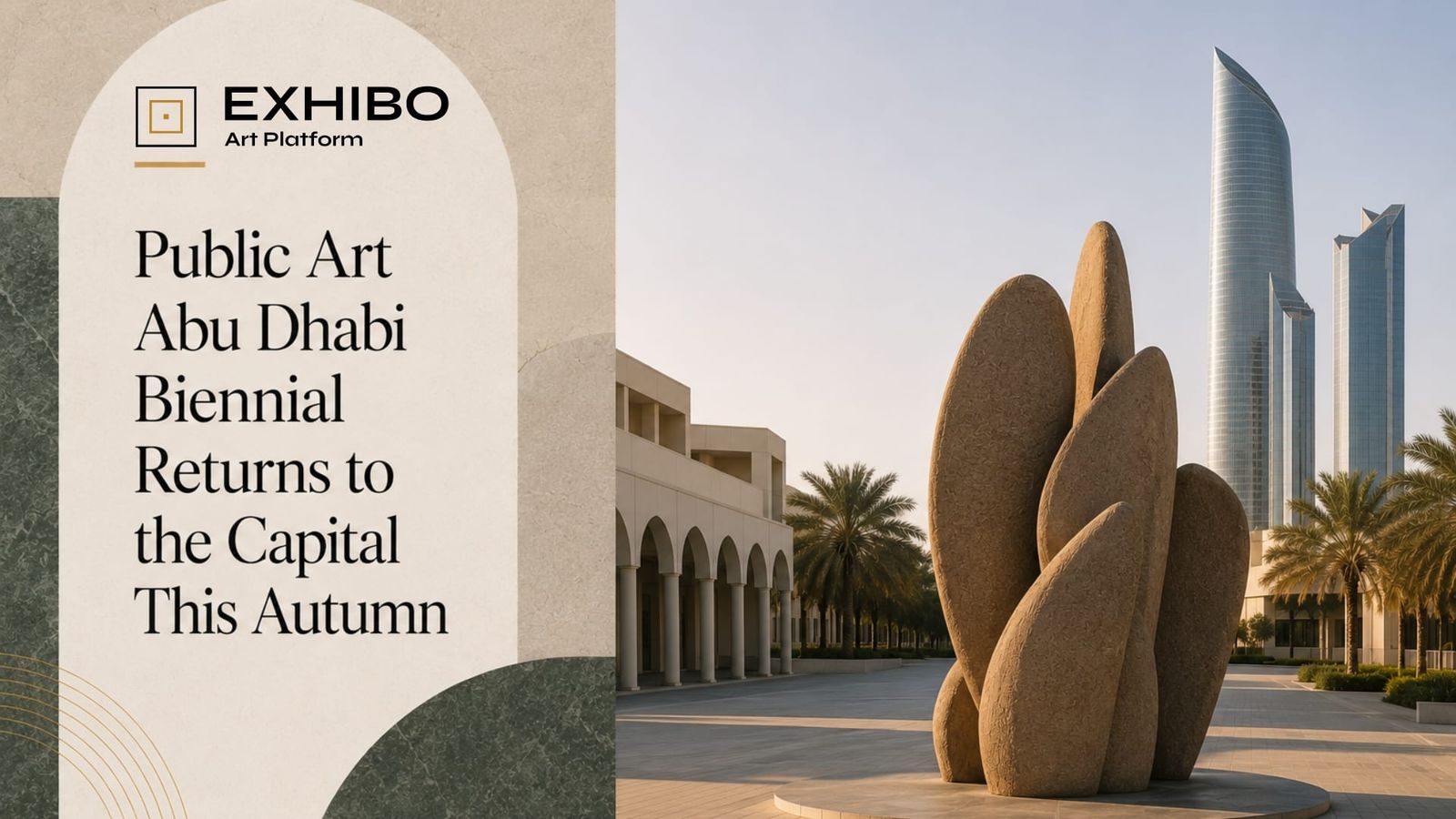
Public Art Abu Dhabi Biennial Returns to the Capital This Autumn
The second edition of the emirate-wide public art event opens in Al Ain in October and Abu Dhabi in November, led by former MACBA director Elvira Dyangani Ose under the theme "Home: A Glossary for a Communal Sense of Place."
The second edition of the Public Art Abu Dhabi Biennial will open in Al Ain on 23 October 2026, before extending to the UAE capital on 15 November, with the full programme running through to February 2027. As with the inaugural edition, the artworks will be sited across public spaces in both cities — streets, plazas, markets, corniches and community hubs — and free to view, with no ticket or gallery visit required to encounter them.
The biennial is organised by the Department of Culture and Tourism – Abu Dhabi (DCT Abu Dhabi) as part of its ongoing commitment to commissioning public art across the emirate, with community engagement built into the initiative from the outset.
PRACTICAL INFORMATION
Edition | Second edition |
Theme | Home: A Glossary for a Communal Sense of Place |
Artistic Director | Elvira Dyangani Ose |
Al Ain opening | 23 October 2026 |
Abu Dhabi opening | 15 November 2026 |
Runs until | February 2027 |
Admission | Free, sited in public spaces |
Organiser | Department of Culture and Tourism – Abu Dhabi (DCT Abu Dhabi) |
A Curator With a Distinctive International Track Record
The second edition is led by Elvira Dyangani Ose, who currently serves as Director of MACBA, the Museu d'Art Contemporani de Barcelona, and was appointed artistic director of the biennial in January 2026. Her curatorial background spans some of the more research-driven corners of the international contemporary art world: she was previously Director and Chief Curator at The Showroom in London, curated the eighth Gothenburg International Biennial for Contemporary Art, and has held posts as Senior Curator at Creative Time and Curator of International Art at Tate Modern, where she also sat on the Advisory Council.
Her curatorial practice has consistently engaged with the recovery of non-Western narratives, the politics of collective memory, and public space as a site of representation — concerns that align closely with the biennial's brief. Recent projects include the multi-year Project a Black Planet: The Art and Culture of Panafrica and a Miu Miu-convened talks series, Tales and Tellers.
Theme: Home as a Shared, Constructed Idea
The second edition takes as its title Home: A Glossary for a Communal Sense of Place. Rather than treating home as a fixed geographic location, the programme frames it as a social and cultural phenomenon, shaped by everyday interactions, collective experience and community life. The approach positions "home" less as an address than as something continually rebuilt through shared use of space — a theme with particular resonance in a city defined by rapid urban change and a highly mobile, majority-expatriate population.
The programme will include new artist commissions, research-led projects and public events designed to engage audiences outside the conventional confines of the museum or gallery — continuing the first edition's emphasis on encountering art unannounced, in the course of ordinary movement through the city.
Building on a Well-Received First Edition
The inaugural edition, staged under the theme Public Matter, ran from 15 November 2024 to 30 April 2025 across Abu Dhabi and Al Ain, featuring large-scale installations by artists from the UAE and abroad. Several works proved popular enough to be acquired as permanent additions to Abu Dhabi's public art collection, including pieces by Kader Attia, Superflex, Nathan Coley, Wael Al Awar, Farah Al Qassimi and Shaikha Al Ketbi — a list that reflects the first edition's mix of established international names and UAE-based artists.
Among the installations that captured public attention were Barzakh, a domed structure built from recycled industrial materials and natural fibre, and Tentarium, a cat-shaped installation sited in a public park. The retention of such works as permanent fixtures — rather than dismantling them at the close of the event — has been central to how the biennial builds Abu Dhabi's public art collection over time, turning each edition into a lasting layer of the city's visual landscape rather than a temporary spectacle.
Further details on specific artists, sites and commissions for the second edition are expected to be announced closer to the October opening.
Museums mentioned
Places mentioned
Related reading
Why Every Sci-Fi Desert Looks Arab
From Arrakis to Tatooine, when a film wants a desert to feel ancient, prophetic and alien, it reaches for an Arab and Berber vocabulary — and reveals more about the West that built it than the region it borrows from.
The wrapped faces, the trilling women, the barely-displaced Arabic: cinema's alien deserts keep sounding Arab. But the vocabulary was assembled in the West — from Orientalist painting to Lawrence to Dune — and it says more about who is looking than about anyone being looked at.
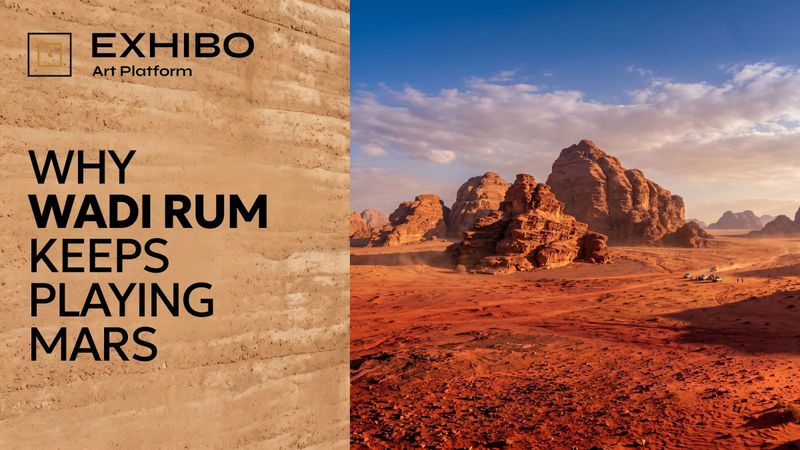
Why Wadi Rum Keeps Playing Mars: A Desert That Is Right About the Wrong Planet
A valley in southern Jordan has become cinema's favourite Mars — not because it is like the planet, but because it looks like the one we carry in our heads.
Put Wadi Rum beside a rover photograph and you can't tell which is Mars. But the desert shares almost nothing with the real planet except its colour — and lately, the illusion has grown powerful enough that real space missions have come to Jordan to rehearse.
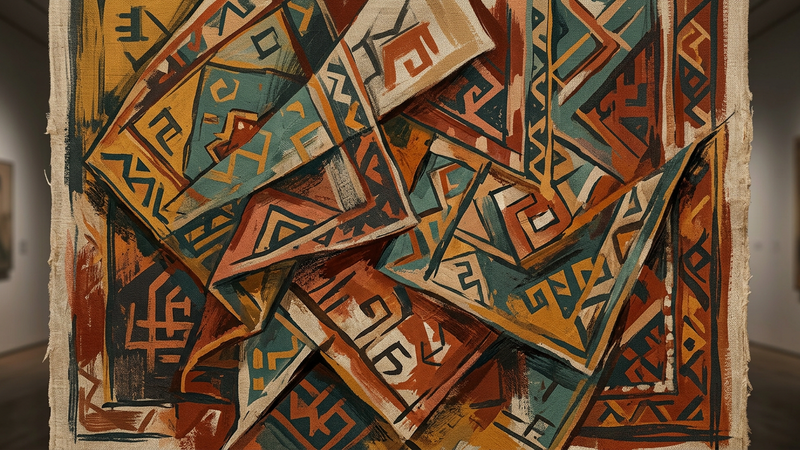
Threads of Heritage: Batima Zaurbekova's Woven Legacy
A survey of Kazakh tapestry pioneers redefines fibre art at Almaty's Kasteyev Museum
Eight decades after her birth, Batima Zaurbekova's textile innovations take centre stage in a major retrospective that bridges Central Asian craft and contemporary visual culture.