
Abu Dhabi · United Arab Emirates
Human in the Loop: A New Sound-and-String Exhibition Opens in Abu Dhabi
At 421 Arts Campus, Emirati robotics engineer Dr Ahmad AlAttar turns the gallery into a field of sound and strings you have to play — his first institutional solo show, on until 13 September.
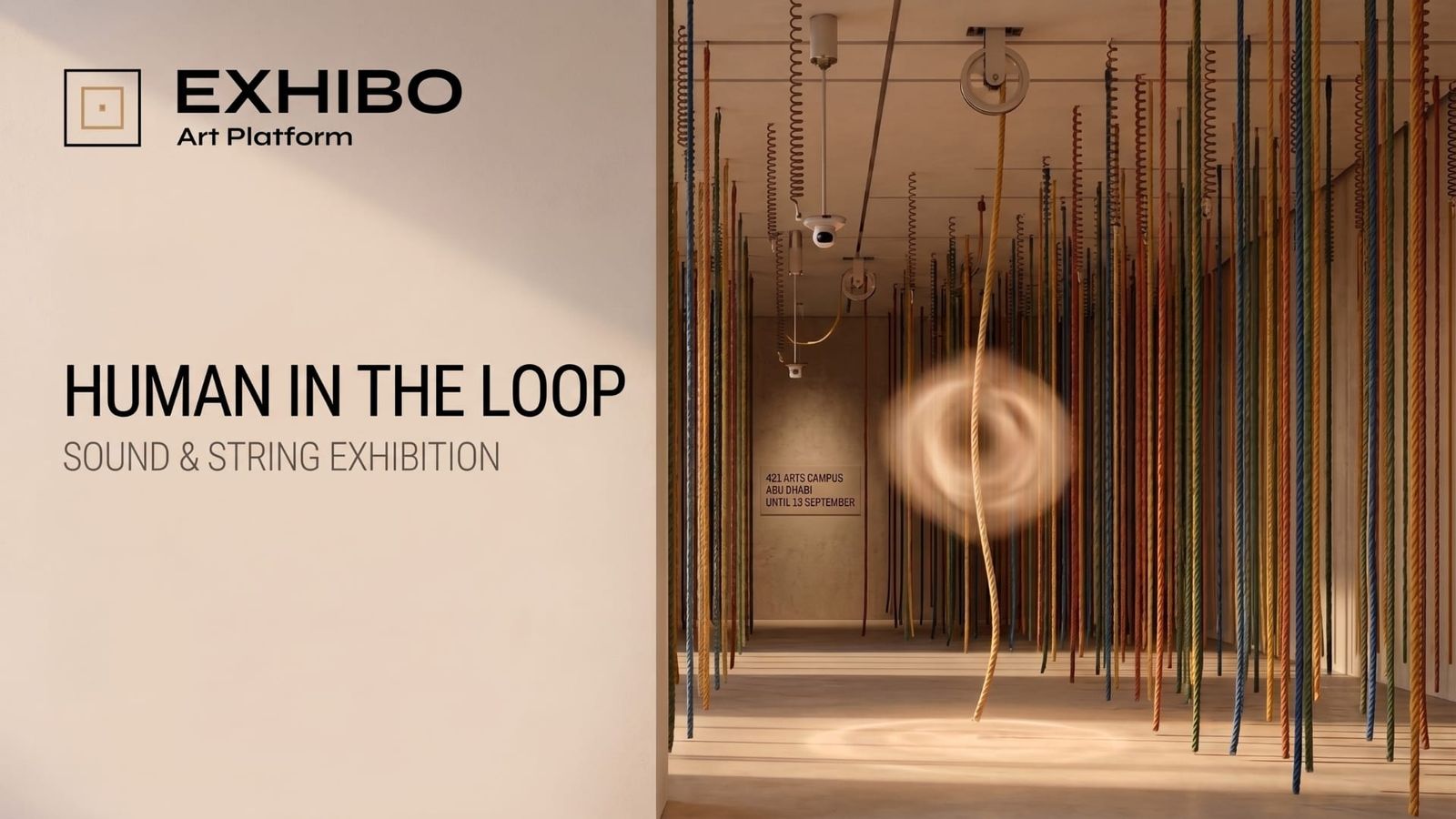
A field of coloured ropes hangs from the ceiling of a gallery in Mina Zayed, and the room is waiting for you to touch it. This is Human in the Loop, the new installation by Emirati artist and robotics engineer Dr Ahmad AlAttar, on at 421 Arts Campus. Pull gently on a rope and it answers with sound. Keep pulling, move through the space, and the answers begin to form a pattern — until you realise you are playing hide-and-seek with an algorithm.
The rules reveal themselves slowly, which is the point. A calm soundscape of nature fills the room; each pull on a rope interrupts it with a brief, glitch-like sound. At first the responses feel random, but with repetition a logic emerges — a faint glitch means the algorithm is far off, a sharper, more distorted one means you are closing in. When the "correct" rope is found, the space answers with a heightened burst of sound and light, before the system relocates and the search begins again. The work never settles, and neither do you.
PRACTICAL INFORMATION
Artist | Dr Ahmad AlAttar |
Venue | 421 Arts Campus, Mina Zayed |
City | Abu Dhabi |
Dates | 21 June – 13 September 2026 |
Hours | Tuesday–Sunday, 10am–8pm |
Programme | 421 Artistic Development Programme, 2024 cycle |
A Term Borrowed from the Lab
The title borrows a term from robotics and artificial intelligence. A "human in the loop" is a system that depends on human input to function — a person kept inside the decision-making process rather than left outside it. AlAttar takes the phrase off the whiteboard and gives it a body: visitors are not observers but components, each tug feeding the algorithm and shaping what it does next. Beneath the play sits a question about the systems most of us move through every day, often without noticing how they steer our attention.
That ambiguity is deliberate. The piece started, AlAttar says, from a simple question — "who is really in control?" He would rather visitors arrive at it through experience than have it explained to them; the installation opens as something playful and only later turns reflective. As he put it in a recent interview, the first encounter with the work might be confusing, but once a visitor learns how the system behaves, they can find themselves following it almost without noticing.
From a Basement to a Gallery Floor
AlAttar's mentor on the project, facilitator Jolaine Frizzell, has described the work's intent plainly: it is not a warning about technology so much as an invitation to notice how it operates on us. That framing matters, because the installation itself grew out of years of quiet experimentation rather than a single idea arriving fully formed. Early tests reportedly began with a single rope in AlAttar's basement, before expanding into a sixteen-rope prototype; at 421, the concept has become a fully immersive environment shaped by the gallery's own architecture — by some accounts, his most ambitious piece to date.
421 Arts Campus
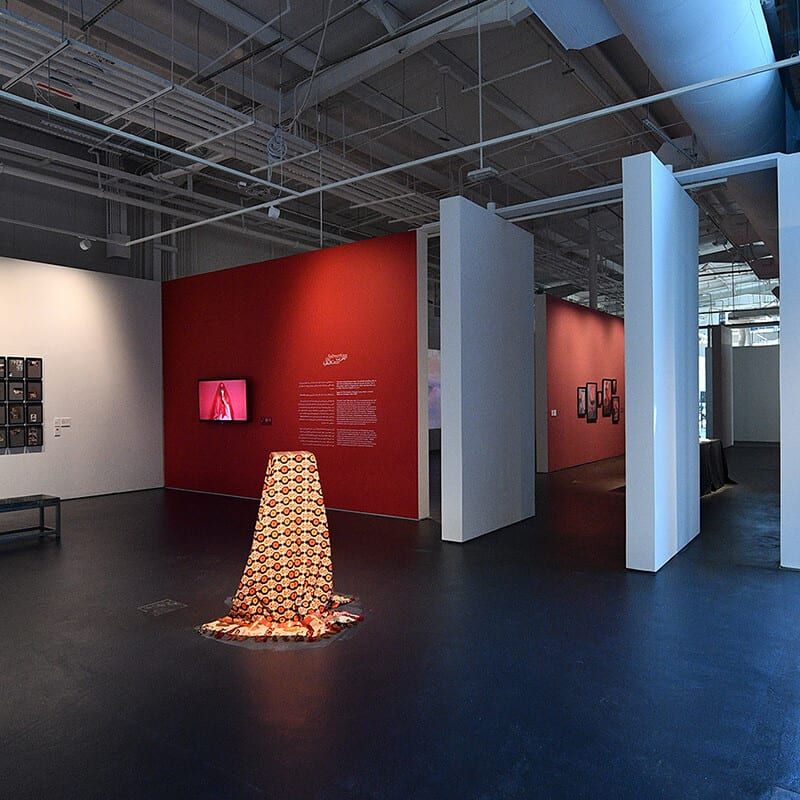
421 Arts Campus functions as a research-driven laboratory dedicated to supporting early-career practitioners through a process-oriented approach that prioritizes experimentation over perfection. Its curatorial ethos centers on harnessing artistic practice as a catalyst for social inquiry, utilizing public programming and capacity-building initiatives to bridge creative disciplines and engage broader audiences. The platform actively cultivates inter-disciplinary exchange while providing structured mentorship and production support for emerging voices.
An Engineer's Route into Art
AlAttar (b. 1994, Dubai) is an unusual figure to be holding a first institutional solo show. Trained as a mechatronics engineer, he holds a PhD in robotics from Imperial College London, where his research centred on how robots learn to move — work that included teaching a robotic arm to grasp for the first time, much as an infant might. He works as a senior robotics engineer at Dubai Future Labs, where he leads advanced robotics research and contributes to the development of the emirate's wider innovation ecosystem. He also founded REALIITY, an Emirati art-and-technology studio, and sits in the first cohort of the AI x Arts Fellowship at Mohamed bin Zayed University of Artificial Intelligence. The split identity — engineer or artist — is one he declines to resolve, treating experimentation as the common ground between the two.
Developed Through 421's Artistic Development Programme
The exhibition is the culmination of his year in 421's Artistic Development Programme, an annual scheme that supports UAE-based artists with mentorship and production help. AlAttar developed the work with facilitator Jolaine Frizzell and mentors Khalid AlAwadhi, founder and CEO of Remal, and Dr Pradeep Sharma, director of the Arts, Culture and Heritage programme at the Salama bint Hamdan Al Nahyan Foundation. Faisal Al Hassan, the campus director, frames the result as a meeting of AlAttar's robotics expertise and his long-standing interest in how people and machines relate — describing the show as a milestone for the institution as much as for the artist.
About the Venue
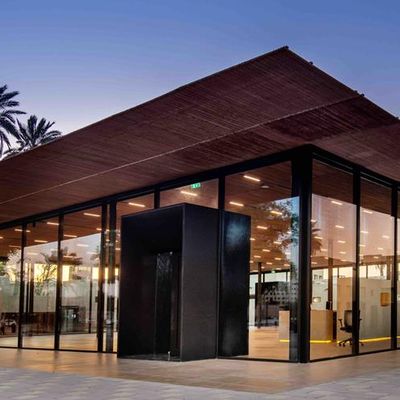
421 Arts Campus was founded in 2015 as Warehouse421 inside a converted warehouse in Mina Zayed, and has grown into one of Abu Dhabi's more independent-minded spaces for emerging artists, with galleries, studios and a public plaza given over to film, performance and talks.
Human in the Loop runs until 13 September, Tuesday to Sunday, 10am to 8pm.
Galleries mentioned
Exhibitions mentioned
Related reading
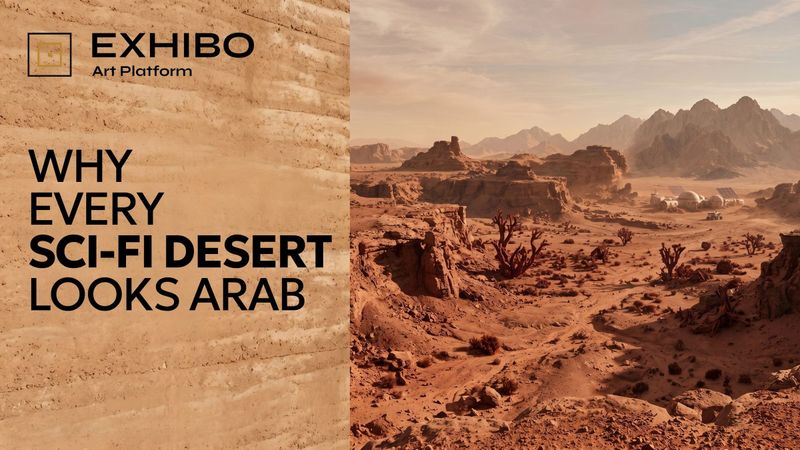
Why Every Sci-Fi Desert Looks Arab
From Arrakis to Tatooine, when a film wants a desert to feel ancient, prophetic and alien, it reaches for an Arab and Berber vocabulary — and reveals more about the West that built it than the region it borrows from.
The wrapped faces, the trilling women, the barely-displaced Arabic: cinema's alien deserts keep sounding Arab. But the vocabulary was assembled in the West — from Orientalist painting to Lawrence to Dune — and it says more about who is looking than about anyone being looked at.
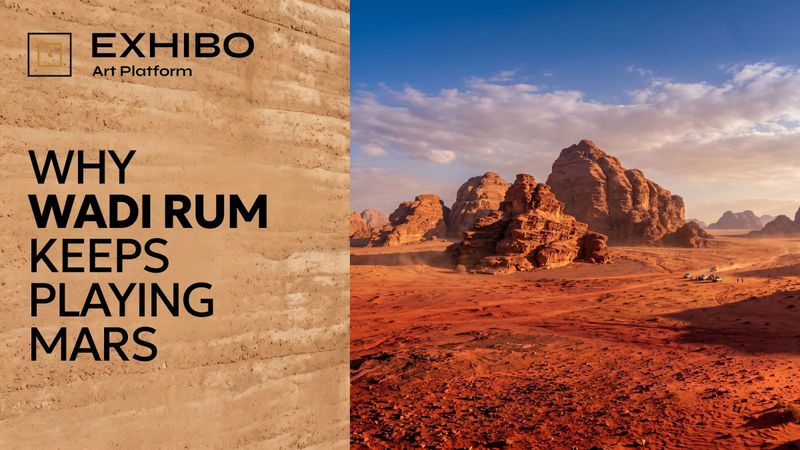
Why Wadi Rum Keeps Playing Mars: A Desert That Is Right About the Wrong Planet
A valley in southern Jordan has become cinema's favourite Mars — not because it is like the planet, but because it looks like the one we carry in our heads.
Put Wadi Rum beside a rover photograph and you can't tell which is Mars. But the desert shares almost nothing with the real planet except its colour — and lately, the illusion has grown powerful enough that real space missions have come to Jordan to rehearse.
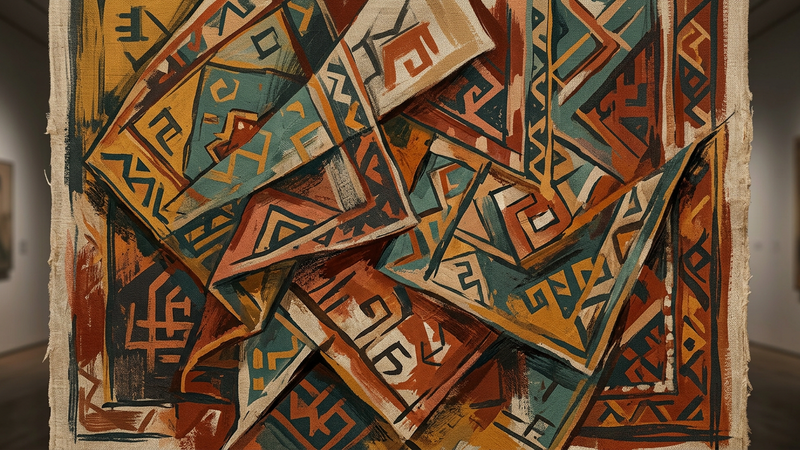
Threads of Heritage: Batima Zaurbekova's Woven Legacy
A survey of Kazakh tapestry pioneers redefines fibre art at Almaty's Kasteyev Museum
Eight decades after her birth, Batima Zaurbekova's textile innovations take centre stage in a major retrospective that bridges Central Asian craft and contemporary visual culture.