
Abu Dhabi · United Arab Emirates
Valerie Hillings Appointed Inaugural Director of Guggenheim Abu Dhabi
The former NCMA chief returns to the capital to shape the Saadiyat Island venue's debut year and curatorial strategy
Shaping a Regional Landmark
Valerie Hillings has stepped into the role of inaugural director at Guggenheim Abu Dhabi, taking charge just months before the cultural complex prepares to welcome its first audiences. Previously leading the North Carolina Museum of Art since 2018, she arrives with a demonstrated capacity for scaling institutional reach and securing substantial financial backing. Under her stewardship, the Raleigh-based organisation recorded over a million visitors across its dual campuses during the most recent fiscal cycle. This metric highlights her ability to manage large-scale public engagement while navigating complex fundraising landscapes, skills that will prove essential for a newly established venue operating in a highly competitive cultural market.
The Abu Dhabi outpost, situated on Saadiyat Island, is scheduled to commence operations on 11 December following more than two decades of planning. Initial blueprints were presented in 2006, yet the final construction budget remains unconfirmed. According to official statements, Hillings will chart the long-term trajectory of the space, ensuring it functions as both a deeply local entity and a globally resonant platform. Her mandate explicitly emphasises cross-cultural dialogue and the presentation of modern and contemporary practices spanning from the mid-twentieth century onwards. This chronological framing deliberately moves away from purely historical surveys, positioning the institution firmly within ongoing global conversations about post-war aesthetics and current socio-political realities.
Returning to Saadiyat
This appointment represents a professional homecoming for the American curator. Between 2009 and 2018, she operated as a curator and associate director of curatorial affairs for the very same project, guiding early acquisition frameworks and shaping foundational collecting priorities. During that period, she also mounted shows drawing from the nascent holdings, notably presenting The Creative Act at Manarat Al Saadiyat in 2017. That exhibition highlighted pioneering regional figures such as Rasheed Araeen and Mohammed Kazem, establishing an early precedent for engaging with Gulf artistic narratives rather than treating them as peripheral to Western canonical trajectories.
In a formal statement, Hillings described the position as a culmination of a prolonged professional journey, noting the collaborative effort required to translate conceptual ambitions into physical infrastructure. She acknowledged the involvement of international partners alongside local stakeholders in realising the vision, underscoring the transnational nature of contemporary museum-making.
Navigating the Transition
As the institution moves closer to its doors opening, operational responsibilities are shifting. Stephanie Rosenthal, who has directed the project since 2022, will oversee the final stages of development before handing over day-to-day artistic and administrative leadership. Rosenthal highlighted the importance of continuity during this handover phase, promising close collaboration to ensure the museum's developmental milestones align with its future scheduling strategy. Such phased transitions are increasingly common among flagship cultural projects, allowing incoming directors to inherit a fully realised architectural environment while retaining flexibility over initial exhibition cycles.
Industry observers have noted a broader structural evolution within the wider Guggenheim network. Strategy consultant András Szántó pointed out that every principal leadership role across the foundation's global branches is currently occupied by women. This follows the late 2023 appointment of Mariët Westermann as chief executive of the Solomon R. Guggenheim Museum and Foundation, signalling a decisive shift in how the historic institution manages its international portfolio and redefines curatorial authority across different geographic contexts.
Anticipating the Inaugural Season
With the December launch approaching, attention now turns to the initial curatorial framework and how Hillings will balance the legacy of the parent organisation with distinct Emirati cultural contexts. The appointment underscores Abu Dhabi's sustained investment in positioning Saadiyat Island as a premier destination for global visual culture. As the new director begins her tenure, the focus will remain on translating architectural ambition into meaningful public initiatives that reflect both historical depth and contemporary relevance.
Museums mentioned
Related reading
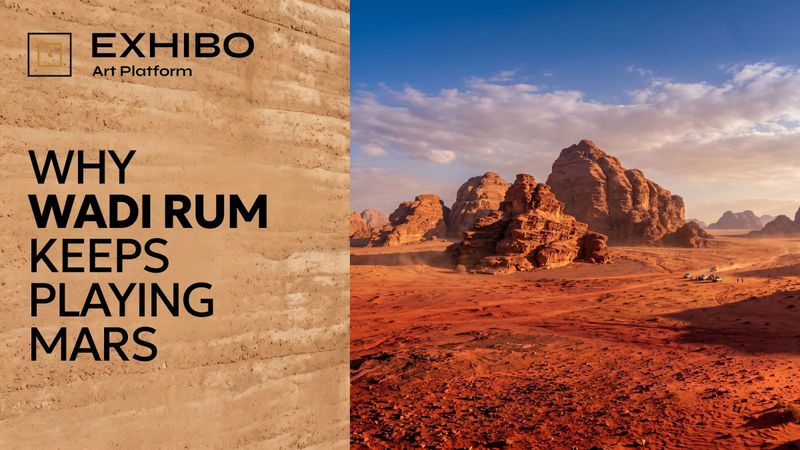
Why Wadi Rum Keeps Playing Mars: A Desert That Is Right About the Wrong Planet
A valley in southern Jordan has become cinema's favourite Mars — not because it is like the planet, but because it looks like the one we carry in our heads.
Put Wadi Rum beside a rover photograph and you can't tell which is Mars. But the desert shares almost nothing with the real planet except its colour — and lately, the illusion has grown powerful enough that real space missions have come to Jordan to rehearse.
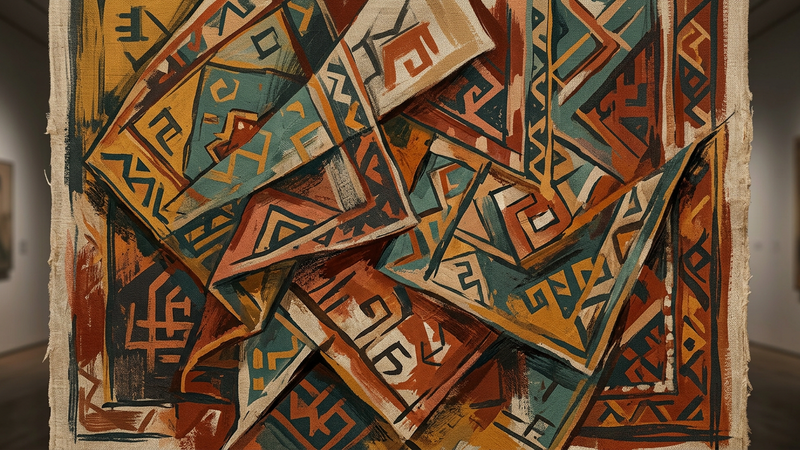
Threads of Heritage: Batima Zaurbekova's Woven Legacy
A survey of Kazakh tapestry pioneers redefines fibre art at Almaty's Kasteyev Museum
Eight decades after her birth, Batima Zaurbekova's textile innovations take centre stage in a major retrospective that bridges Central Asian craft and contemporary visual culture.
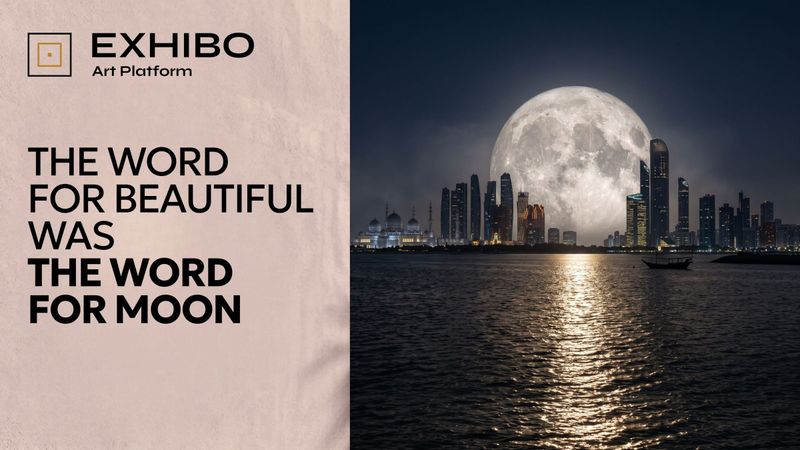
The Word for Beautiful Was the Word for Moon
The moon has been the measure of a beautiful face in Arabic verse for fifteen centuries — but beauty was only one of the things that light was ever asked to carry. A history of one disc, from a pre-Islamic ode to a glowing sphere over an Abu Dhabi harbour.
Ya qamar — you moon — is the oldest compliment in Arabic, and almost nothing about it means what we assume. The moon it praised was not always a woman, not always even a kindness, and in the end not only about beauty at all.