
Cairo

Kerdasa

1 gallery · 0 museums · 0 places

About this district

A textile town on the western edge of Greater Cairo, past Giza toward the desert — hand-woven carpets, wall hangings in traditional patterns, embroidered cotton and silk galabiyas, sold from the workshops that make them. Popular with Egyptian buyers before foreign ones, which tells you something about the quality.

Galleries

Museums

No published museums in this district yet.

Places

No published places in this district yet.

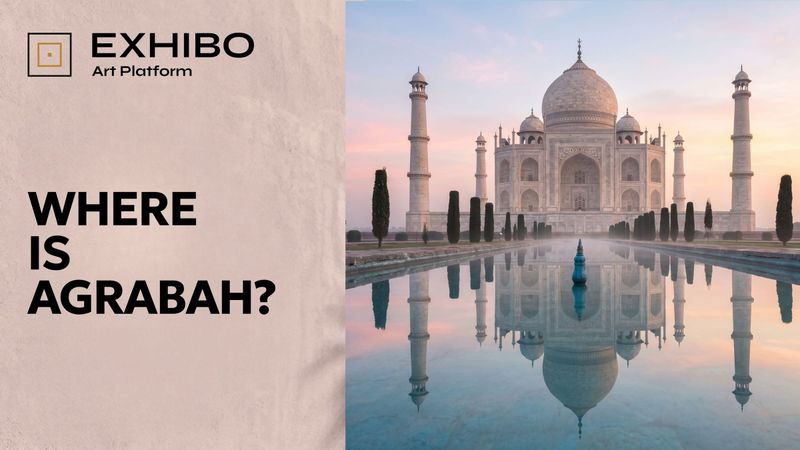
The white marble dome and framing minarets of the Taj Mahal in Agra, mirrored in the still water of its reflecting pool at dawn.
Editorial

Where Is Agrabah? The City Disney Assembled From Real Places

Agrabah was going to be Baghdad. A war made it fictional — and then Disney built it back out of real places, from a tomb in Agra to a valley in Jordan that usually plays Mars.

The Sultan's palace where Princess Jasmine feels trapped has the silhouette of the Taj Mahal — which is not a palace at all, but a tomb. That is how Agrabah works. Disney's fairy-tale city was going to be Baghdad, until the Gulf War made the name impossible; the studio invented a place that could not be found on a map, then quietly rebuilt it out of real ones — Isfahan and Agra, Marrakesh and Mandalay, a Jordanian desert that has played both Arabia and Mars.

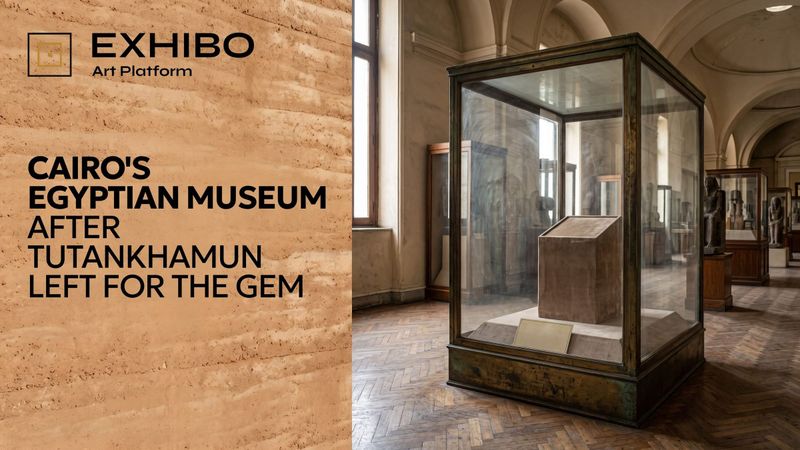
The empty glass case on the upper floor of the Egyptian Museum in Cairo where Tutankhamun's golden mask stood for decades, before its 2025 transfer to the Grand Egyptian Museum.
Editorial

The House Whose Famous Guests All Moved Out

When Tutankhamun's mask left Cairo's Egyptian Museum for the Grand Egyptian Museum, it took the crowds with it — but not the collection. What remains in the old building on Tahrir Square turns out to be a stranger and more interesting museum than the one that emptied.

For most of a century, the golden mask of Tutankhamun stood behind glass on the upper floor of the Egyptian Museum in Cairo. In October 2025 it was driven out to Giza, and it was not the only thing to go: the royal mummies, the whole Tutankhamun collection, tens of thousands of objects have left the old museum for Egypt's gleaming new institutions.

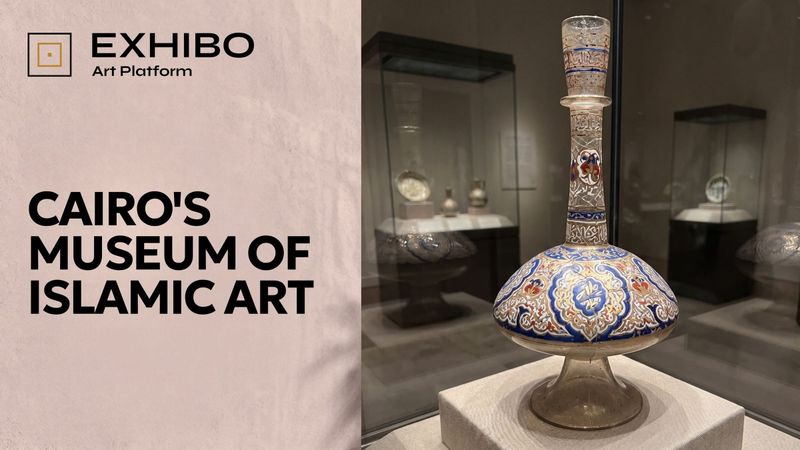
An enamelled medieval Syrian glass bottle in a display case at Cairo's Museum of Islamic Art, restored after the 2014 bombing, the mend faintly visible in the glass.
Editorial

The Bottle That Was in Pieces on the Floor

A car bomb left one of the world's great collections of Islamic art in fragments on the floor. What the Museum of Islamic Art chose to do with the repair — mark it, rather than hide it — turns out to be the most quietly radical decision in the building.

Near the entrance of Cairo's Museum of Islamic Art stands an eight-hundred-year-old Syrian glass bottle with a small gold mark on its label. The mark does not mean the bottle is precious, though it is. It means it was broken — shattered on the floor by the 2014 bombing across the street, then patiently glued back into a single shape.

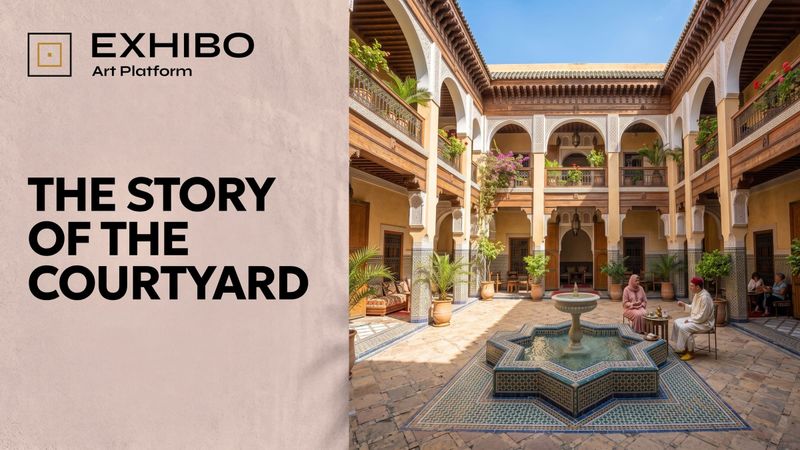
Sunlit central courtyard of a traditional Moroccan riad in the Fez medina, with zellij tilework, arched galleries and a fountain beneath an open square of sky.
Editorial

Why North African Cities Turn Inward: The Story of the Courtyard

A courtyard plan far older than Islam turned North African houses — and the medinas built from them — to face inward. Climate and religion only half-explain why, and what finally displaced the courtyard says the rest.

The blank walls and inward courtyards of Fez, Tunis, Algiers and Cairo are usually explained by heat or religion. Both are true; neither is the whole story. The clue is in what eventually pushed the courtyard out of the modern city.

The colossal statue of Ramses II standing in the sunlit atrium of the Grand Egyptian Museum, reflected in the shallow pool at its base, with daylight falling through the roof.
Editorial

The Museum That Reflects Everything, Including You

How the world's largest single-civilisation museum gathers a nation's heritage, national story, tourism economy and repatriation claims under one reflective roof — and what those mirrored surfaces quietly ask of everyone who walks in.

Around the colossus of Ramses II, shallow pools mirror the floor so exactly that visitors keep stepping in. It is a small, faintly comic thing — and a way into a much larger question about the Grand Egyptian Museum. A civilisation is gathered here and made whole, while its three most famous faces stay abroad. A home for a nation's heritage opens, and the nation queues outside it. A monument to Egyptian sovereignty rises, financed largely from Tokyo.

A deep cobalt-blue Ilkhanid ceramic bowl decorated with white, red, and cut gold-leaf ornament, its glaze imitating the color of lapis lazuli.
Editorial

Why Disney Made the Genie Blue

The long material and colonial history behind the most recognizable blue body in popular culture.

Almost everyone remembers that Disney's genie is blue. Fewer ask why. The answer runs backward through five thousand years — Egyptian blue standing in for lapis, cobalt on a Mongol palace, the eye that guards against envy, the last color most languages learned to name, and a layout artist photographing Isfahan just before a war — to a color that was rarely, in this part of the world, quite what it claimed to be.