Beirut

Gemmayzeh

6 galleries · 0 museums · 0 places

About this district

A long, narrow neighbourhood of stairways and nineteenth-century houses climbing off Rue Gouraud, east of Downtown, and one of the two hills where Beirut's gallery life and nightlife have concentrated. Gemmayzeh is heritage stone buildings, the famous Saint Nicolas stairs, cafés, bars and independent galleries pressed together along one walkable spine. It shades directly into Mar Mikhael next door — the same street, a different name. The character is bohemian and dense. The scale is intimate.

Galleries

Museums

No published museums in this district yet.

Places

No published places in this district yet.

EVA 2: The Alien Self Opens in Hanoi, Staging AI as Both Collaborator and Question

EVA 2: The Alien Self Opens in Hanoi, Staging AI as Both Collaborator and Question

Four young Vietnamese artists take over more than 860 square metres at L'Art Gallery, structuring the show around the four stages of how AI processes human data — recognition, classification, encoding, regeneration.

EVA 2: The Alien Self, a contemporary art exhibition exploring the relationship between human identity and artificial intelligence, opened on 17 July at L'Art Gallery in Hanoi's Lotte Mall West Lake. Structured around four stages that mirror how AI processes human data, the show runs until 25 July as part of Hanoi Creative Design Festival 2026.
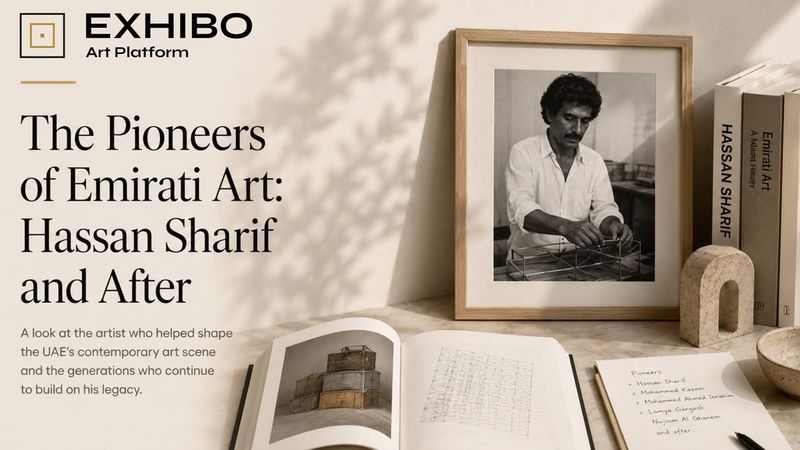
The Pioneers of Emirati Art: Hassan Sharif and After
Editorial

The Pioneers of Emirati Art: Hassan Sharif and After

How Hassan Sharif and the artists known as "the Five" built conceptual art in the UAE from nothing

Before the Louvre came to Abu Dhabi and Alserkal filled with galleries, a small group of artists made conceptual art in the UAE with almost no audience and a great deal of ridicule. This is the story of Hassan Sharif and the pioneers who built a scene from nothing — and why their work still anchors Emirati art today.

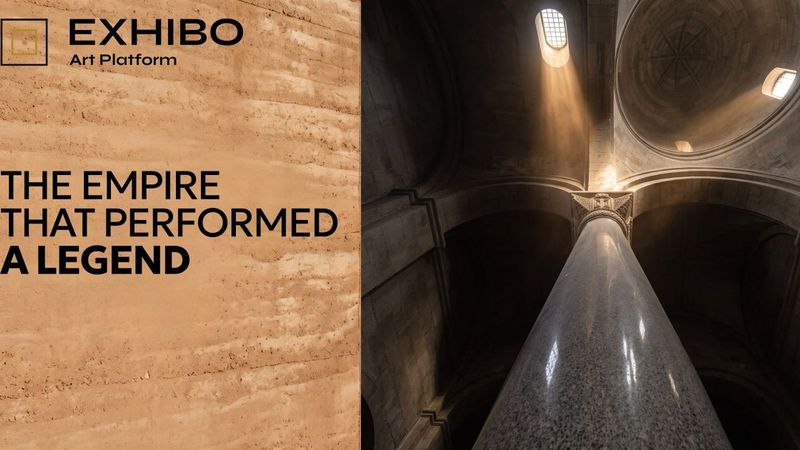
A massive granite column shaft under a stone arch, seen from below, with the dome springing above it.
Editorial

Seventy Thousand Solomons: The Empire That Performed a Legend

A demon catalogue in the conqueror's library, a sixteenth-century text where kingship is an office held seventy thousand times, and the columns a sultan dragged across three provinces to prove he held it.

Mehmed II kept a Greek catalogue of demons in his library at Topkapı. Seventy years later a sultan named for a prophet was rebuilding the walls of Jerusalem and hauling Roman columns out of Egypt and the Lebanon into a mosque above the Golden Horn. In between, Ottoman writers turned Solomon from a warning into a job — and the empire applied for it in stone.