
Bangkok · Thailand
Mona's Bangkok Ambition: Tasmanian Private Museum Plans Major Southeast Asian Outpost
Hobart's Museum of Old and New Art partners with Thai developer to create riverside cultural destination
A Transnational Cultural Venture
In a significant move for Southeast Asian cultural infrastructure, Hobart's Museum of Old and New Art (Mona) has unveiled plans for a Bangkok outpost. The Tasmanian institution, known for its provocative programming and private ownership model, will partner with Asset World Corporation (AWC), one of Thailand's most prominent real estate developers, to establish Mona Bangkok on a prime riverside site.
The announcement, made at the Athenee Hotel Bangkok on 10 July, brings together Mona's founder David Walsh, artist-curator Kirsha Kaechele, and Darklab CEO Leigh Carmichael with AWC executives. The Thai conglomerate, whose portfolio includes the Asiatique entertainment district, will handle construction, ownership and operations, while Mona retains responsibility for curatorial vision and architectural design.
Architecture of Light
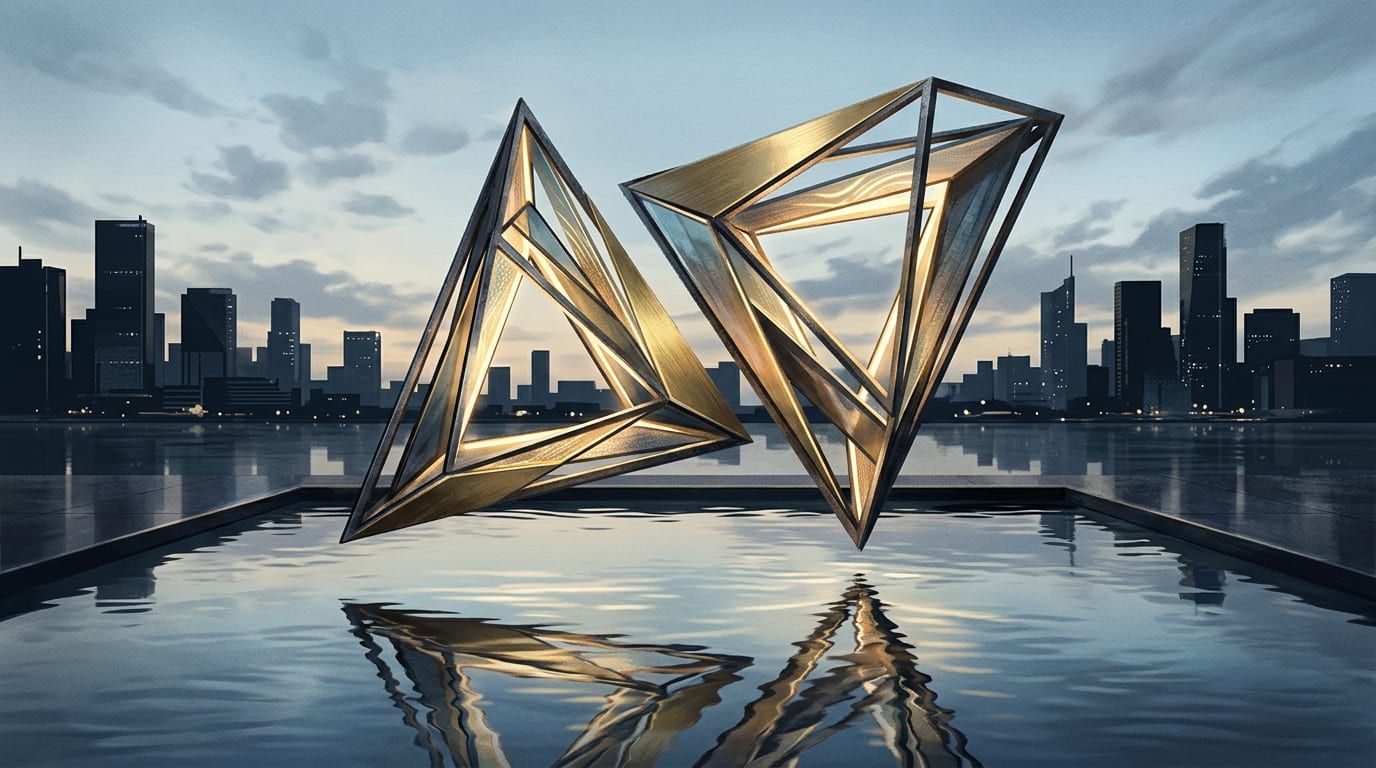
Early renderings suggest an ambitious structure: two interlocking triangular volumes arranged around a spacious piazza directly on the Chao Phraya River. The design echoes Mona's distinctive approach in Hobart, where visitors arrive by ferry to encounter unexpected encounters with art. In Bangkok, accessibility will be enhanced via both river transport and a planned chair lift connecting to Asiatique across the water.
Light has emerged as a central theme for the new institution. Carmichael indicates the museum will explore "the phenomenon of light, both physical and metaphorical" - a concept that could translate compellingly to the Thai context, where light holds deep spiritual significance in Buddhist culture and contemporary art alike.
Cultural Context and Competition
Bangkok's art scene has expanded considerably in recent years. The Museum of Contemporary Art opened in 2012, followed by the Bangkok Art and Culture Centre in 2008. Most recently, Dib Bangkok launched in December 2023 as another privately-funded contemporary space. Mona Bangkok enters this growing ecosystem with a unique proposition: bringing Tasmania's distinctive curatorial DNA to one of Asia's most dynamic cities.
Carmichael emphasises that the Bangkok venue won't simply replicate the Hobart experience. "It will take the creative spirit of Mona but come up with a new concept developed in partnership with locals and AWC," he explains. This collaborative approach marks new territory for Mona, which has operated independently for over two decades.
Timeline and Challenges
While the target opening date is 2029, Carmichael acknowledges this may prove optimistic. However, given AWC's substantial resources - their real estate portfolio is valued at approximately USD$6bn - the timeline seems achievable. The 15-year agreement includes provisions for a further five-year extension, providing long-term stability for the venture.
The partnership represents Mona's first major international expansion since its founding in 2011. The Hobart museum recently opened Phrontisterion, a new wing housing a 50,000-item library alongside installations by Anselm Kiefer and Julian Charrière. This expansion demonstrates the institution's continued growth and appetite for ambitious projects.
Looking Forward
Mona Bangkok signals a shift in how private museums might operate internationally. Rather than simply exporting a brand, the project appears designed to create something genuinely responsive to its new environment. Whether this model proves successful will depend largely on how effectively the partnership navigates cultural translation and local engagement.
The museum's riverside location positions it well within Bangkok's ongoing urban development. As the city continues investing in cultural infrastructure, Mona Bangkok could become a significant addition to a rapidly evolving artistic landscape.
Further reading: The Art Newspaper
Galleries mentioned
Museums mentioned
Related reading
Hockney and Wu Guanzhong in Dialogue at Christie's Hong Kong
A pioneering non-selling exhibition explores shared landscapes and cross-cultural influences
Christie's Hong Kong presents the first joint showing of David Hockney and Wu Guanzhong, exploring shared landscapes and cross-cultural visual traditions.
M+M: The Day of the Mantis at the 16th Gwangju Biennale
Luxembourg Pavilion's immersive insect-centric film trilogy explores ecological anxiety and non-human perspectives
A new cinematic installation by Marc Weis and Martin De Mattia refracts contemporary unease through the eyes of arthropods at South Korea's premier contemporary art festival.
Birke Gorm: the evening and the morning and the night at the Gwangju Biennale
Austria's national pavilion reimagines a museum loft as a living archive of repurposed sculpture and hidden histories.
The Austrian Pavilion transforms an upper-floor gallery into a tactile attic, exploring material memory and marginalised narratives through sculpture and sound.