
Seoul · South Korea
This is (Not) Conceptual Art: Tracing Korea's Linguistic Turn at MMCA Seoul
How Korean artists reimagined conceptual practice beyond Western frameworks
Beyond the Visual: Korea's Conceptual Evolution
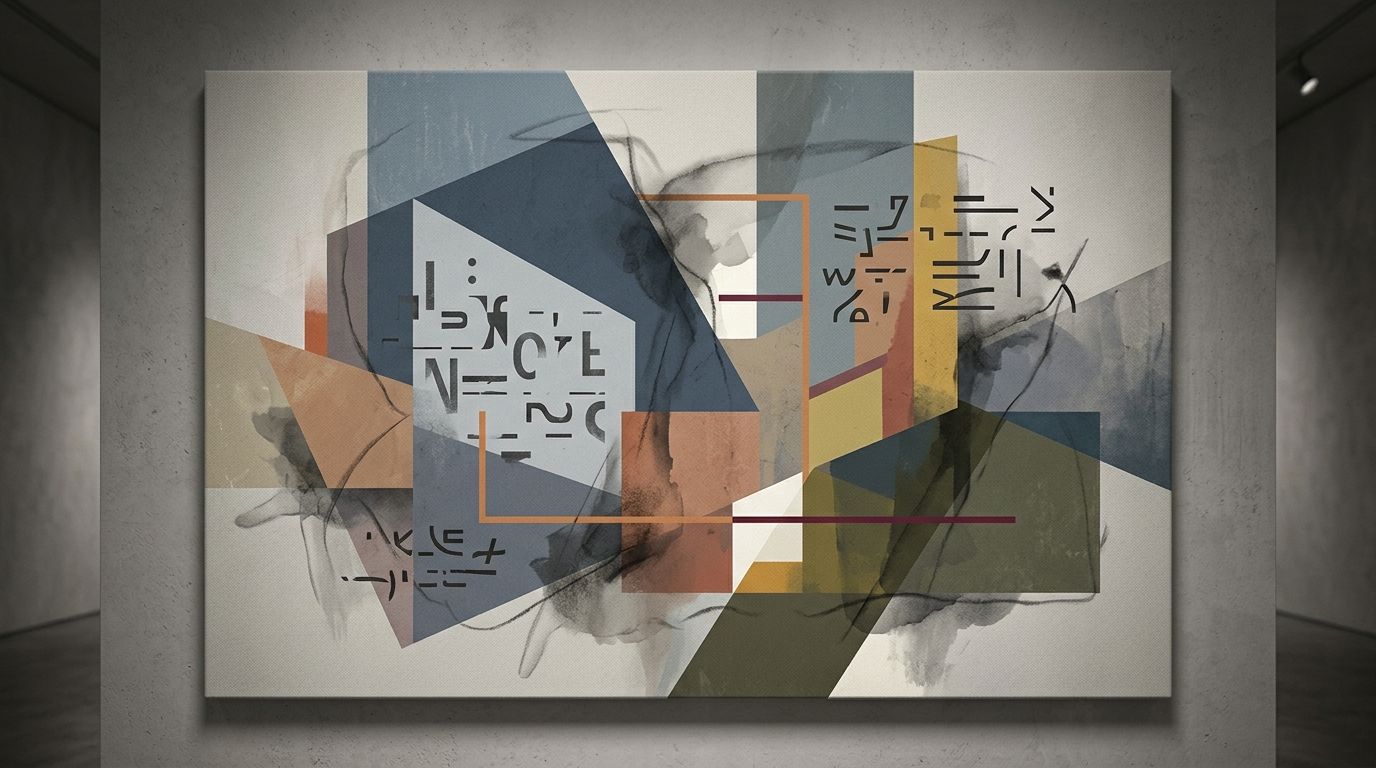
The National Museum of Modern and Contemporary Art in Seoul presents a significant examination of Korean conceptual art with 'This is (Not) Conceptual Art', running from June 19 to October 11, 2026. Rather than treating conceptual art as a fixed Western import, the exhibition traces how Korean practitioners adapted and transformed this approach within their own cultural and political contexts.
From Eye to Mind
Conceptual art emerged in the West during the mid-1960s, challenging traditional notions of aesthetics by prioritising ideas over visual form. However, as this exhibition demonstrates, Korean artists began exploring similar territory from the late 1960s within experimental art circles. Rather than abandoning materiality entirely, they developed a distinctive approach that positioned language and thought in dialogue with objects and form.
The show brings together approximately 140 works by 28 artists including Ahn Kyuchul, Bahc Yiso, Choi Byungso, Chung Seoyoung, and Kim Beom, among others. These practitioners charted a course that differed markedly from Western models, creating what the exhibition suggests is a uniquely Korean strand of conceptual practice.
Four Thematic Currents
The exhibition unfolds across four chapters. The first, 'Language, Logic, Performance', focuses on how artists from the 1970s to 1990s used physical actions and linguistic structures to move beyond sensory representation. The second chapter, 'Objects and Language', reveals the tensions between material things and their verbal descriptions, prompting viewers to reconsider accepted systems of meaning.
'Mapping and Measuring' examines how Korean artists have interrogated seemingly objective systems—maps, measuring tools, timekeeping devices—that impose order on experience. The final chapter, 'Manipulators of Signs', presents works that rework existing symbolic systems from newspapers, advertisements and statistical data to redirect their meanings.
Global Perspectives, Local Voices
What distinguishes this survey is its positioning of Korean conceptual art within broader international developments. During the 1990s and beyond, conceptualism became a tool for questioning institutional frameworks, historical narratives and social realities. This coincided with growing recognition that conceptual art was not solely a Western phenomenon, but operated within diverse social, political and economic contexts across Latin America, Eastern Europe and Asia.
The exhibition's parenthetical title—'(Not)'—signals its central argument: conceptual art cannot be reduced to a single category or origin story. Instead, it represents multiple practices that have evolved differently across cultural boundaries. Korean artists' engagement with language and systems thinking emerges not as derivative but as part of this global diversification.
Contemporary Resonances
By foregrounding the 'vast and limitless gap between established meanings and realms', as Bahc Yiso described, the exhibition invites viewers to reconsider how we understand both art and the world around us. The works on display demonstrate how Korean conceptual art has consistently challenged ocular-centric approaches to art-making, offering alternative ways of seeing and thinking.
This survey arrives at a moment when museums worldwide are reevaluating their narratives about conceptual art's development. By centring Korean perspectives, MMCA Seoul contributes to a more nuanced understanding of how global conceptual practices have evolved.
Galleries mentioned
Museums mentioned
Related reading
Koo Jeong A: OUSSSMOS Redefines Institutional Space Through Ephemeral Phenomena
Ephemeral forces and spatial fluidity converge in a landmark survey at Seoul's premier contemporary art institution
The Leeum Museum of Art hosts the artist's largest Korean solo show, dispersing installations across unconventional zones to challenge linear viewing habits.
Five Essential Exhibitions During Seoul Art Week
From Martin Parr's photographic archives to Do Ho Suh's textile architectures, a guide to the capital's defining cultural moments.
A curated overview of the key gallery presentations, museum surveys, and cinematic programmes defining this year's Seoul Art Week.
Christine Sun Kim: Have Many Dumb Fights Against Rock
Reframing digital discourse through immersive OLED installations at MMCA Seoul
The Korean American artist explores communication barriers and digital polarisation in a new site-specific commission for the national museum.