Genres & Symbolism in Art
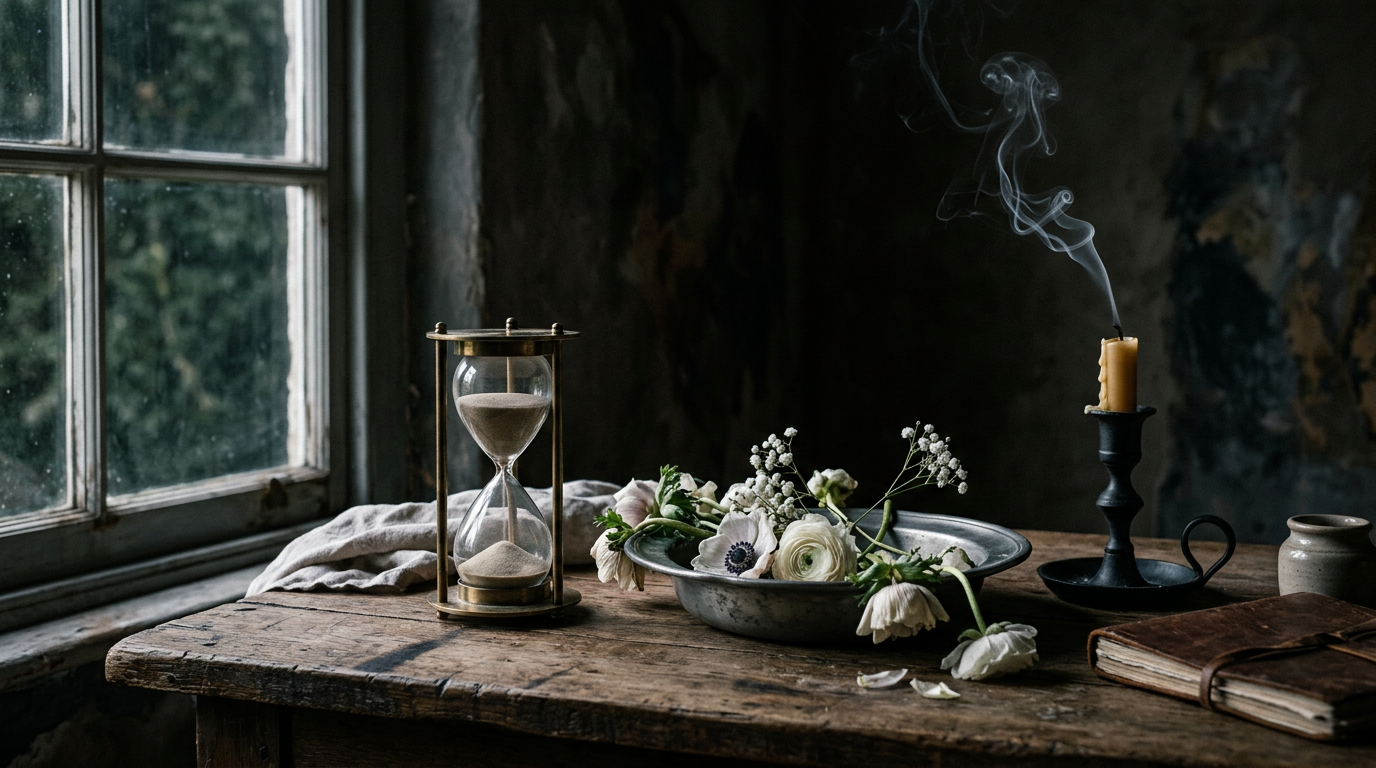
Skulls, hourglasses, flowers already wilting, a dog at the foot of the bed. Painters spent six hundred years building a symbol system their audiences could read fluently and we mostly can't. This series teaches the vocabulary back.
Pictures as a language you can still learn
Western painting ran for centuries on a shared literacy. A skull on a table was not a costume-shop prop. A lily in a Virgin's hand, a dog at a marriage bed, a snuffed candle beside a watch: viewers were expected to read those objects as they read letters. Academies ranked subjects (history, portrait, genre, landscape, still life) as a hierarchy of prestige. Painters used the ranking, bent it, and sometimes ignored it. This series restores that literacy without turning every canvas into a crossword. It stays with Western and Mediterranean Christian traditions. Inventories of Gulf falcons, khamsa hands, and Maghreb colour lore belong with Exhibo's live regional series on Islamic and Arab symbols.
Searchers arrive with mixed questions. Some want the Latin tag memento mori explained as culture, not as a tattoo slogan. Some want a method for reading a saint's attributes. Some want the difference between a breakfast still life and a vanitas. The articles answer those questions with named works you can still visit, museum catalogue pages, and the academic habit of saying when two readings disagree.
Genres first, then symbols
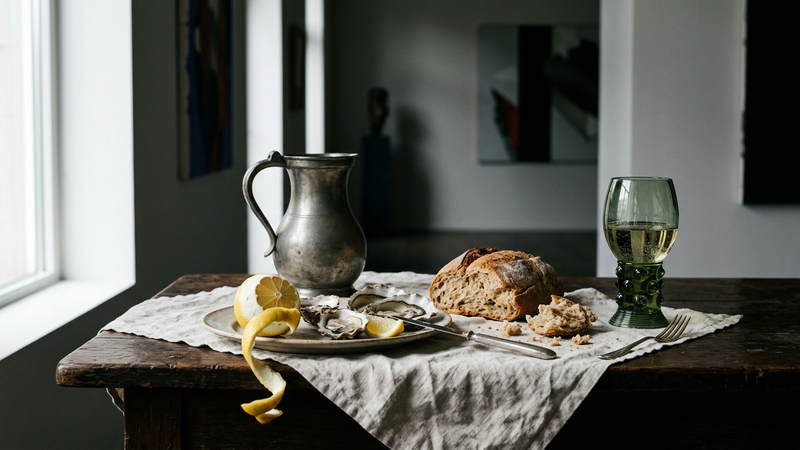
A genre is a type of subject the market and the academy recognised: landscape, portrait, still life, history painting, scenes of ordinary life. A symbol is a thing inside the picture that carries meaning beyond its look. The two meet in vanitas still life, where oysters and watches are both objects of skill and arguments about time. They meet again in history painting, where a nude or a horse may be a mythological person rather than a studio model. This hub keeps those distinctions so later articles do not cannibalise each other. Iconography as a method (Panofsky's three levels, how to check an attribute against a source) is one guide. Christian iconography as a set of Western subjects is another. Memento mori as a cultural history from Rome through later revivals is not the same page as Dutch vanitas painting, nor as a dictionary of skulls, bubbles and snuffed candles.
Landscape history here is the rise of a subject, not a manual for painting outdoors. Portraiture is how likeness worked in courts, churches and studios; famous-portrait listicles and the self-portrait as a separate history wait in other slots. The nude, allegory, animal and flower emblems, colour as meaning, and Greek myth in Western painting complete the set in a second batch.
What you will find in the first cluster
The flagship is memento mori as cultural history: Roman stoic reminders, medieval tombs, early-modern print, later fashion. Vanitas painting then takes the Netherlandish still-life form that made transience a genre. The danse macabre is the procession, not the table. A table-led dictionary of vanitas objects sits beside those three so the skull, the hourglass and the soap bubble have a home that is not a second cultural essay.
Iconography teaches how to read, with worked examples across periods. Christian iconography stays on Western church art: attributes, cycles, and the difference between a narrative scene and a cult image. Still life and landscape and portraiture take the academy's lower and middle ranks and show how they became major arts. Internal links point to this hub, to sibling pages in the cluster (some still pending until the second batch is live), and to Exhibo's museums directory when a collection is the place to look next. Period surveys such as the Dutch Golden Age and ancient Greek art already live in Periods of Art History; this series does not rewrite those centuries.
How to use these guides
Read a picture with the article open, then go and look. If a passage names a work, it names a current collection where that fact could be checked at the time of writing. Loans, reattributions and restitutions move objects; confirm before you travel. The tone is museum education with a spine: concrete nouns, dated works, no mystical decoding. Colour theory as optics and pigment chemistry belong in other series. Technique manuals for plein air sit with painting techniques. Aniconism in Islamic art is a different argument, already fenced to that cluster.
Exhibo maps galleries and museums so the history does not stay on the page alone. The series exists so you can walk into a room of still lifes or altarpieces and recognise the system the painter assumed you already knew.
Articles in this series
- GuideSymbolism
Memento Mori: A Cultural History
From a slave's whisper on a Roman chariot to Tudor rings, printed knights and later fashion, Europe kept death in daily view.
Latin tags and skull rings sit in search results next to stoic merch. The older story is public ritual: triumphs, cadaver tombs, rosary beads, marriage portraits and prints that put mortality on a body you could wear or a wall you had to pass. This guide tracks that history without turning it into a Dutch still-life lesson or a tattoo catalogue.
- GuideSymbolism
Iconography: How to Read Symbols in Art
Panofsky’s three levels, attributes and source-checking: a method for reading Western pictures without treating every object as a code.
Iconography in art history is a method: name what you see, match it to a conventional type, then test that match against a dated source. This guide walks Panofsky’s levels, Ripa and ICONCLASS, and six museum works from Botticelli to Beuys, and keeps Christian saints, MENA symbol lists and the Symbolist movement on their own pages.
- GuideSymbolism
Landscape Painting: A History
How Western painters turned scenery from a backdrop into a genre, from Dutch mills and Claude’s ports to Constable and Impressionist weather
Landscape painting became a European specialism in the seventeenth century, then a vehicle for national feeling, scientific looking and modern colour. This history follows the genre from antiquity’s backgrounds through Dutch naturalism, Claude, the picturesque, Romantic weather and Impressionist light, with four works read in museum collections.
- GuideSymbolism
Vanitas Painting, Explained
Netherlandish still life as a moral argument: how painters built vanitas tables, six named works, and how to recognise the type.
Vanitas is a Netherlandish still-life type: a table of goods and mortality markers arguing that status and pleasure do not last. This guide defines the type, shows how Haarlem and Leiden workshops built it, reads six named works from 1603 to 1977, and keeps it distinct from memento mori history, object dictionaries, and pop-culture namesakes.
- GuideSymbolism
Still Life Painting, Explained
Breakfast tables, flower pieces, and kitchen pictures: how still life painting works from Haarlem specialists to Cézanne and Cubism.
Still life painting treats arranged objects as the subject, from Dutch ontbijtjes and floral bouquets to Chardin’s kitchens and Cézanne’s apples. This guide maps types, technique, six named works, contemporary practice, and how to tell the genre from vanitas, genre scenes, and decorative flower studies.
- GuideSymbolism
Portraiture: A History
Court, civic, donor and group likeness from Roman Egypt to oil’s golden centuries, and how painters answered the camera
Portraiture is the craft of making a specific person recognisable and useful to the living: as ancestor, donor, ruler, spouse or citizen. This guide follows those paid jobs through panel, fresco and oil, then the decades when photography cheapened the face without ending the painted court and civic commission.
- GuideSymbolism
The Nude in Art History
Academy, myth and the life room: how Western art treated the unclothed body as a learned form from marble workshops to Manet
Search results mix fertility figurines, Salon scandals and studio drawing. Art history uses a narrower term: the nude as a trained convention, with myth, athletics and academy rules supplying the alibi. This guide follows that convention through named, visitable works and the arguments that later stripped the alibi away.
- GuideSymbolism
History Painting, Explained
Istoria at the academy’s summit: Bible, myth and recent events as large pictures meant to instruct through human action.
History painting is the academic genre of serious narrative: Bible, myth, literature and public events staged as moral action, not a documentary of dates. This guide defines istoria, maps Félibien’s hierarchy, walks through studio method, reads six named canvases from Raphael to Géricault, and shows how later painters still use the form.
- GuideSymbolism
Animal Symbolism in Art
Western painting’s animal emblems: bestiaries, attributes and named museum pictures for reading a lamb, lion, dog or unicorn.
Animal symbolism in Western art is a set of period conventions, not a universal chart. This guide shows how bestiaries, heraldic puns and saintly attributes work, then reads six named works from the Cloisters unicorn to Zurbarán’s bound lamb, and shows how later painters reuse beasts without the old handbook.
- GuideSymbolism
Flower Symbolism in Art
How painters turned lily, rose, columbine and sunflower into meaning, with named museum works from van Eyck to O’Keeffe.
Flower symbolism painting is a dated convention: species, count, vessel and scene type, checked against a source. Lily, rose, columbine and sunflower are read in named museum works from van Eyck’s Annunciation to O’Keeffe’s jimson weed, without a florist chart, a vanitas dump, or a shopping list.
- GuideSymbolism
The Self-Portrait: A History
Mirrors, signatures and a free model: how painters made themselves the sitter from van Eyck’s 1433 panel to photography
A self-portrait is a likeness the maker produces of their own body, often with a mirror, a signature and a claim on professional status. This history follows that practice through oil, print and camera, four visitable works, and the critics who treated the genre as vanity, workshop drill or autobiography.
- GuideSymbolism
Genre Painting, Explained
Ordinary people in ordinary rooms: how genre painting stages everyday life from Bruegel’s barns through to Hopper’s diner.
Genre painting pictures unnamed people at work, play, or rest rather than saints, monarchs, or battles. This guide defines the type against the other academy ranks, shows how painters build a scene, reads six named works from 1568 to 1942, and maps how contemporary painters still use kitchens, bars, and living rooms.
- GuideSymbolism
Christian Iconography in Western Art
How Western painters coded Christ, Mary and the saints so a viewer could read liturgy, legend and civic claim in one glance.
Museum labels still assume you can tell Peter from Paul at ten paces. This guide maps the working grammar of Western Christian pictures: attributes, feast types, altar programmes, and the difference between a cult image and a story cycle, with named works from Ravenna, Siena, Ghent and the National Gallery.
- GuideSymbolism
Colour Symbolism in Art History
Marian blue, imperial purple, gold ground and modernist hues as dated Western conventions you can check against named museum works.
Colour symbolism in Western art is a convention you can date: who wears the hue, which feast it marks, whether gold stands for light. This guide reads liturgical codes, Marian blue, Tyrian purple and gold ground through named museum works from San Vitale to Klein, then shows how to test a reading in front of the picture.
- GuideSymbolism
The Danse Macabre
Cemetery murals and printed books in which Death takes pope, king and labourer in one chain, from Paris 1424 to Holbein.
The danse macabre is a late-medieval picture-and-verse formula: a ranked procession of the living paired with the dead. This guide stays with mural cycles and prints, names the lost Paris cemetery scheme that set the type, and then follows the motif through Lydgate, Marchant, Notke and Holbein.
- GuideSymbolism
Vanitas Objects: A Symbol Dictionary
A table-led dictionary of Dutch still-life props, from skulls to soap bubbles, with named museum pictures as citations.
Searchers who type vanitas symbols meaning want a key for objects on a table. This dictionary states selection rules first, then reads skull, hourglass, bubble, snuffed lamp, watch, flowers, instruments, books, coins and globes against named pictures in London, New York and Leiden, with notes on later reuse.
- GuideSymbolism
Allegory in Art, Explained
Personification, Ripa and civic programmes: how Western pictures make Justice and Time visible without a private riddle.
Allegory in art is a mode: figures and objects stand for ideas a period public could name, from Lorenzetti’s council chamber to Vermeer’s hidden Mass. This guide sets personification and Ripa against iconography as method and history painting as genre, then walks six museum works and the confusions that still wreck gallery readings.
- GuideSymbolism
Greek Myth in Western Painting
From Medici groves to Philip II’s poesie, Western painters used Ovid and recovered sculpture to make Greek stories into court pictures.
Vase-painting and Botticelli postcards crowd the same search. This guide stays with Western painting after antiquity: Medici panels, Titian’s poesie for Philip II, Poussin’s reconstructed rites, and the academy’s later rank for Ovid on canvas. Ancient Greek art is linked out, not surveyed here.