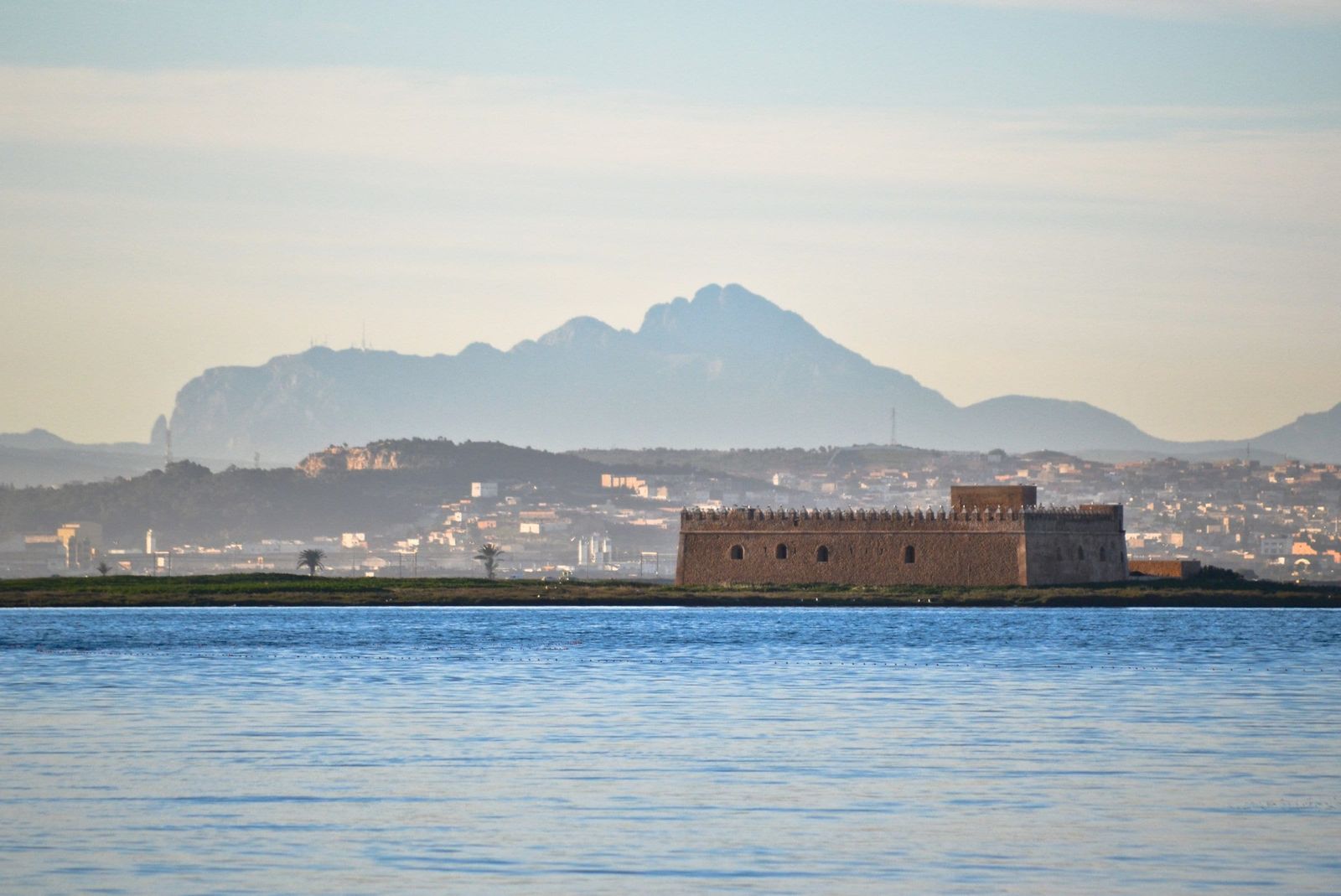
Chikly Island Fort, Lake of Tunis
A Spanish fort of the 1540s alone on an island in the Lake of Tunis, now a refuge for egrets.
An island in the lake
Chikly is a small island in the northern Lake of Tunis, the shallow lagoon between the capital and the sea. Its position made it a natural lookout over the water between Tunis and the sea.
After Charles V took Tunis in 1535, the Spanish held the fort of La Goulette at the mouth of the lake. Between 1546 and 1550 the Spanish governor of La Goulette, Luis Pérez de Vargas, rebuilt the fortification on Chikly on older foundations. It was dedicated to Saint James and named Fort Santiago. From the island the garrison could watch the lake and the road between Tunis and the sea.
Ottoman centuries
The Ottomans took Tunis and La Goulette in 1574. The fort on Chikly remained in use. In 1660 it was repaired under the Ottoman authorities of Tunis. In the 19th century it lost its military role and was abandoned.
Architecture
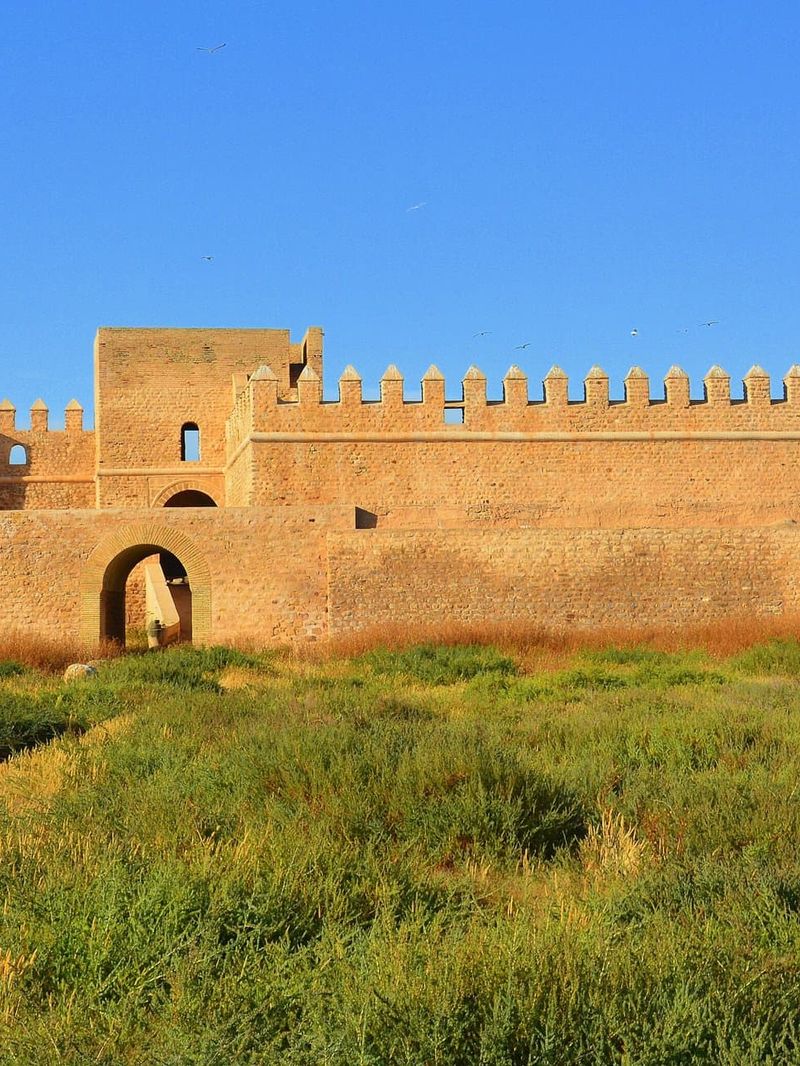
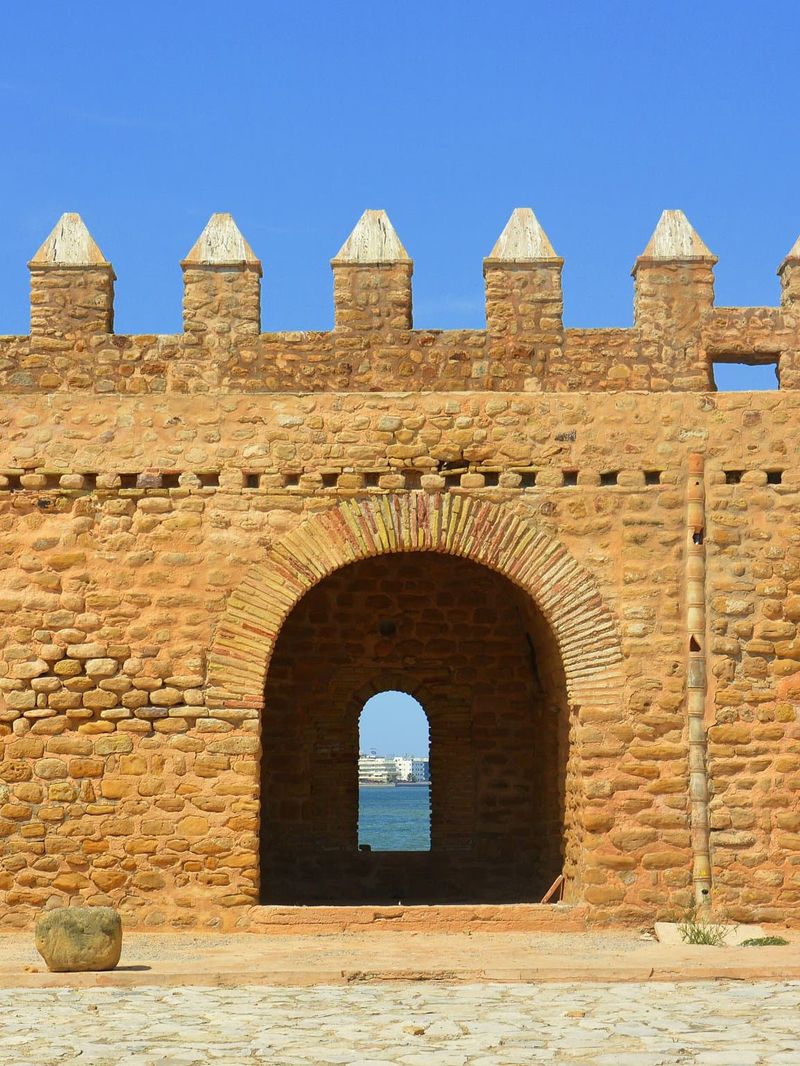
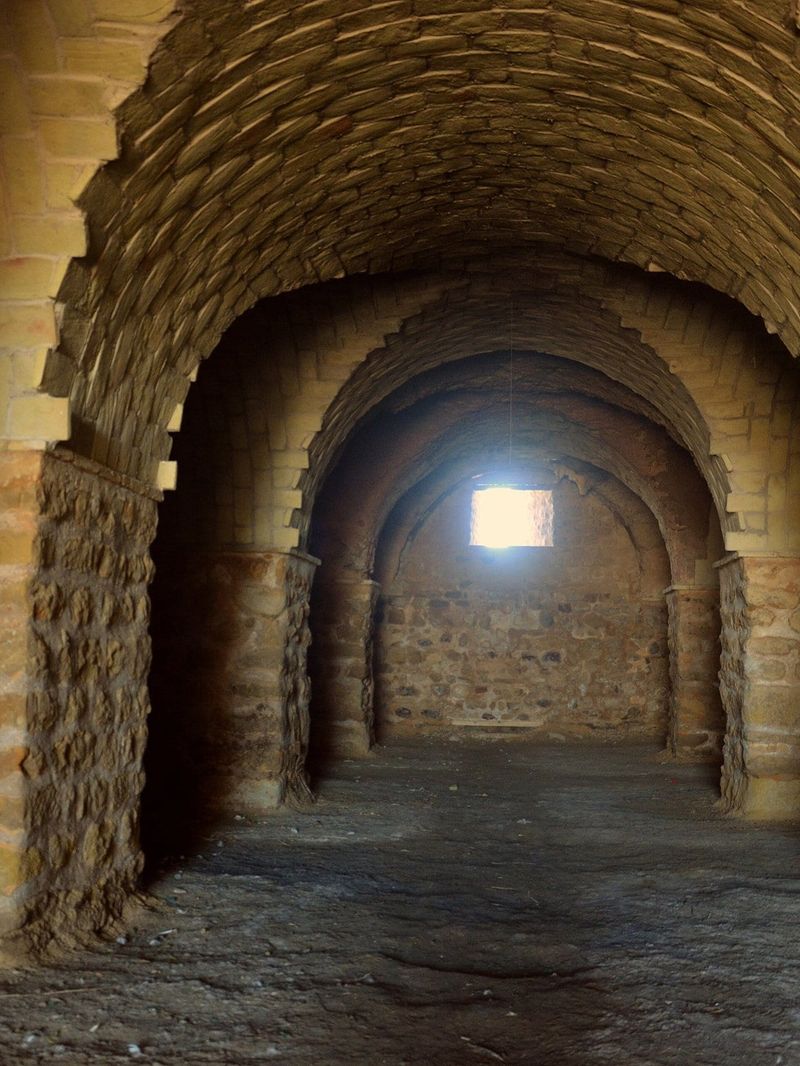
The fort is a rectangular enclosure of yellow stone and brick, with crenellated walls and a square tower. Inside, a courtyard is lined with vaulted rooms. Some of the vaults rest on ancient columns with carved capitals, reused from older buildings. From the walls the view reaches across the water to the mountains of Bou Kornine and Zaghouan.
A bird sanctuary
The island has been a nature reserve since 1993 and belongs to the Lake of Tunis wetland, a site of international importance for birds. Little egrets nest here in large numbers. The fort is not open as a regular visit, but it can be seen from the shores of the lake.
Exhibo editorial
You see it from the car, from the light railway, from the terraces of the Lac district: a small golden box floating on the water with mountains behind. Most people never learn its name.
It is the quietest monument in Tunis. Egrets on the walls, fishermen in flat boats, the sun dropping behind Zaghouan. Find a spot on the shore at the end of the day and watch the fort turn from yellow to pink to grey.
Gallery
How to find it
Chikly lies in the northern Lake of Tunis, west of the causeway that carries the road and the TGM light railway from Tunis to La Goulette. The island is a protected reserve and is not open to visitors. The best views are from the causeway, the shore of the Berges du Lac and the light railway between Tunis Marine and Le Bac. The Karraka Fort at La Goulette was built by the same Spanish garrison.
Similar places
All places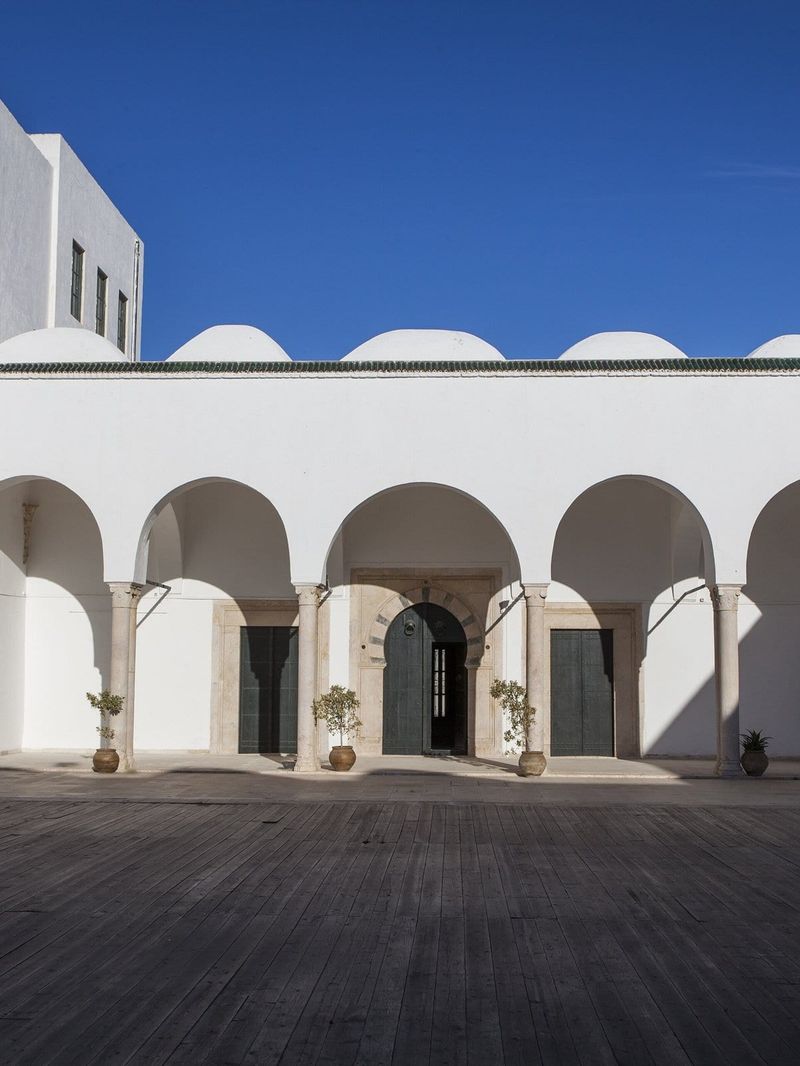
News by Exhibo
Editorial coverage on Exhibo

Why Every Sci-Fi Desert Looks Arab
From Arrakis to Tatooine, when a film wants a desert to feel ancient, prophetic and alien, it reaches for an Arab and Berber vocabulary — and reveals more about the West that built it than the region it borrows from.
The wrapped faces, the trilling women, the barely-displaced Arabic: cinema's alien deserts keep sounding Arab. But the vocabulary was assembled in the West — from Orientalist painting to Lawrence to Dune — and it says more about who is looking than about anyone being looked at.
The Real Aladdin: The Story That Belonged to No Country
Aladdin has no Arabic manuscript older than its French translation. Behind the gap stands a young man from Aleppo, catalogued for a century as anonymous.
The most famous "Arabian" tale in the world is missing from the oldest Arabic manuscript of the Thousand and One Nights — because before a French translator wrote it down in Paris, there was no manuscript of it to be missing from.
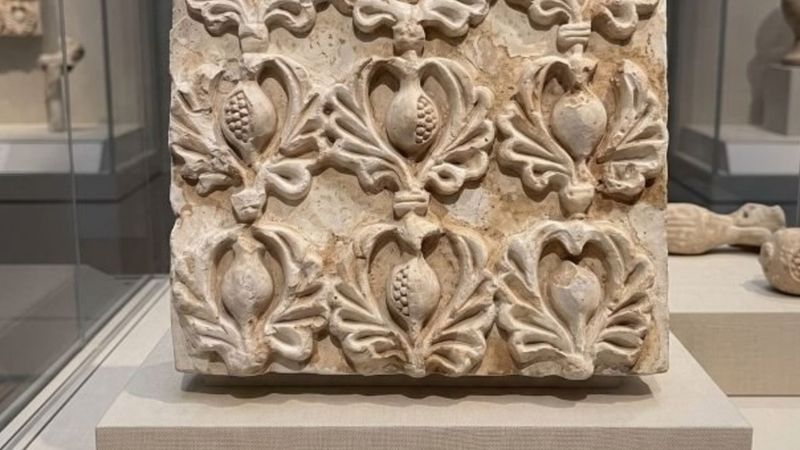
The Fruit We Are Sure We Recognize
How the pomegranate became one of the most confidently named motifs in Islamic ornament — and one of the least confidently identified — across a thousand years of tile, silk and stucco, with meanings we mostly attached later.
A slab of sixth-century plaster in the Met shows a fruit you recognise at a glance: a pomegranate, and surely it means paradise. Hold that certainty up to the light and it dissolves. Across a thousand years of tile, silk and stucco, the pomegranate is the shape we name most confidently and identify least — blurring into the artichoke and the palmette, its meanings attached by later viewers, its very name partly a nineteenth-century invention