A cathedral on the acropolis
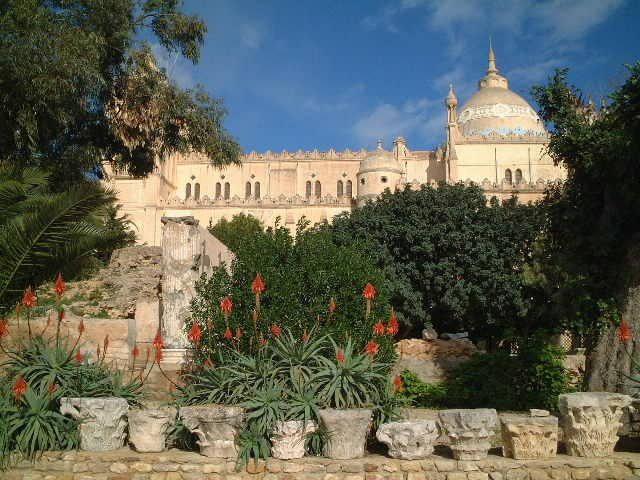
The Cathedral of Saint Louis crowns Byrsa Hill, the ancient acropolis of Carthage. It was built in the 1880s and completed in 1890, in the early years of the French protectorate over Tunisia. It was dedicated to Louis IX of France, Saint Louis, who led the Eighth Crusade against Tunis and died before the city in 1270. Byrsa was chosen with intent. The hill had held a temple of the Punic city and then the Roman forum.
The cathedral became the seat of the archbishops of Carthage, the title revived for the Catholic Church in North Africa in the 19th century. The missionaries of the White Fathers settled on the hill beside it. They excavated much of Carthage and founded the museum that later became the Carthage National Museum.
Architecture
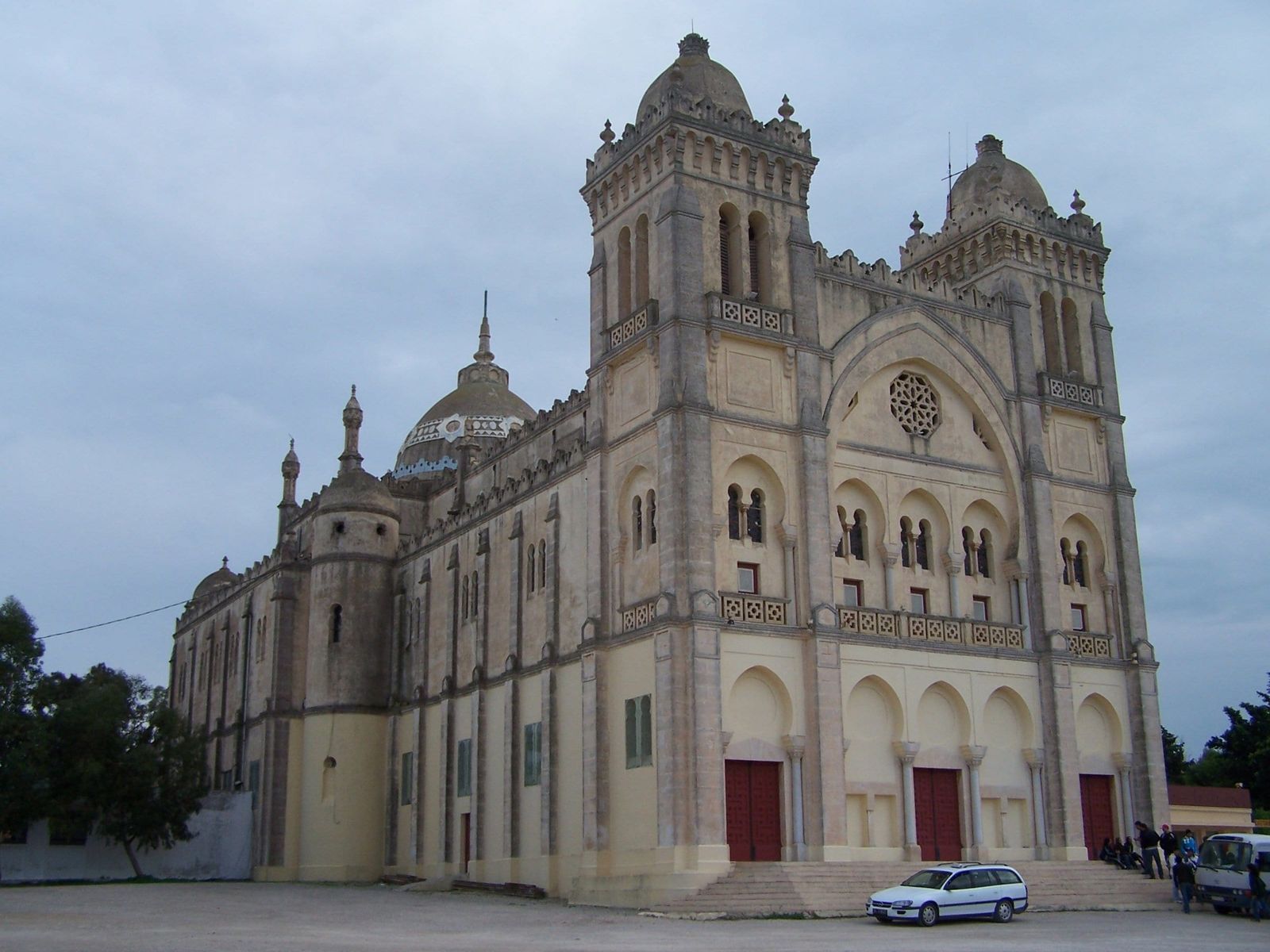
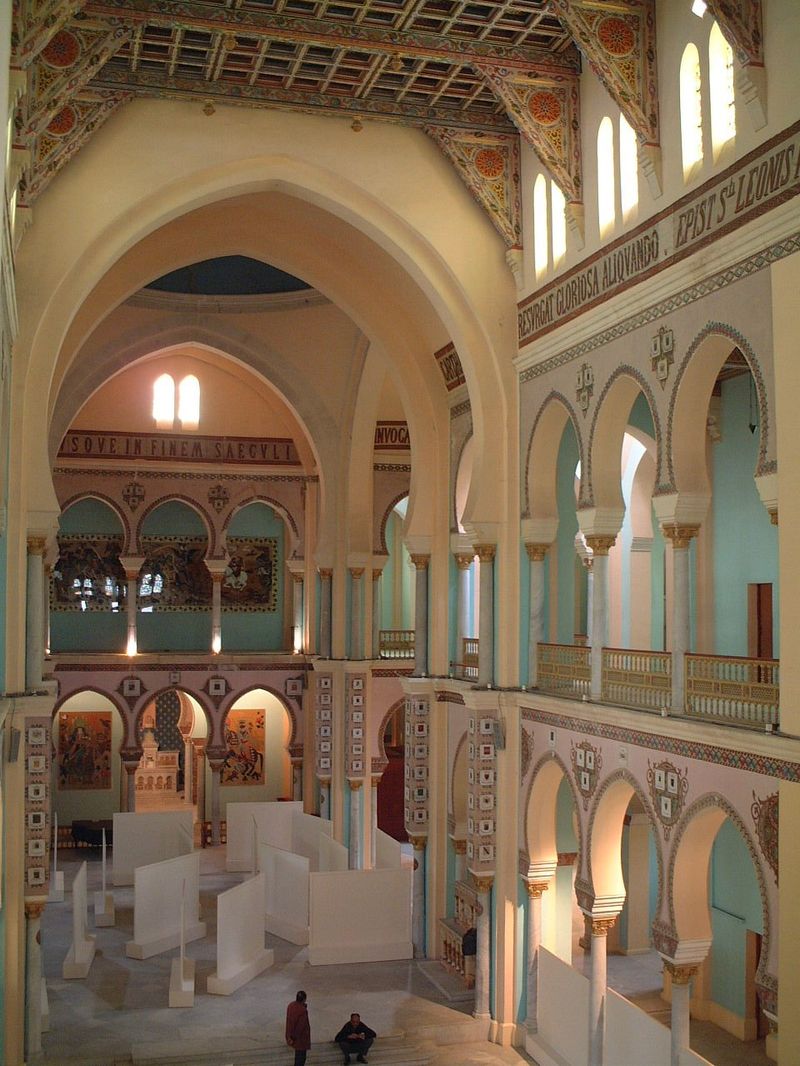
The building mixes Byzantine and Moorish forms. It is built on a cross plan with a long facade flanked by two square towers. A great dome rises over the crossing, with smaller domes and slender turrets around it. Inside, horseshoe arches, carved and painted stucco and coloured glass recall the architecture of the Islamic world. It is one of the most visible landmarks of the Gulf of Tunis.
The Acropolium
In 1964, after Tunisian independence, the cathedral was handed over to the Tunisian state and ceased to be a church. It was restored and opened in 1993 as the Acropolium, a cultural centre for concerts and exhibitions. In 2021 the operating concession ended after a long dispute and the building was closed. The heritage agency announced its reopening to visitors in 2024.
Exhibo editorial
From almost anywhere in Carthage you see it: two towers and a white dome on the highest hill. Many visitors take it for something ancient. It is not. It is a statement from 1890, a colonial power planting its church on top of Dido's citadel.
That is exactly why it is worth a look. Walk round it slowly. The towers, the domes and the stucco borrow freely from mosques and from Byzantium. The result is odd, theatrical and rather beautiful against the sky.
Gallery
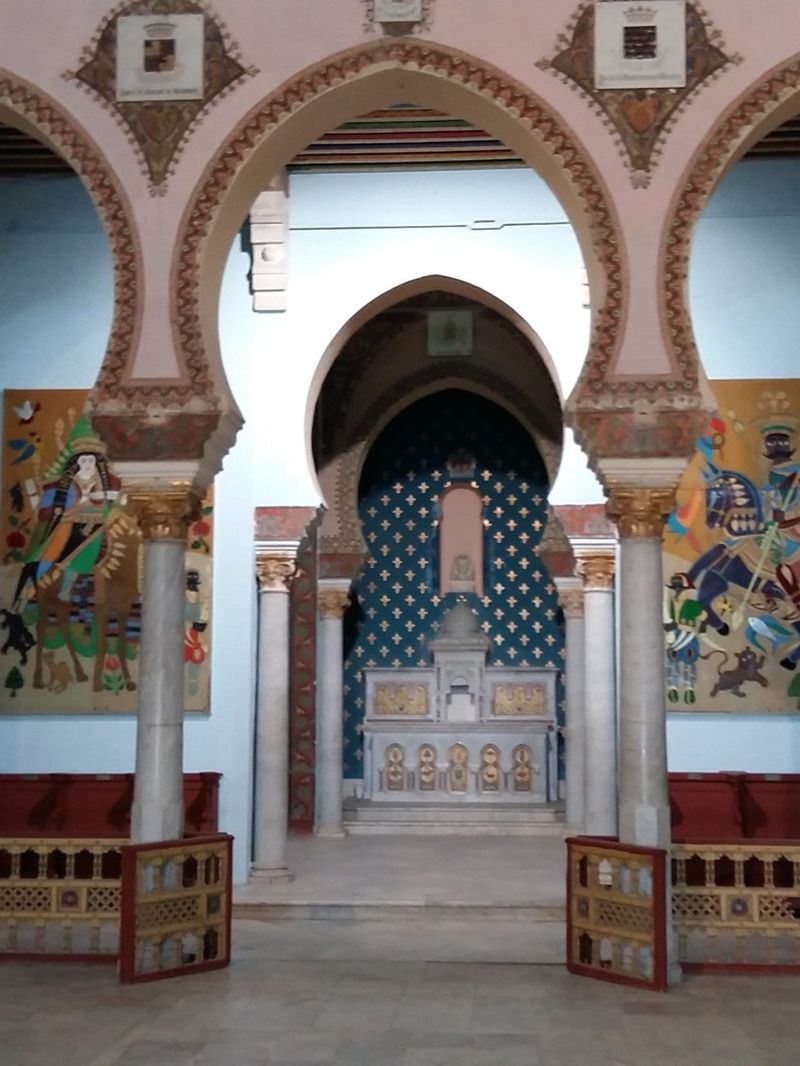
How to find it
The cathedral stands on the summit of Byrsa Hill, next to the Carthage National Museum. Take the TGM to Carthage Hannibal or Carthage Byrsa and walk uphill for about ten minutes, or take a taxi to the top. Access to the interior has changed in recent years; the exterior can always be seen from the hilltop.
Similar places
All places
News by Exhibo
Editorial coverage on Exhibo
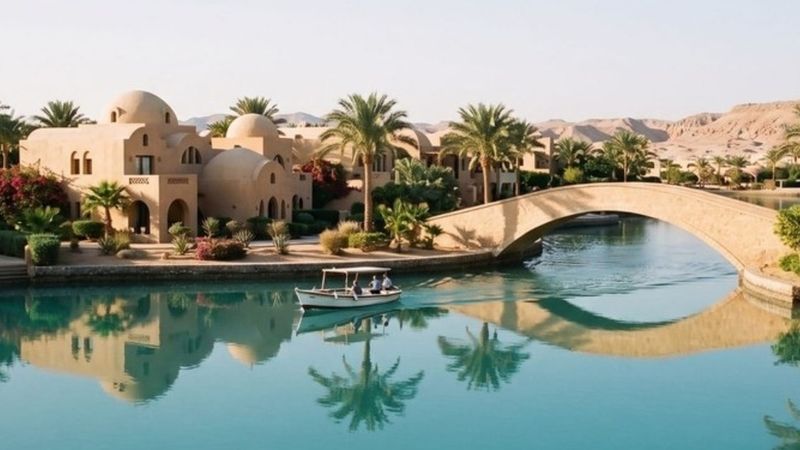
Why the Middle East Keeps Building Venice
From the Red Sea to the Gulf, canal towns keep getting called Venice. The water was usually about something else — and Venice was never quite Venice either.
The Middle East is full of “Venices”. Most began as a way to manufacture shoreline; the name usually arrived later, in English, from the people selling it.
Elie Khouri's New Foundation Takes Shape in Dubai
A private villa in Jumeirah 1 becomes the home for Ekaf
Collector Elie Khouri transforms a historic Jumeirah 1 residence into a contemporary art venue opening in 2028.

Following Damascus... Osthaus and the Islamicate Collection
Museum Folkwang revisits the founder's early travels and the formation of its historic Islamic Department
A survey of Karl Ernst Osthaus's collecting habits, featuring loans from Berlin and Dresden alongside European modernist responses.