Hammam-Lif is a seaside town about twenty kilometres south-east of central Tunis, squeezed between the Gulf of Tunis and the twin peaks of Djebel Bou Kornine. It grew around hot springs that have been used since antiquity. At its centre stands the Beylical Palace, for more than two centuries the winter residence of the rulers of Tunisia.
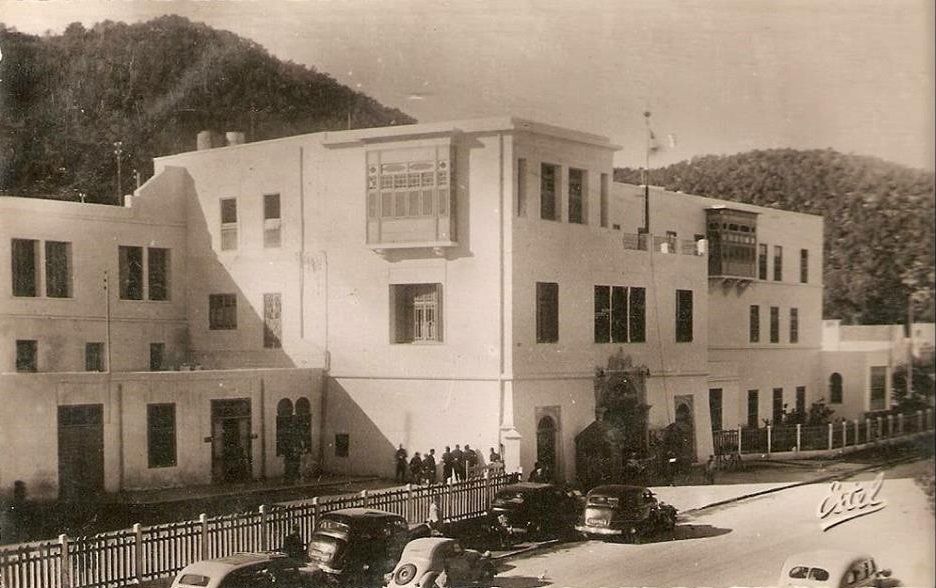
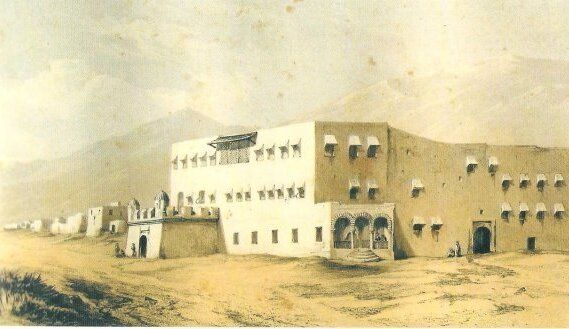
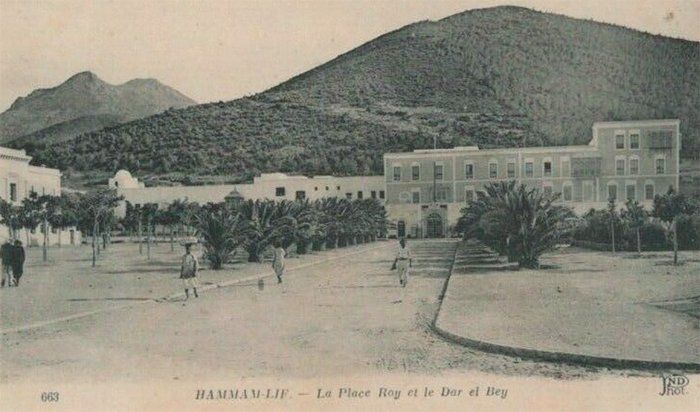
Around 1750, Ali Bey built a pavilion for his own use beside one of the springs, which became known as Aïn el Bey, the bey's spring. In 1826 Hussein Bey added a residence next to it where he could stay with his family and court for part of the year. Later beys enlarged and altered it. Most of them spent time here in the winter months until the monarchy was abolished in 1957. Old photographs and engravings show a long white building with rows of windows and wooden balconies, the mountain rising directly behind.
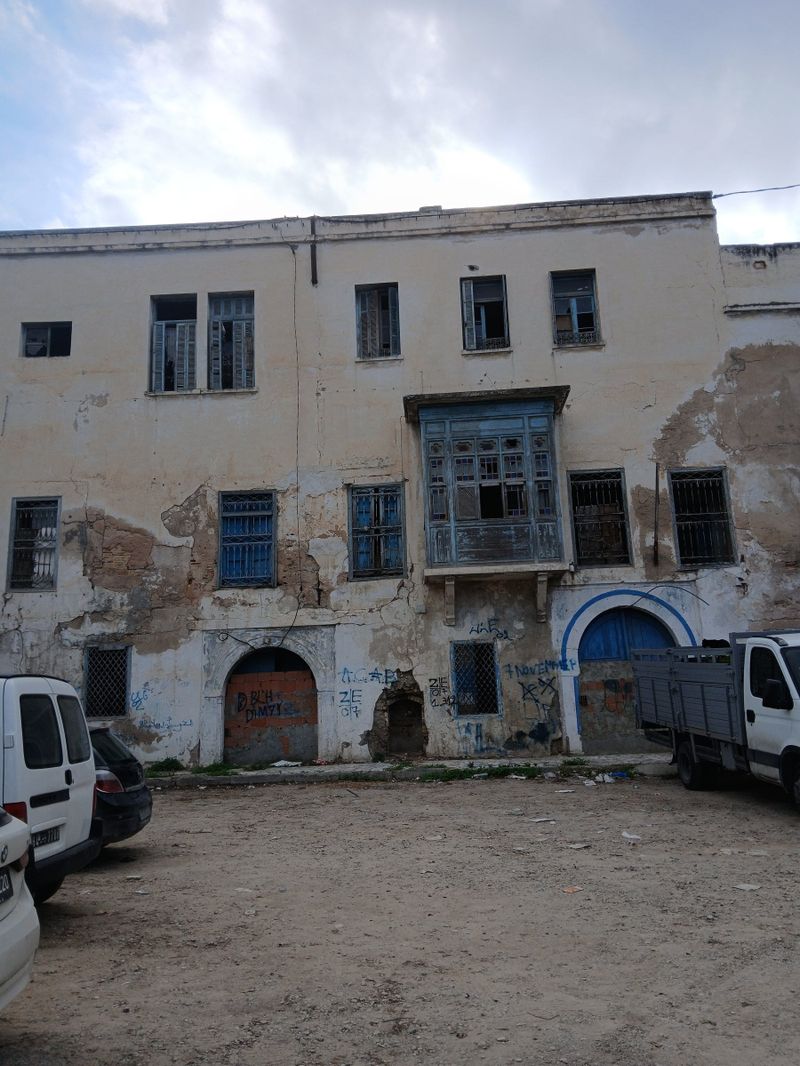
After independence the palace was used for various purposes and then abandoned. From the 1980s families moved into its rooms. It has since fallen into poor condition. Residents and heritage groups have campaigned for years to save it. In 2021 the National Heritage Institute was charged with securing the building as a first step towards turning it into a cultural space. Today it can be seen from the outside only.
The town's history goes much further back. In antiquity it was Naro. In 1883 a French officer, Captain Ernest de Prudhomme, uncovered the mosaic floor of a late Roman synagogue while digging a garden here. Its panels of birds, fish, palm trees and menorahs were later bought by the Brooklyn Museum in New York, where they remain. Nothing of the synagogue survives on site, but the mosaics make Naro one of the best known names in the study of ancient Judaism.
Exhibo editorial
Hammam-Lif feels like a place that has been waiting for its moment to come round again. The beys took the waters here, Tunis families built villas, the trains brought bathers from the capital. Then the fashions moved on and left the palace stranded at the foot of the mountain, its balconies now home to families rather than courtiers.
It is not a polished visit. It is not meant to be. Come for the setting, Bou Kornine almost on top of the town. Stay for the strange layering of it all. A bey's winter palace, a Roman synagogue whose floor now lives in Brooklyn, a promenade facing the gulf. Few towns this close to Tunis hold so much history so lightly.
Gallery
How to find it
Hammam-Lif is about twenty kilometres south-east of central Tunis, on the coast road and on the southern suburban railway line from Tunis. The palace stands in the town centre, below Djebel Bou Kornine. Radès, the nearest Exhibo district, lies about ten kilometres back towards Tunis.
Similar places
All places
News by Exhibo
Editorial coverage on Exhibo
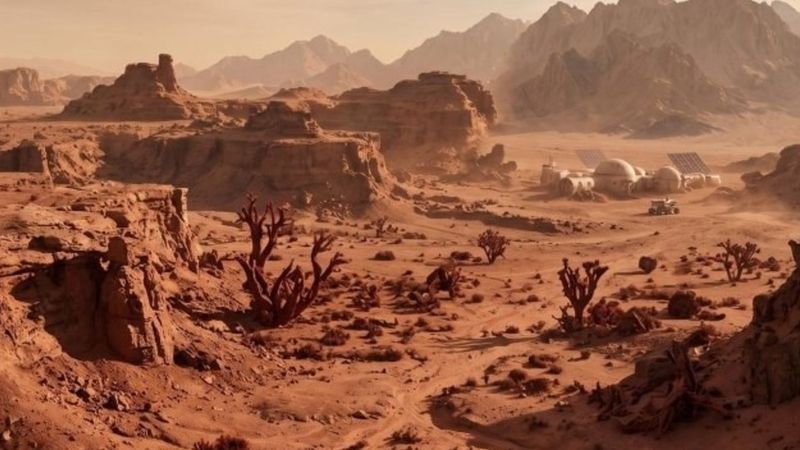
Why Every Sci-Fi Desert Looks Arab
From Arrakis to Tatooine, when a film wants a desert to feel ancient, prophetic and alien, it reaches for an Arab and Berber vocabulary — and reveals more about the West that built it than the region it borrows from.
The wrapped faces, the trilling women, the barely-displaced Arabic: cinema's alien deserts keep sounding Arab. But the vocabulary was assembled in the West — from Orientalist painting to Lawrence to Dune — and it says more about who is looking than about anyone being looked at.
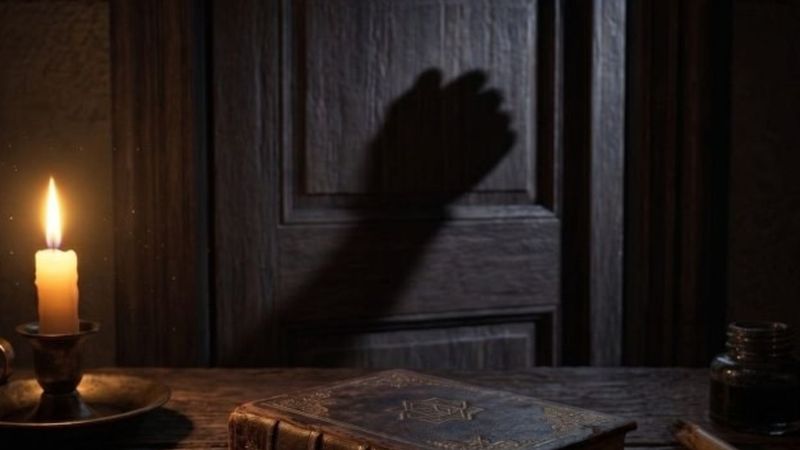
The Real Aladdin: The Story That Belonged to No Country
Aladdin has no Arabic manuscript older than its French translation. Behind the gap stands a young man from Aleppo, catalogued for a century as anonymous.
The most famous "Arabian" tale in the world is missing from the oldest Arabic manuscript of the Thousand and One Nights — because before a French translator wrote it down in Paris, there was no manuscript of it to be missing from.
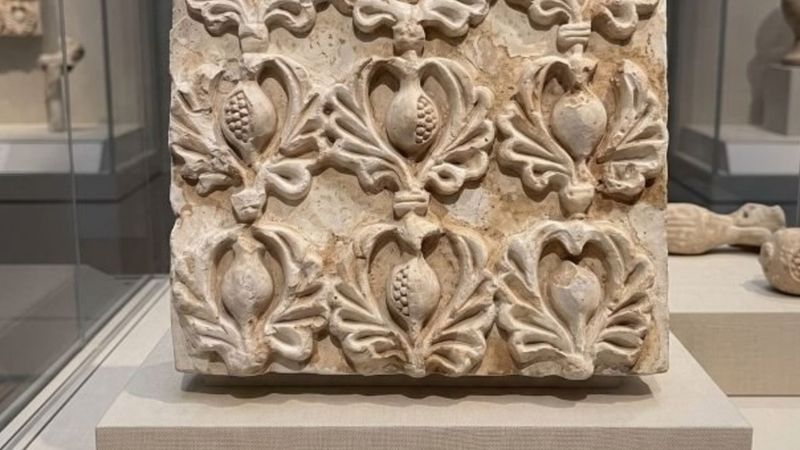
The Fruit We Are Sure We Recognize
How the pomegranate became one of the most confidently named motifs in Islamic ornament — and one of the least confidently identified — across a thousand years of tile, silk and stucco, with meanings we mostly attached later.
A slab of sixth-century plaster in the Met shows a fruit you recognise at a glance: a pomegranate, and surely it means paradise. Hold that certainty up to the light and it dissolves. Across a thousand years of tile, silk and stucco, the pomegranate is the shape we name most confidently and identify least — blurring into the artichoke and the palmette, its meanings attached by later viewers, its very name partly a nineteenth-century invention