
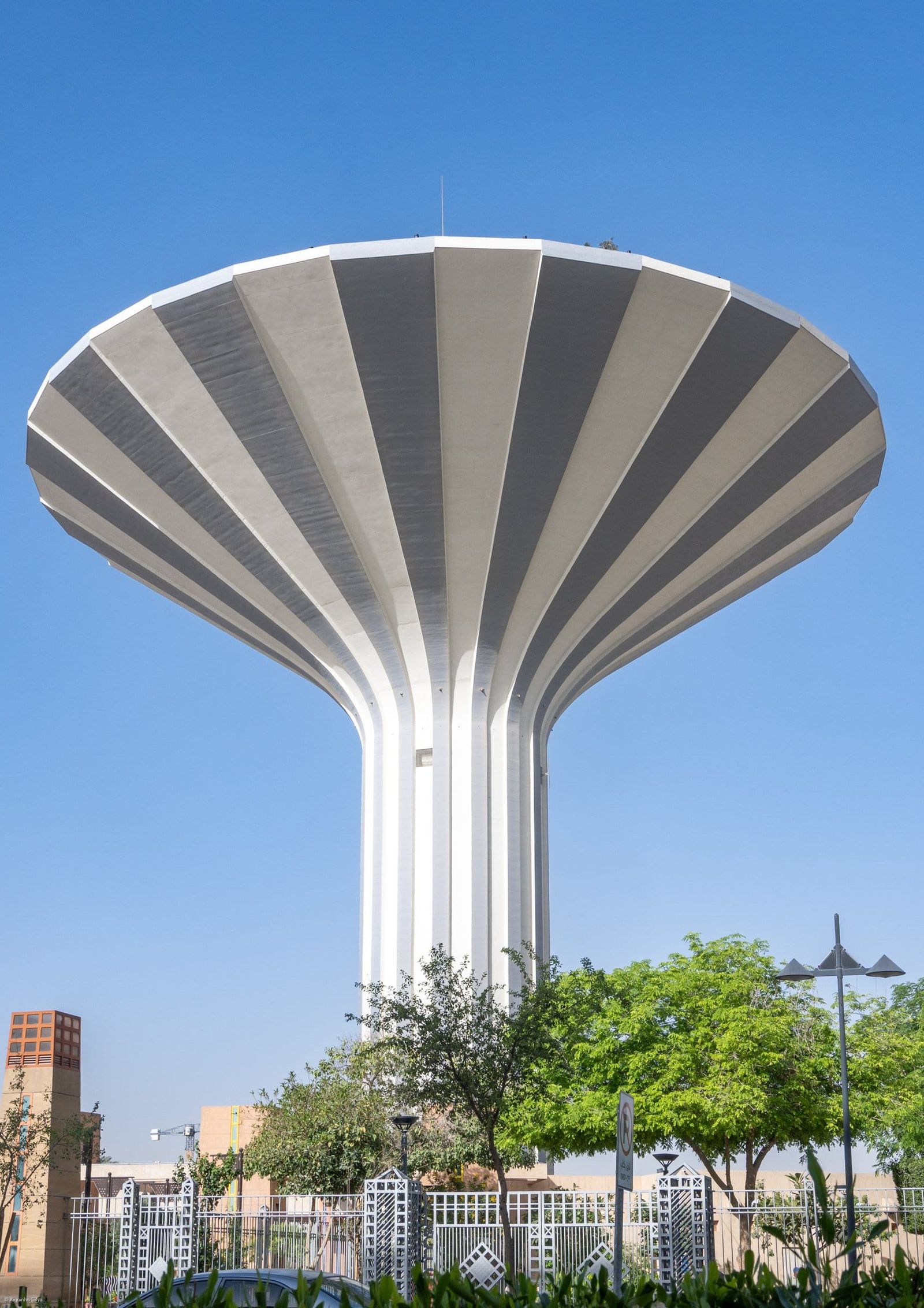
Riyadh Water Tower (Burj Al Khazzan)
A striped concrete mushroom 61 metres tall, Riyadh's first modern landmark from the years before the skyscrapers.
A tower for a growing city
The Riyadh Water Tower, known in Arabic as Burj Al Khazzan, stands in Al Watan Park in Al Futah, one of the oldest central districts of Riyadh. In the late 1960s the capital was growing fast and its water network could not keep up. Under King Faisal, work on a great water tower began in 1970 near the Murabba Palace, as part of the city's first modern water supply system. The tower was completed in 1971 under the Ministry of Agriculture and Water. It raised the water pressure across the city network and could store about 12,000 cubic metres of water.
At 61 metres, it was the tallest structure in Saudi Arabia when it was finished.
A Swedish mushroom
The tower was designed by the Swedish architect Sune Lindström. He had already built the mushroom-shaped Svampen water tower in Örebro, Sweden. The Riyadh tower also resembles the water towers built in Kuwait in the same years. In Riyadh he used the same idea: a slender cylindrical shaft carrying a wide tank shaped like an inverted cone. The shaft and the underside of the tank are painted in broad vertical stripes, which make the whole tower look like a giant striped mushroom. The street that runs beside it is known locally as Al Khazzan Street, after the tower.
The tower today
The tower has remained one of the most familiar silhouettes in central Riyadh. It stands in Al Watan Park, a short walk from the Murabba Palace and the National Museum of Saudi Arabia in the King Abdulaziz Historical Centre. In 2025 the Paris-based architects Stella Amae published a concept for turning it into a cultural and ecological landmark, with a new facade inspired by the trunk of the date palm and the triangular patterns of Najdi architecture.
Exhibo editorial
Every city has one building that tells you when its modern age began. In Riyadh it is this cheerful striped mushroom. It is not a palace or a mosque. It is a water tank, built for a city that was about to explode in size.
It still looks optimistic, like a drawing from a 1970s children's book. Come in the late afternoon, sit in the park and look at it against the sky. Then walk over to the mud walls of Murabba, a few minutes away. See how far Riyadh travelled in thirty years.
Gallery
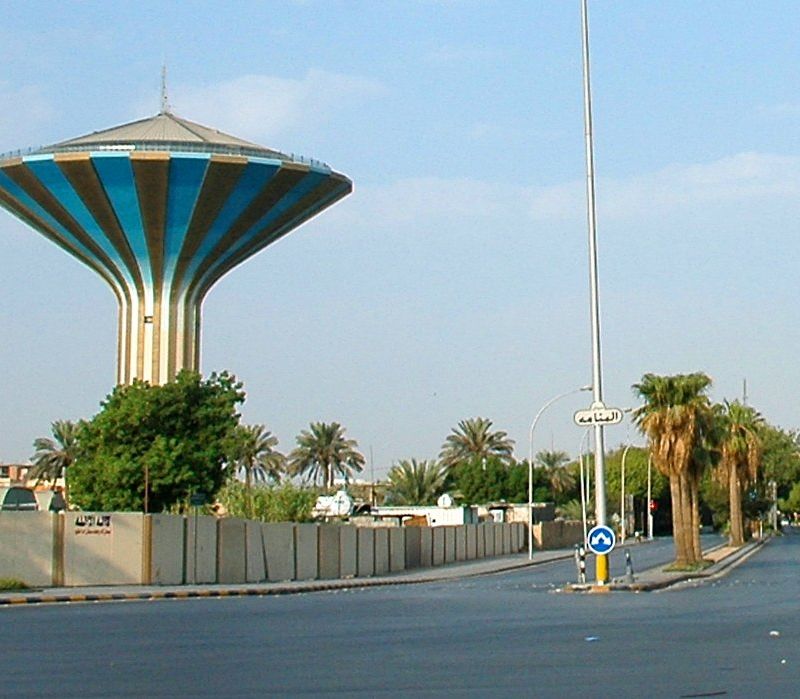
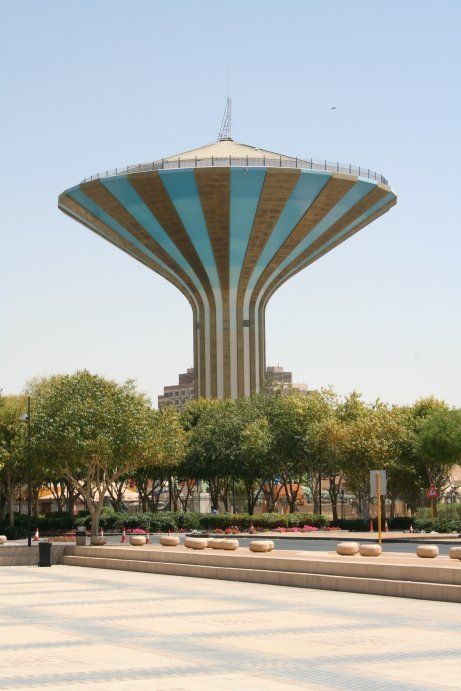
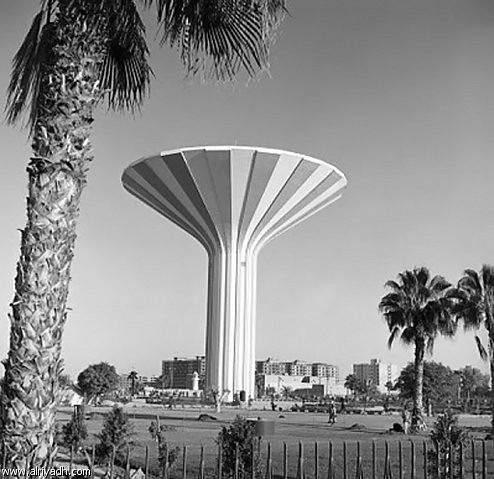
How to find it
The tower stands in Al Watan Park on King Saud Road in Al Futah, central Riyadh, a short walk south of the King Abdulaziz Historical Centre and the National Museum. The park is open to the public; the tower itself is best seen from the paths around it.
Similar places
All places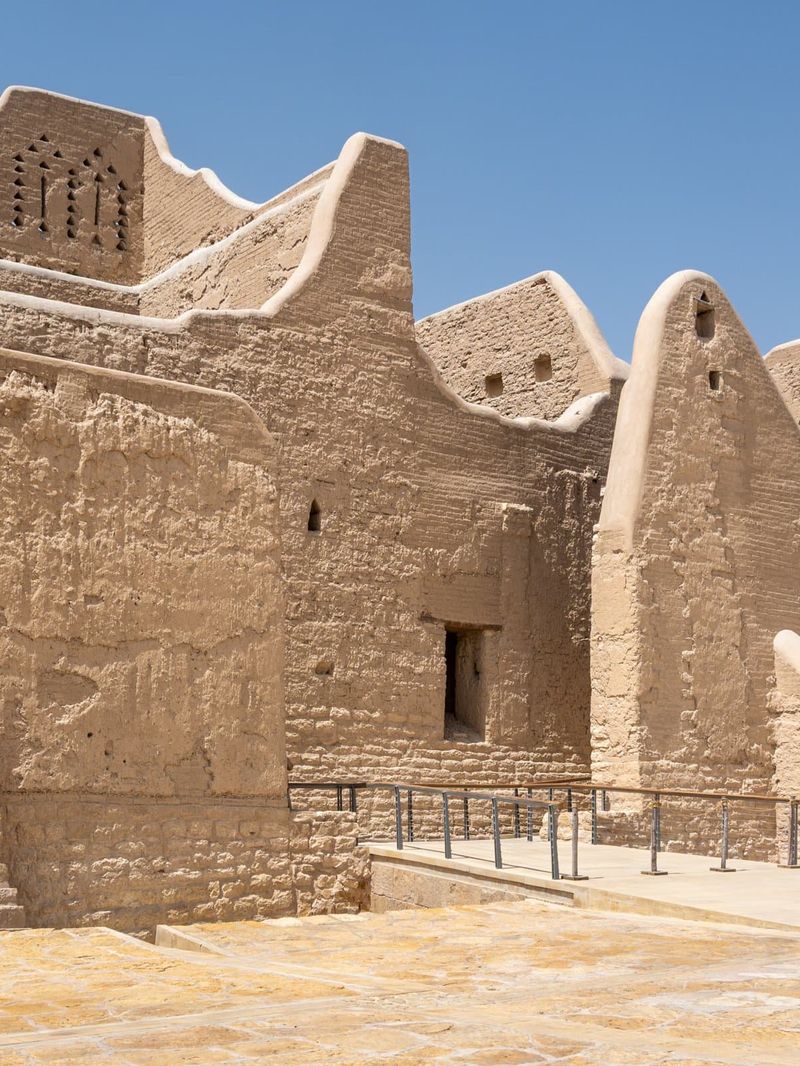
News by Exhibo
Editorial coverage on Exhibo
AlUla on Film: When Heritage Becomes a Film Set
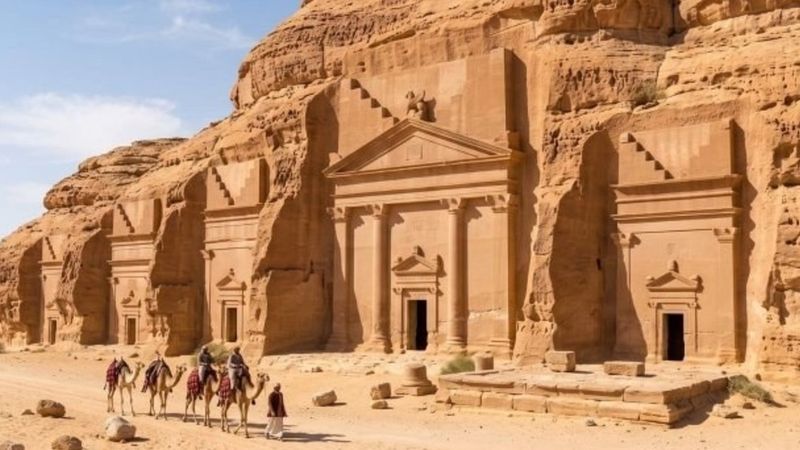
Hollywood came to AlUla to build Iraq and Afghanistan. Saudi Arabia is using the same landscape to build AlUla itself — destination, museum, cultural stage — and the old stone is being asked to say something new.
Hollywood built Iraq and Afghanistan in AlUla; Saudi Arabia is building AlUla into itself. On carved kings, a warning old as scripture, a mirror the size of a building, and who gets to author a place.
The Coffee Ritual That Ran the Desert
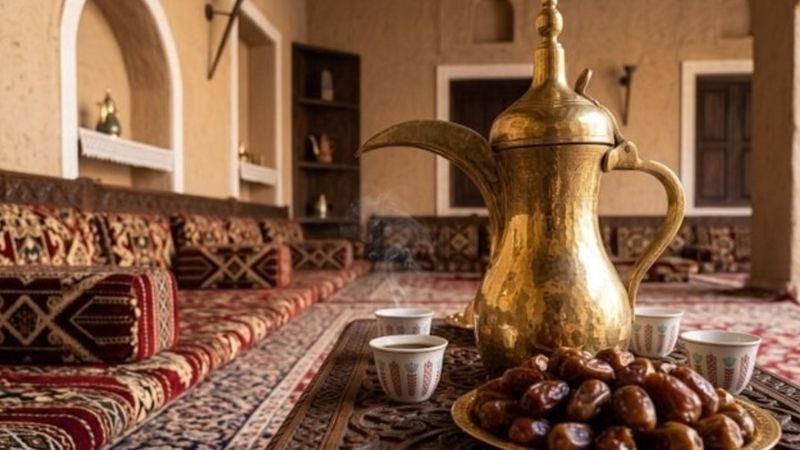
A cup of coffee in the desert was a contract, a test, a truce, and a promise of protection — a whole social order in the tilt of a small white cup.
Among the Bedouin of Arabia, serving coffee was never just hospitality — it was a code. The order of the cups, the amount poured, the shake of the wrist that says enough: a whole unwritten language for turning a dangerous stranger into a guest, and sometimes an ally. The story of Arabic coffee as the social law of the desert — and how it lives on in the region's museums and art.
Sadu Weaving: The Geometry of Bedouin Textiles
The geometry the Bedouin wove, and the women who carried it in memory because nothing was written down.
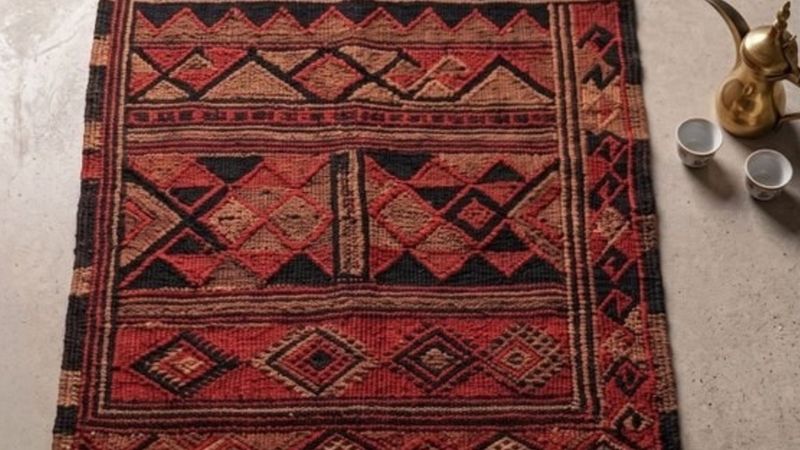
On a loom you stake into the sand, Bedouin women wove the interior world of the Gulf — tents, dividers, camel trappings — and threaded through the wool a geometry that carried tribe, family and meaning. A story of Sadu: the patterns and their names, the women who transmitted them without a single written word, and the quiet work of keeping the craft alive.