
Murabba Palace
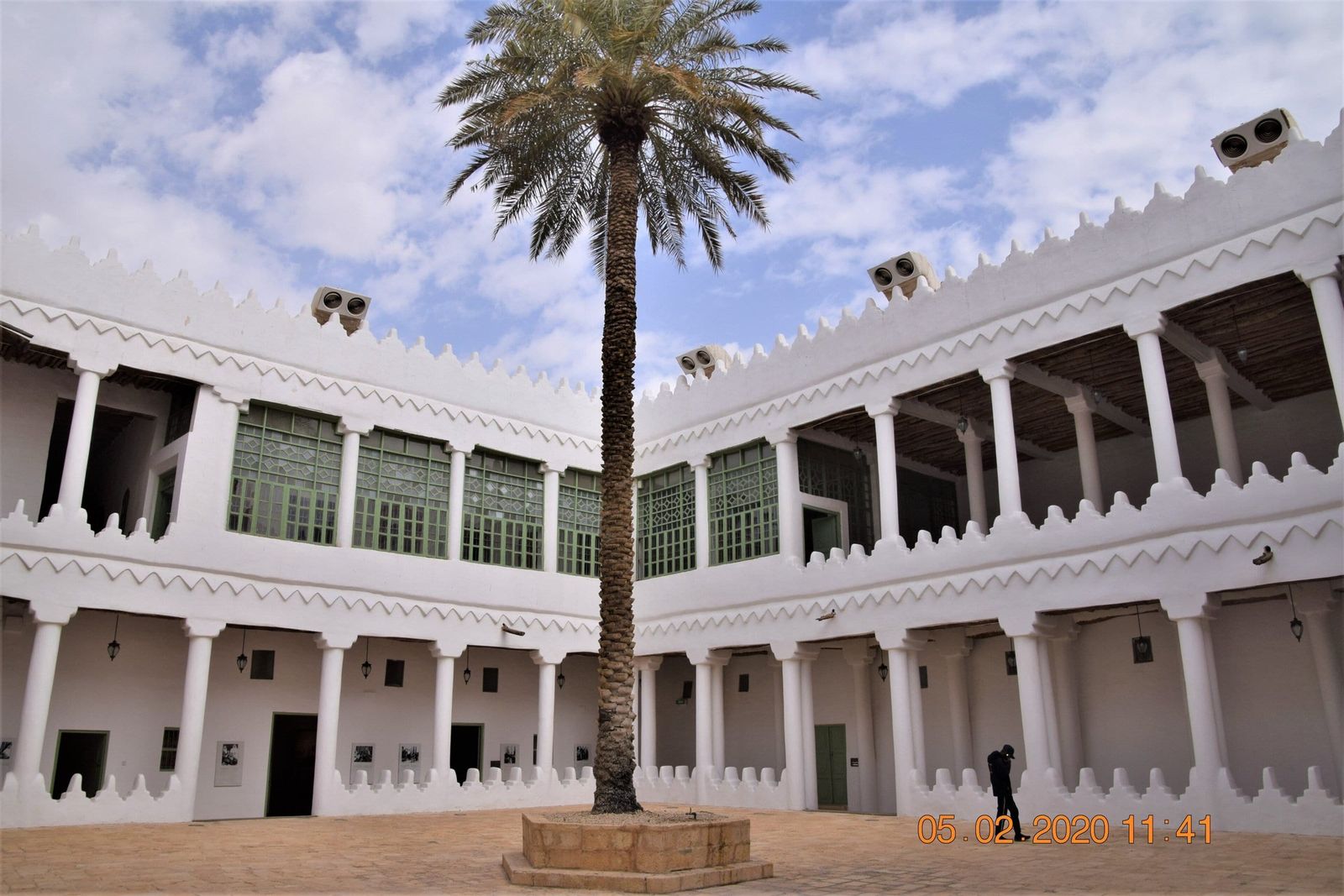
King Abdulaziz's mud-brick palace outside old Riyadh, where the new kingdom received kings round a palm-shaded courtyard.
A palace outside the walls
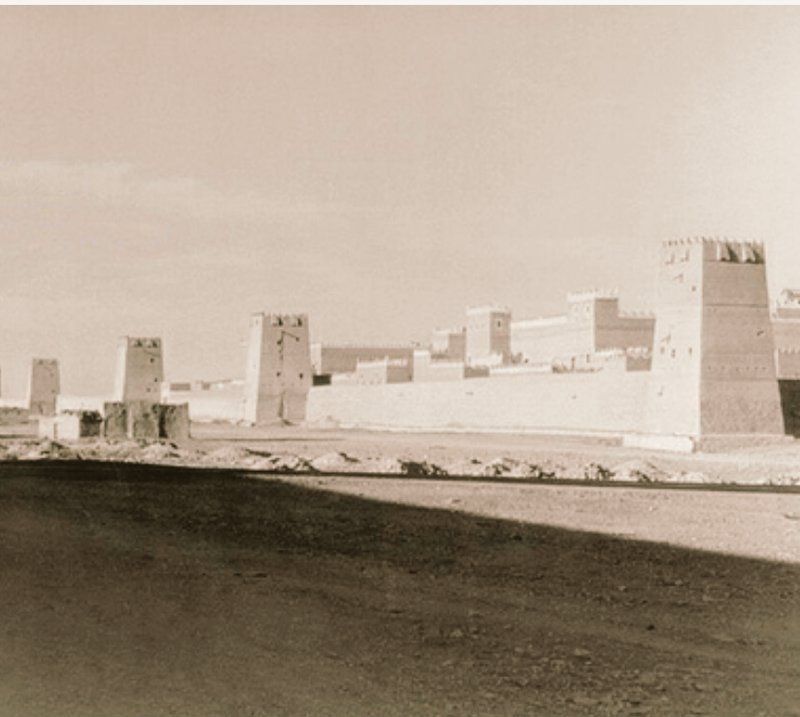
Until the 1930s Riyadh was a walled town of mud houses and narrow lanes. In 1936 King Abdulaziz Al Saud, the founder of Saudi Arabia, ordered a new palace complex on open land north of the old city. It was finished in 1938 and the king moved in that year. It was one of the first great buildings raised outside the walls. The modern city soon grew out towards it. The land had been called Murabba al-Sufyan and was farmed in the rainy season. The complex took the name Murabba, meaning square, after its plan.
For the rest of the king's reign Murabba was the centre of power in the young kingdom. Here King Abdulaziz received kings and heads of state from across the Arab and Islamic world. Here he held his councils and agreed the decisions that built the new state.
Najdi building at its finest
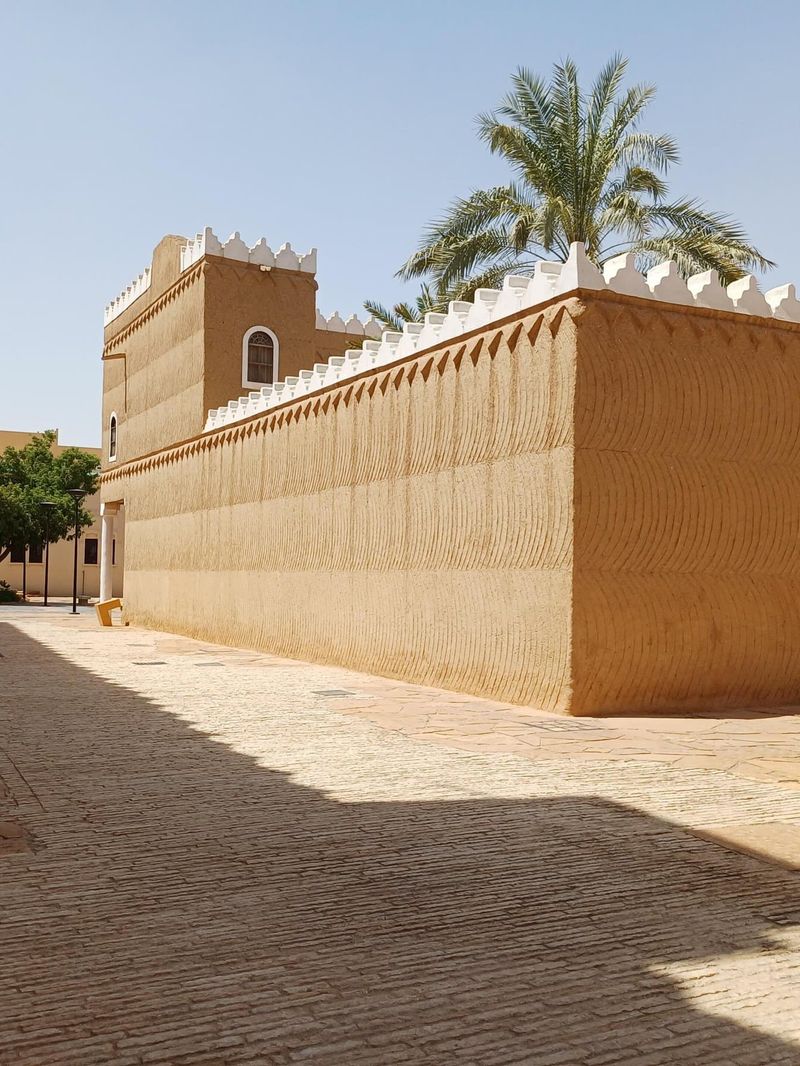
The palace is built in the traditional style of Najd, the central Arabian plateau around Riyadh. Its foundations are stone. Its thick walls are sun-dried mud brick mixed with straw, which holds out the heat of the day. The ceilings are made of tamarisk trunks laid across the walls and covered with palm fronds. Doors and windows are of wood. The parapets are crowned with stepped crenellations, a mark of Najdi architecture.
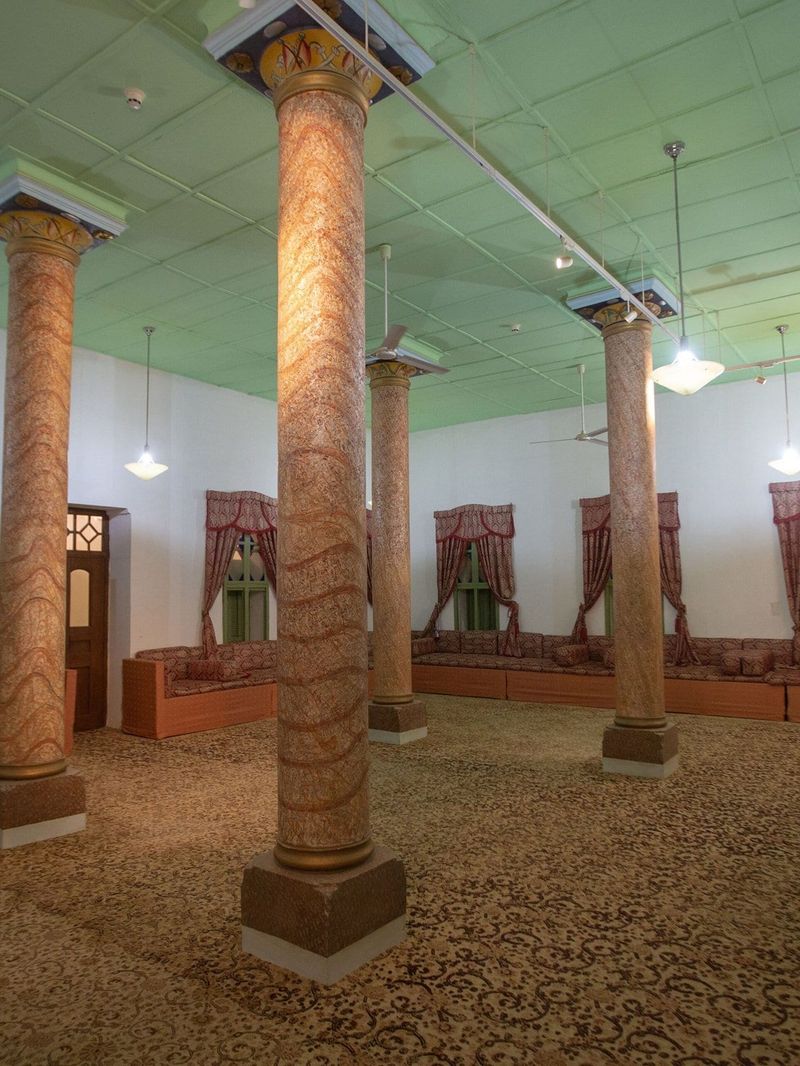
The main building, the king's diwan, covers about 1,680 square metres on two floors set around a large central courtyard planted with palms. The ground floor housed the royal guard, food stores and staff. The upper floor held the king's summer and winter councils and the office for political affairs, opening onto galleries that look down into the courtyard. Stone was used for the columns. The ceilings are decorated with geometric patterns.
The palace today
The palace has been restored. It now stands within the King Abdulaziz Historical Centre, a park of gardens, lawns and heritage buildings in the Al Murabba district. Across the gardens stands the National Museum of Saudi Arabia.
Exhibo editorial
Riyadh today is towers, motorways and glass. Murabba is the moment just before all that, when a desert kingdom was being run from rooms of mud and palm wood. It is a fine building, but it is above all a modest one. The power here was in the people who came, not in marble.
Stand in the courtyard and look up at the two tiers of galleries, white against the sky. Then go upstairs and sit for a moment in the council rooms. They are quiet now. The decisions made in them shaped the country outside.
Gallery
How to find it
Murabba Palace is in the King Abdulaziz Historical Centre in the Al Murabba district, just north of old Riyadh. The palace stands in the gardens of the centre, a short walk from the National Museum. By taxi, ask for the King Abdulaziz Historical Centre.
Similar places
All places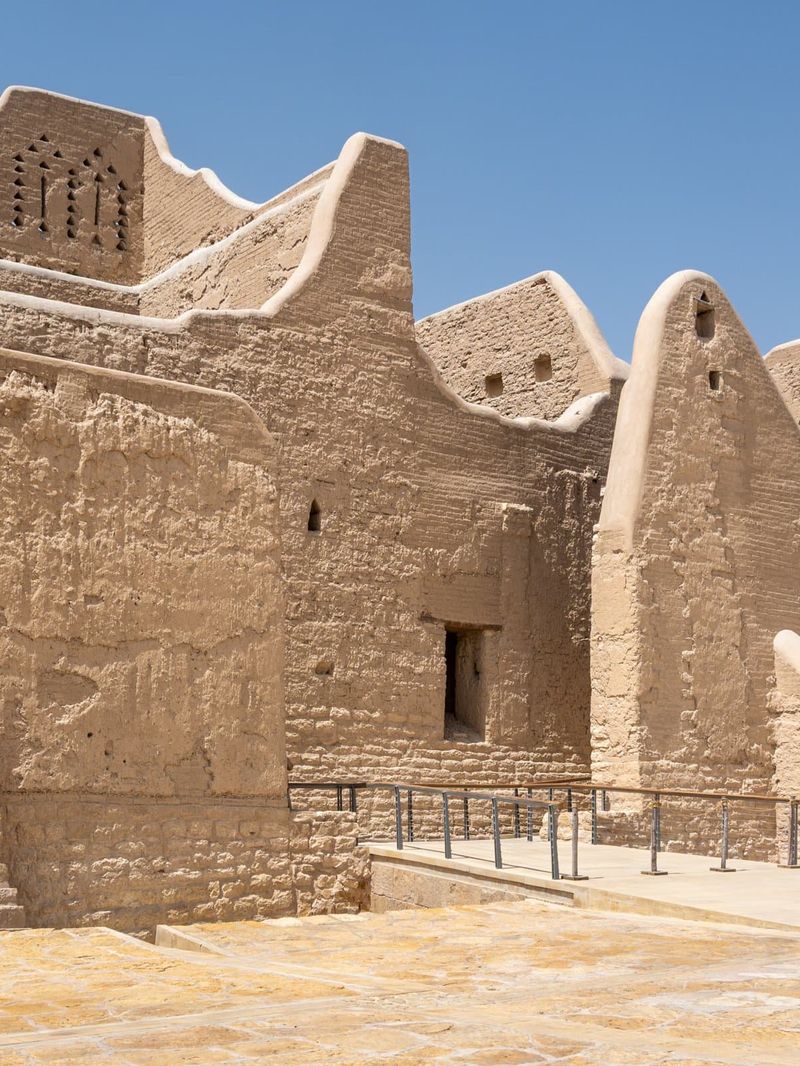
News by Exhibo
Editorial coverage on Exhibo
AlUla on Film: When Heritage Becomes a Film Set
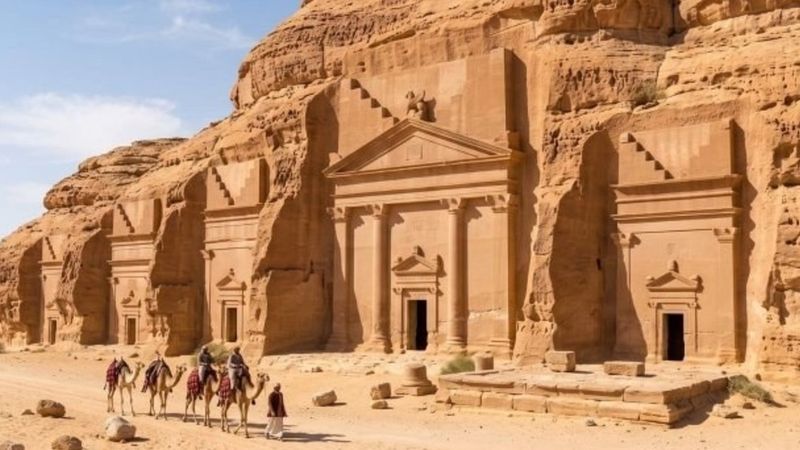
Hollywood came to AlUla to build Iraq and Afghanistan. Saudi Arabia is using the same landscape to build AlUla itself — destination, museum, cultural stage — and the old stone is being asked to say something new.
Hollywood built Iraq and Afghanistan in AlUla; Saudi Arabia is building AlUla into itself. On carved kings, a warning old as scripture, a mirror the size of a building, and who gets to author a place.
The Coffee Ritual That Ran the Desert
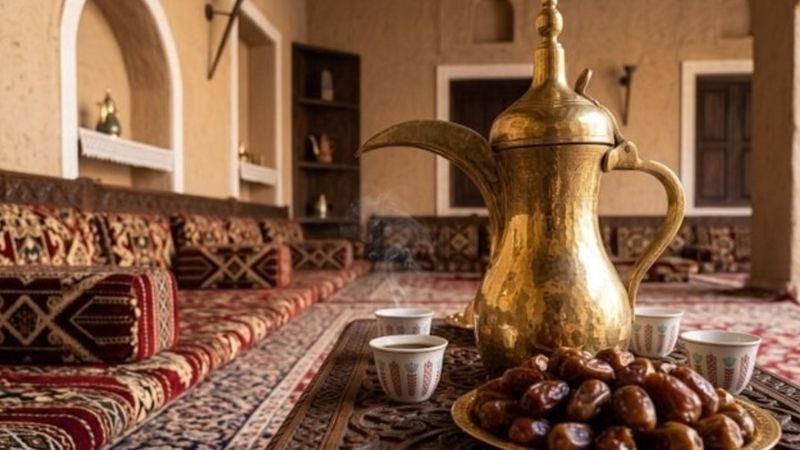
A cup of coffee in the desert was a contract, a test, a truce, and a promise of protection — a whole social order in the tilt of a small white cup.
Among the Bedouin of Arabia, serving coffee was never just hospitality — it was a code. The order of the cups, the amount poured, the shake of the wrist that says enough: a whole unwritten language for turning a dangerous stranger into a guest, and sometimes an ally. The story of Arabic coffee as the social law of the desert — and how it lives on in the region's museums and art.
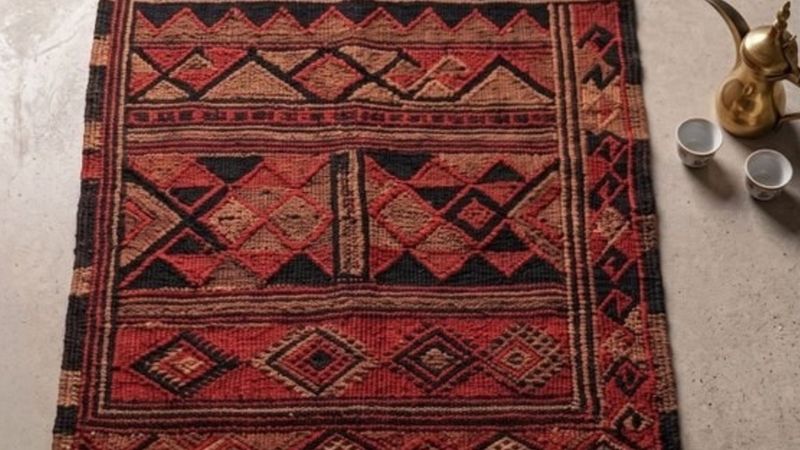
Sadu Weaving: The Geometry of Bedouin Textiles
The geometry the Bedouin wove, and the women who carried it in memory because nothing was written down.
On a loom you stake into the sand, Bedouin women wove the interior world of the Gulf — tents, dividers, camel trappings — and threaded through the wool a geometry that carried tribe, family and meaning. A story of Sadu: the patterns and their names, the women who transmitted them without a single written word, and the quiet work of keeping the craft alive.