
The first Saudi capital
At-Turaif is the old citadel of Diriyah, on the north-western edge of Riyadh. It stands on a spur above Wadi Hanifah, the long valley whose palm groves made this part of Najd an oasis. Diriyah was founded in the 15th century. In the 18th century it became the capital of the first Saudi state. At-Turaif was the seat of the House of Saud.
Saudi Arabia now dates the founding of that state to 1727, when Imam Muhammad bin Saud took power in Diriyah. In the middle of the century he formed an alliance with the religious reformer Sheikh Muhammad ibn Abd al-Wahhab, who lived, preached and died in the town. From Diriyah the power of the Al Saud spread across much of the Arabian Peninsula.
Siege and ruin
The Ottoman sultan saw the new state as a threat. He sent the armies of Muhammad Ali, ruler of Egypt, against it. In 1818 Muhammad Ali's son Ibrahim Pasha besieged Diriyah for several months. The city surrendered and was largely destroyed. The last imam of the first Saudi state, Abdullah bin Saud, was taken to Istanbul and executed. When the Al Saud returned to power, they made their capital in Riyadh. At-Turaif was left in ruins and stood almost empty for most of two centuries.
Najdi architecture
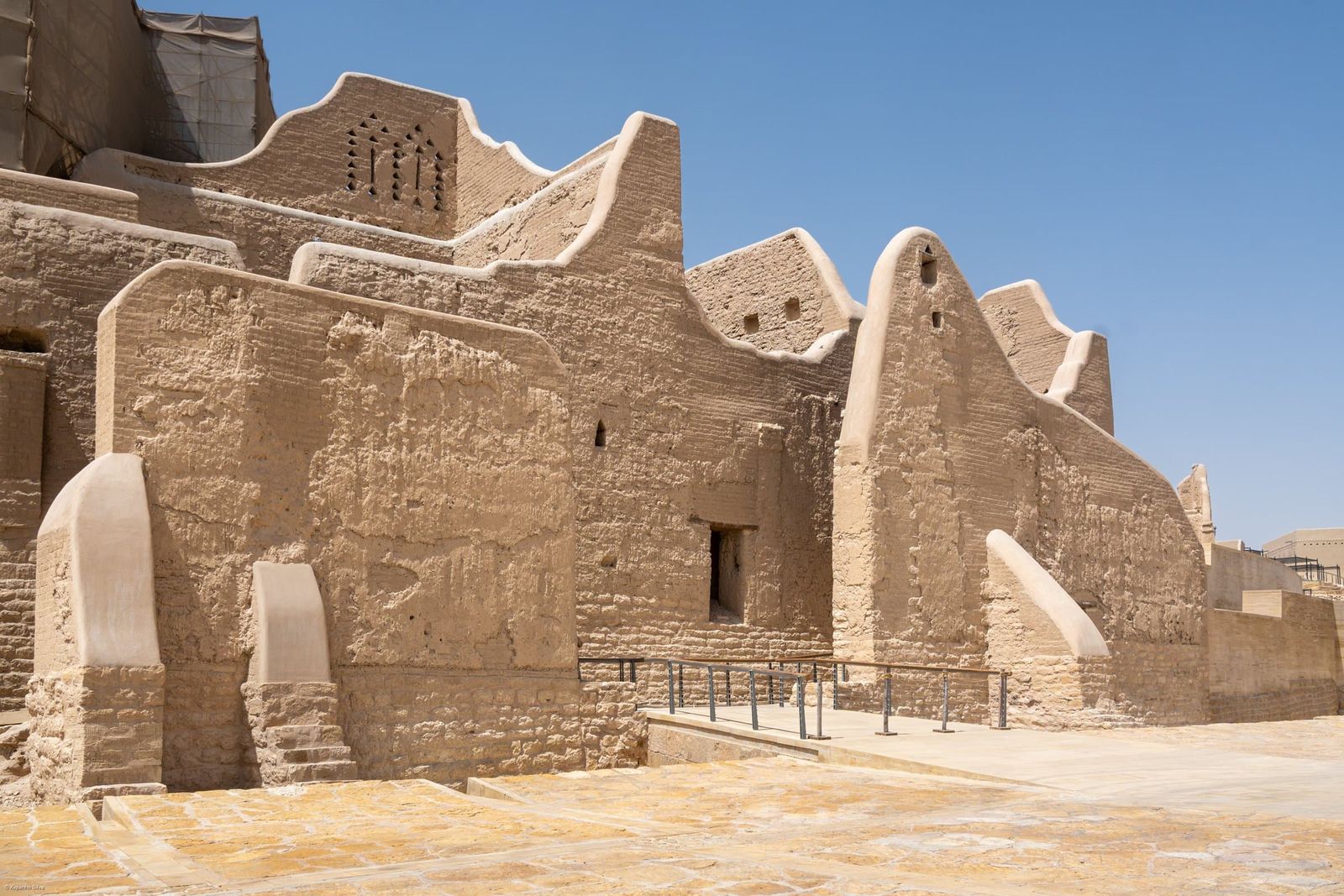
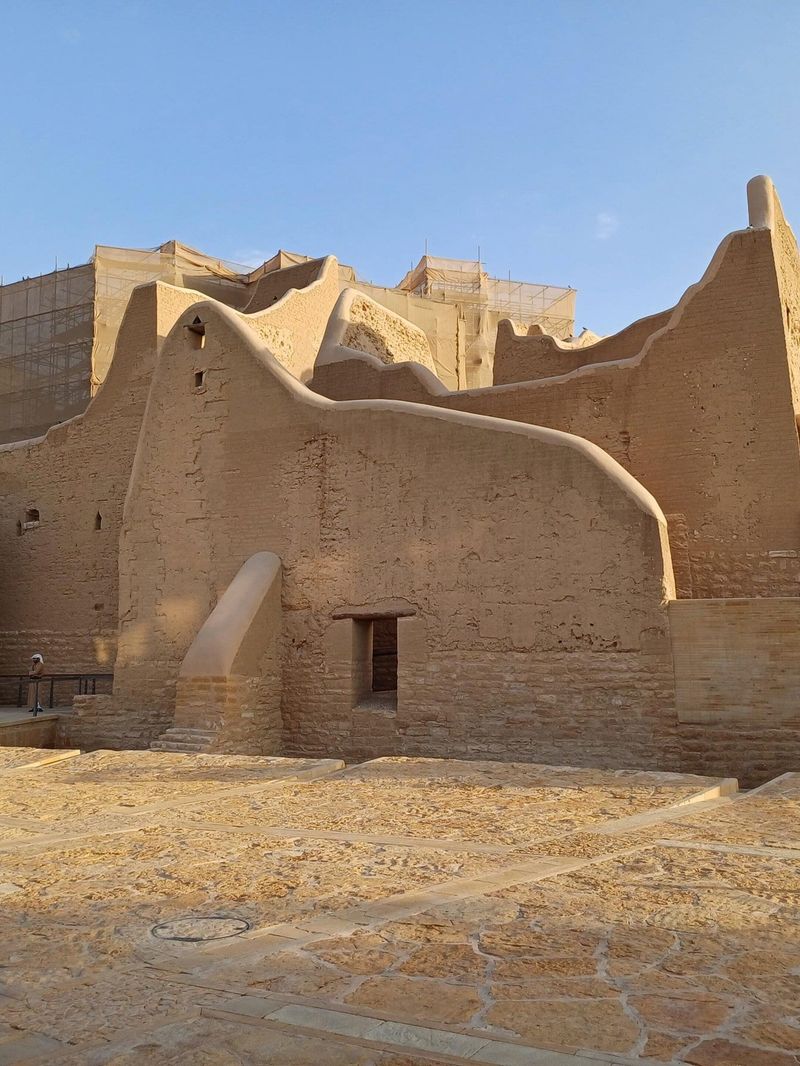
That long abandonment preserved it. At-Turaif keeps the plan of a fortified oasis town, with its palaces, houses, mosques and the lanes between them. Everything is built of mud brick on stone footings, with thick walls, small windows and parapets crowned with stepped crenellations. Triangular openings and patterns cut into the walls form the geometric decoration that is the signature of the Najdi style. The largest building is Salwa Palace, the seat of the imams, a great complex that now houses a museum on the history of Diriyah.
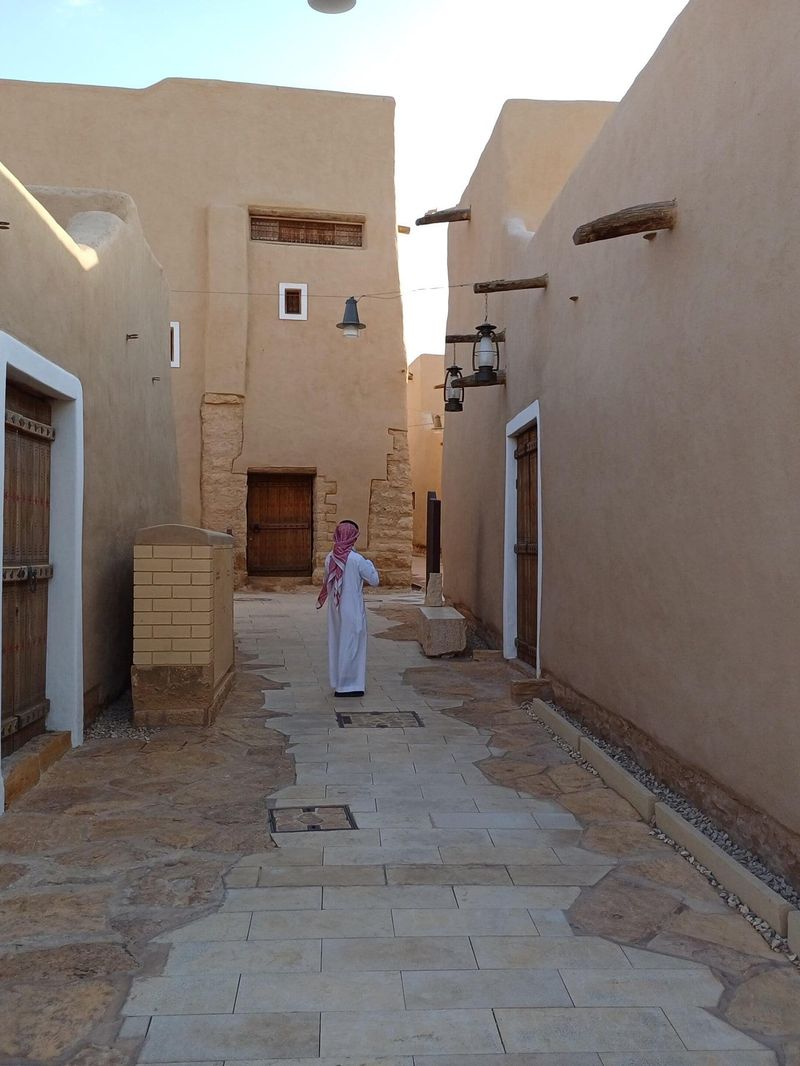
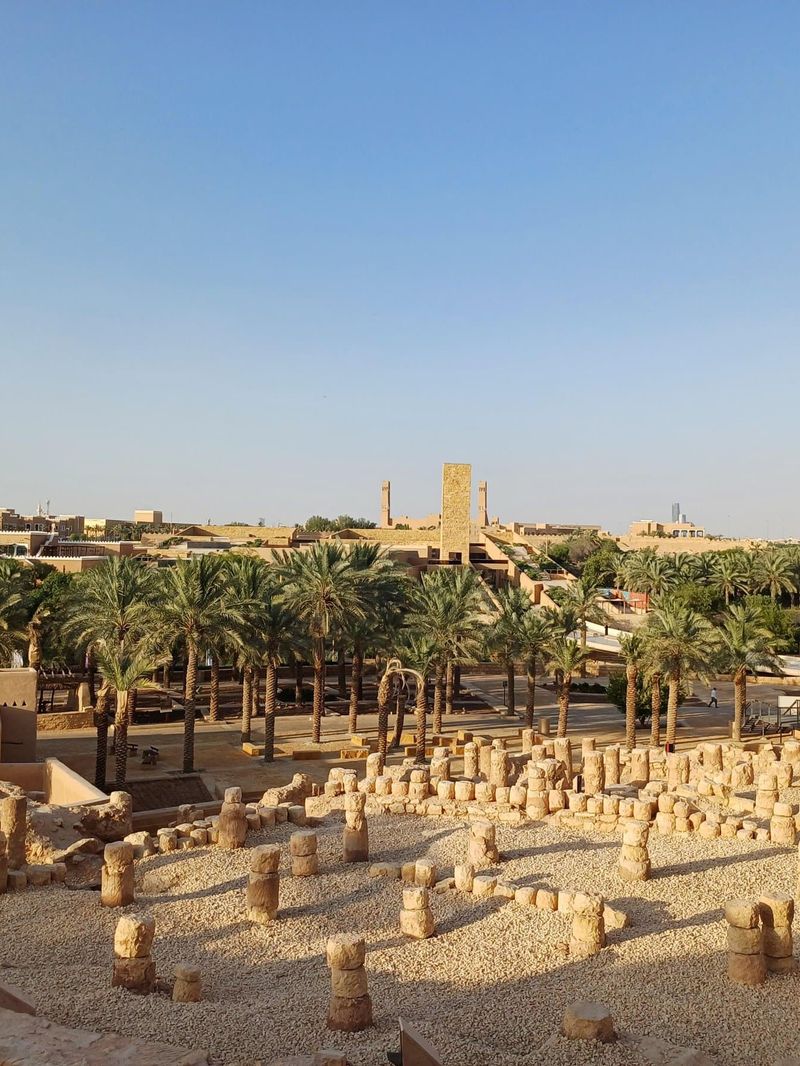
UNESCO inscribed the At-Turaif District in ad-Dir'iyah on the World Heritage List in 2010. The site covers almost 29 hectares. It has since been carefully restored and opened to visitors, with walkways through the ruins and views over the palms of the wadi. For the palace from which King Abdulaziz ruled the modern kingdom, see Murabba Palace.
Exhibo editorial
Seen from across the wadi, At-Turaif looks less built than grown. The walls rise out of the same earth as the hill. Everything is the colour of dry clay, set against a line of dark green palms.
Walk the lanes late in the afternoon, when the low light picks out every triangle and step in the parapets. This is where a kingdom began, in a town of mud. It was destroyed once already. Its survival today is the result of a lot of careful work.
Gallery
How to find it
At-Turaif is in Diriyah, on the north-western edge of Riyadh. It is reached by car or taxi from the city centre. Visits start from the Diriyah visitor entrance; check opening times and tickets with Diriyah before you go.
Similar places
All places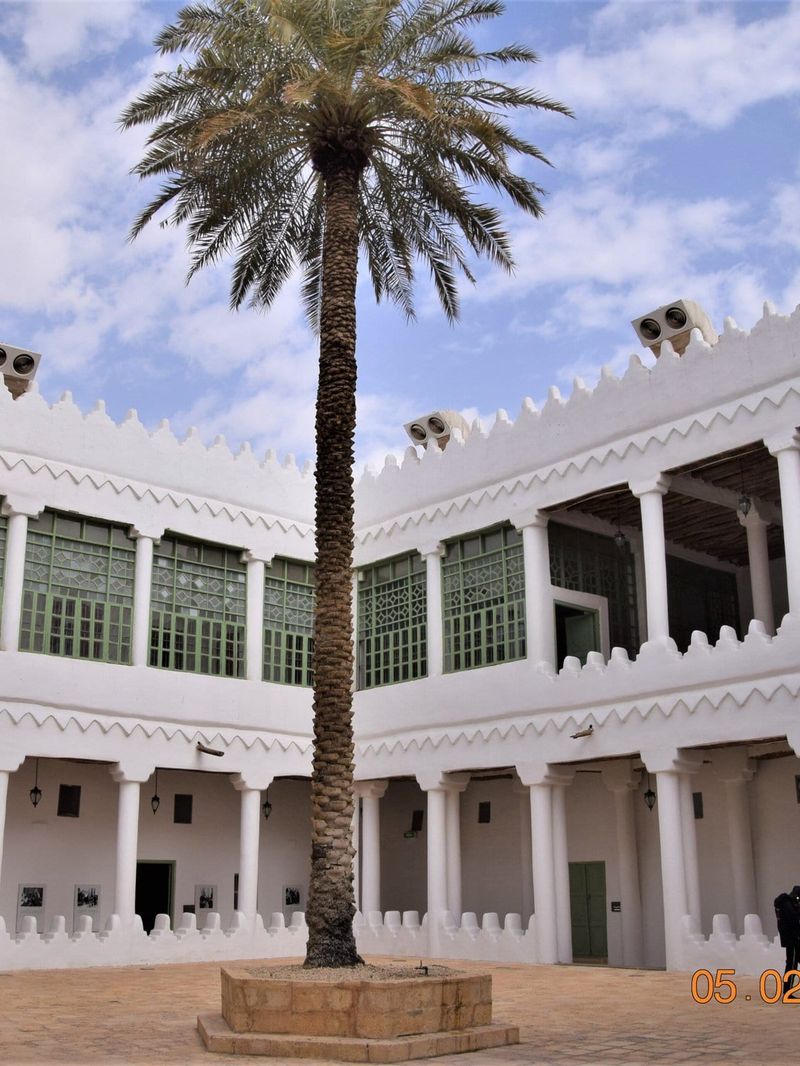
News by Exhibo
Editorial coverage on Exhibo
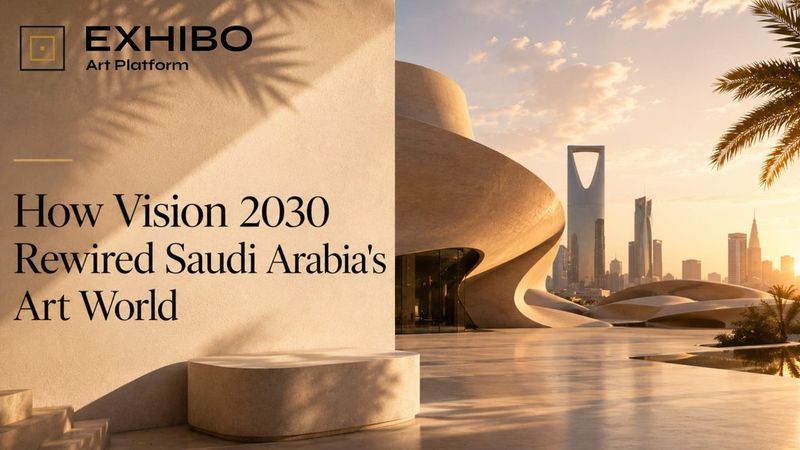
How Vision 2030 Rewired Saudi Arabia's Art World
In a single decade, the Kingdom built a contemporary art ecosystem from almost nothing — ministries, biennials, museums, a market. Here is how it happened, what it has produced, and the questions that remain.
Vision 2030 did not simply fund some exhibitions; it rewired the institutional plumbing of an entire art world, and did so fast enough to unsettle the assumptions on which the Gulf's art map had been drawn.
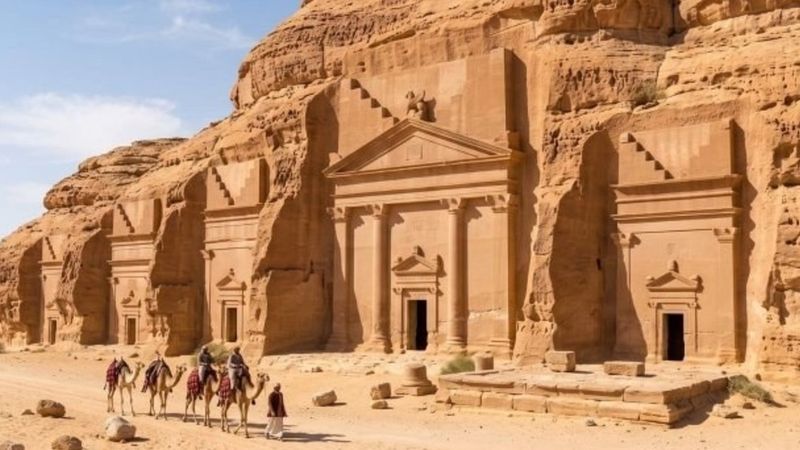
AlUla on Film: When Heritage Becomes a Film Set
Hollywood came to AlUla to build Iraq and Afghanistan. Saudi Arabia is using the same landscape to build AlUla itself — destination, museum, cultural stage — and the old stone is being asked to say something new.
Hollywood built Iraq and Afghanistan in AlUla; Saudi Arabia is building AlUla into itself. On carved kings, a warning old as scripture, a mirror the size of a building, and who gets to author a place.
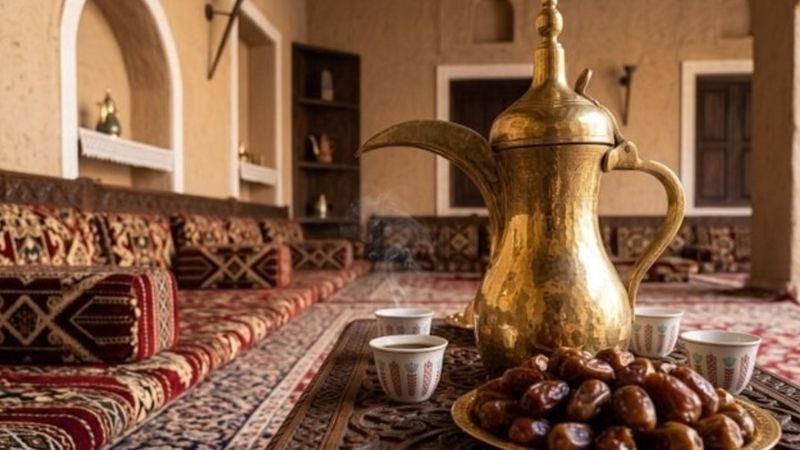
The Coffee Ritual That Ran the Desert
A cup of coffee in the desert was a contract, a test, a truce, and a promise of protection — a whole social order in the tilt of a small white cup.
Among the Bedouin of Arabia, serving coffee was never just hospitality — it was a code. The order of the cups, the amount poured, the shake of the wrist that says enough: a whole unwritten language for turning a dangerous stranger into a guest, and sometimes an ally. The story of Arabic coffee as the social law of the desert — and how it lives on in the region's museums and art.