The mosque of the booksellers
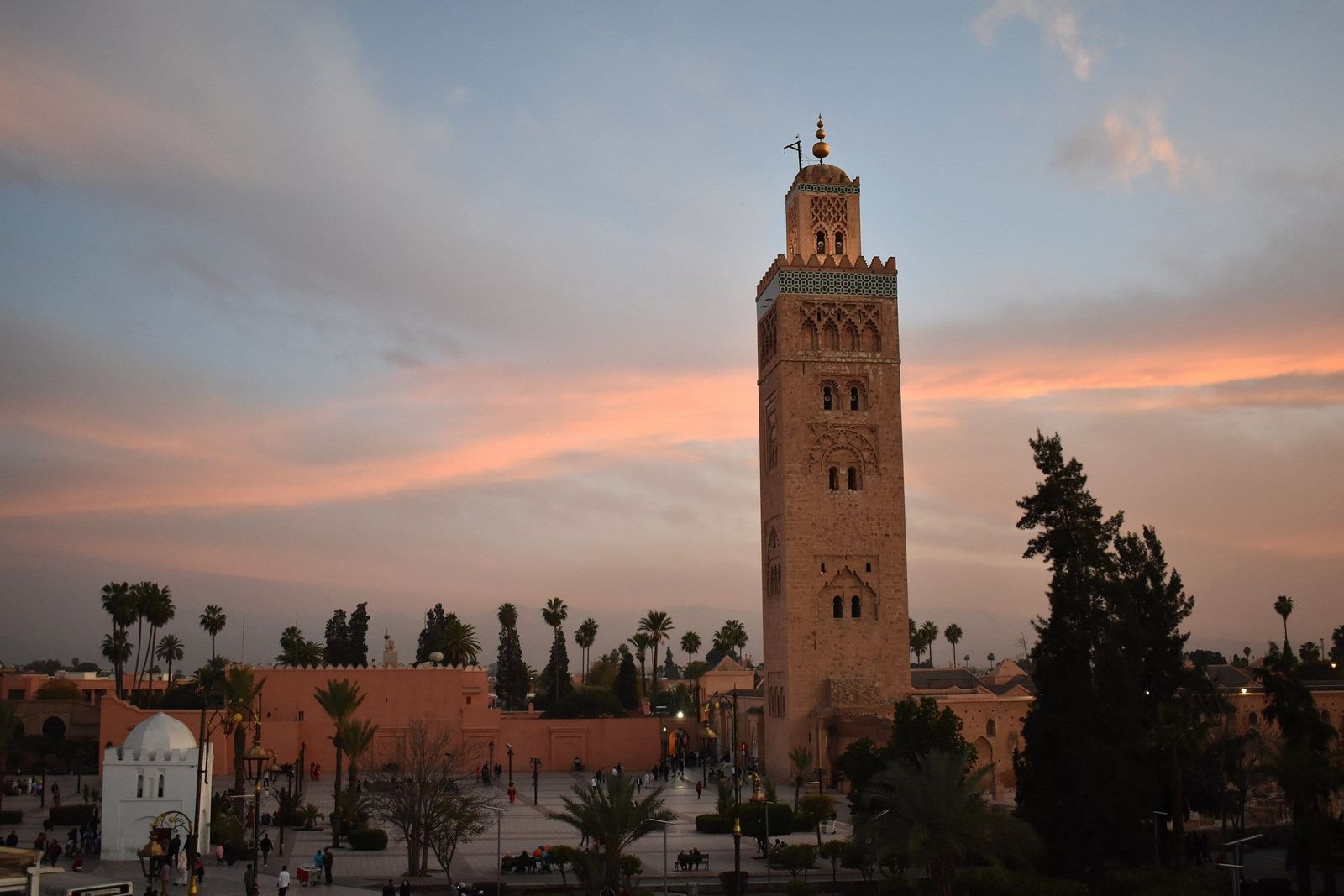
The minaret of the Koutoubia rises over the western side of the medina of Marrakech, a few minutes' walk from Jemaa el-Fna. It is the city's landmark, visible from almost everywhere in Marrakech and from far out on the plain. The mosque takes its name from the Arabic kutubiyyin, booksellers. Its eastern side once opened onto a street lined with bookshops, so people called it the mosque of the booksellers.
Two mosques on one site
The Koutoubia was built by Abd al-Mu'min, the first caliph of the Almohad dynasty, which ruled from Spain across North Africa. In 1147 he captured Marrakech from the Almoravids. On the site of the old Almoravid palace he built a great Friday mosque. Only a few years later he built a second, almost identical mosque right beside the first, turned a few degrees on a slightly different axis. The first prayers were said in the new mosque in 1158.
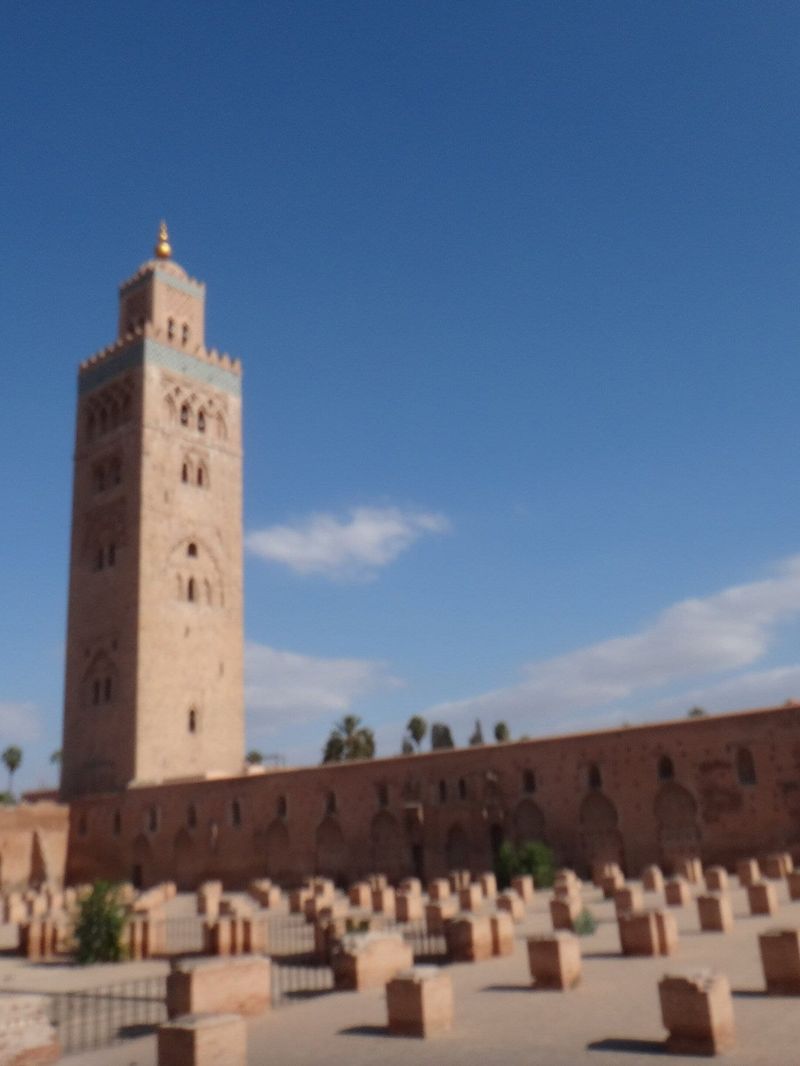
Why he built twice is still debated. One theory is that the first mosque did not face Mecca correctly. If so, the correction failed: the second mosque points even further away. For decades the two mosques stood side by side. The first was later abandoned and fell into ruin. Its foundations and the bases of its columns have been excavated beside the standing mosque. The outline of the vanished building now lies open to the sky.
The surviving mosque is a vast prayer hall of brick, a forest of horseshoe arches resting on more than a hundred columns, with an open courtyard. It could hold around 20,000 worshippers. Inside, the walls are plain and white, as the Almohads preferred.
The minaret
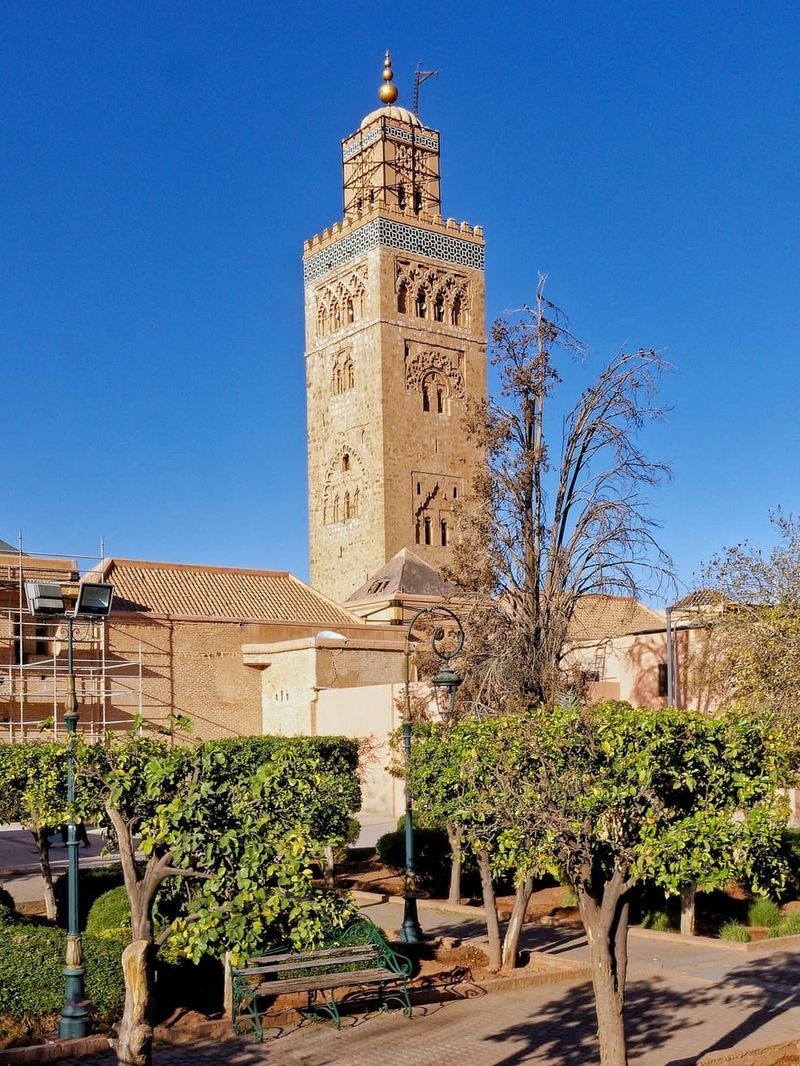
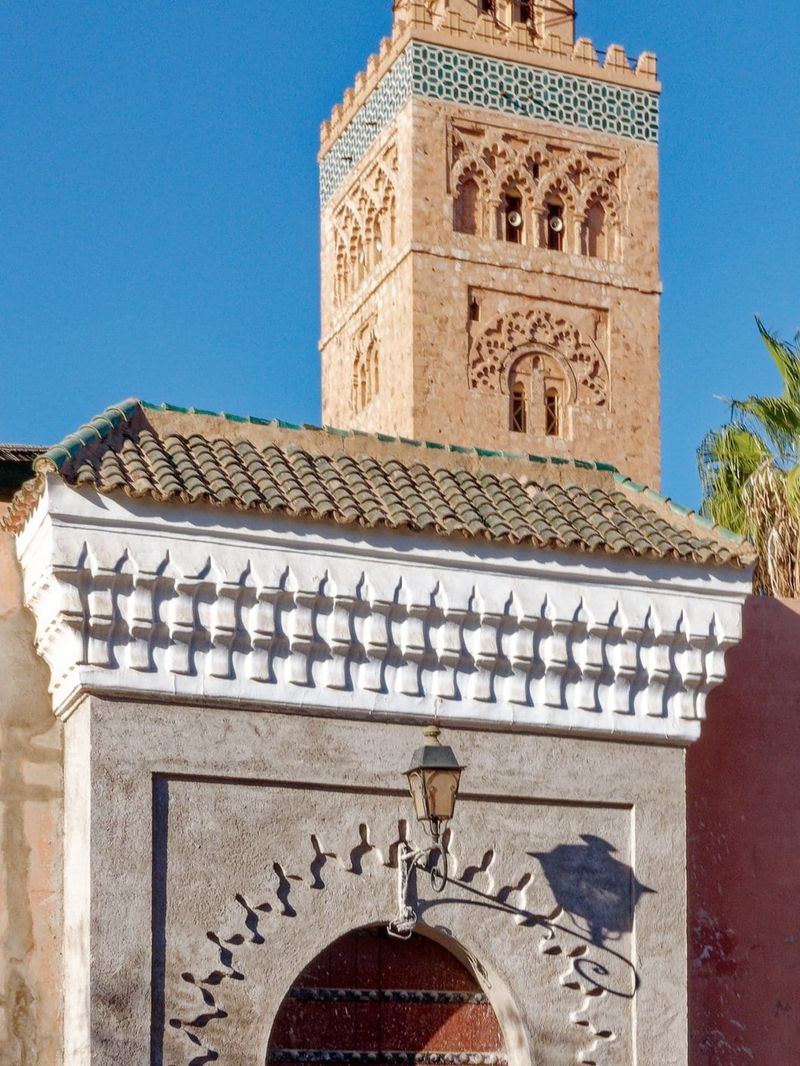
The minaret stands 77 metres high. Its square shaft, almost 13 metres wide, is built of large sandstone blocks. Instead of stairs, ramps wind up inside it to a gallery at the top of the shaft. Each face is different. Blind arches, windows and panels of interlaced lobed arches, the net-like pattern called sebka, are carved round the openings at four levels. A band of green glazed tiles runs below the stepped crenellations at the top. Above it rises a smaller lantern tower crowned by a small dome and a metal finial.
The Koutoubia is often compared with the other great Almohad towers, the Giralda in Seville and the unfinished Hassan Tower in Rabat. The minaret suffered only minor damage in the earthquake of September 2023.
The mosque's famous carved minbar, made in a Córdoba workshop for the Almoravid sultan Ali ibn Yusuf, stood here for centuries. Since 1962 it has been shown at the El Badi Palace.
The same Almoravid ruler had already ringed the city with the red rammed-earth Marrakech Medina Walls and Gates.
Exhibo editorial
Few cities are organised so clearly round a single tower. The minaret governs the view of Marrakech. It tells you where you are wherever you stand.
Come at the end of the afternoon. The rose-coloured stone warms to orange as the call to prayer begins. Then walk round the ruins of the first mosque. It is strange to stand among the rows of column bases and see that the most famous mosque in Morocco was, in a sense, built twice.
Gallery
How to find it
The Koutoubia stands at the southern end of Avenue Mohammed V, on the edge of the medina, a five-minute walk west of Jemaa el-Fna. The Koutoubia Gardens lie to the south and west of the mosque. The excavated ruins of the first mosque lie right beside the standing building.
Similar places
All places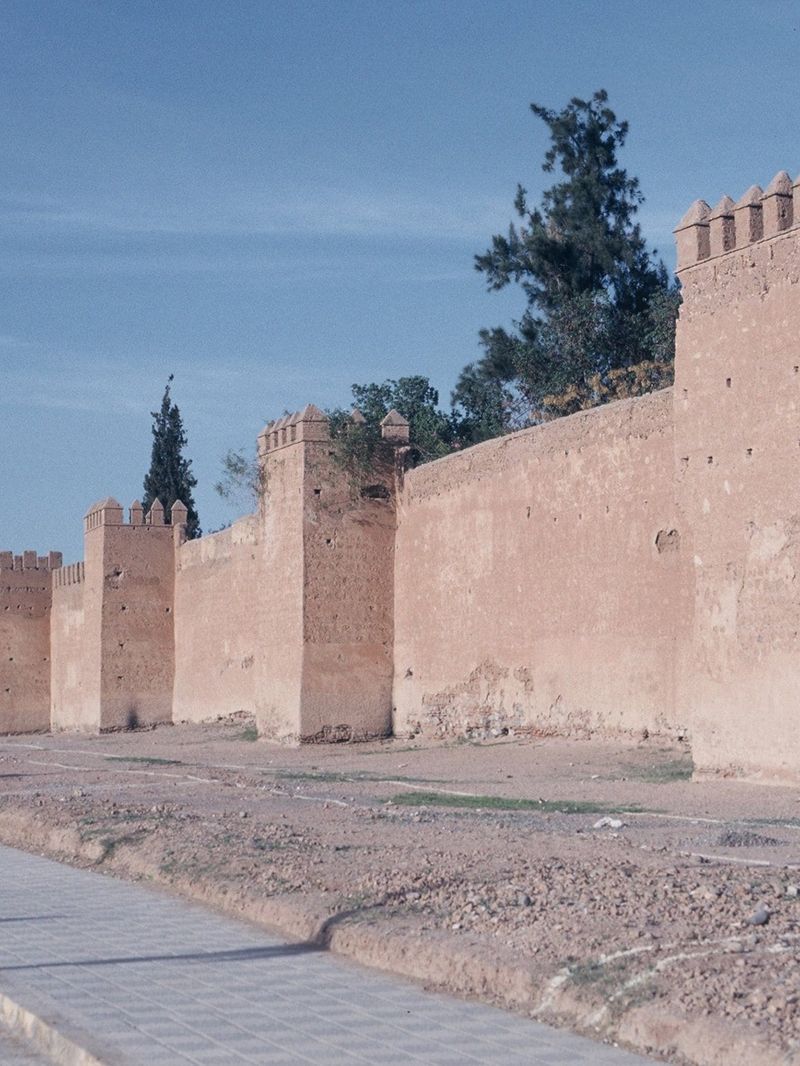
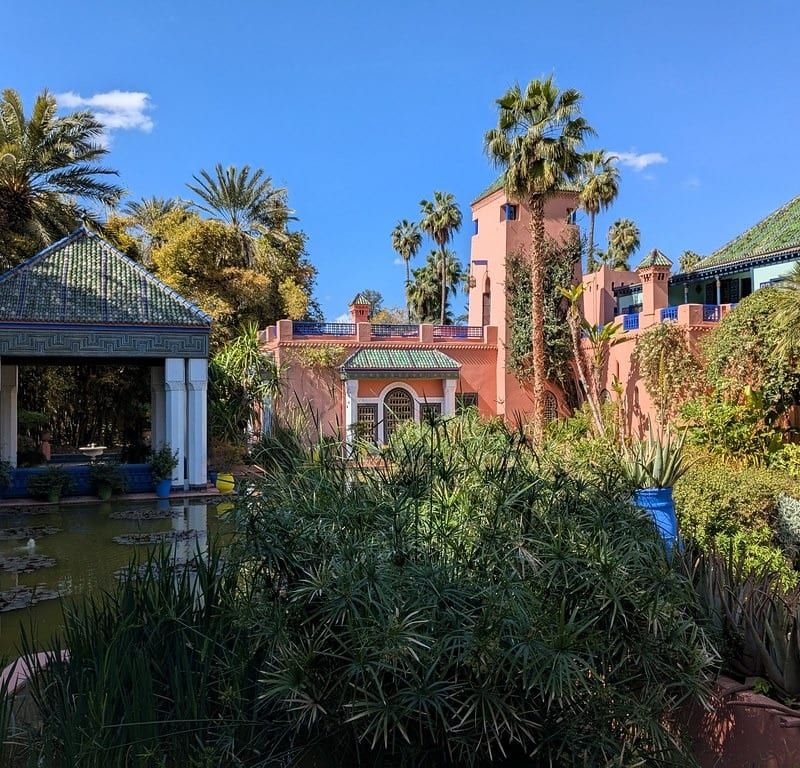
News by Exhibo
Editorial coverage on Exhibo
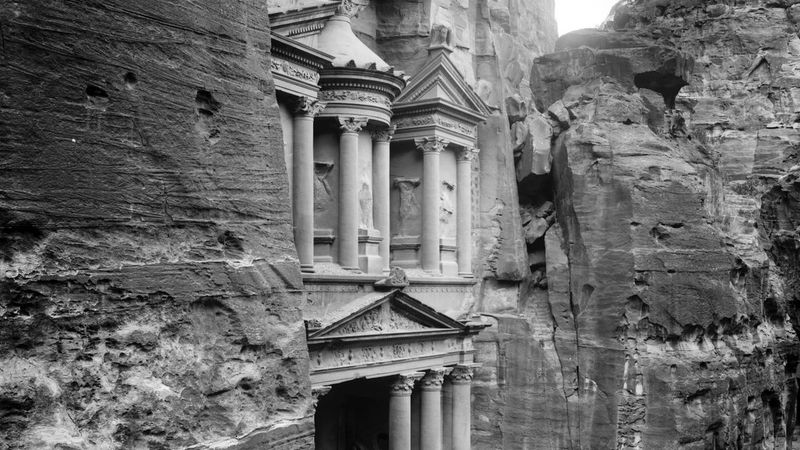
Filmed, but Not Recorded: The Arab World’s Missing Film Locations
Wikidata knows Gladiator was filmed in Morocco. It doesn’t know where.
Ouarzazate is the second most filmed place in the Middle East and North Africa, yet 25 of its 27 productions are recorded only in Wikipedia prose. We compared filming records worldwide and found that in the Arab world, Wikidata usually knows the country but not the place.
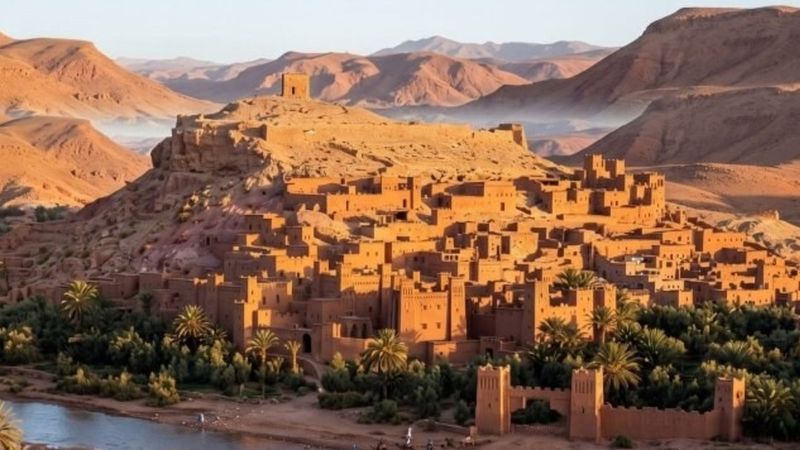
Gladiator and Game of Thrones: Inside Aït Benhaddou
The earthen ksar that has played Rome, Jerusalem and Yunkai survives only because people keep rebuilding it. What cinema films as eternity is, wall by wall, a work of constant repair.
Aït Benhaddou is cinema's favourite image of the ancient past, from Gladiator to Game of Thrones. But its earthen walls last only as long as someone keeps repairing them, so the set for eternity is the freshest mud in Morocco.
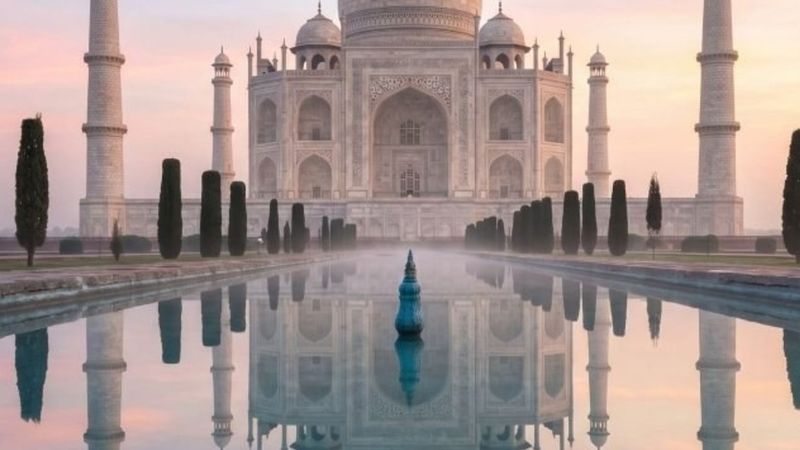
Where Is Agrabah? The City Disney Assembled From Real Places
Agrabah was going to be Baghdad. A war made it fictional — and then Disney built it back out of real places, from a tomb in Agra to a valley in Jordan that usually plays Mars.
The Sultan's palace where Princess Jasmine feels trapped has the silhouette of the Taj Mahal — which is not a palace at all, but a tomb. That is how Agrabah works. Disney's fairy-tale city was going to be Baghdad, until the Gulf War made the name impossible; the studio invented a place that could not be found on a map, then quietly rebuilt it out of real ones — Isfahan and Agra, Marrakesh and Mandalay, a Jordanian desert that has played both Arabia and Mars.