Fatih & Historic PeninsulaIstanbul
Süleymaniye Mosque
Sinan's masterpiece for Süleyman the Magnificent, crowning Istanbul's third hill above the Golden Horn.
The sultan and his architect
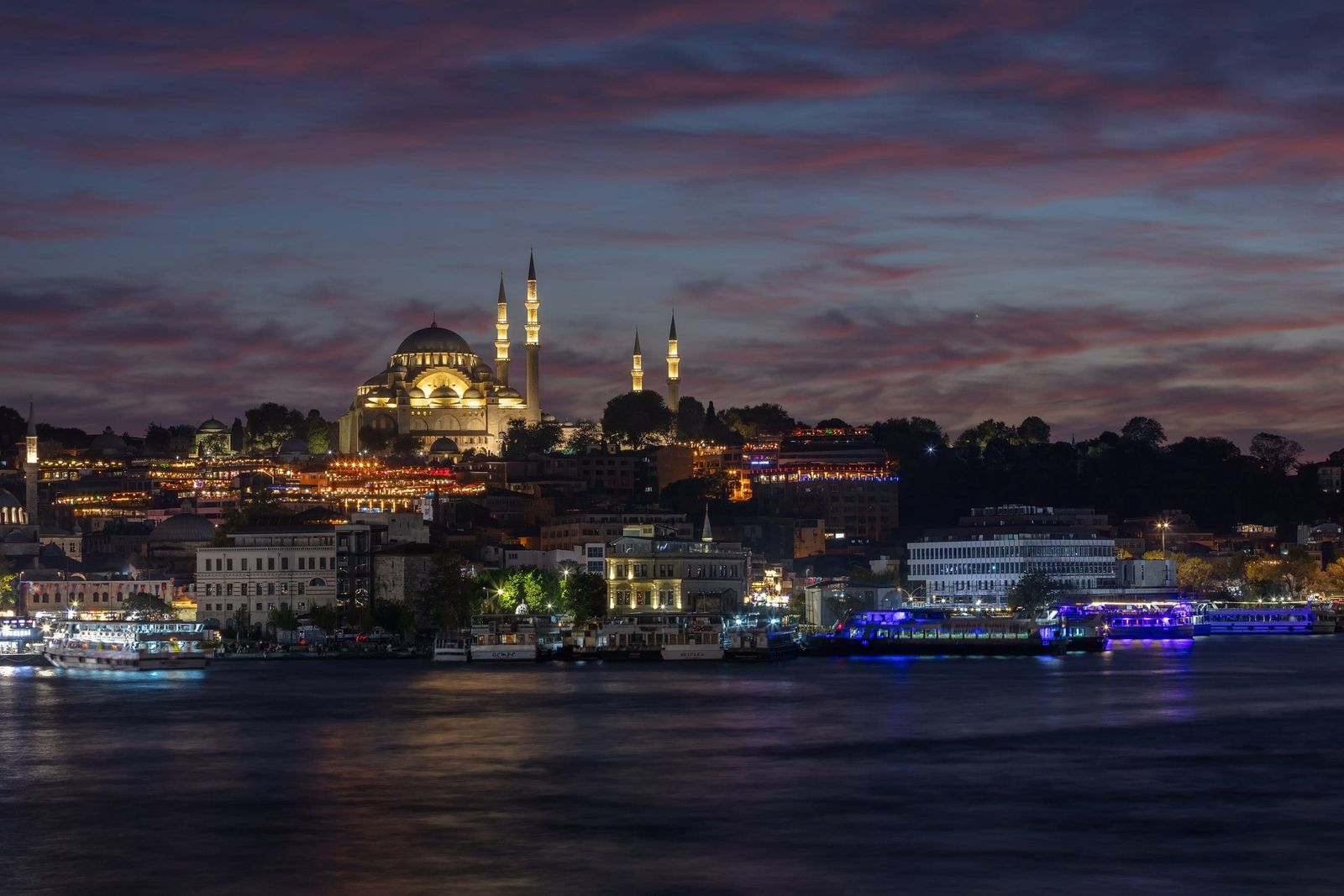
The Süleymaniye Mosque crowns the third hill of Istanbul's historic peninsula, high above the Golden Horn. It was built for Sultan Süleyman the Magnificent, the ruler of the Ottoman Empire at its height. His chief architect was Sinan, who served the sultan for almost three decades. The mosque and its complex were built between 1550 and 1557. More than 3,500 workers laboured on it.
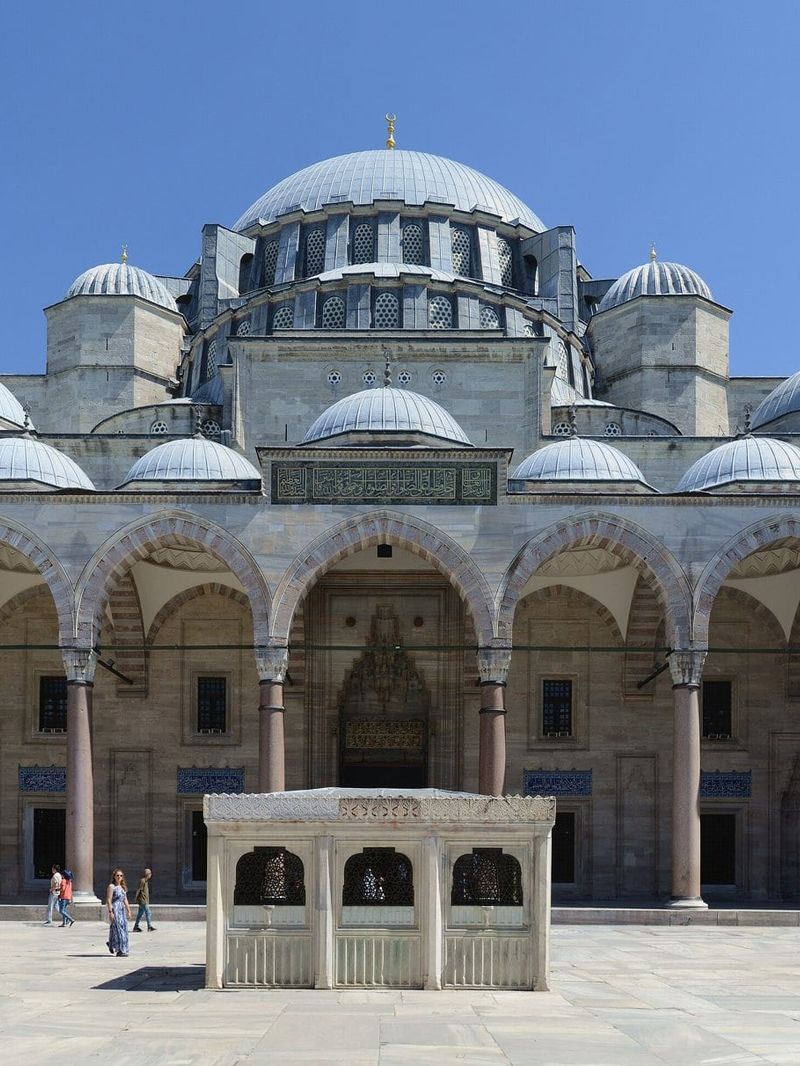
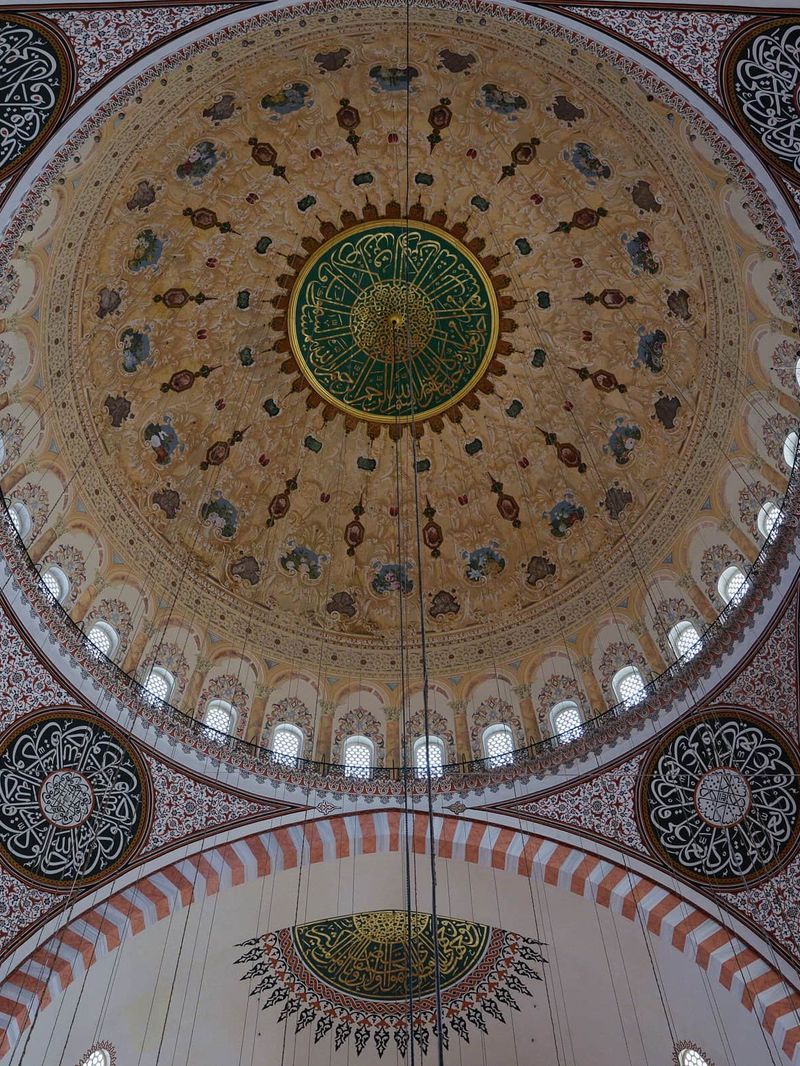
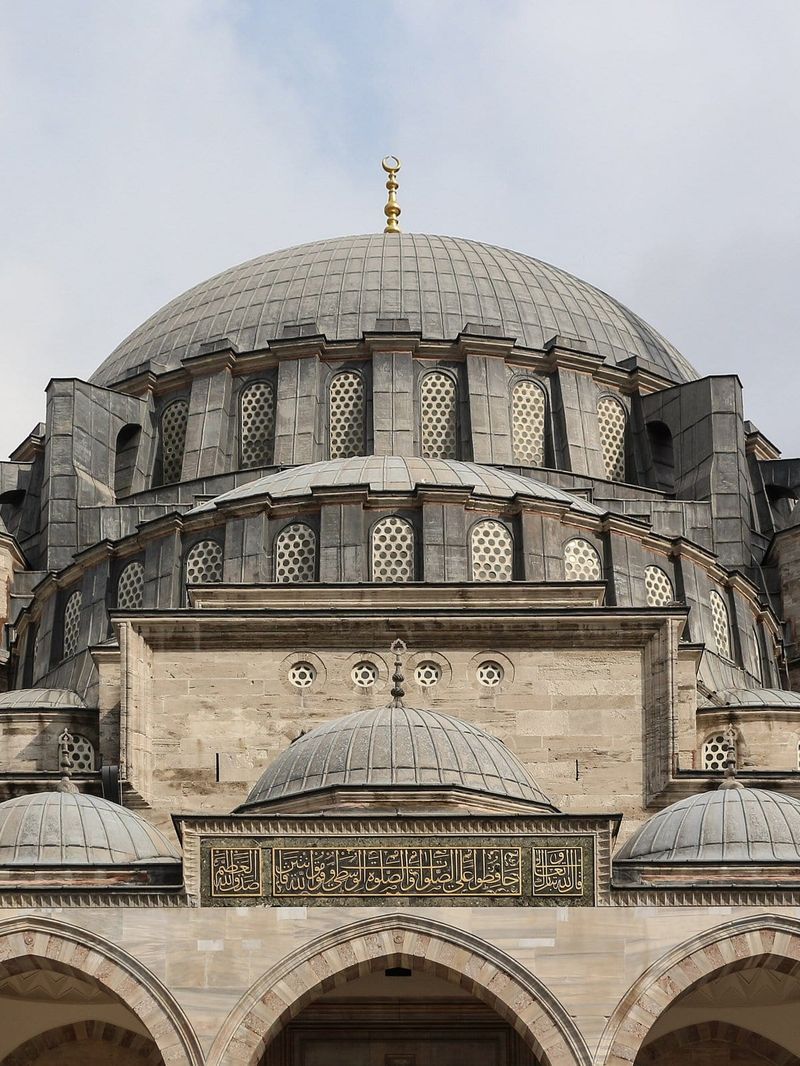
Süleyman meant his mosque to rival Hagia Sophia. It is smaller, but it is often judged the more graceful building. The prayer hall is about 59 metres long and 58 metres wide. The main dome rises 53 metres and is 27 metres across. Like Hagia Sophia it is flanked by two half-domes. Smaller domes descend from it in tiers. Four minarets stand at the corners of the courtyard.
A city within the city
The mosque stood at the centre of a great charitable complex, the külliye. Around it were madrasas, a medical school, a hospital, a public kitchen that fed the poor, a caravanserai, a library and a bath. In the garden behind the mosque stand the tombs of Süleyman and of his wife Hürrem Sultan, known in Europe as Roxelana. UNESCO names the Süleymaniye complex among the supreme ensembles of Ottoman architecture in the Historic Areas of Istanbul.
Fires and restorations
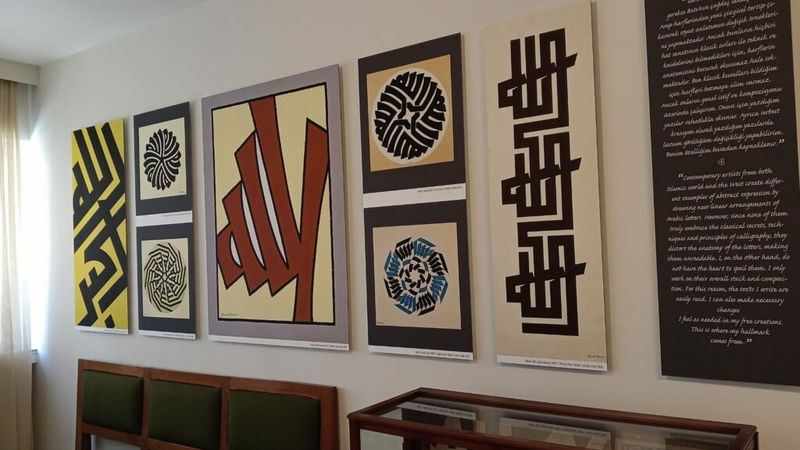
Fire damaged the mosque in 1660 and an earthquake in 1766. It was damaged again during the First World War, when its courtyard was used as an arms store. It was fully restored in 1956 and restored again between 2007 and 2010. Inside, the hall is lit by great hanging rings of lamps. The light falls through many windows onto stone, tiles and calligraphy.
Exhibo editorial
Hagia Sophia is the more famous building. The Süleymaniye is the better place to understand Istanbul. Come up through the quiet lanes from the Golden Horn and the whole city opens out behind the mosque: the water, the bridges, the hills of Galata and Asia.
Inside, it is calm and bright. Sinan cleared the space so that the great dome reads in a single glance. Outside, take time in the garden among the tombs. Sinan himself is buried in a small tomb just outside the complex.
Gallery
How to find it
The Süleymaniye stands on the hill above the Grand Bazaar and the Golden Horn. From the Beyazıt tram stop or the Grand Bazaar walk north through the university area, about 10 minutes. From Eminönü it is a steep 15-minute climb through the market streets. It is a working mosque, closed to sightseeing during prayers. Dress modestly; women cover their hair.
Similar places
All places
News by Exhibo
Editorial coverage on Exhibo
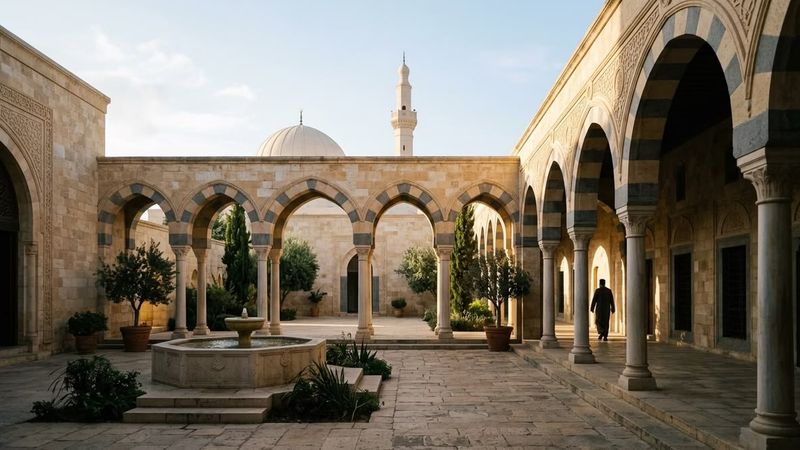
Islamic Architecture, Explained
Mosque types, domes, minarets and courtyard plans from Umayyad Jerusalem to Ottoman Istanbul, with five regional schools read through buildings you can visit
Islamic architecture is the building tradition of Muslim-ruled lands from the seventh century onward: hypostyle mosques, courtyard sahn, minaret towers and dome engineering shaped by prayer law, climate and regional craft. This guide maps Umayyad, Mamluk, Safavid, Mughal and Ottoman schools through named monuments, with muqarnas vaulting and decorative arts deferred to sibling pages in the series.
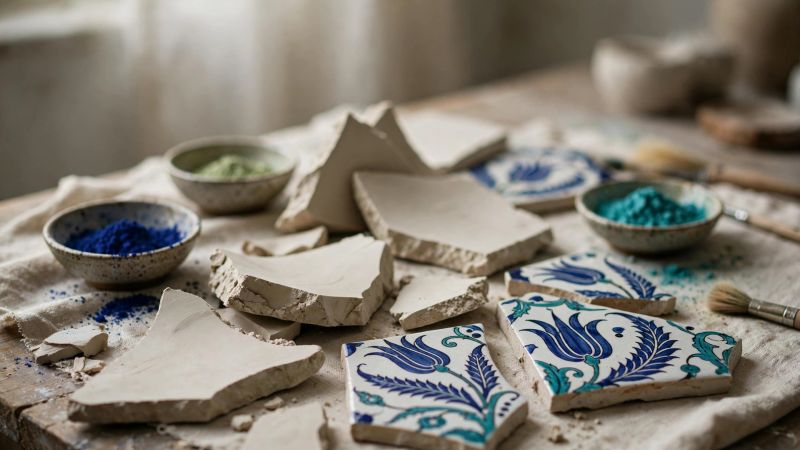
Ottoman Art and the Court Workshop
Court workshops, Iznik tiles, metalwork, textiles and imperial architecture from Bursa to Topkapı, with named museum works
Ottoman art names the luxury objects, tiles, metalwork, textiles and architectural programmes made under sultans from the fourteenth century to the early twentieth. The Ehl-i Hiref court corps and the nakkashane design office coordinated makers in Istanbul, Iznik and Bursa. This survey stays with workshop organisation and decorative media; miniature painting and manuscripts sit in sibling guides.
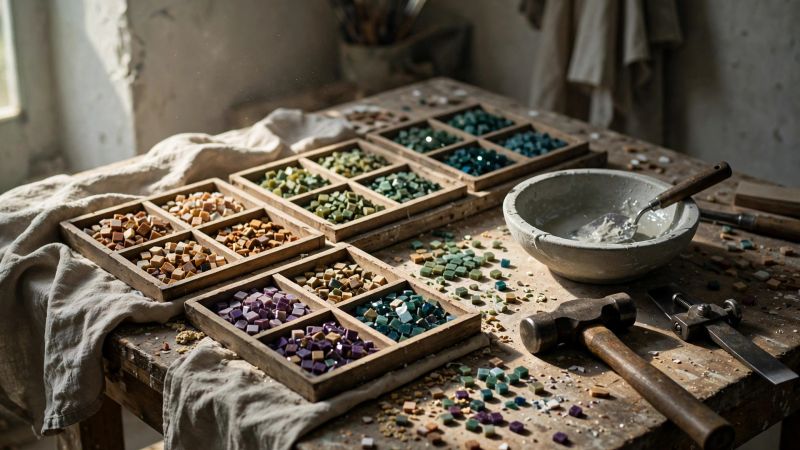
What Is Mosaic?
Tesserae, mortar, and andamento: how mosaicists build durable pictures in stone and glass, from Roman floors to Byzantine walls.
Mosaic in art is a surface built from small set pieces (tesserae) fixed in mortar or adhesive. This guide covers materials, direct and indirect methods, opus and andamento, six museum examples, failure modes, and what a serious commission costs today.