Fatih & Historic PeninsulaIstanbul
Column of Marcian (Kıztaşı)
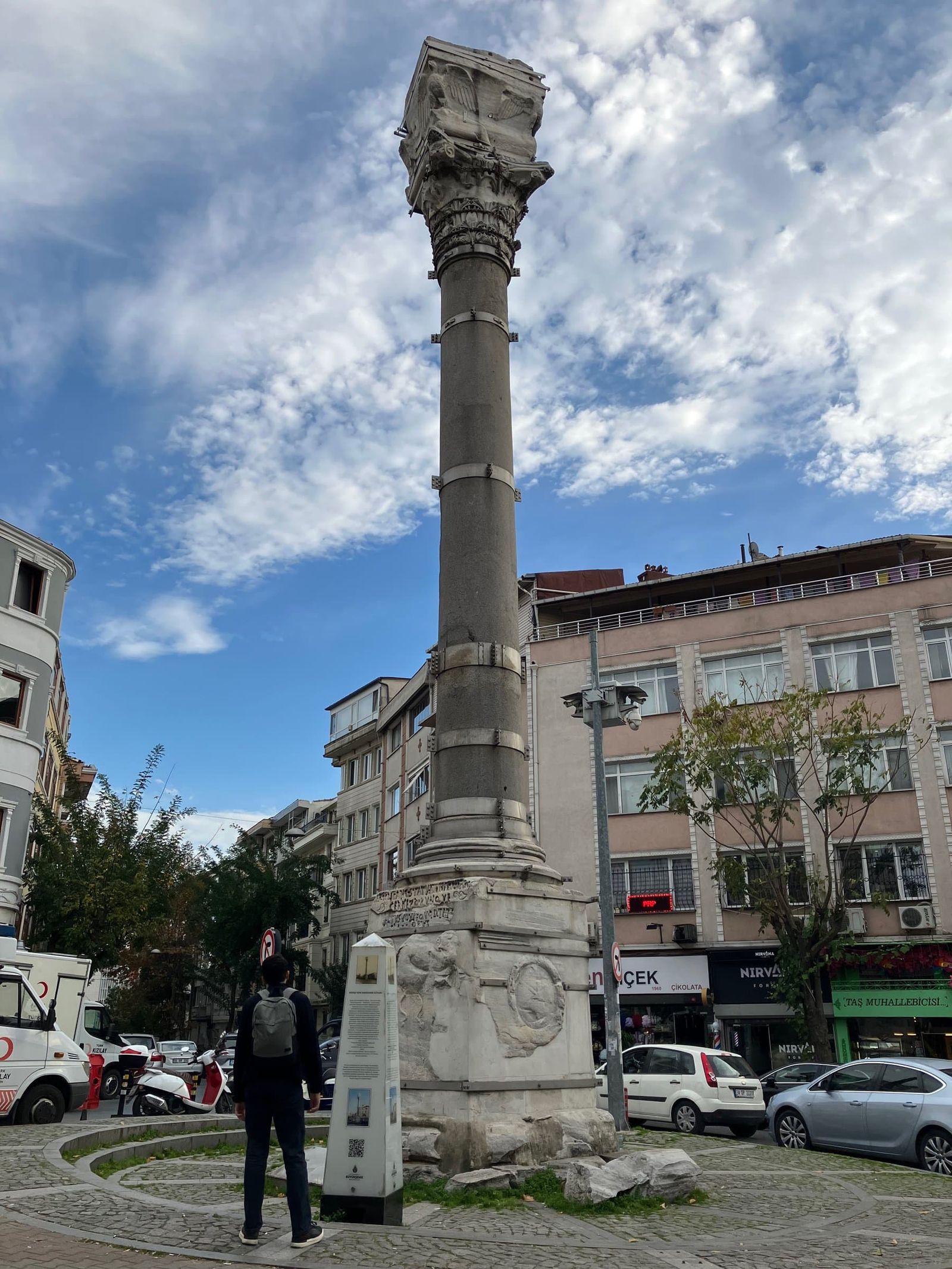
A Roman column of the 450s standing in a busy Fatih street, still carved with Victories and a Latin dedication.
A monument to Emperor Marcian
The Column of Marcian is one of the few Roman honorary columns still standing in Istanbul. It was raised in Constantinople in the early 450s by the city prefect Tatianus, in honour of the emperor Marcian, who reigned from 450 to 457. On top it once carried a statue of the emperor, long since lost.
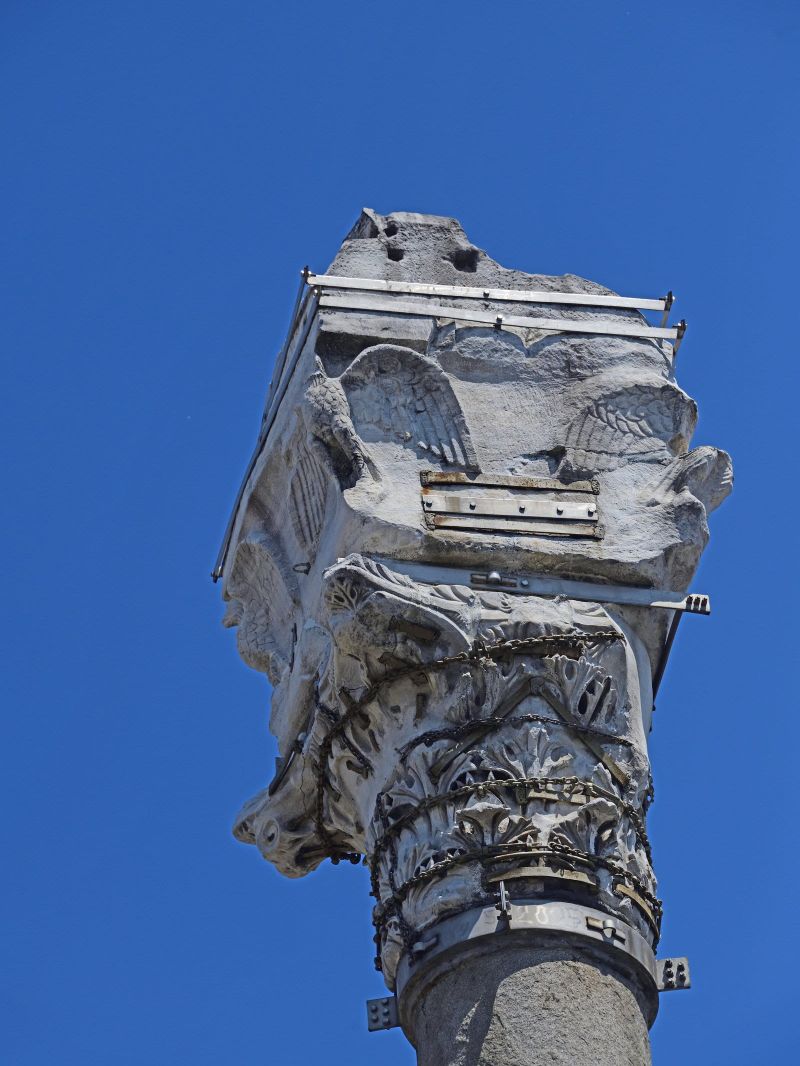
The shaft is of grey granite from Egypt, in two pieces. It stands on a tall marble pedestal and is topped by a Corinthian capital with eagles at its corners and a block that held the statue. The whole monument rises some 16 metres above the modern street level.
Victories and an inscription
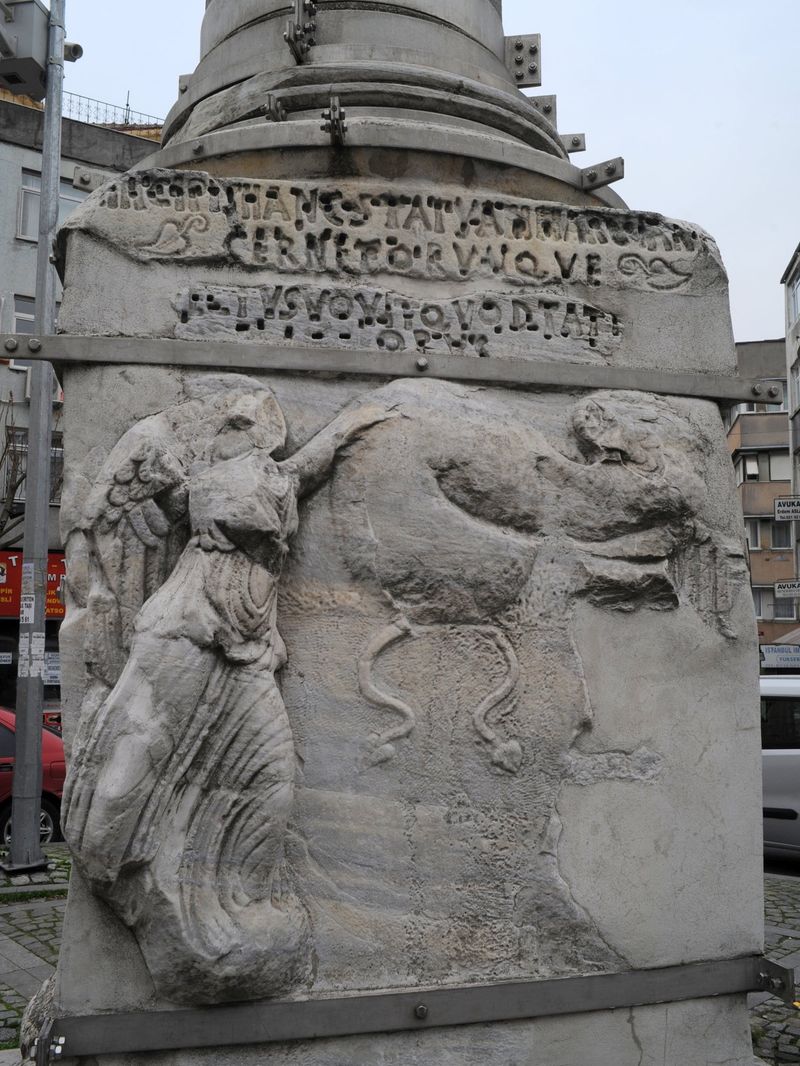
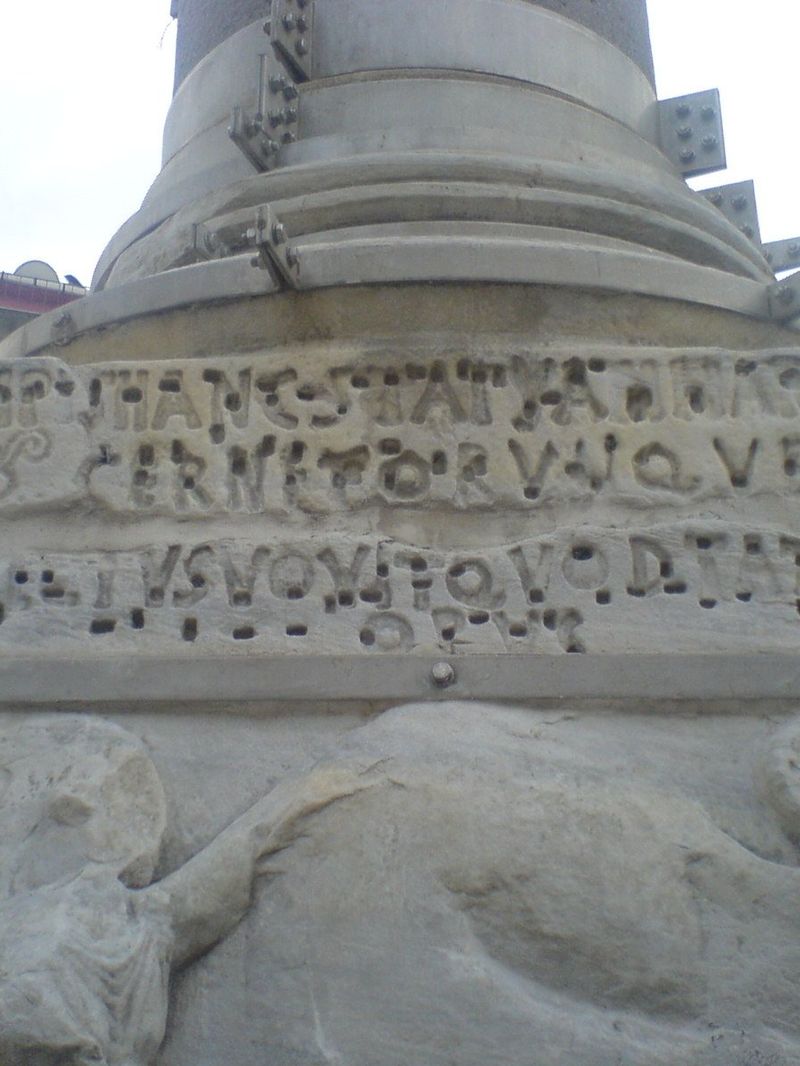
The pedestal is the most interesting part. On one face, two winged Victories in long robes hold up a shield. Their worn figures can still be made out in the marble. Above them runs a Latin inscription recording the dedication of the statue of the emperor by Tatianus. Its letters were once filled with bronze, which has gone, so the text is read from the holes that held it. Another face is carved with a wreath.
The Girl's Stone
The Turks named it Kıztaşı, the Girl's Stone. The name seems to come from the female figures of the Victories on the base. The column stands in a small square in the Fatih district, among apartment blocks and shops, between the Fatih Mosque and the Saraçhane park. Unlike the monuments of Sultanahmet, it is part of everyday street life.
Exhibo editorial
Most people walk past without knowing it is there. The column rises out of a traffic island ringed with parked cars and cafés. Yet this is one of a handful of monuments in the city that still stand where a Roman emperor's officials placed them.
Look closely at the base. The Victories are worn almost smooth, but they are still holding up their shield after more than fifteen centuries. Around them the neighbourhood carries on with its errands as if nothing were there.
Gallery
How to find it
The Column of Marcian stands in Kıztaşı square on Kızanlık Caddesi in Fatih, a short walk from the Fatih Mosque. From the Saraçhane park and the Aqueduct of Valens it is about 10 minutes on foot.
Similar places
All places
News by Exhibo
Editorial coverage on Exhibo
Seventy Thousand Solomons: The Empire That Performed a Legend
A demon catalogue in the conqueror's library, a sixteenth-century text where kingship is an office held seventy thousand times, and the columns a sultan dragged across three provinces to prove he held it.
Mehmed II kept a Greek catalogue of demons in his library at Topkapı. Seventy years later a sultan named for a prophet was rebuilding the walls of Jerusalem and hauling Roman columns out of Egypt and the Lebanon into a mosque above the Golden Horn. In between, Ottoman writers turned Solomon from a warning into a job — and the empire applied for it in stone.
Islamic Architecture, Explained
Mosque types, domes, minarets and courtyard plans from Umayyad Jerusalem to Ottoman Istanbul, with five regional schools read through buildings you can visit
Islamic architecture is the building tradition of Muslim-ruled lands from the seventh century onward: hypostyle mosques, courtyard sahn, minaret towers and dome engineering shaped by prayer law, climate and regional craft. This guide maps Umayyad, Mamluk, Safavid, Mughal and Ottoman schools through named monuments, with muqarnas vaulting and decorative arts deferred to sibling pages in the series.
Ottoman Art and the Court Workshop
Court workshops, Iznik tiles, metalwork, textiles and imperial architecture from Bursa to Topkapı, with named museum works
Ottoman art names the luxury objects, tiles, metalwork, textiles and architectural programmes made under sultans from the fourteenth century to the early twentieth. The Ehl-i Hiref court corps and the nakkashane design office coordinated makers in Istanbul, Iznik and Bursa. This survey stays with workshop organisation and decorative media; miniature painting and manuscripts sit in sibling guides.