Fatih & Historic PeninsulaIstanbul
Hagia Sophia (Ayasofya)
Justinian's Great Church of 537: a dome that seems to float on light, Byzantine mosaics and fifteen centuries of faith.
Justinian's church
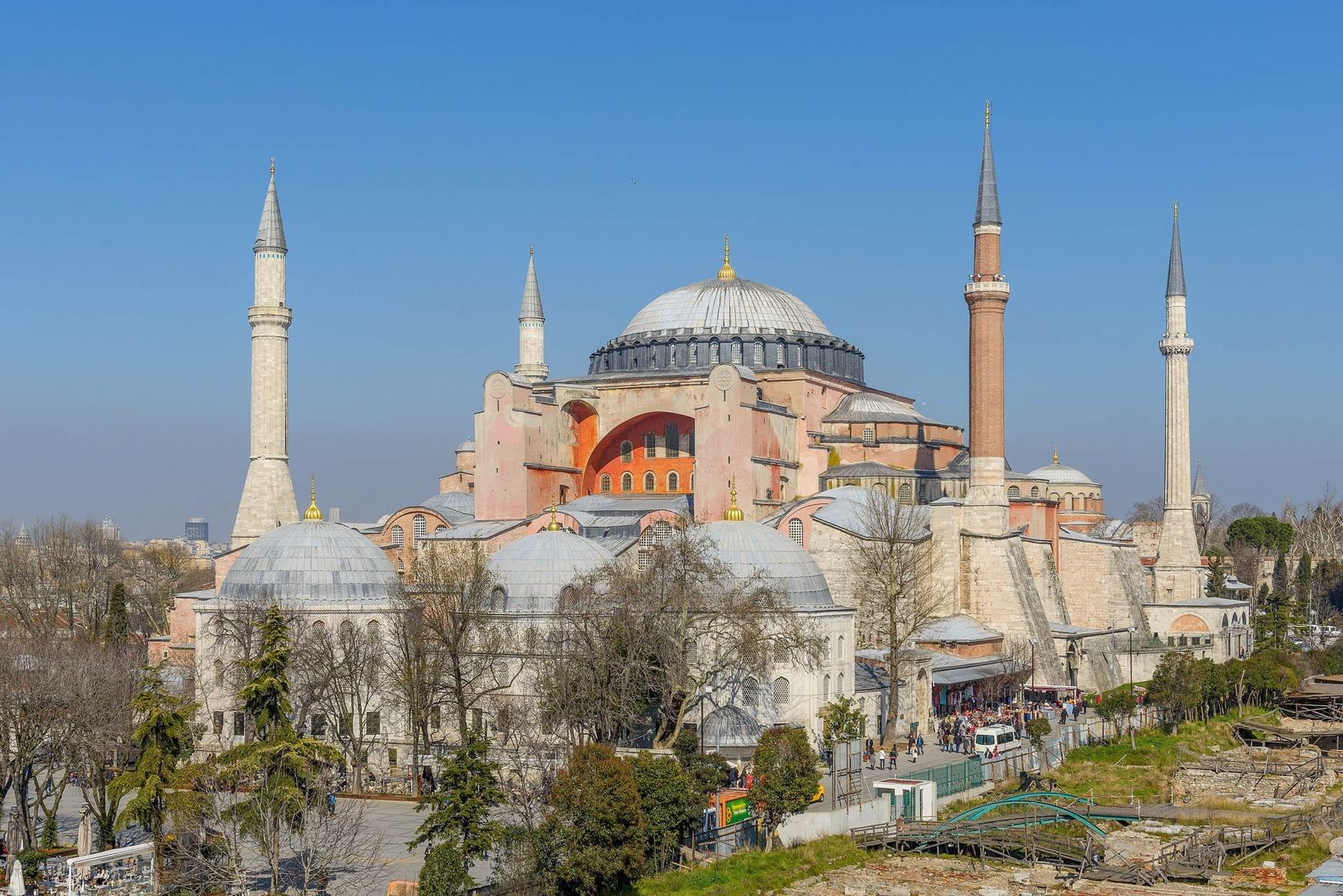
Hagia Sophia, Holy Wisdom, stands at the tip of the historic peninsula of Istanbul, facing the Blue Mosque across Sultanahmet Square. An earlier church on the site burned in the Nika riot of January 532. The emperor Justinian I at once ordered a far grander replacement. It was built in about six years and completed in 537.
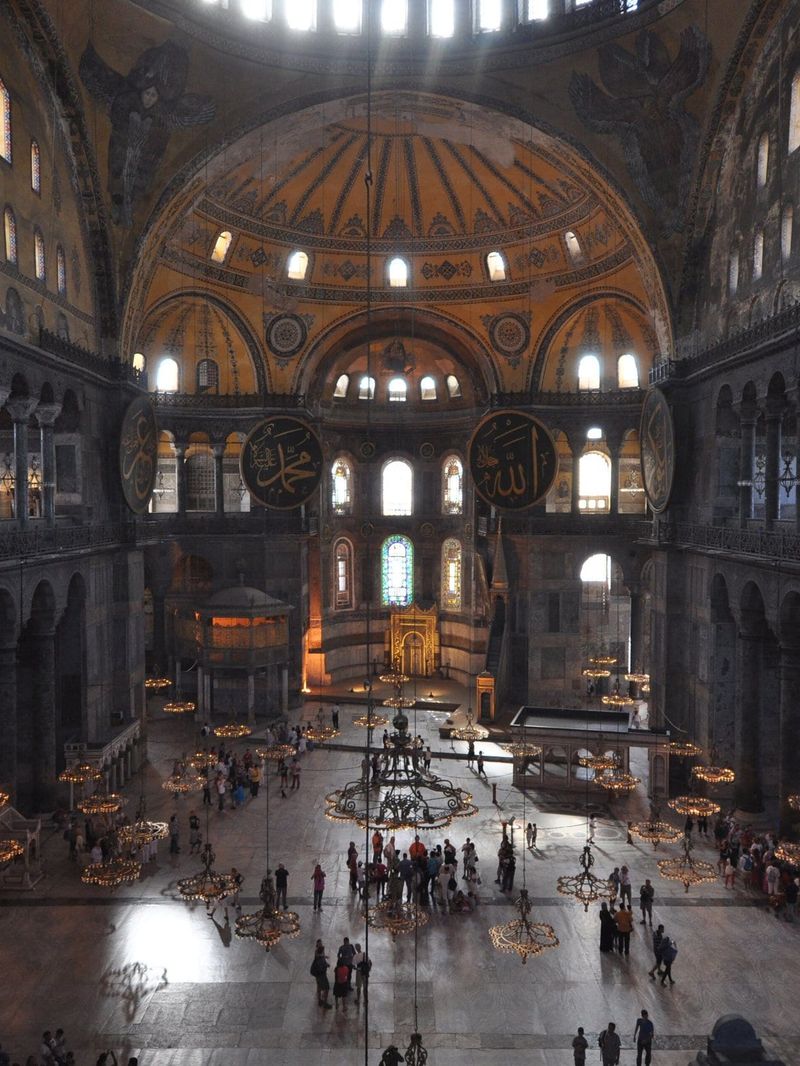
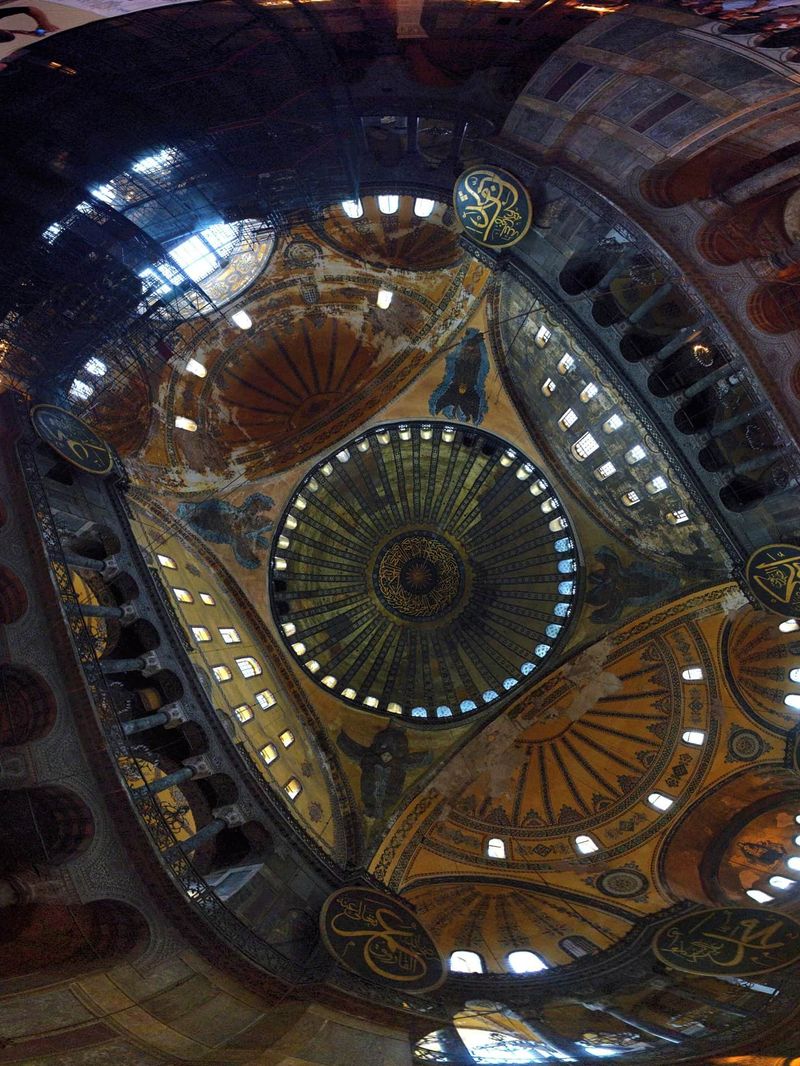
Its architects were Anthemius of Tralles and Isidore of Miletus, both experts in mathematics and mechanics. Their building joined a long basilica to a central dome in a way no one had tried before. The main dome is about 32 metres across. It rests on four pendentives between great piers, with a half-dome on either side. A ring of windows runs round its base, so that in daylight it seems to float on air. An earthquake brought part of the dome down in 558. It was restored in 562.
Cathedral, mosque, museum
For more than nine hundred years Hagia Sophia was the cathedral of Constantinople and the seat of the Ecumenical Patriarch. Crusaders looted it in 1204. After the Ottoman conquest of 1453 Sultan Mehmed II turned it into a mosque, adding a mihrab, a minbar and a minaret. Later sultans added more minarets, two of them built by the great architect Sinan in the 16th century.
In 1934 the building was secularised and in 1935 it opened as a museum. In 2020 it became a mosque again. UNESCO lists it as part of the Historic Areas of Istanbul, inscribed in 1985.
The mosaics
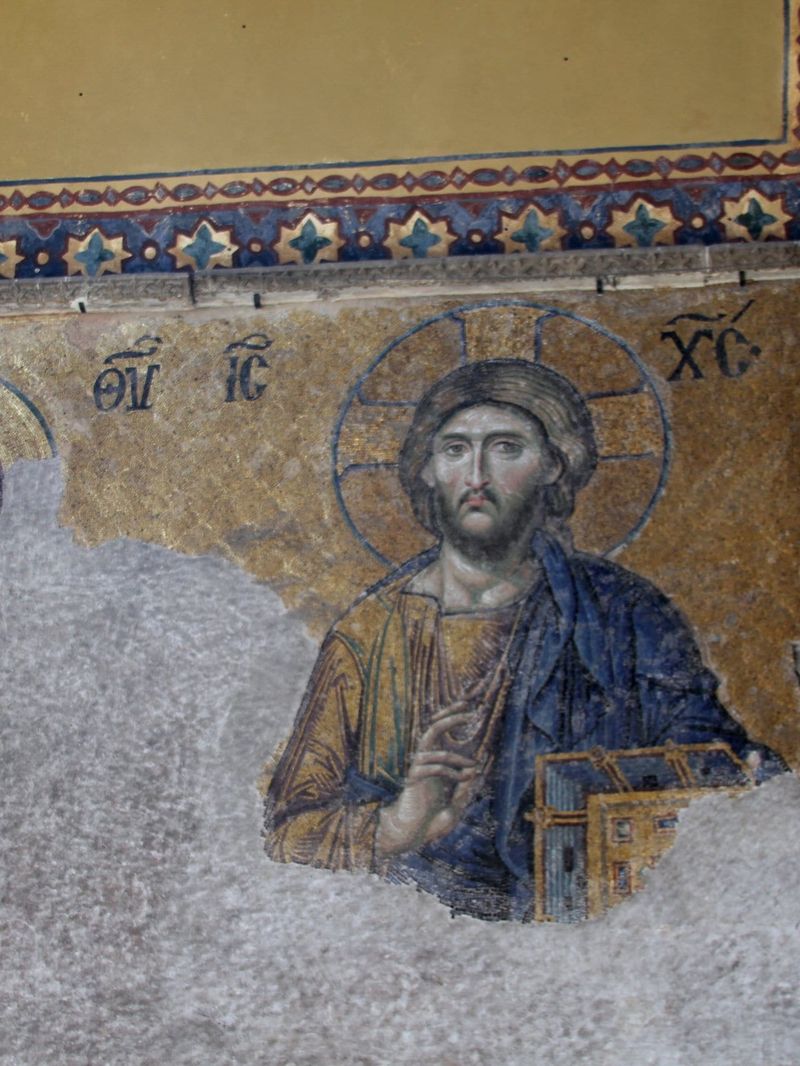
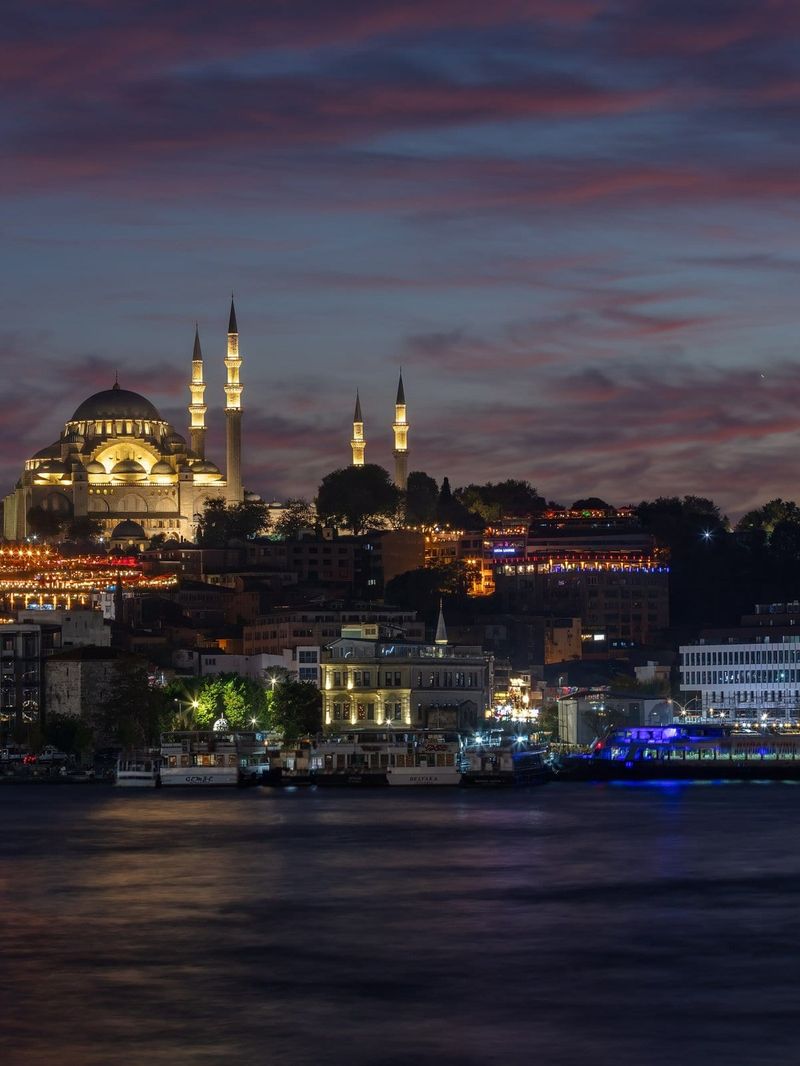
Marble columns and coloured stone panels line the lower walls. Above, the surviving mosaics are some of the finest of Byzantine art. Many date from after the end of Iconoclasm in the 9th century. The Deesis in the upper gallery shows Christ between the Virgin and John the Baptist. Another, over a doorway, shows the Virgin and Child between two emperors. Justinian offers a model of the church. Constantine offers a model of the city. Huge round panels with Arabic calligraphy hang from the piers below the dome. A short walk west, across the old city, stands the Süleymaniye Mosque, Sinan's answer to Justinian.
Exhibo editorial
Every great dome in Istanbul is a reply to this one. The Ottoman sultans built mosque after mosque to rival it. The skyline is the record of that conversation.
Go inside and look up before you look at anything else. The dome is shallow, wide and pierced with light, so the stone seems to hang from the sky rather than press down on the walls. Then find the faces of the mosaics in the gold. After fifteen centuries and four changes of faith, they are still here.
Gallery
How to find it
Hagia Sophia faces the Blue Mosque across Sultanahmet Square. The T1 tram stops at Sultanahmet, a two-minute walk away. It is a working mosque again and closes to sightseeing during prayers, especially at midday on Friday. Visitors who are not there to pray follow a separate route, so check the current tickets and times before you go. Women cover their hair and everyone dresses modestly.
Similar places
All places
News by Exhibo
Editorial coverage on Exhibo
What Is Mosaic?
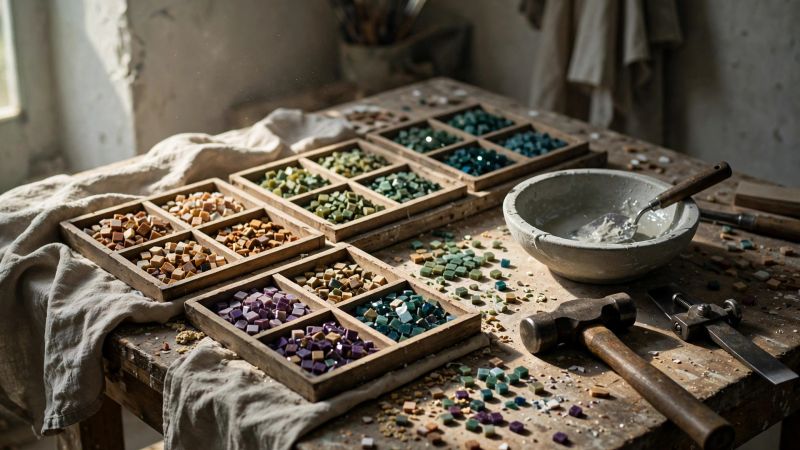
Tesserae, mortar, and andamento: how mosaicists build durable pictures in stone and glass, from Roman floors to Byzantine walls.
Mosaic in art is a surface built from small set pieces (tesserae) fixed in mortar or adhesive. This guide covers materials, direct and indirect methods, opus and andamento, six museum examples, failure modes, and what a serious commission costs today.
Seventy Thousand Solomons: The Empire That Performed a Legend
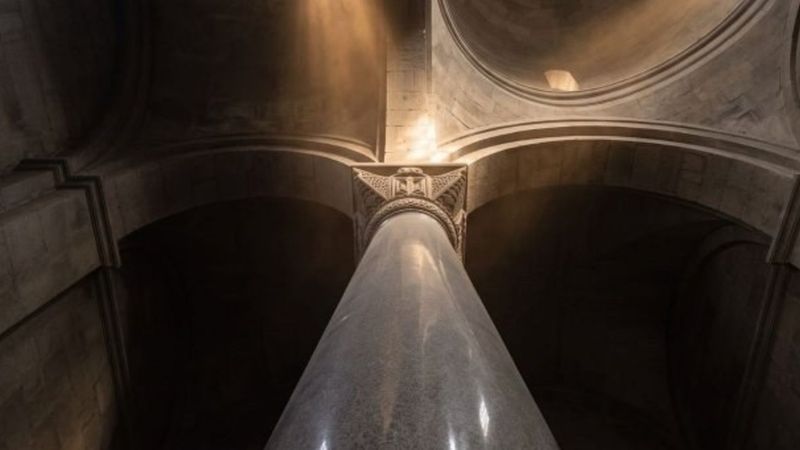
A demon catalogue in the conqueror's library, a sixteenth-century text where kingship is an office held seventy thousand times, and the columns a sultan dragged across three provinces to prove he held it.
Mehmed II kept a Greek catalogue of demons in his library at Topkapı. Seventy years later a sultan named for a prophet was rebuilding the walls of Jerusalem and hauling Roman columns out of Egypt and the Lebanon into a mosque above the Golden Horn. In between, Ottoman writers turned Solomon from a warning into a job — and the empire applied for it in stone.
Icons and Icon Painting
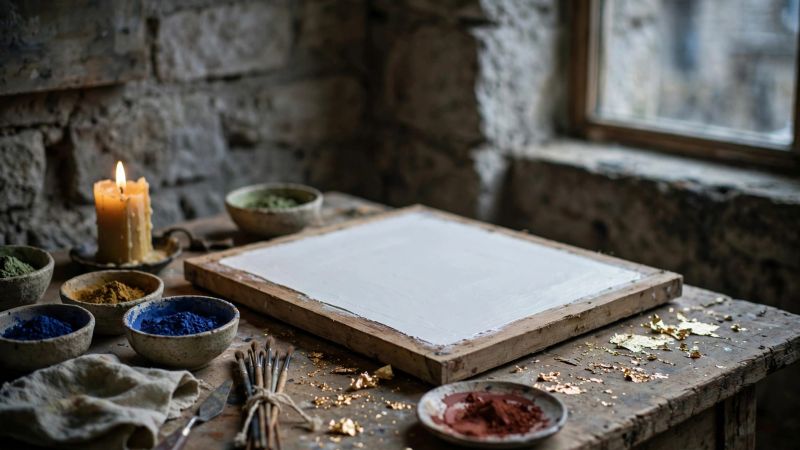
How Byzantine sacred panels were made, used in liturgy, and argued over from Sinai workshops to the later Orthodox world.
A museum-led guide to Byzantine icons as practice and image theology: how panels and gold grounds work, what Iconoclasm changed after 843, four works to study at close range, and how the type travelled into Rus, the Balkans and Western painting without turning the piece into confessional debate.