
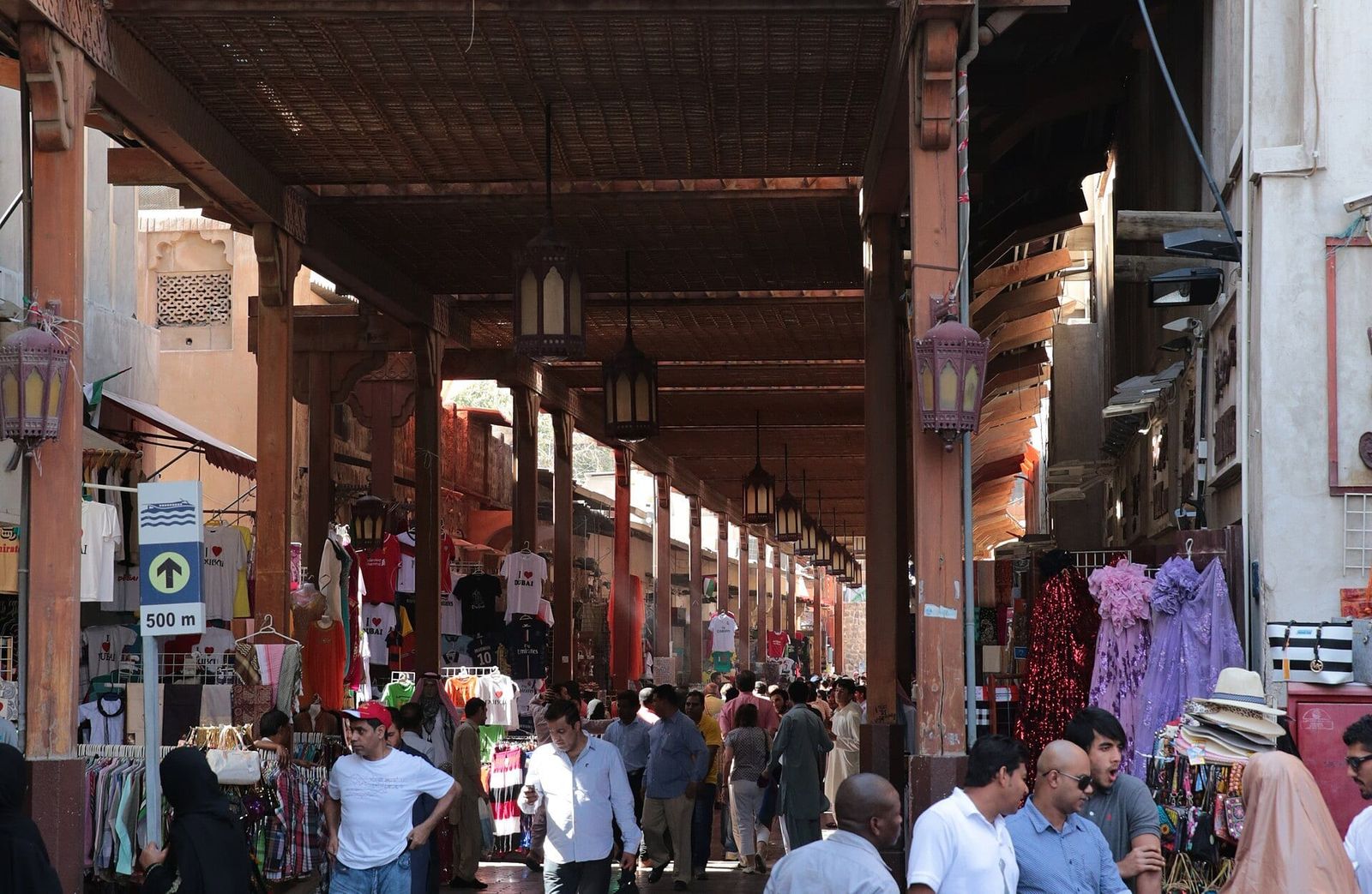
Textile Souk, Bur Dubai
A covered, wood-roofed bazaar by the Creek: bolts of silk, pashmina and cotton in one of Dubai's oldest markets.
The Textile Souk, part of the Bur Dubai Old Souk, is one of Dubai's oldest marketplaces, set on the Bur Dubai bank of Dubai Creek directly opposite the Gold Souk in Deira. The Old Souk dates to the late 19th century, constructed during the commerce-friendly rule of Maktoum bin Hashar around 1894 and established in the years that followed, when the pearl trade and the Creek's growing port were drawing merchants from Iran, India and across the Gulf.
The souk is largely covered, entered through a traditional gateway of large wooden beams, with sand-coloured walls divided into small shops behind wooden doors and shaded wooden-arcaded lanes running between them. While it sells souvenirs, handicrafts and spices, its defining stock is fabric, bolts of silk, cotton, pashmina, embroidered cloth and more, which is why the Old Souk is popularly known as the Textile Souk. Many of its merchants have traded for decades and the market has a strong South Asian character, with tailoring shops and the neighbouring Meena Bazaar catering to custom stitching.
The most evocative way to arrive is by abra, the traditional wooden ferry, which crosses the Creek from Deira for around one dirham and lands steps from the souk's main arcade. Alongside Al Fahidi and the Dubai Creek waterfront, the Textile Souk anchors the historic, low-rise fabric of old Bur Dubai.
Exhibo editorial
The Textile Souk is the quieter, gentler half of the Creek's old trade. Cross by abra from the gold-and-spice bustle of Deira and you land in a covered lane of fabric, bolts of silk and cotton stacked to the ceiling, tailors measuring in doorways, the pace noticeably slower than the market you just left.
What gives it its texture is who runs it: this has long been an immigrant market, heavily South Asian and the fabrics and the tailoring reflect that as much as any Emirati heritage. It's less polished than the tourist-facing souks and better for it. Take the abra over, six minutes, one dirham and the best possible approach, then let the shopkeepers unroll a few metres of something you didn't know you wanted.
Gallery
How to find it
The Textile Souk runs along Ali Bin Abi Talib Street in Bur Dubai, right beside the Creek and opposite the Bur Dubai Abra Station — it is the first thing you reach stepping off an abra from Deira. The nearest metro is Al Ghubaiba or Al Fahidi (Green Line), about a 10–15 minute walk toward the Creek. Enter through the large wooden-beamed gateway; the covered fabric lanes run from there, with Al Fahidi and the Dubai Museum a short walk inland.
Similar places
All places
News by Exhibo
Editorial coverage on Exhibo
Why Doha Is Full of Roundabouts
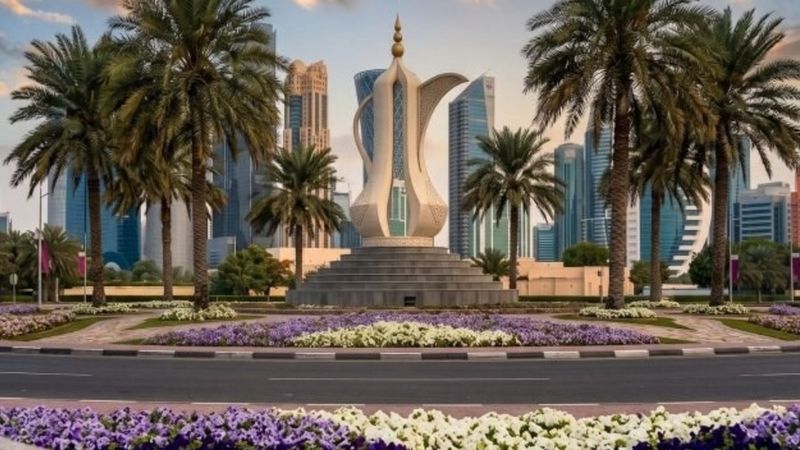
An old circle at a crossroads, sharpened by British road engineering, became the way an Arabian city found its way and remembered itself — and it took the bulldozers to reveal it.
In a city where a landmark was more useful than an address, Doha's roundabouts became its navigation, its landscaping and its national image all at once. Now they're being torn out for signalled junctions — and the affection for them arrived, as one scholar put it, only posthumously.
Why the Middle East Keeps Building Venice
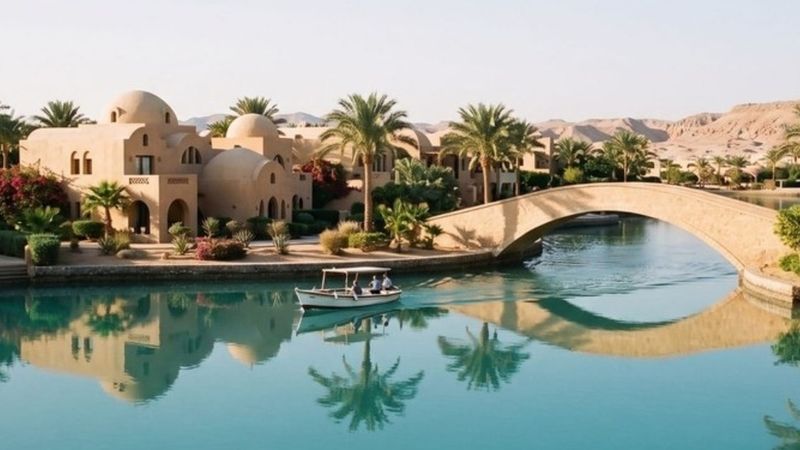
From the Red Sea to the Gulf, canal towns keep getting called Venice. The water was usually about something else — and Venice was never quite Venice either.
The Middle East is full of “Venices”. Most began as a way to manufacture shoreline; the name usually arrived later, in English, from the people selling it.
Elie Khouri's New Foundation Takes Shape in Dubai
A private villa in Jumeirah 1 becomes the home for Ekaf
Collector Elie Khouri transforms a historic Jumeirah 1 residence into a contemporary art venue opening in 2028.