
Madinat Jumeirah & Umm SuqeimDubai
Madinat Jumeirah Bronze Horses
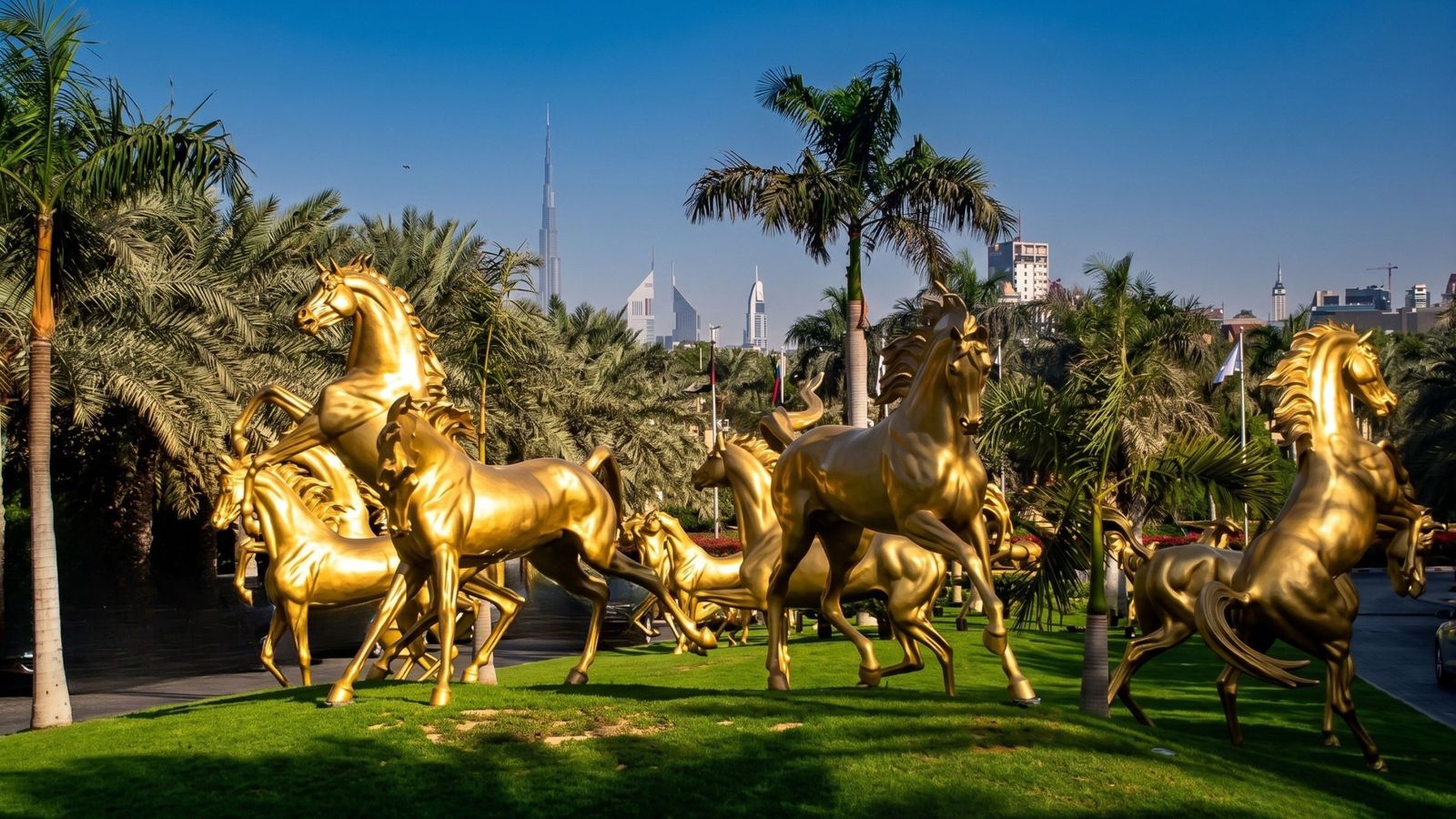
A herd of life-size bronze Arabian horses by Danie de Jager, galloping across the lawns of the Madinat Jumeirah resort.
Set among the waterways and lawns of the Madinat Jumeirah resort in Umm Suqeim is one of Dubai's most striking pieces of outdoor animal sculpture: a herd of eighteen life-size bronze Arabian horses by the South African sculptor Danie de Jager (1936–2003), positioned at the grand entrance to the Jumeirah Al Qasr hotel ('Al Qasr' meaning 'The Palace').
De Jager, one of South Africa's most prolific monumental sculptors, was renowned for his dynamic bronze horses, and the Al Qasr herd is among his best-known international commissions. The horses are cast mid-movement — rearing, galloping and frolicking across the grass — their polished bronze surfaces catching a golden sheen in the sun, so the group reads as a single surging motion frozen in metal. Arranged as part of the hotel's deliberately processional entrance sequence, they set the tone of Arabian myth and royal opulence that defines the whole resort.
The horses are complemented elsewhere in the Madinat Jumeirah complex by further bronze animal sculptures, including camels near the souk entrances, together forming an open-air gallery of monumental animalier work threaded through the resort's canal-side promenades. Freely visible to visitors exploring the Madinat, they are a favourite photo stop, especially with the sail-shaped Burj Al Arab rising beyond the resort.
Exhibo editorial
Everyone comes to Madinat Jumeirah for the wind towers and the Burj Al Arab view, and walks straight past the best thing on the grounds: eighteen bronze horses caught mid-gallop on the lawn outside Al Qasr. They're the work of Danie de Jager, a South African who spent a career making horses move in metal, and here he made a whole herd do it at once.
The trick is the motion. Frozen bronze shouldn't feel like it's about to thunder past you, but line them up and the group reads as a single surge — manes up, legs mid-stride, the polished surfaces going gold in the afternoon. In a resort that's all staged Arabian fantasy, the horses are the moment where the theatre actually lands. Catch them late in the day, when the low sun does most of the work.
How to find it
The bronze horses are on the lawns at the main entrance to Jumeirah Al Qasr, within the Madinat Jumeirah resort in Umm Suqeim. Enter the Madinat Jumeirah grounds and head toward the Al Qasr hotel arrival court; the herd is on the landscaped grass by the drive. Further bronze animal sculptures, including camels, are near the Souk Madinat entrances. Freely viewable while exploring the resort; best in late-afternoon light.
Similar places
All places
News by Exhibo
Editorial coverage on Exhibo
Somewhere Between a Marble Factory and a Masterpiece
On the art world's transparency problem, the extraordinary markets the world is only beginning to discover, and why we decided to build a map.
February 2026, Doha. Msheireb Downtown — the old business district that Qatar has been quietly transforming into something between a cultural quarter and an ur…
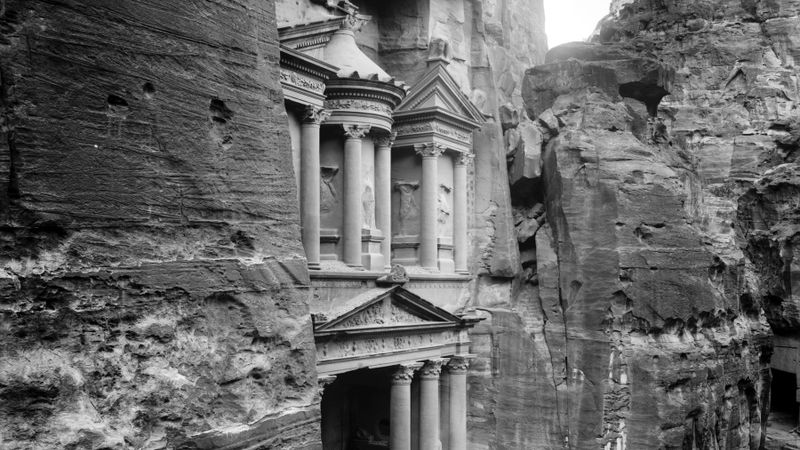
Filmed, but Not Recorded: The Arab World’s Missing Film Locations
Wikidata knows Gladiator was filmed in Morocco. It doesn’t know where.
Ouarzazate is the second most filmed place in the Middle East and North Africa, yet 25 of its 27 productions are recorded only in Wikipedia prose. We compared filming records worldwide and found that in the Arab world, Wikidata usually knows the country but not the place.
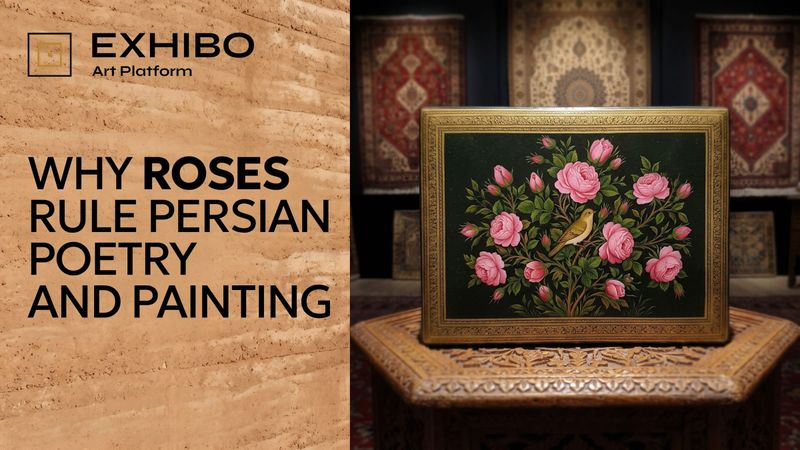
The Flower That Was Never Only Beautiful
The rose rules Persian poetry and painting — but under the sweetness sits a thorn, a bleeding bird, and a national emblem quietly assembled out of Chinese, European and Persian parts. A history of gol o bolbol, from a medieval still to a Dubai gallery.
Gol o bolbol — the rose and the nightingale — is among the most beautiful images in a thousand years of Persian art, and in modern Persian it also means sweet, empty talk. Under the tile, the picture is darker: a bird singing in blood for a flower that will not answer and will not last.