Jameel Arts Centre Desert Gardens
Seven courtyards by Anouk Vogel, each a different desert of the world — sculptural plants on pink terrazzo, some rescued and three centuries old.
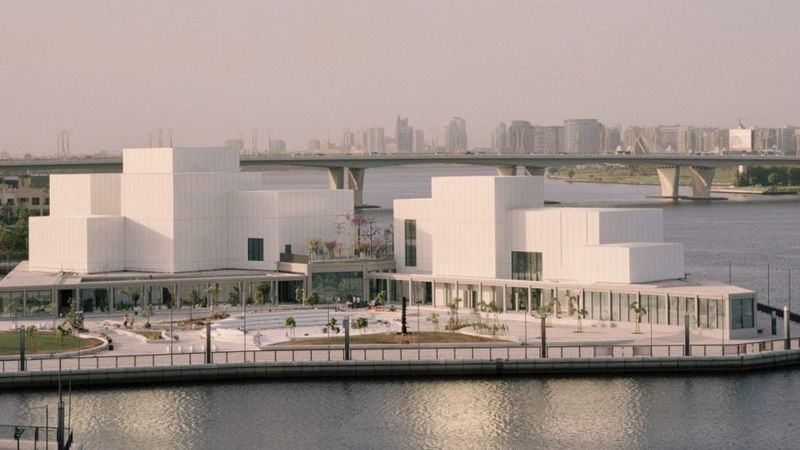
Threaded through the Jameel Arts Centre on the Jaddaf waterfront — the Serie Architects–designed contemporary art institution opened by Art Jameel in 2018 — is a series of seven open-air courtyard gardens by the acclaimed Dutch landscape architect Anouk Vogel, who also designed Bahrain's pavilion for Milan Expo 2015.
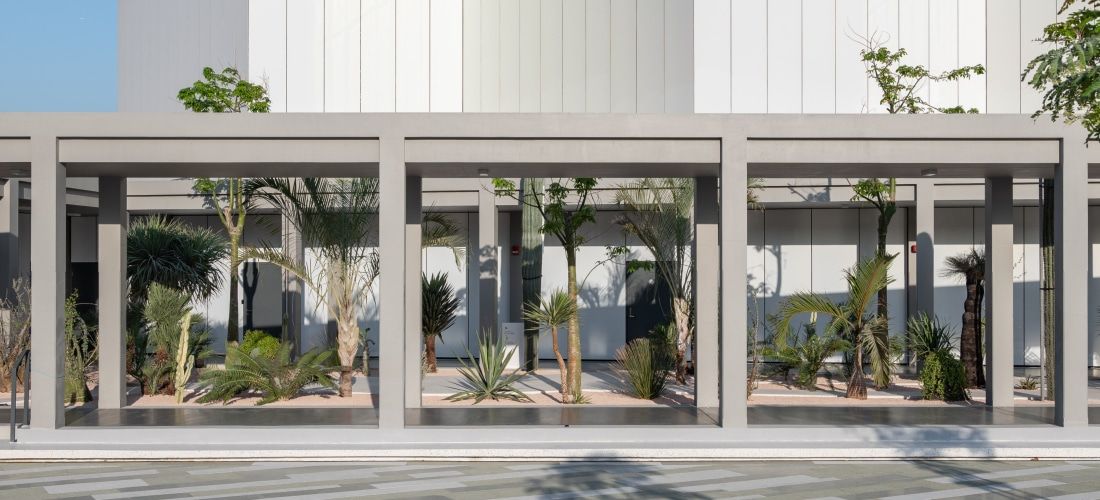
Each garden represents a distinct desert environment somewhere in the world, and is named accordingly: Namib, Socotra, Chihuahuan, Australian, Silk Floss, Arabian and Spiny Woodlands. Across them, 33 plant species are represented, chosen for sculptural form and set against soft pink terrazzo, unusual paving and curving gravel paths, so that each courtyard has its own distinct mineral palette and character. Vogel has said she treated the spaces almost like canvases, drawing inspiration from the history of botanical adventurers and the ways plant species travel across the world. Several specimens are rescues — individually saved from construction sites marked for destruction — including a sesame bush estimated to be between 220 and 300 years old.
Functionally, the courtyards funnel daylight into the galleries, create self-shading and cross-ventilation between the building's aluminium-clad volumes, and offer moments of pause between exhibitions. An eighth garden, set between two galleries and opening onto the Creekside colonnade, is the Artist's Garden: a commissioned space where artists respond to flora, plant symbolism or the Creek itself. Together with the Jaddaf Waterfront Sculpture Park outside, the gardens make landscape integral to the experience of the Centre rather than decorative.
Exhibo editorial
Most art centres treat their courtyards as gaps between galleries. Anouk Vogel treated Jameel's seven as artworks, and the difference is immediate: you step out of a show into the Namib, then later into Socotra, then the Chihuahuan, each one a different desert of the world rendered in sculptural plants on pale pink terrazzo.
The detail that lingers is provenance. Some of these plants were rescued — dug out of construction sites where they'd have been bulldozed — and one sesame bush has been alive for roughly three centuries, longer than the country it now sits in has existed. In a building on reclaimed waterfront in a city that rebuilds itself every decade, that's a quietly radical thing to plant in a courtyard. Take the gardens slowly, in the order the building gives them to you.
How to find it
The desert gardens are inside Jameel Arts Centre on the Jaddaf Waterfront, Dubai Creek; Jaddaf metro (Green Line) is nearby. The seven courtyards are interspersed between the galleries, so you encounter them naturally while moving through the building — look for the named gardens (Namib, Socotra, Chihuahuan, Australian, Silk Floss, Arabian, Spiny Woodlands). The Artist's Garden sits between two galleries, open to the Creekside colonnade. Entry to the Centre is free; the Jaddaf Waterfront Sculpture Park is immediately outside.
Similar places
All places
News by Exhibo
Editorial coverage on Exhibo
Inside Alserkal Avenue: A Guide to Dubai's Art District
How a row of Al Quoz warehouses became the most serious address in Gulf contemporary art — and how to navigate its galleries, foundations and programme.
Alserkal Avenue sits in Al Quoz Industrial Area 1 — a grid of concrete warehouses and marble workshops wedged between Sheikh Zayed Road and Al Khail Road — and it is, improbably, the most culturally credible square kilometre in the Gulf.
Somewhere Between a Marble Factory and a Masterpiece
On the art world's transparency problem, the extraordinary markets the world is only beginning to discover, and why we decided to build a map.
February 2026, Doha. Msheireb Downtown — the old business district that Qatar has been quietly transforming into something between a cultural quarter and an ur…
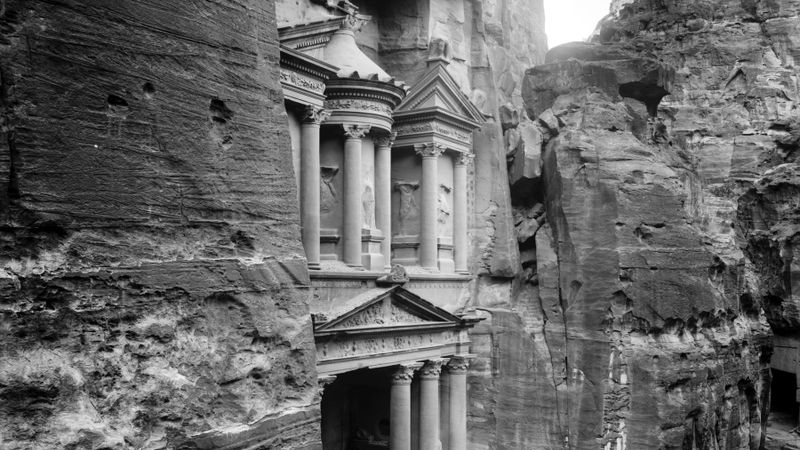
Filmed, but Not Recorded: The Arab World’s Missing Film Locations
Wikidata knows Gladiator was filmed in Morocco. It doesn’t know where.
Ouarzazate is the second most filmed place in the Middle East and North Africa, yet 25 of its 27 productions are recorded only in Wikipedia prose. We compared filming records worldwide and found that in the Arab world, Wikidata usually knows the country but not the place.