
Dubai · United Arab Emirates
Inside Alserkal Avenue: A Guide to Dubai's Art District
How a row of Al Quoz warehouses became the most serious address in Gulf contemporary art — and how to navigate its galleries, foundations and programme.
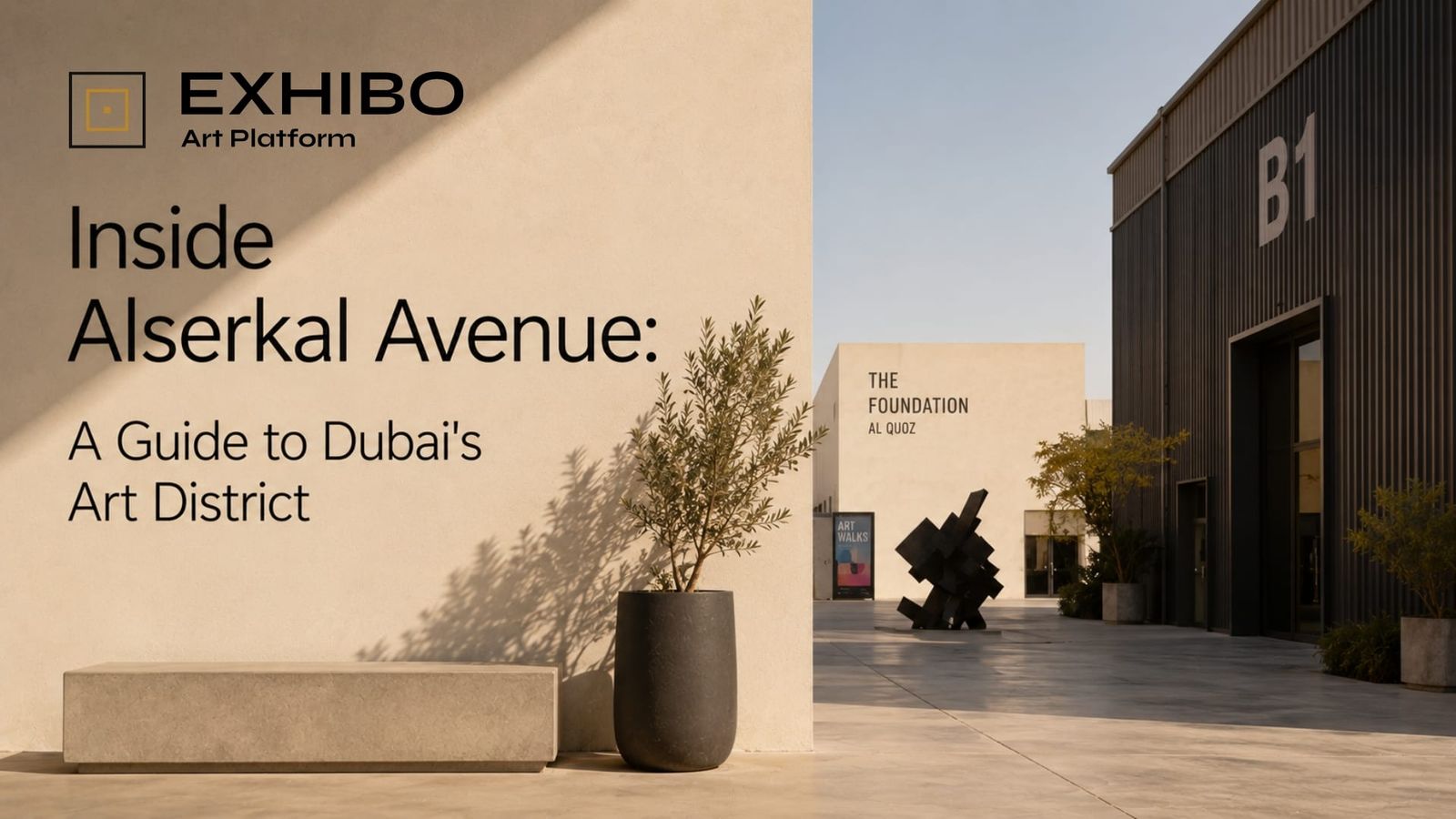
There are no palm-lined boulevards here, no choreographed fountains, no mirrored towers. Alserkal Avenue sits in Al Quoz Industrial Area 1 — a grid of concrete warehouses and marble workshops wedged between Sheikh Zayed Road and Al Khail Road — and it is, improbably, the most culturally credible square kilometre in the Gulf. What began in 2007 as a handful of subsidised warehouse units has become a district of roughly seventy spaces across half a million square feet: galleries representing artists from Tehran to Cape Town, two non-profit foundations, the UAE's only independent cinema, design studios, and a programme of commissions, residencies and talks that runs year-round. For a first-time visitor, the place can read as deceptively low-key. This guide is a map to what is actually there, who the key galleries are, and how to spend a few hours among them without missing the point.
How an auto-parts district became an art district
The story is now well-rehearsed in the region, but worth telling plainly because it explains why Alserkal feels different from a purpose-built cultural zone. In 2007, Abdelmonem Bin Eisa Alserkal — a member of one of Dubai's established trading families — began converting a cluster of warehouses on Street 8 in Al Quoz into exhibition spaces, offering them at subsidised rents to galleries and creative businesses willing to commit to permanent operations. The earliest tenants were a small group: Ayyam Gallery, Gallery Isabelle van den Eynde and Carbon 12 among them, with no coffee stop in sight.
The turning point came around 2011, when Green Art Gallery, Grey Noise and Lawrie Shabibi arrived, drawn by the scale of the empty warehouses and the freedom they offered. A second wave in 2015–16 brought international weight: New York's Leila Heller opened a 14,000-square-foot Dubai branch, Stephane Custot relocated his decades of London and Paris experience into Custot Gallery Dubai, and The Third Line — one of the city's foundational galleries — moved in with its roster of Middle Eastern artists. By 2017, the OMA-designed exhibition hall Concrete had opened, giving the district a flexible, architecturally serious venue for large-scale shows.
What makes the model unusual is its economics. Commercial rents from established galleries help fund subsidised studios for emerging artists through the Alserkal Arts Foundation — a self-sustaining loop in which market success at one level underwrites creative risk at another. In a region where cultural infrastructure has typically been built top-down by the state, this bottom-up, market-driven precinct has been studied by planners from Abu Dhabi, Riyadh and Jeddah as a template. Dubai's 2040 Urban Master Plan has since designated Al Quoz one of the city's five creative and knowledge clusters.
The galleries: who's who
Alserkal's galleries divide roughly into three temperaments — the regionally-rooted programmes writing the art history of the MENASA region (Middle East, North Africa, South Asia), the internationally-minded spaces bringing global names to the Gulf, and the foundations operating on a non-commercial, curatorial logic. The table below is an orientation, not a ranking.
Gallery / Space | Focus | Why it matters |
|---|---|---|
The Third Line | Middle Eastern contemporary | One of Dubai's foundational galleries; a roster of established regional artists and consistently strong solo shows. |
Green Art Gallery | MENASA, conceptual & multidisciplinary | A long history with Arab modernism; now programmes curatorially ambitious group shows that travel well internationally. |
Carbon 12 | International contemporary | Founded 2008 by Kourosh Nouri and Nadine Knotzer; among the first to show non-Middle Eastern artists in Dubai, with a tight, global programme. |
Lawrie Shabibi | MENASA emerging & mid-career | Rigorous, often research-led exhibitions; a reliable barometer of serious regional practice. |
Grey Noise | South Asian & Middle Eastern, avant-garde | Champions emerging artists engaging identity, politics and social change. |
Gallery Isabelle van den Eynde | Regional contemporary | One of the original tenants; long-standing relationships with key Emirati and regional artists. |
Leila Heller Gallery | East–West dialogue | The largest contemporary gallery in the UAE; a New York pedigree and a programme spanning blue-chip international and regional names. |
Custot Gallery Dubai | Modern & contemporary | Founded by Stephane Custot; brings a European modern-master sensibility to the Avenue. |
Ayyam Gallery | Established & emerging Middle Eastern | Known for its commitment to Syrian and wider Arab artists. |
Ishara Art Foundation | South Asian contemporary (non-profit) | Founded 2019; the region's dedicated platform for South Asian art and its diaspora — museum-grade exhibitions, not sales. |
Jean-Paul Najar Foundation | Abstract & conceptual (non-profit) | A collection-based foundation with a focus on dialogue between Western and regional abstraction. |
1x1 Art Gallery | Contemporary Indian | A specialist programme within the Avenue's South Asian axis. |
Elmarsa Gallery | Modern & contemporary Arab | Strong on North African and Tunisian modernism. |
A useful tell for newcomers: the foundations — Ishara and Jean-Paul Najar — run on a curatorial rather than commercial logic, so their shows often feel closer to a museum than a gallery, and there is no expectation that you are there to buy. The commercial galleries, meanwhile, are entirely approachable; you are welcome to walk in, look, and ask. Making an enquiry about a work, or simply asking the front desk what to look at, is normal and expected — not the preserve of established collectors.
Beyond the galleries
Alserkal is not only galleries, and treating it as a gallery-only stop undersells it.
Concrete is the OMA-designed exhibition hall — high-ceilinged, with a pivoting facade — used for the district's largest and most experimental shows and a shortlisted building for the Aga Khan Award for Architecture. Cinema Akil is the UAE's only independent cinema, screening art-house and international film, and a destination in its own right. A4 Space functions as a community centre with workshops, an organic café and a more relaxed daytime rhythm. Scattered between the warehouses are design studios, fine-art shippers, frame-makers, third-wave coffee roasters and restaurant concepts — Comptoir 102, Wild & The Moon and a rotating cast of pop-up kitchens among them — that make a half-day visit easy to sustain.
The Alserkal Arts Foundation ties it together: public art commissions, research grants, artist residencies in purpose-built studios, and a continuous programme of talks and symposia. Much of this is free and open to the public.
When to go: the rhythm of the season
Alserkal runs year-round, but its calendar has a clear pulse, and timing your visit changes the experience entirely.
Moment | When | What it is |
|---|---|---|
Alserkal Lates | Season opening (autumn) | An evening when galleries and spaces open together, often with new exhibitions, sound commissions and performances — the unofficial start of the art season. |
Galleries Day | Periodically across the season | Coordinated openings across the district's galleries and foundations in a single day. |
Alserkal Art Week / Art Month | Spring, around Art Dubai | The district's busiest stretch. In 2026 this expanded into a five-week "Art Month" (mid-April to mid-May), with sixteen gallery exhibitions, public commissions and more than a hundred talks and performances — timed to lead into a rescheduled Art Dubai. |
Quoz Arts Fest | Annual | A community festival of art, music, food and pop-ups that draws tens of thousands. |
Gulf Photo Plus (GPP) | Annual | A week dedicated to photography, with exhibitions, workshops and talks. |
The single most concentrated time to visit is during Art Week / Art Month, when the Avenue anchors Dubai's role as the first stop for international curators, collectors and cultural journalists in the Gulf. If you prefer the work over the crowds, a quiet Tuesday-to-Saturday afternoon outside fair season lets you actually sit with the exhibitions.
Practical notes for a first visit
A few things the signage won't tell you:
Getting there. Alserkal is best reached by car or taxi; taxis in Dubai are inexpensive. The nearest Metro stop is roughly a fifteen-to-twenty-minute walk away — manageable in cooler months, less so at midday in summer.
Hours. Most galleries run Tuesday to Saturday, broadly 10am–7/8pm, and many close around 6pm. Check individual spaces before a late-afternoon visit; some keep different hours, and Cinema Akil runs into the evening.
Cost. Entry to the galleries and most exhibitions is free.
Heat. The Avenue is pedestrianised and pleasant to walk in the cooler months. In summer, plan around the heat — the galleries sit close together, so short hops between air-conditioned spaces work well, and a café break is easy to build in.
A sensible route. Park once and walk. Start with one of the foundations (Ishara or Jean-Paul Najar) to set a curatorial frame, move through the commercial galleries clustered along the main lanes, break at a café in The Yard, and finish at Concrete if a large show is on. Allow at least two to three hours; a thorough visit can fill a half-day.
Photography. Generally permitted in public areas and most galleries unless a specific show says otherwise — check the signage or ask.
Why it matters
It would be easy to file Alserkal under Dubai's appetite for landmarks. The more accurate reading is that it is the counter-argument to that scepticism: a district that grew from market demand rather than decree, whose galleries report that the majority of their sales now go to regional collectors — a reversal from a decade ago, when that share was a small minority. For galleries across the wider region, Alserkal set the standard for what a permanent, credible, year-round contemporary art presence in the Gulf can look like. For a visitor, it offers the rarest thing a fast-built city can produce: somewhere that feels genuinely, unhurriedly real.
If you are planning a wider trip, the Avenue pairs naturally with DIFC's downtown galleries and the Jameel Arts Centre on the waterfront — and, a ninety-minute drive away, the more curatorially experimental world of the Sharjah Biennial.
Galleries mentioned
Alserkal Arts Foundation
Ayyam Gallery
Carbon 12
Custot Gallery Dubai
Elmarsa Gallery
Frame Art Gallery
Grey Noise
Gulf Photo Plus
Ishara Art Foundation
Jameel Arts Centre
Lawrie Shabibi
Leila Heller Gallery
Nadine Gallery
Photography Gallery
Sfeir-Semler Gallery (Downtown)
Sharjah Art Foundation (HQ)
The Third Line





Museums mentioned

Exhibitions mentioned
Related reading
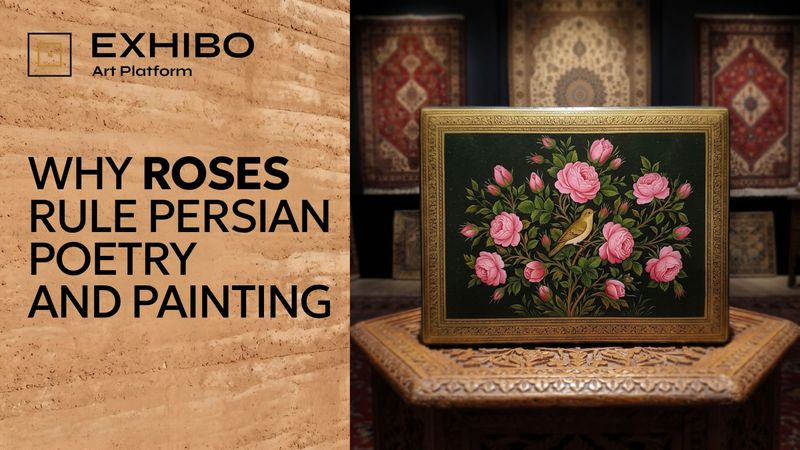
The Flower That Was Never Only Beautiful
The rose rules Persian poetry and painting — but under the sweetness sits a thorn, a bleeding bird, and a national emblem quietly assembled out of Chinese, European and Persian parts. A history of gol o bolbol, from a medieval still to a Dubai gallery.
Gol o bolbol — the rose and the nightingale — is among the most beautiful images in a thousand years of Persian art, and in modern Persian it also means sweet, empty talk. Under the tile, the picture is darker: a bird singing in blood for a flower that will not answer and will not last.
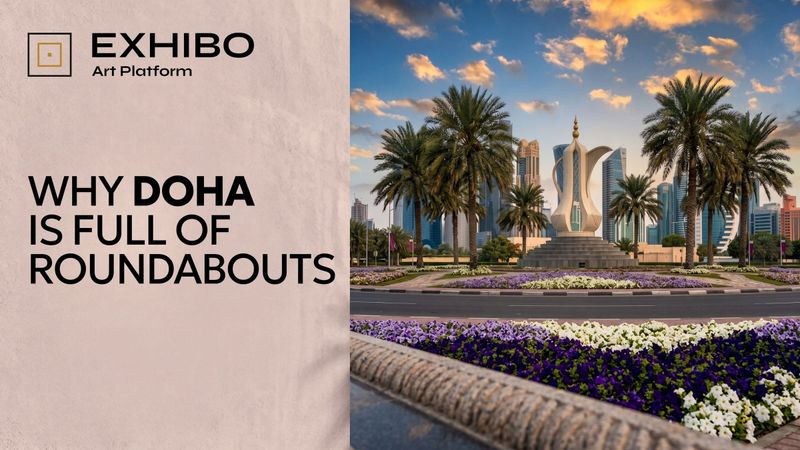
Why Doha Is Full of Roundabouts
An old circle at a crossroads, sharpened by British road engineering, became the way an Arabian city found its way and remembered itself — and it took the bulldozers to reveal it.
In a city where a landmark was more useful than an address, Doha's roundabouts became its navigation, its landscaping and its national image all at once. Now they're being torn out for signalled junctions — and the affection for them arrived, as one scholar put it, only posthumously.
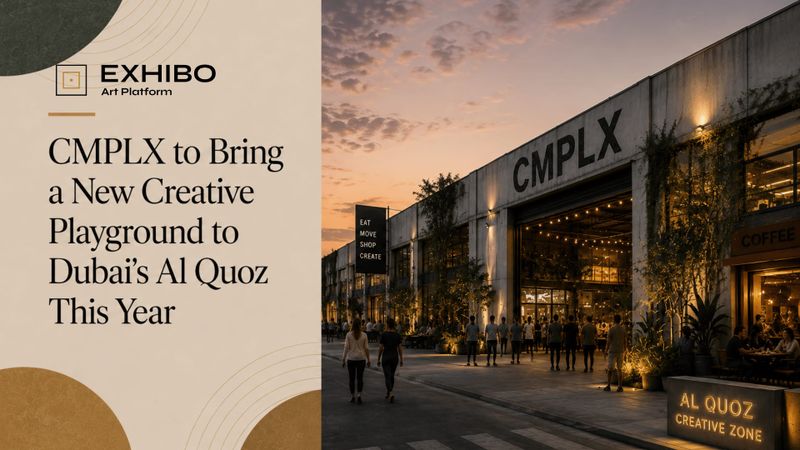
CMPLX to Bring a New Creative Playground to Dubai's Al Quoz This Year
A seven-warehouse lifestyle hub combining food, wellness, retail and creative studios is set to open in Al Quoz Creative Zone by the end of 2026, adding a new anchor to the neighbourhood built around Alserkal Avenue.
CMPLX, a new warehouse-style lifestyle destination combining food, wellness, retail and creative studios, is set to open in Dubai's Al Quoz Creative Zone by the end of 2026 — adding a fresh anchor to a neighbourhood already defined by Alserkal Avenue's galleries and cultural spaces.