
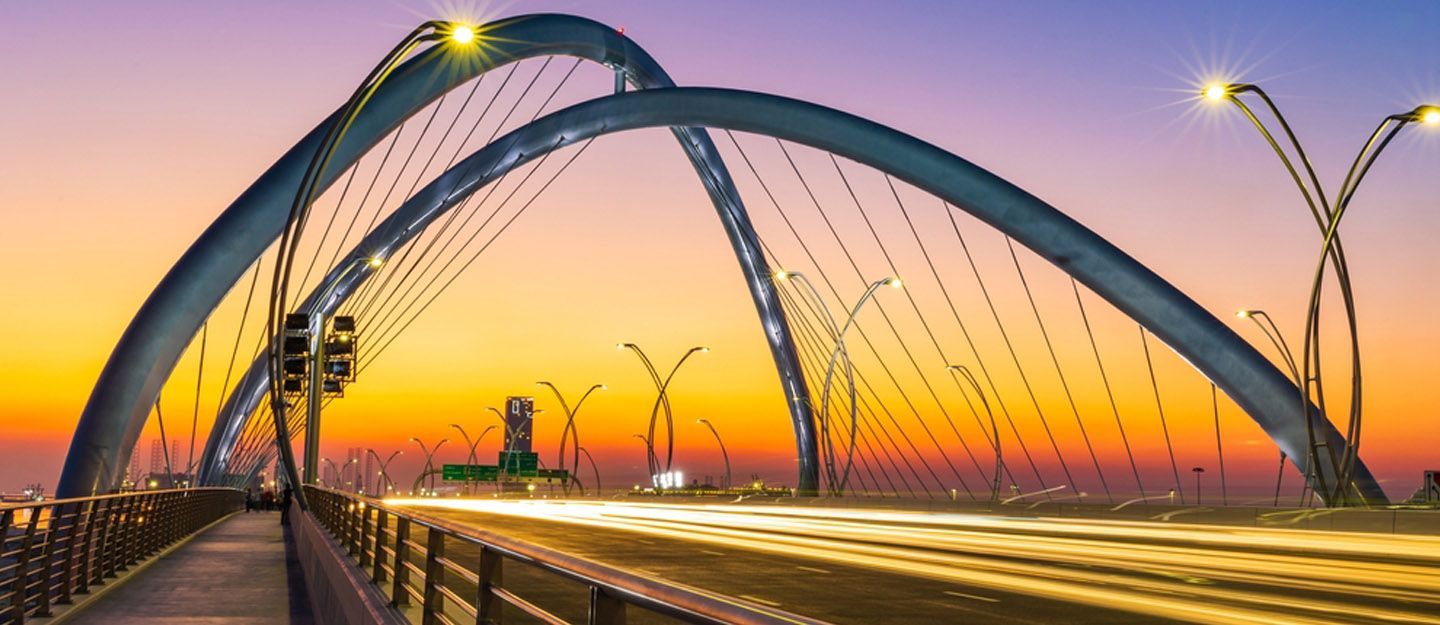
Infinity Bridge
A 42-metre steel arch bent into the mathematical symbol for infinity, spanning Dubai Creek at its historic mouth.
The Infinity Bridge is a road and pedestrian crossing over Dubai Creek, opened on 16 January 2022, linking Al Shindagha on the Bur Dubai side with Al Ras on the Deira side. It was built by Belgian contractor Besix, with the structure defined by consultants Parsons, as the centrepiece of the AED 5.3 billion Al Shindagha Corridor Improvement Project — effectively replacing the 1975 Al Shindagha Tunnel as the main route across the mouth of the Creek.
The bridge takes its name from its signature feature: a steel arch, rising around 42 metres, bent into the shape of the mathematical symbol for infinity. This is achieved with two steel arches set diagonally across the deck, spanning roughly 135 metres between their piers to create the continuous looping form; the segments were prefabricated and assembled on site, some weighing close to 130 tonnes. Sheikh Mohammed bin Rashid framed the design as representing Dubai's limitless, boundless ambitions.
Beyond the sculpture, the bridge is a major piece of infrastructure: roughly 300 metres long and up to 55 metres wide, carrying six lanes in each direction and capable of some 24,000 vehicles per hour, it raised the number of lanes crossing the Creek from 48 to 60. It also includes a three-metre-wide shared pedestrian and cycling track and a wide marine navigation passage beneath. At night the arch is illuminated, and its reflection on the Creek has made it a favourite subject for photographers and dhow-cruise passengers.
Exhibo editorial
It's rare for a piece of pure traffic infrastructure to earn a nickname, but the Infinity Bridge did it honestly: two steel arches leaned across the deck until they draw, unmistakably, the ∞ symbol against the sky. The pun is obvious — Dubai's boundless ambition, and so on — yet the thing is elegant enough to survive its own metaphor.
What gives it weight is where it sits: at the historic mouth of the Creek, the exact seam between Bur Dubai and Deira where the whole city began as a trading post. A mathematical symbol for endlessness, planted over the water that started everything. Come at dusk, walk the pedestrian track, and watch the arch double itself in the Creek below.
Gallery


How to find it
The Infinity Bridge spans Dubai Creek at its mouth, connecting Al Shindagha (Bur Dubai side) with Al Ras (Deira side), next to the former Al Shindagha Tunnel. The best views of the infinity-shaped arch are from the Creek-side promenades on either bank and from dhow cruises passing beneath; a shared pedestrian and cycling track runs across the bridge itself for a closer look.
Similar places
All places
News by Exhibo
Editorial coverage on Exhibo
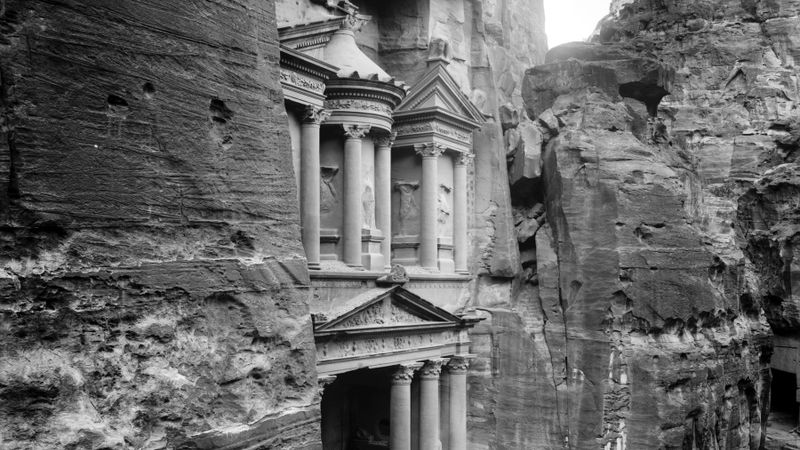
Filmed, but Not Recorded: The Arab World’s Missing Film Locations
Wikidata knows Gladiator was filmed in Morocco. It doesn’t know where.
Ouarzazate is the second most filmed place in the Middle East and North Africa, yet 25 of its 27 productions are recorded only in Wikipedia prose. We compared filming records worldwide and found that in the Arab world, Wikidata usually knows the country but not the place.
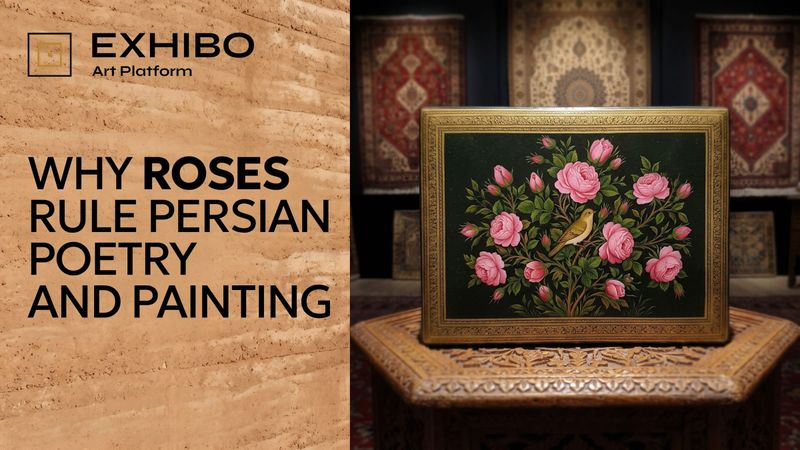
The Flower That Was Never Only Beautiful
The rose rules Persian poetry and painting — but under the sweetness sits a thorn, a bleeding bird, and a national emblem quietly assembled out of Chinese, European and Persian parts. A history of gol o bolbol, from a medieval still to a Dubai gallery.
Gol o bolbol — the rose and the nightingale — is among the most beautiful images in a thousand years of Persian art, and in modern Persian it also means sweet, empty talk. Under the tile, the picture is darker: a bird singing in blood for a flower that will not answer and will not last.
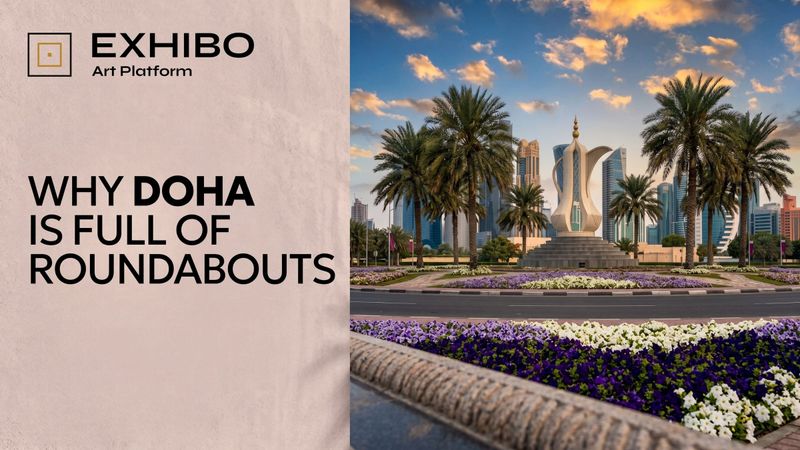
Why Doha Is Full of Roundabouts
An old circle at a crossroads, sharpened by British road engineering, became the way an Arabian city found its way and remembered itself — and it took the bulldozers to reveal it.
In a city where a landmark was more useful than an address, Doha's roundabouts became its navigation, its landscaping and its national image all at once. Now they're being torn out for signalled junctions — and the affection for them arrived, as one scholar put it, only posthumously.