
Dubai Metro Station Shells
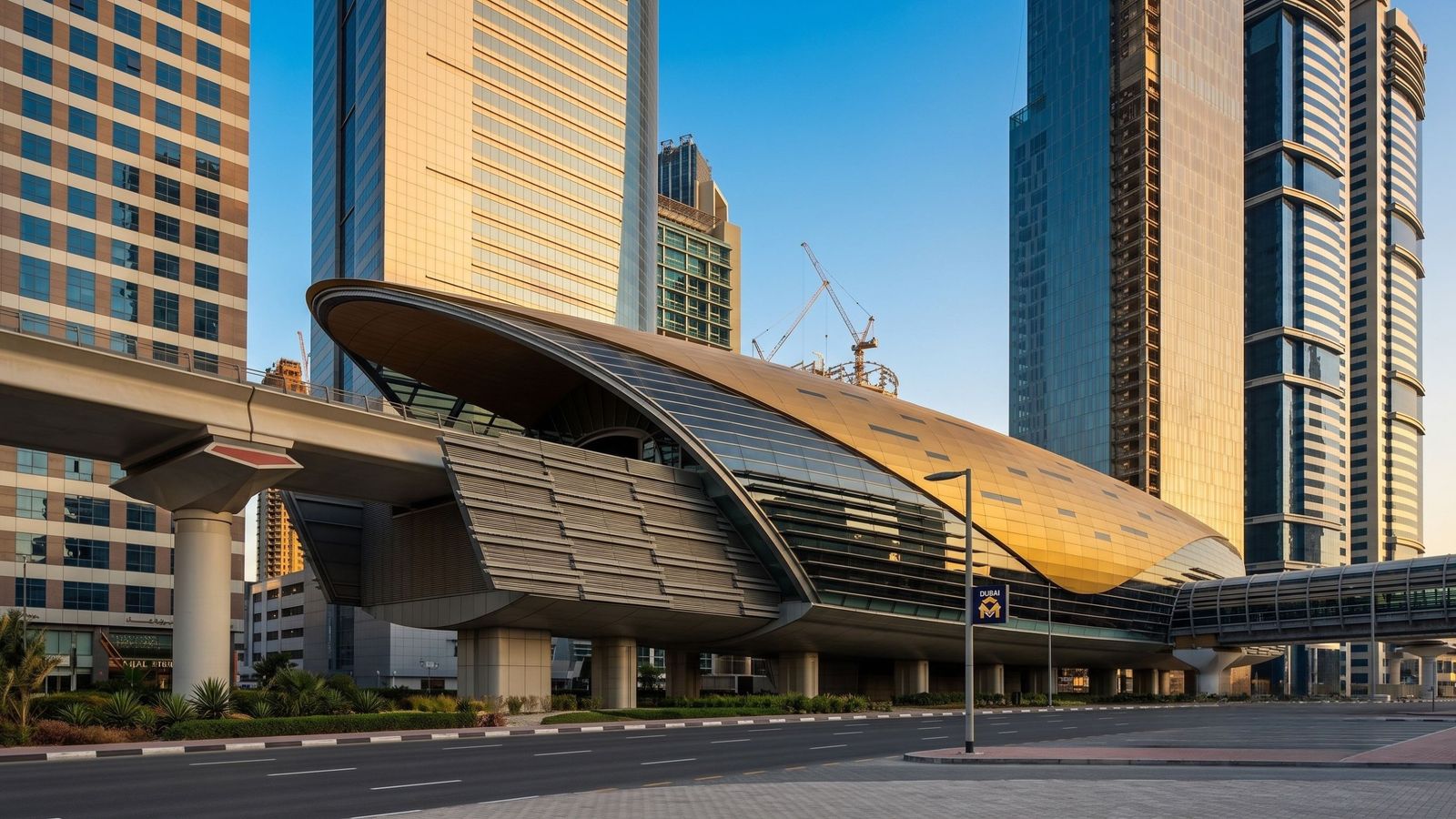
Golden shell-roofed stations across the city — Aedas's pearl-inspired canopies, a column-free steel form repeated as urban jewellery.
The Dubai Metro, inaugurated on 9 September 2009, was the first urban rail network in the Arabian Gulf and, at opening, the world's longest fully automated driverless system. Its stations were designed by the firm Aedas, working across offices in the UK, Hong Kong, Singapore and Dubai, with architectural design director Boran Agoston; Atkins led overall civil and structural coordination for the RTA.
The stations share a single, instantly recognisable architectural idea: a golden, shell-shaped roof. The form is a direct reference to Dubai's pre-oil heritage as a pearling village — the rough exterior and smooth interior of a pearl shell — casting each station as a 'modern-day gem'. Each roof is a long-span steel structure without internal columns or supports, an elliptical cone over a curve, rising in places to more than 30 metres and clad in aluminium panels over a double-skin envelope. That double skin is not only sculptural: it enables 'solar-assisted' natural ventilation that helps cool the roof in the city's extreme climate. Interiors, designed by KCA International, are themed around the four elements — earth, water, air and fire.
Repeated across dozens of elevated and underground stations along the Red and Green lines (and later the Route 2020 extension), the shell became a piece of city-scale identity: a consistent, biomimetic envelope that turns ordinary transit infrastructure into a series of gleaming landmarks strung across Dubai. The seashell form has since been carried forward as the design language for later extensions.
Exhibo editorial
Most cities let their metro stations disappear into the background. Dubai turned its into a recurring sculpture. The same golden shell surfaces again and again along the lines — over the highway, above the desert, beside the malls — so the network reads as a single object scattered across the whole city rather than a set of separate stops.
The reference is the pearl, the thing Dubai lived on before oil, and there's a quiet argument in that choice: an emirate famous for the future borrowing the form of its oldest trade for the infrastructure that moves it around. Notice, next time you pass one lit up at night, that there isn't a single internal column holding the shell up — just one long, confident span of steel.
How to find it
The shell-roofed stations run the length of the Dubai Metro's Red and Green lines and the Route 2020 extension, both elevated and underground. Any elevated station along Sheikh Zayed Road shows the golden shell canopy clearly from street level; flagship interchanges such as those near the financial district and the malls are among the most dramatic. The form is best appreciated approaching an elevated station from outside, then again from the concourse level inside, where the column-free span reads overhead.
Similar places
All places
News by Exhibo
Editorial coverage on Exhibo
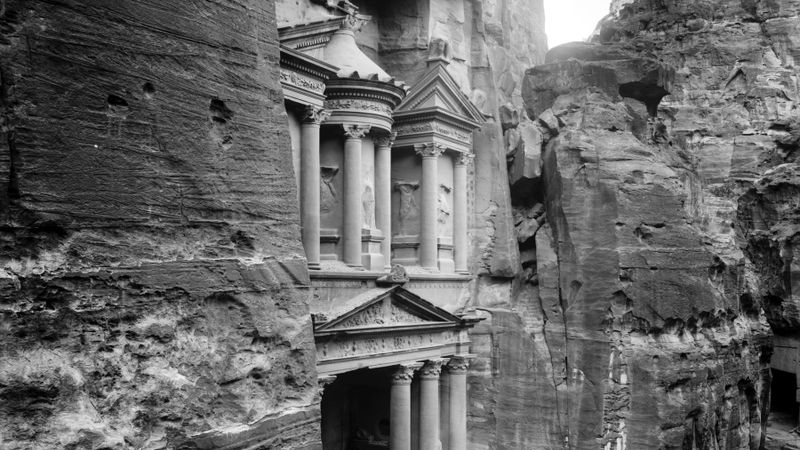
Filmed, but Not Recorded: The Arab World’s Missing Film Locations
Wikidata knows Gladiator was filmed in Morocco. It doesn’t know where.
Ouarzazate is the second most filmed place in the Middle East and North Africa, yet 25 of its 27 productions are recorded only in Wikipedia prose. We compared filming records worldwide and found that in the Arab world, Wikidata usually knows the country but not the place.
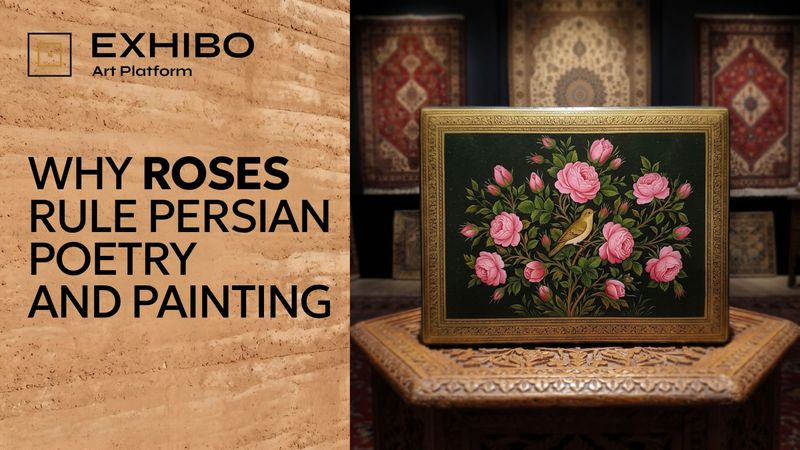
The Flower That Was Never Only Beautiful
The rose rules Persian poetry and painting — but under the sweetness sits a thorn, a bleeding bird, and a national emblem quietly assembled out of Chinese, European and Persian parts. A history of gol o bolbol, from a medieval still to a Dubai gallery.
Gol o bolbol — the rose and the nightingale — is among the most beautiful images in a thousand years of Persian art, and in modern Persian it also means sweet, empty talk. Under the tile, the picture is darker: a bird singing in blood for a flower that will not answer and will not last.
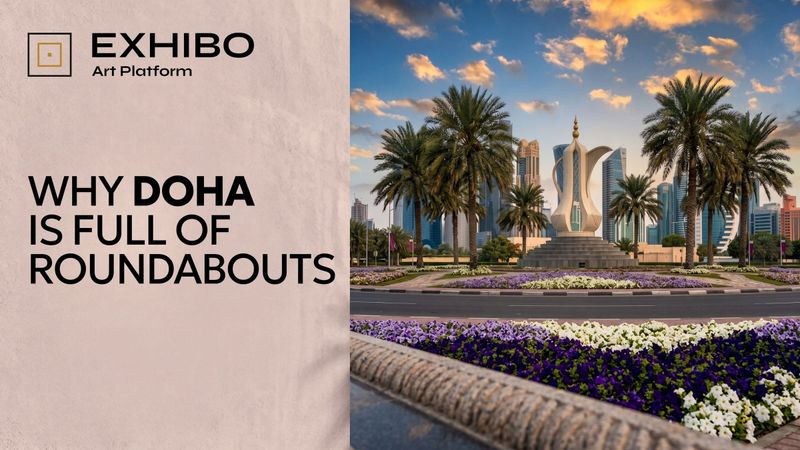
Why Doha Is Full of Roundabouts
An old circle at a crossroads, sharpened by British road engineering, became the way an Arabian city found its way and remembered itself — and it took the bulldozers to reveal it.
In a city where a landmark was more useful than an address, Doha's roundabouts became its navigation, its landscaping and its national image all at once. Now they're being torn out for signalled junctions — and the affection for them arrived, as one scholar put it, only posthumously.