Declaration by eL Seed
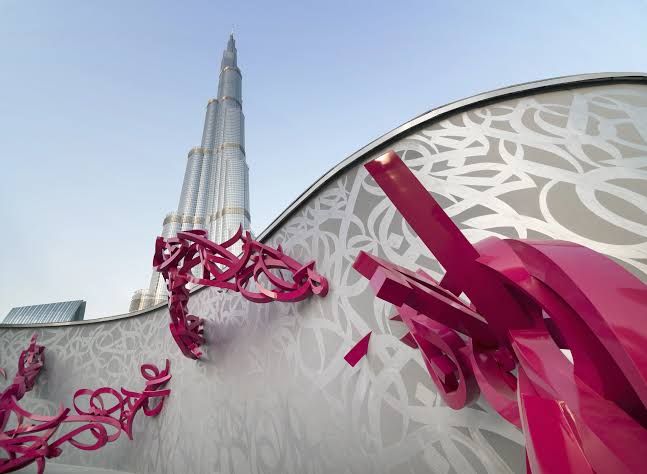
A 30-metre ribbon of bright pink Arabic calligraffiti outside Dubai Opera — a quote you can walk through and climb on.
Declaration is a monumental public sculpture by the French-Tunisian artist eL Seed, installed in March 2018 in the plaza and gardens outside Dubai Opera in Downtown Dubai's Opera District. eL Seed, based in Dubai since 2013 and working from a studio in Alserkal Avenue, is one of the world's foremost practitioners of 'calligraffiti' — a hybrid of graffiti and classical Arabic calligraphy.
The work snakes along a curved wall opposite the opera house as a continuous ribbon of looping, three-dimensional Arabic script, roughly 30 metres in length and weighing about 3.5 tonnes. It is fabricated mostly from bright pink stainless steel and took over a year to complete with the help of 31 craftsmen; though heavy, it is engineered to appear almost to float. The letters spell out a quotation from Sheikh Mohammed bin Rashid Al Maktoum, Vice President and Ruler of Dubai: that art in all its colours and types reflects the culture of nations, their history and civilisation.
True to eL Seed's practice, Declaration is made to be inhabited rather than only viewed: visitors can walk through it and climb on it, and there is even a bird's nest inside the form. The artist has described it as a declaration of love and gratitude to Arabic calligraphy and to Dubai, the city he calls home. It builds on an earlier, smaller and more ephemeral sculptural work of the same name that eL Seed created during a residency at Tashkeel — a piece he has called a turning point in his career.
Exhibo editorial
eL Seed calls this his most iconic Dubai piece, and the reason is simple: you don't just look at Declaration, you walk into it. Thirty metres of electric pink Arabic script curling along the wall outside the opera house, low enough to climb, open enough to step through — calligraphy turned into a place rather than a picture.
The words are the Ruler of Dubai's, about art reflecting the civilisation of nations, which could have been dry. Rendered in eL Seed's looping calligraffiti and painted the least solemn shade of pink imaginable, it becomes something a child clambers on without ever reading. There's a bird's nest tucked inside the letters — a small, unplanned proof that the work is genuinely lived in. Best caught with the Opera and Burj Khalifa behind it.
How to find it
Declaration stands in the plaza and gardens directly outside Dubai Opera, on the curved wall facing the opera house in the Opera District of Downtown Dubai. Walk the promenade around the Opera; the bright pink sculpture is hard to miss along the garden wall. You can approach it closely, walk through the letters and see the bird's nest set inside the calligraphy.
Similar places
All places
News by Exhibo
Editorial coverage on Exhibo
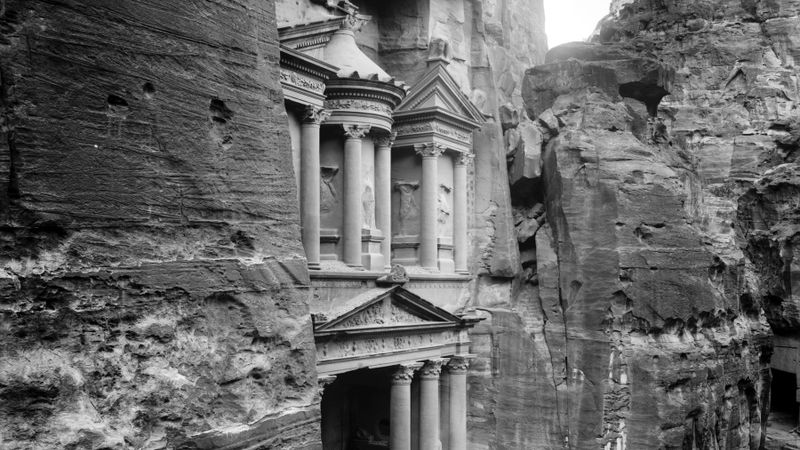
Filmed, but Not Recorded: The Arab World’s Missing Film Locations
Wikidata knows Gladiator was filmed in Morocco. It doesn’t know where.
Ouarzazate is the second most filmed place in the Middle East and North Africa, yet 25 of its 27 productions are recorded only in Wikipedia prose. We compared filming records worldwide and found that in the Arab world, Wikidata usually knows the country but not the place.
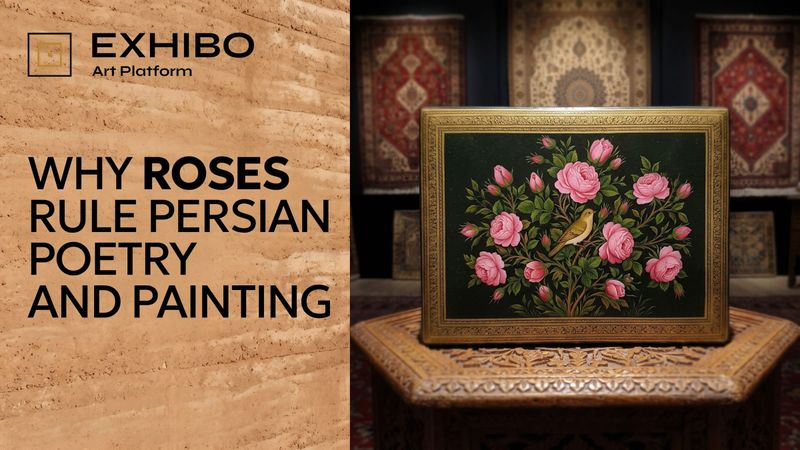
The Flower That Was Never Only Beautiful
The rose rules Persian poetry and painting — but under the sweetness sits a thorn, a bleeding bird, and a national emblem quietly assembled out of Chinese, European and Persian parts. A history of gol o bolbol, from a medieval still to a Dubai gallery.
Gol o bolbol — the rose and the nightingale — is among the most beautiful images in a thousand years of Persian art, and in modern Persian it also means sweet, empty talk. Under the tile, the picture is darker: a bird singing in blood for a flower that will not answer and will not last.
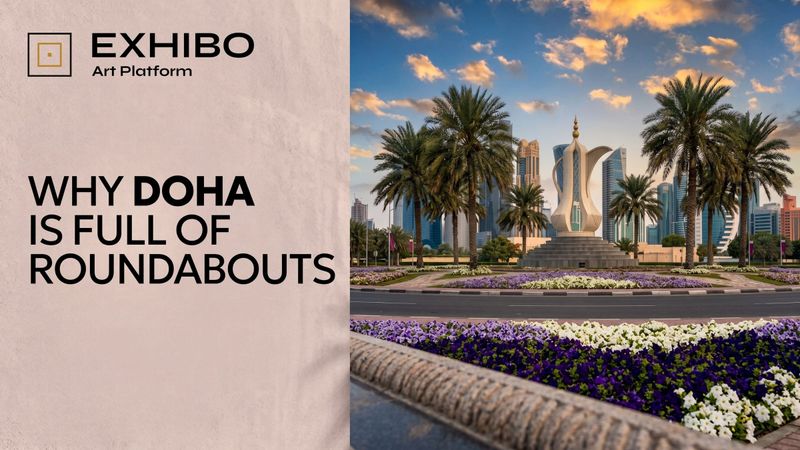
Why Doha Is Full of Roundabouts
An old circle at a crossroads, sharpened by British road engineering, became the way an Arabian city found its way and remembered itself — and it took the bulldozers to reveal it.
In a city where a landmark was more useful than an address, Doha's roundabouts became its navigation, its landscaping and its national image all at once. Now they're being torn out for signalled junctions — and the affection for them arrived, as one scholar put it, only posthumously.