
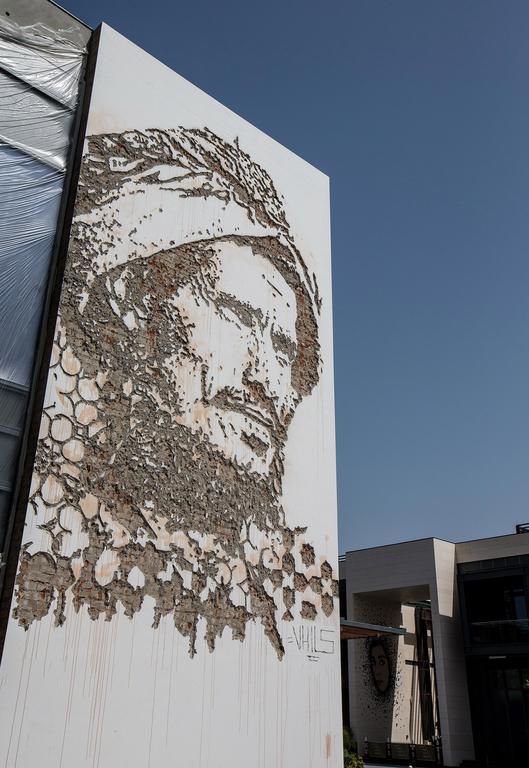
This monumental portrait at City Walk is the work of Portuguese artist Alexandre Farto, known as Vhils, made for the inaugural Dubai Walls project in March 2016.
Vhils is celebrated for an inverted technique: rather than adding paint to a wall, he removes material from it. Using hammer drills, chisels and other destructive tools, he chips and carves back through the layers of a surface so that the image emerges from what is taken away — the practice he calls 'Scratching the Surface'. The result reads as a portrait excavated from the building rather than applied to it, with the raw texture of the wall doing the shading.
The Dubai wall-carving depicts a Bedouin, and is reported to be inspired by the 1950s photography of the British explorer Sir Wilfred Thesiger, who documented his journeys across the Rub' al Khali desert in his book Arabian Sands. Placing an excavated portrait of a desert nomad in the middle of a newly built luxury retail district gives the work a pointed relationship to its setting. It remains one of the best-preserved pieces from the 2016 project.
Exhibo editorial
Every other artist at City Walk brought paint. Vhils brought a hammer drill. The Bedouin's face here wasn't put onto the wall — it was dug out of it, layer by layer, so the portrait is literally made of damage.
That inversion lands harder than it sounds once you're standing in front of it. The source is a Thesiger photograph from the 1950s, a desert nomad recorded just before the oil changed everything, and now he's been cut into the side of a shopping district built on what came after. Nobody wrote that irony into the brief; it just happens to be true. Get close enough to see the tool marks.
How to find it
The Vhils carving is on a wall within the City Walk pedestrian district on Al Safa Street. It is large in scale and best read from a few metres back, where the carved layers resolve into a face; step closer to see the drill and chisel marks that form the image. Look for the distinctive grey, monochrome surface — unlike the painted murals nearby, this piece has no colour.
Similar places
All places
News by Exhibo
Editorial coverage on Exhibo
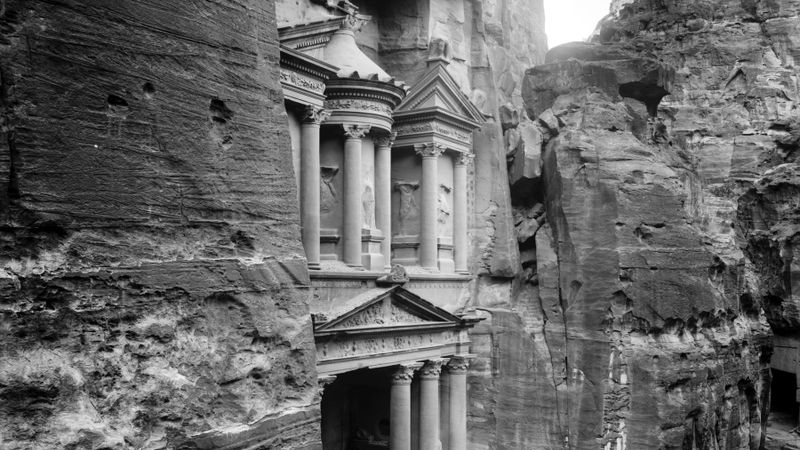
Filmed, but Not Recorded: The Arab World’s Missing Film Locations
Wikidata knows Gladiator was filmed in Morocco. It doesn’t know where.
Ouarzazate is the second most filmed place in the Middle East and North Africa, yet 25 of its 27 productions are recorded only in Wikipedia prose. We compared filming records worldwide and found that in the Arab world, Wikidata usually knows the country but not the place.
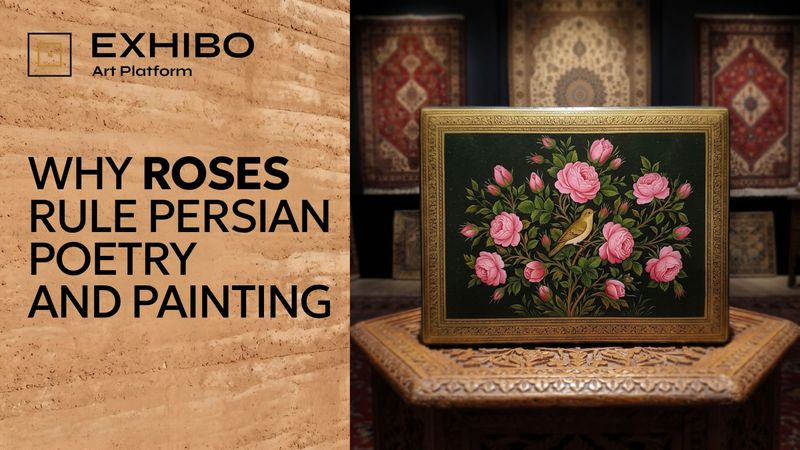
The Flower That Was Never Only Beautiful
The rose rules Persian poetry and painting — but under the sweetness sits a thorn, a bleeding bird, and a national emblem quietly assembled out of Chinese, European and Persian parts. A history of gol o bolbol, from a medieval still to a Dubai gallery.
Gol o bolbol — the rose and the nightingale — is among the most beautiful images in a thousand years of Persian art, and in modern Persian it also means sweet, empty talk. Under the tile, the picture is darker: a bird singing in blood for a flower that will not answer and will not last.
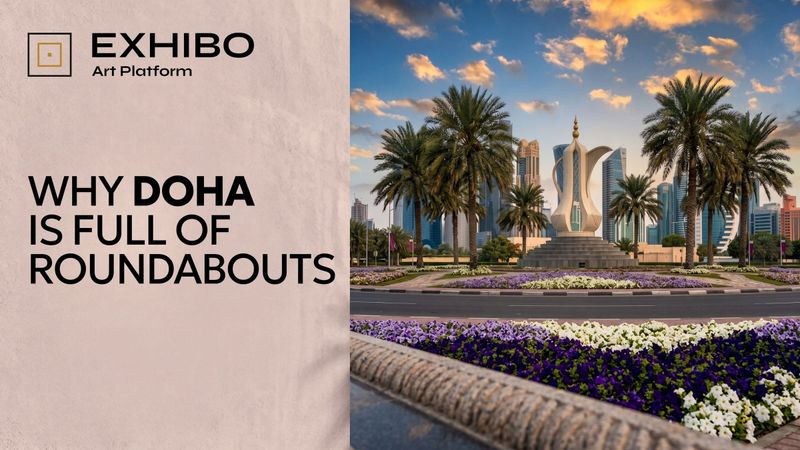
Why Doha Is Full of Roundabouts
An old circle at a crossroads, sharpened by British road engineering, became the way an Arabian city found its way and remembered itself — and it took the bulldozers to reveal it.
In a city where a landmark was more useful than an address, Doha's roundabouts became its navigation, its landscaping and its national image all at once. Now they're being torn out for signalled junctions — and the affection for them arrived, as one scholar put it, only posthumously.