
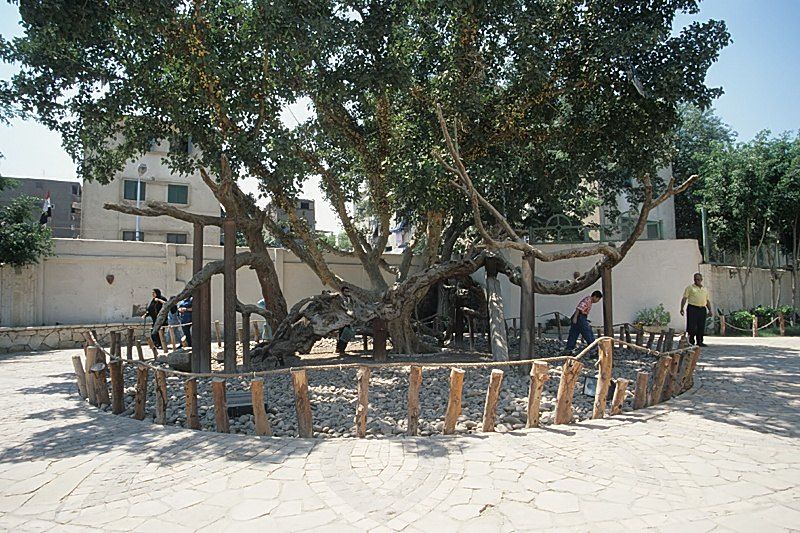
Virgin Mary's Tree, Matariya
A sacred sycamore where, by tradition, the Holy Family rested on their flight into Egypt.
A station of the Holy Family
The Virgin Mary's Tree, Shagaret Mariam, in Matariya, north-eastern Cairo, is one of the best-known stations on the route of the Holy Family in Egypt. According to Coptic tradition, Mary, Joseph and the infant Jesus, fleeing from Herod, passed through the area of ancient Heliopolis and rested in the shade of a sycamore fig tree here; a spring is said to have appeared nearby for them to drink and wash and Mary is said to have washed the child's clothes there. The story is told in medieval Christian accounts and has drawn pilgrims for many centuries.
The tree today
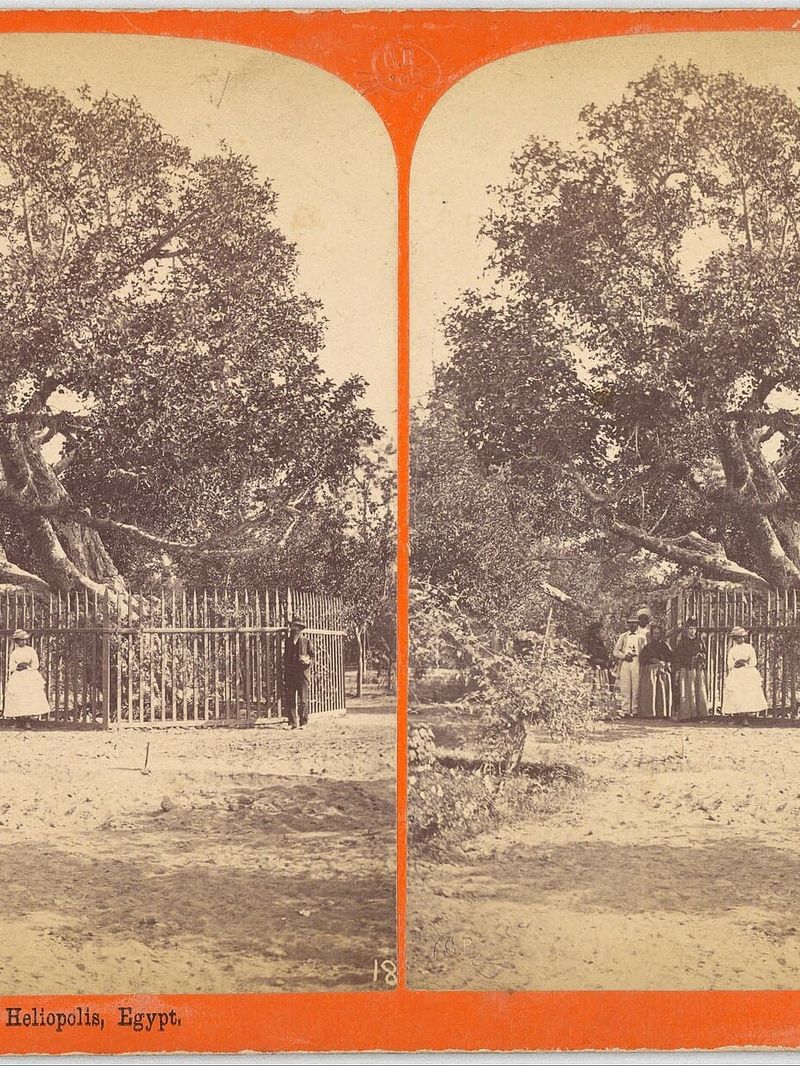
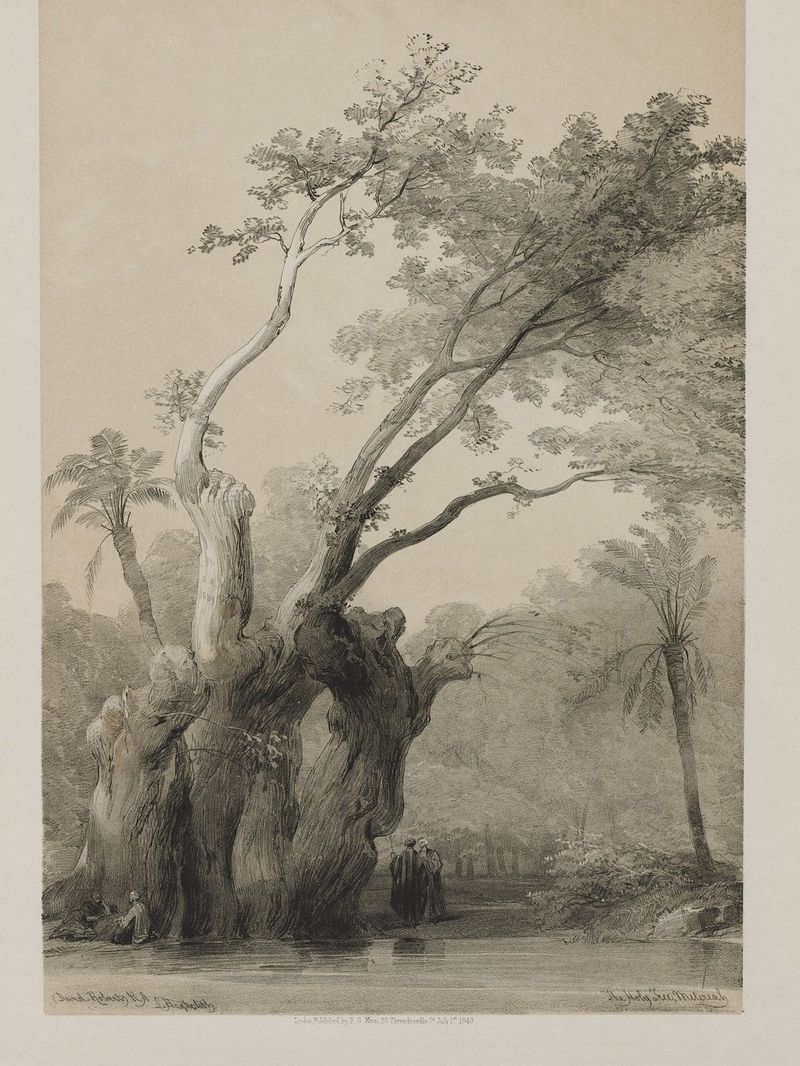
The sycamore that stands in the walled garden today is very old, but it is not the original tree of the tradition; it is said to have grown from shoots of an earlier tree on the same spot, which has collapsed and regrown over the centuries. It is propped up with supports and surrounded by a protective enclosure. Pilgrims of different faiths have long visited it, the Virgin Mary is honoured in Islam as well as in Christianity and the site was a famous stop for European travellers in the Middle Ages and later.
Visiting
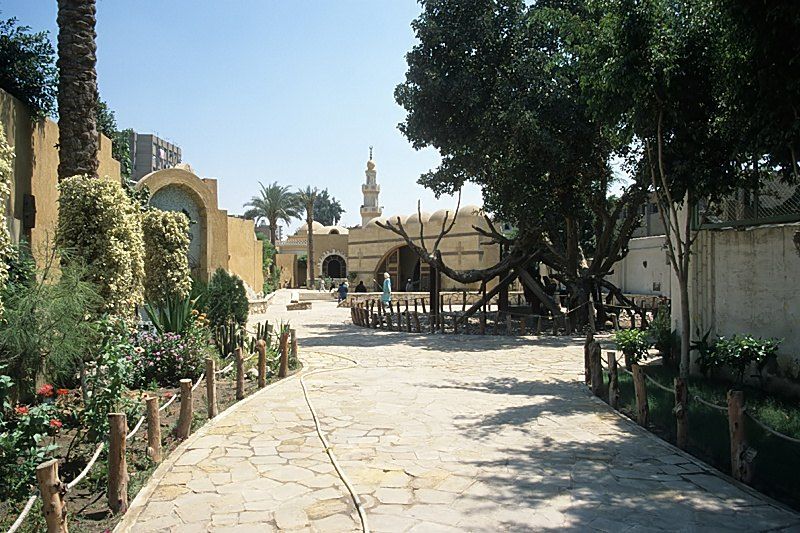
The tree is managed as an antiquities site by the Ministry of Tourism and Antiquities, with a small display on the Holy Family's journey through Egypt. It lies in the same district as the Obelisk of Senusret I, the last monument of ancient Heliopolis and the two can be visited together.
Exhibo editorial
There isn't much to see: a gnarled, propped-up old tree in a small walled garden, a few benches, a few panels on the wall. And yet people have been coming to this spot for something like fifteen centuries, from every Christian tradition and quite a few Muslim ones, to stand where a frightened young family is said to have stopped to rest.
That continuity is the point. Come quietly, sit on a bench in the shade and let the noise of Matariya fade for a few minutes. Then go on to the obelisk nearby: the two together make one of the oddest and most affecting half-days in Cairo.
Gallery
How to find it
In Matariya, in north-eastern Cairo, a short taxi ride from El-Matareyya metro station on Line 1. Combine it with the Obelisk of Senusret I nearby.
Similar places
All places
News by Exhibo
Editorial coverage on Exhibo
Colour Symbolism in Art History
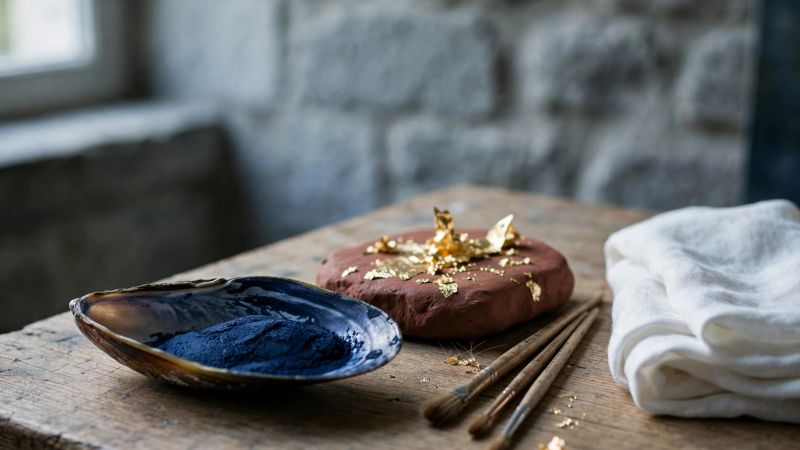
Marian blue, imperial purple, gold ground and modernist hues as dated Western conventions you can check against named museum works.
Colour symbolism in Western art is a convention you can date: who wears the hue, which feast it marks, whether gold stands for light. This guide reads liturgical codes, Marian blue, Tyrian purple and gold ground through named museum works from San Vitale to Klein, then shows how to test a reading in front of the picture.
Fra Angelico's Earliest Altarpiece Returns to Fiesole Following Major Conservation
Conservation reveals hidden architectural designs and clarifies Renaissance interventions
The meticulous restoration of Fra Angelico's earliest preserved work uncovers concealed layers and structural innovations ahead of its return to its original Tuscan setting.
Agatha Christie's Egypt: Three Abu Simbels, a Pharaoh and a Murder on the Nile
Christie set one famous murder on the Nile and two lesser-known stories in ancient Egypt. The temples, letters and film sets behind all three.
The Abu Simbel of Death on the Nile has since moved up a hill. Christie's two other Egyptian stories lead to a pharaoh's dismantled temples at Karnak and a farmer's 4,000-year-old letters now in New York.