
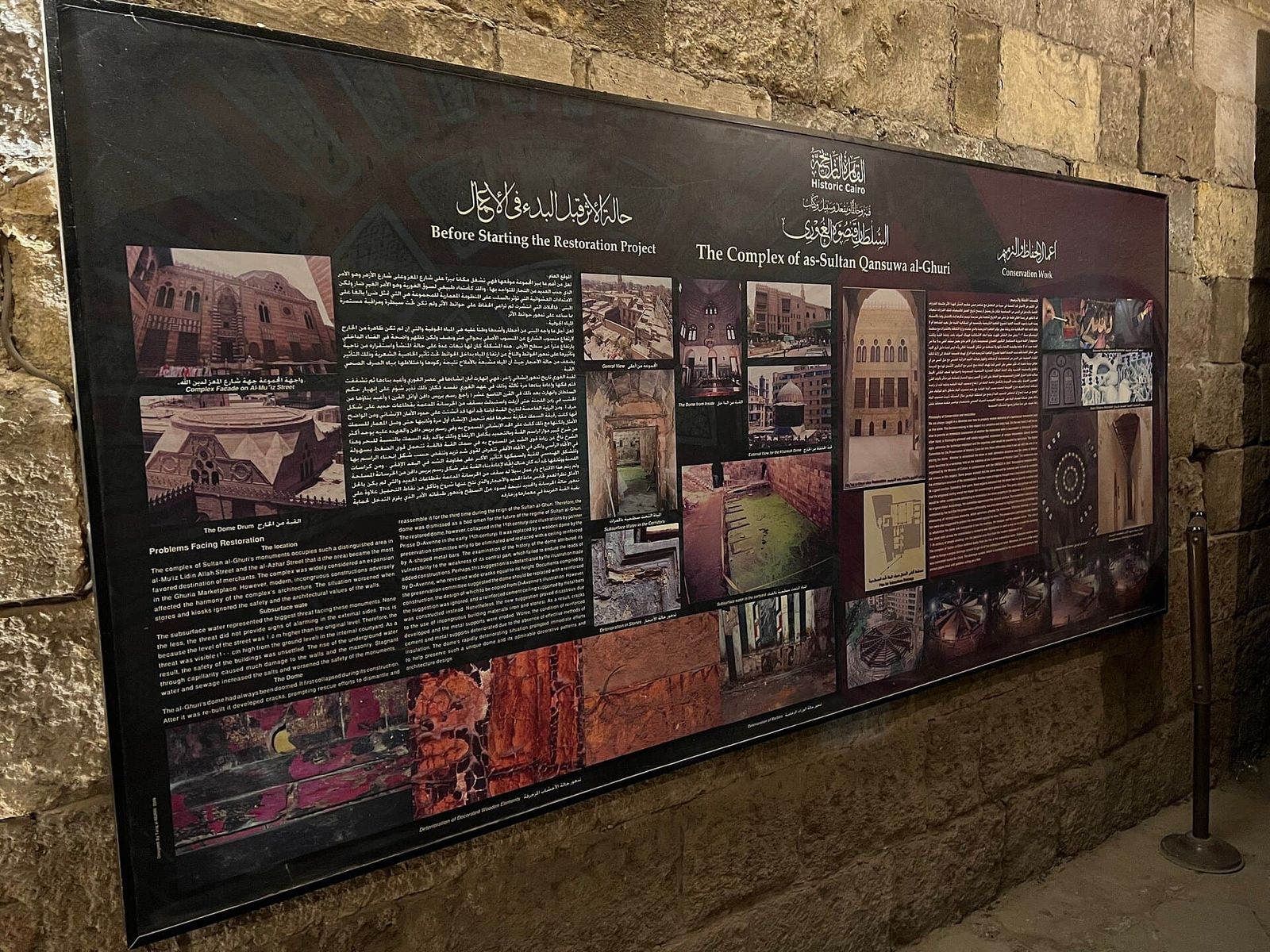
Sultan al-Ghuri Complex
The last great Mamluk ensemble, a mosque, mausoleum and caravanserai where the tanoura dervishes now whirl.
Two buildings, one street
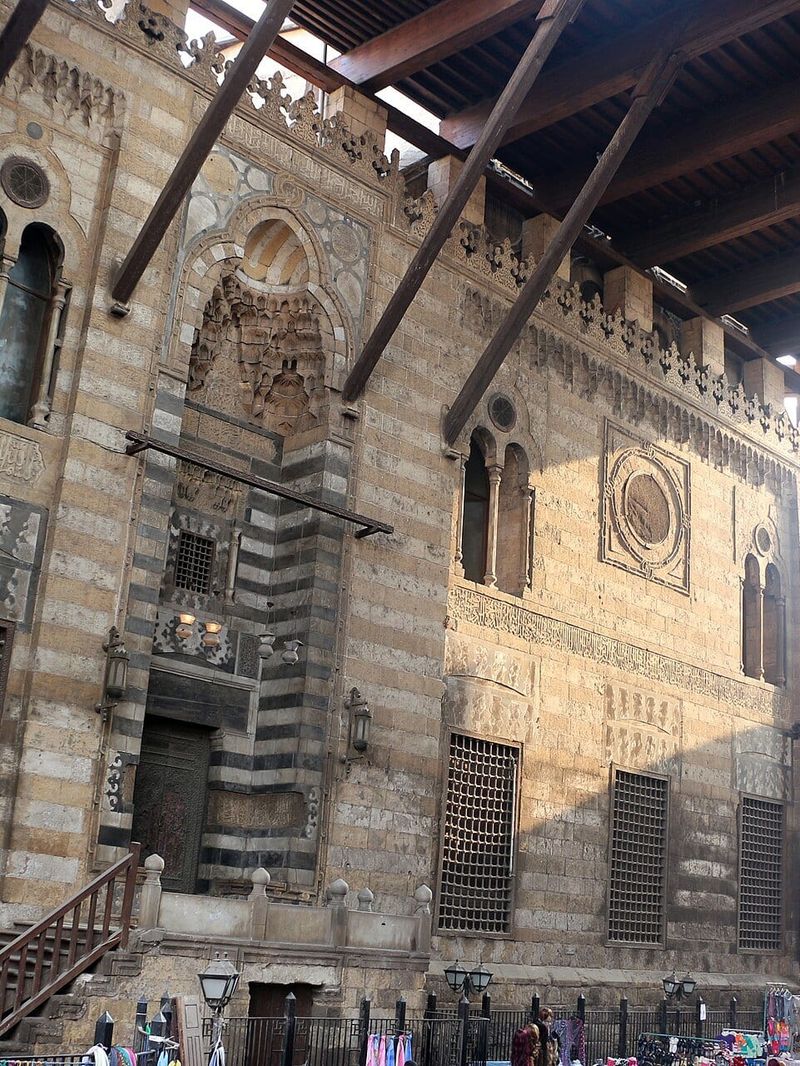
The Complex of Sultan al-Ashraf Qansuh al-Ghuri stands on al-Muizz Street just south of Al-Azhar Street, where its two halves face each other across the road, originally linked by a wooden roof that turned the street between them into a covered market. Al-Ghuri, one of the last Mamluk sultans of Egypt, built it between 1503 and 1505. On the west side is his congregational mosque and madrasa; on the east side, his mausoleum, together with a khanqah for Sufis, a sabil-kuttab (a public water fountain with a Qur'an school above) and other charitable foundations.
Architecture
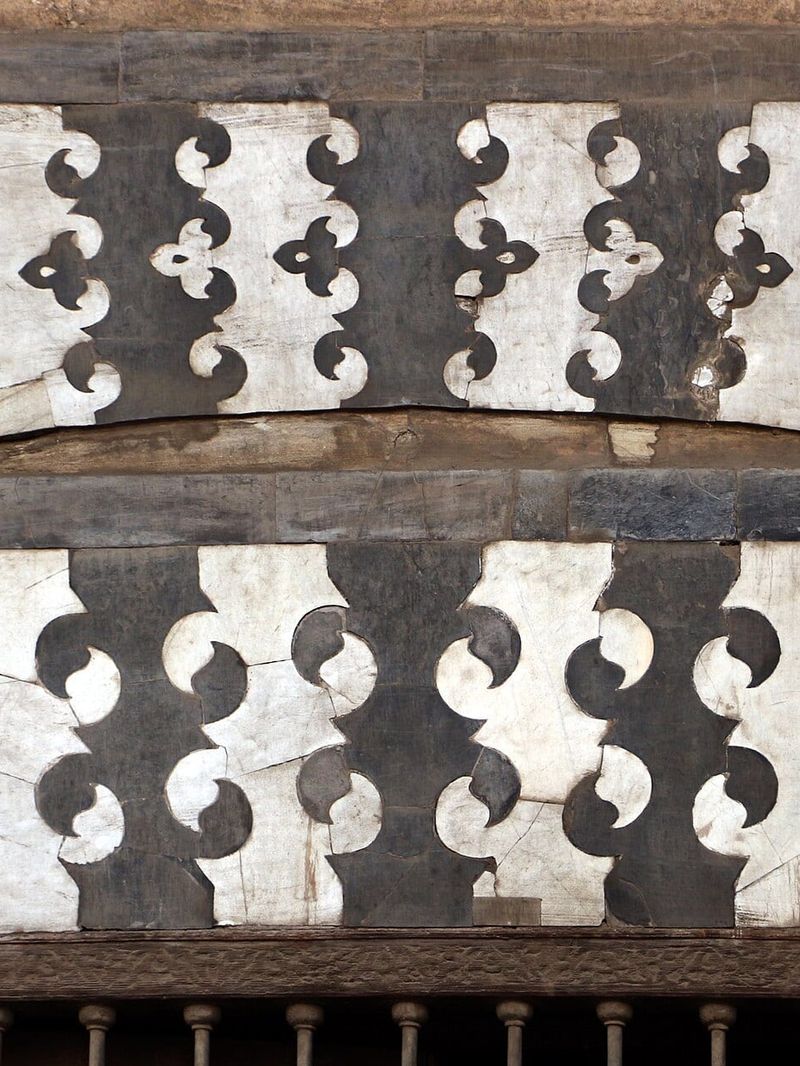
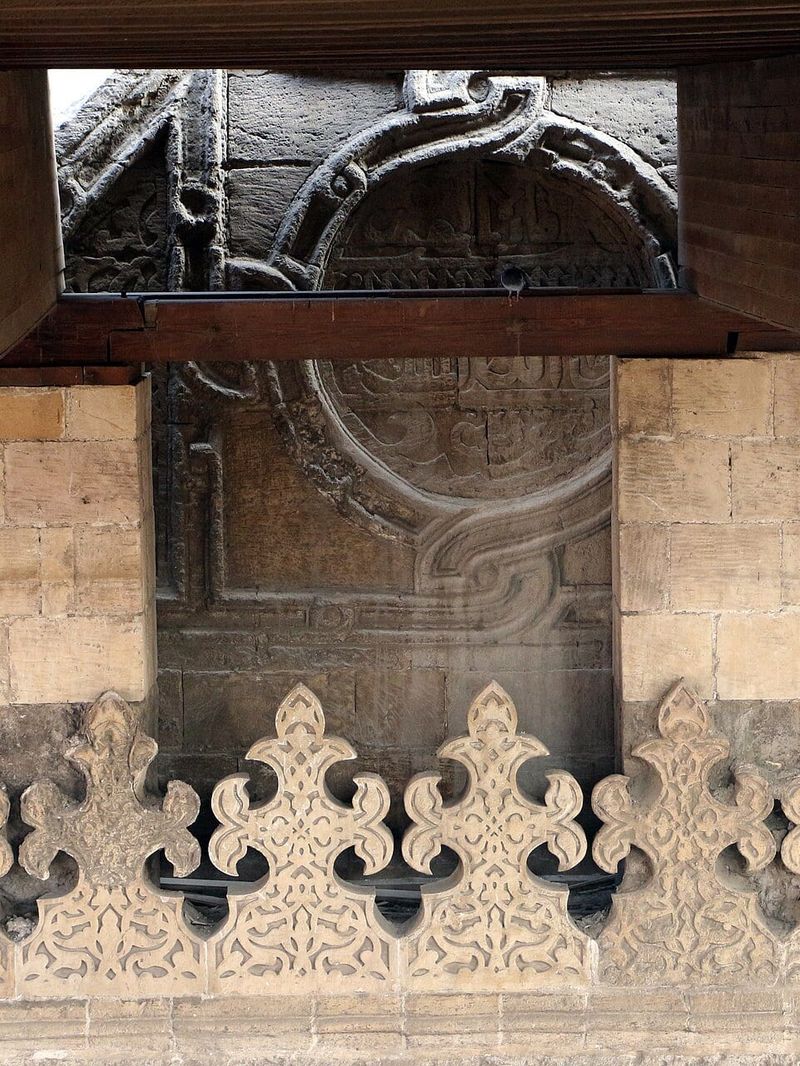
The mosque-madrasa follows the four-iwan plan of earlier Mamluk madrasas, its interior richly decorated with polychrome marble floors and wall panels and a carved and painted wooden ceiling; its tall square minaret, crowned with four small domed finials, is one of the most distinctive on the Cairo skyline. The façades on both sides of the street are banded in red and white stone, with deep recessed panels and carved muqarnas. The sultan never lay in his mausoleum: al-Ghuri was killed in 1516 at the Battle of Marj Dabiq in Syria against the Ottomans and his body was never recovered. A year later the Ottomans conquered Egypt and the Mamluk sultanate came to an end.
The wikala and the tanoura
A short walk east along Al-Azhar Street stands the Wikala of al-Ghuri, also built for the sultan in the early sixteenth century: a caravanserai with storerooms for merchants around a large courtyard and lodging on the upper floors. Restored as a cultural centre, it is now the venue of the Al-Tannoura Egyptian Heritage Dance Troupe, whose performances of tanoura, the Egyptian Sufi dance in which dancers whirl in multicoloured skirts to live music, take place in the courtyard several evenings a week. The al-Ghuri mosque and mausoleum are visited on a single ticket and are part of the UNESCO World Heritage Site of Historic Cairo.
Exhibo editorial
Al-Ghuri is the last word of the Mamluks. It sounds like it: confident, striped, a little theatrical, two façades staring at each other across the street as if the whole of al-Muizz were a stage set. Inside the mosque, the marble floor glows in red, black and white. The painted ceiling is one of the most beautiful in Cairo.
Then comes the irony. The sultan built himself a mausoleum and went off to fight the Ottomans; he was killed in Syria, his body was never found. Within a year his world was over. Come back after dark to the wikala down the road and watch the tanoura: a dancer turning for half an hour in a skirt of a dozen colours, while the Mamluk courtyard looks on. It feels like the building's own afterlife.
Gallery
How to find it
On al-Muizz Street just south of the Al-Azhar Street crossing. The mosque and the mausoleum face each other across the street. The Wikala of al-Ghuri is a short walk east.
Similar places
All places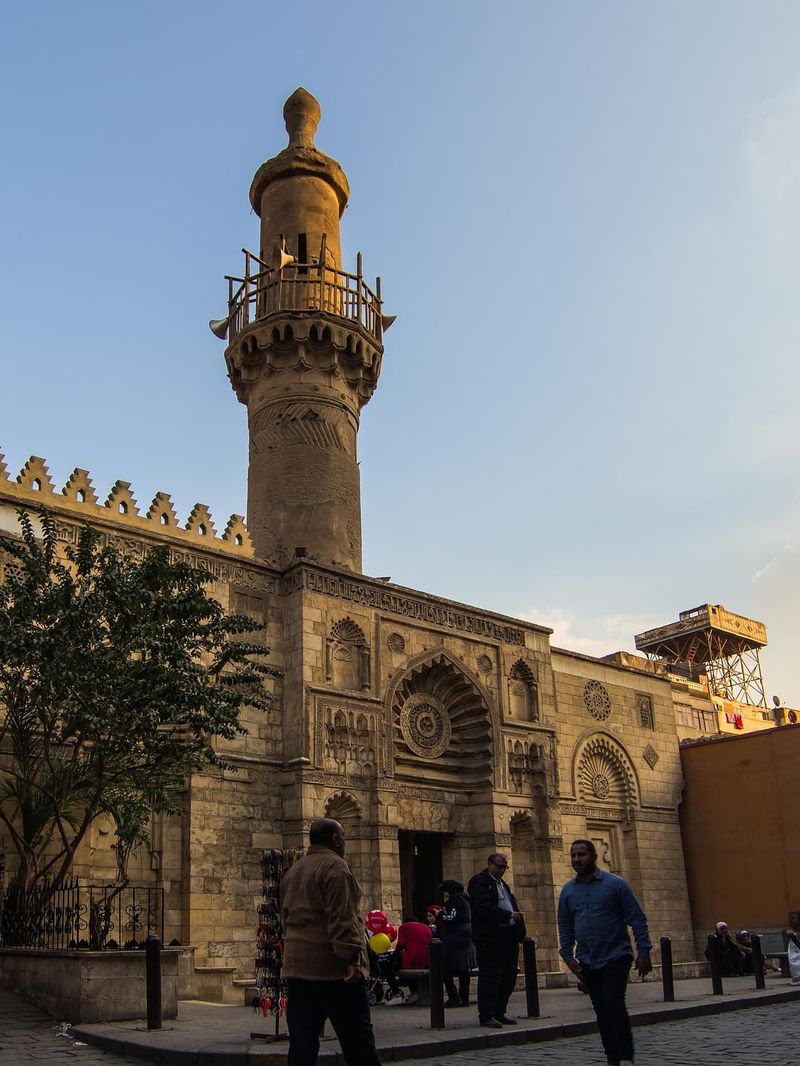
News by Exhibo
Editorial coverage on Exhibo
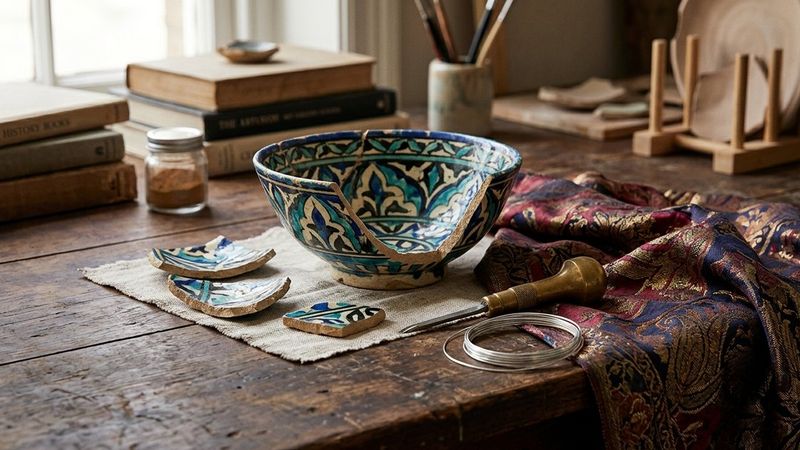
Islamic Decorative Arts: Ceramics, Metalwork, Glass and Textiles
From Kashan luster bowls to Mamluk mosque lamps and Safavid silks: a museum survey of four luxury media with named works in London, New York and Doha
Islamic decorative arts are the portable luxury crafts of Muslim-ruled lands: pottery and tile, inlaid brass, enamelled glass, woven silk and knotted carpet. This survey follows workshop conditions, techniques and trade from Abbasid Iraq to Ottoman Istanbul, with four close readings and a media comparison table, while Iznik depth, arabesque theory and building programmes sit in sibling articles on the series hub.
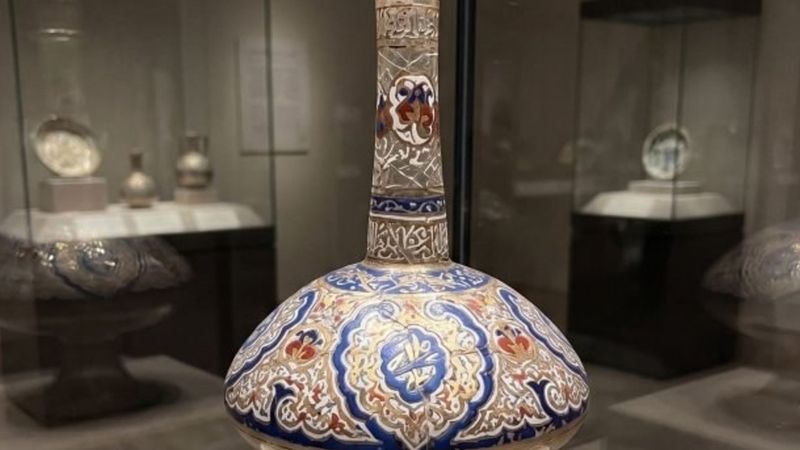
The Bottle That Was in Pieces on the Floor
A car bomb left one of the world's great collections of Islamic art in fragments on the floor. What the Museum of Islamic Art chose to do with the repair — mark it, rather than hide it — turns out to be the most quietly radical decision in the building.
Near the entrance of Cairo's Museum of Islamic Art stands an eight-hundred-year-old Syrian glass bottle with a small gold mark on its label. The mark does not mean the bottle is precious, though it is. It means it was broken — shattered on the floor by the 2014 bombing across the street, then patiently glued back into a single shape.
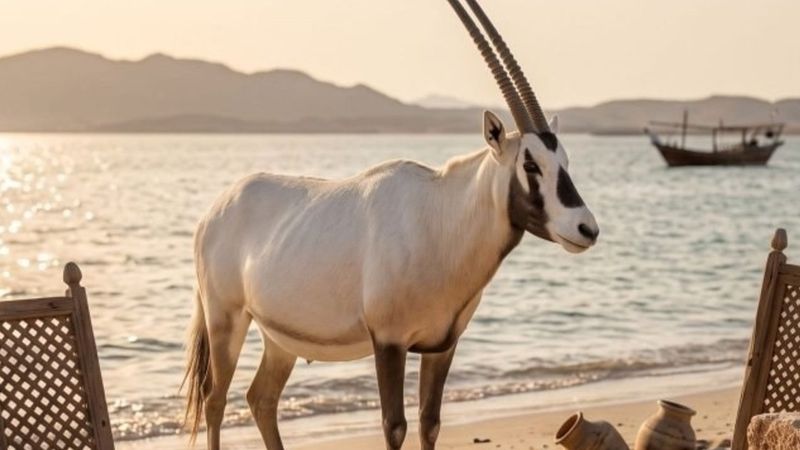
The Animal We Drew Everywhere Once It Was Gone
From Neolithic rock to airline tailfin — how the Arabian oryx vanished from the desert, came back from nine animals, and multiplied everywhere as a symbol in the very decades it was gone.
The last wild Arabian oryx was shot in 1972. By then it was already a picture — carved on Bronze Age tombs, mistaken by the ancients for a unicorn, praised by poets as the eyes of the beloved. This is the story of an animal that went extinct in the wild and was brought back from nine survivors, and of the strange gap between the creature and the emblem it became: fast, sharp and ascendant on a nation's tailfin, while the animal itself survives by standing still in the shade.