
Street of the Tentmakers (Al-Khayamiya)
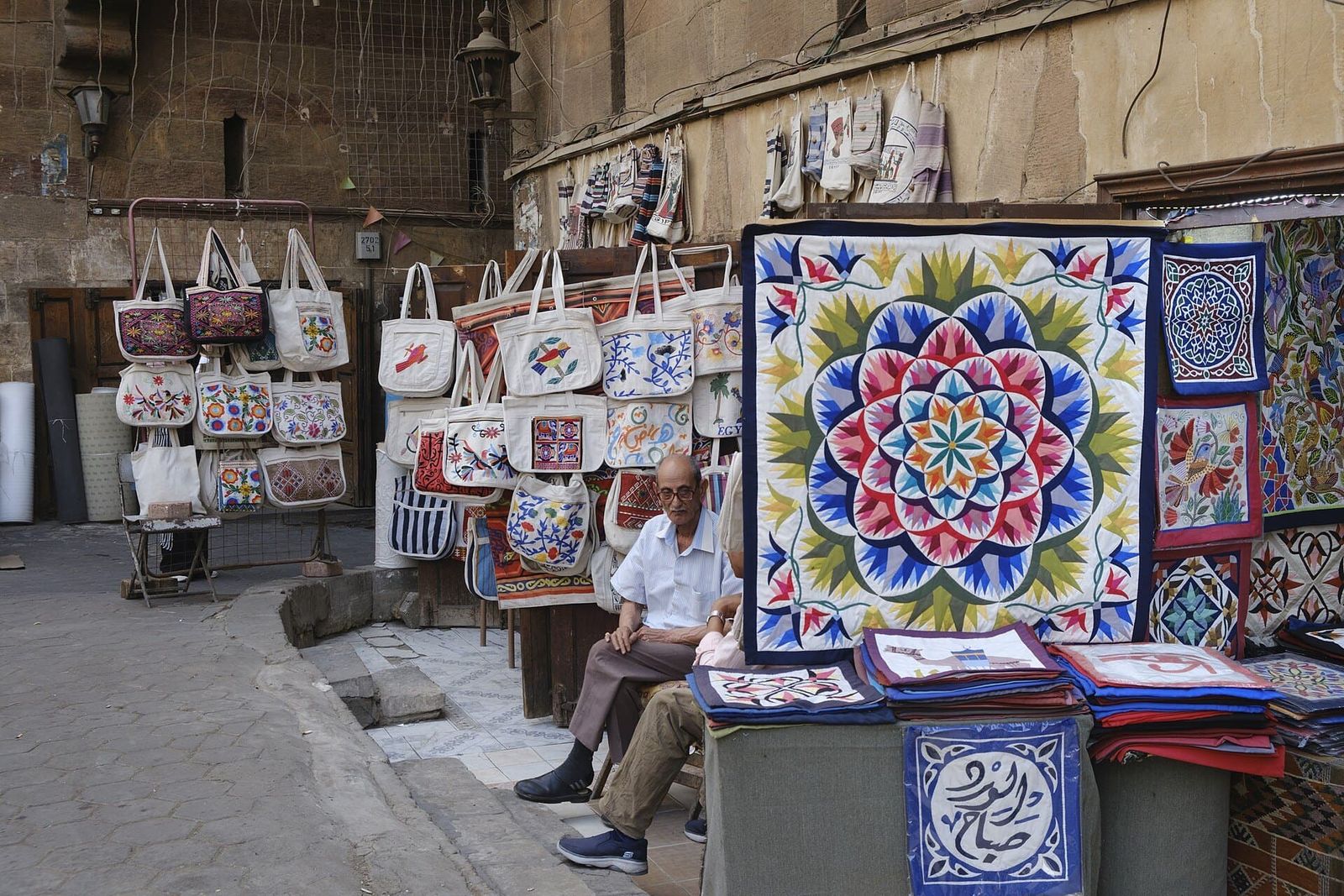
Cairo's last covered market of the tentmakers, where craftsmen still stitch the city's bright appliqué panels by hand.
A covered market by Bab Zuwayla
The Street of the Tentmakers, Sharia al-Khayamiya, begins just south of Bab Zuwayla, where al-Muizz Street continues out of the old Fatimid city. Its heart is a covered market, the Qasaba of Radwan Bey, built in the mid-seventeenth century by the Ottoman-era emir Radwan Bey: a long stretch of street roofed with timber, lined on both sides by small shops with living quarters above. It is one of the very few surviving covered markets in Cairo and the last place where the city's tentmakers still work together on a single street.
The craft of khayamiya
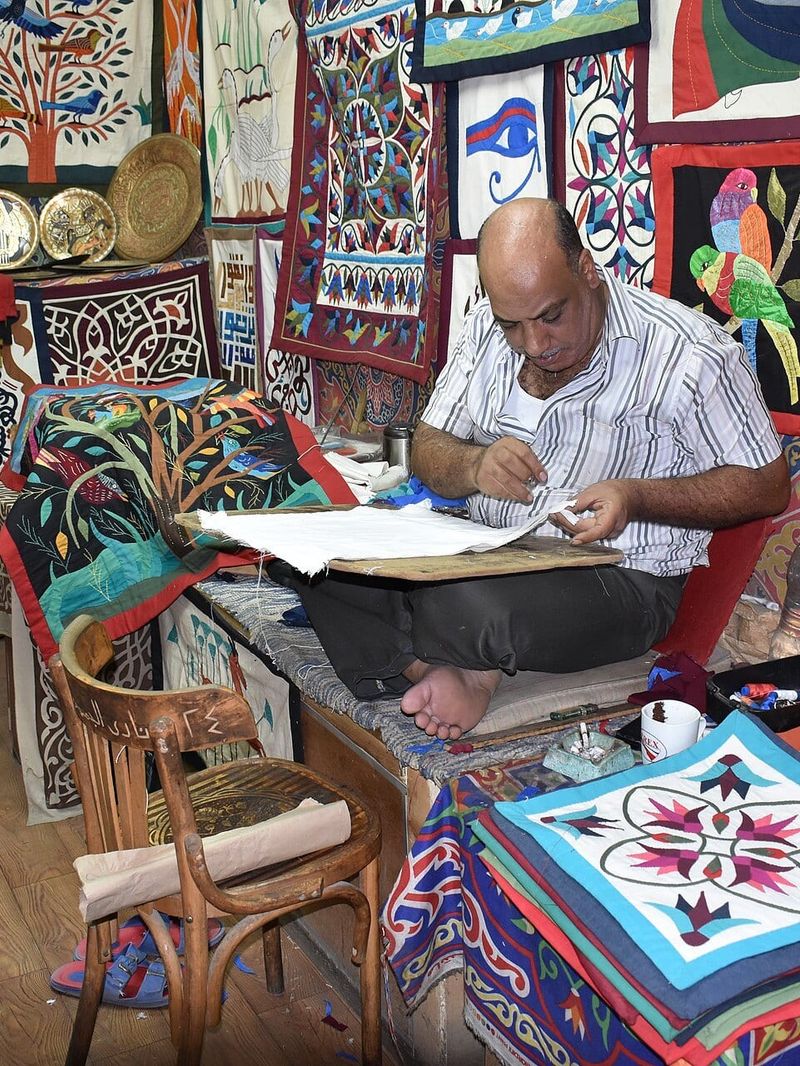
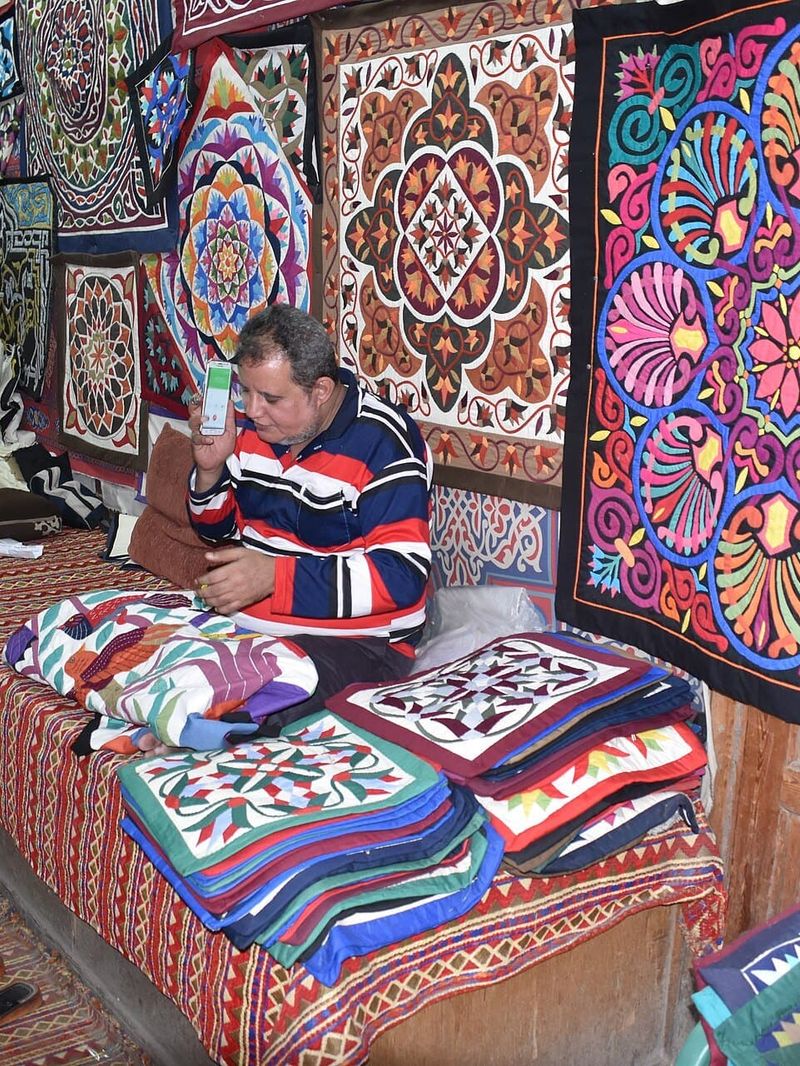
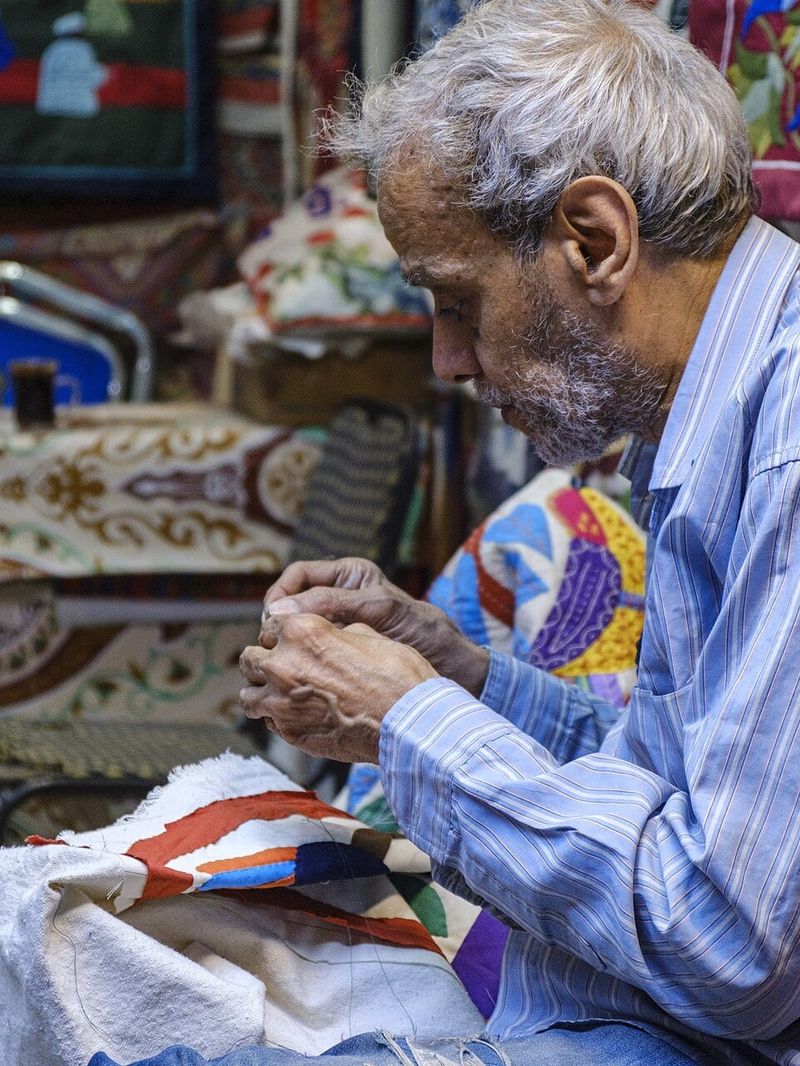
Khayamiya is the Egyptian art of appliqué textile: pieces of coloured cotton are cut and hand-stitched onto a heavy canvas backing to create geometric and floral designs, Arabic calligraphy and, more recently, pharaonic motifs and scenes of Egyptian life. Historically, the panels were used to line the great ceremonial tents set up for weddings, funerals, religious festivals and the departure of the pilgrimage caravan and tentmakers produced the elaborate covers carried with the mahmal to Mecca. Printed fabric has replaced handwork for most of today's street tents, but the craft survives in the workshops of al-Khayamiya, where masters sit cross-legged in their shopfronts stitching cushion covers, wall hangings, bedspreads and large commissioned panels, often working without drawings.
A living heritage
In recent decades khayamiya has been collected and exhibited internationally and the tentmakers' work has been the subject of exhibitions and documentary films. The street is part of the UNESCO World Heritage Site of Historic Cairo and lies on the route from Bab Zuwayla towards the Citadel and al-Darb al-Ahmar.
Exhibo editorial
Walk out of Bab Zuwayla and the light changes: you are under a wooden roof, in a corridor of colour. Every shop is a wall of appliqué: lotus flowers, geometric stars, calligraphy, camels and pharaohs for the tourists. In almost every doorway a man sits with a needle, stitching without looking up.
This is not a museum of a craft but the craft itself, still paying its rent. Take your time, ask to see the older-style geometric panels and watch one being made; the stitches are tiny and the patience enormous. Buy something if you can. On this street, a cushion cover is a vote for a tradition staying alive.
Gallery
How to find it
Walk south out of Bab Zuwayla. The covered Street of the Tentmakers begins almost immediately, under the wooden roof of the Qasaba of Radwan Bey.
Similar places
All places
News by Exhibo
Editorial coverage on Exhibo
Where Is Agrabah? The City Disney Assembled From Real Places
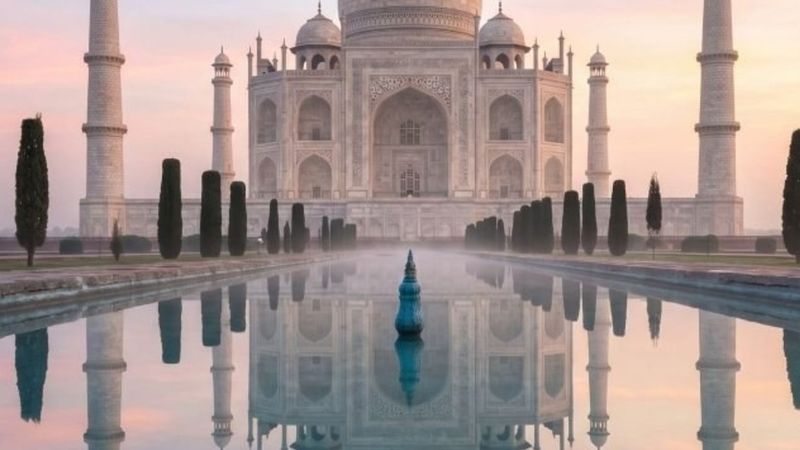
Agrabah was going to be Baghdad. A war made it fictional — and then Disney built it back out of real places, from a tomb in Agra to a valley in Jordan that usually plays Mars.
The Sultan's palace where Princess Jasmine feels trapped has the silhouette of the Taj Mahal — which is not a palace at all, but a tomb. That is how Agrabah works. Disney's fairy-tale city was going to be Baghdad, until the Gulf War made the name impossible; the studio invented a place that could not be found on a map, then quietly rebuilt it out of real ones — Isfahan and Agra, Marrakesh and Mandalay, a Jordanian desert that has played both Arabia and Mars.
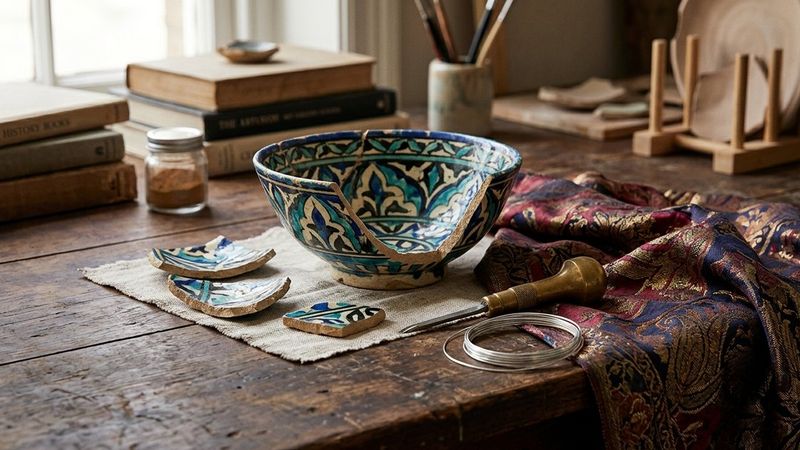
Islamic Decorative Arts: Ceramics, Metalwork, Glass and Textiles
From Kashan luster bowls to Mamluk mosque lamps and Safavid silks: a museum survey of four luxury media with named works in London, New York and Doha
Islamic decorative arts are the portable luxury crafts of Muslim-ruled lands: pottery and tile, inlaid brass, enamelled glass, woven silk and knotted carpet. This survey follows workshop conditions, techniques and trade from Abbasid Iraq to Ottoman Istanbul, with four close readings and a media comparison table, while Iznik depth, arabesque theory and building programmes sit in sibling articles on the series hub.
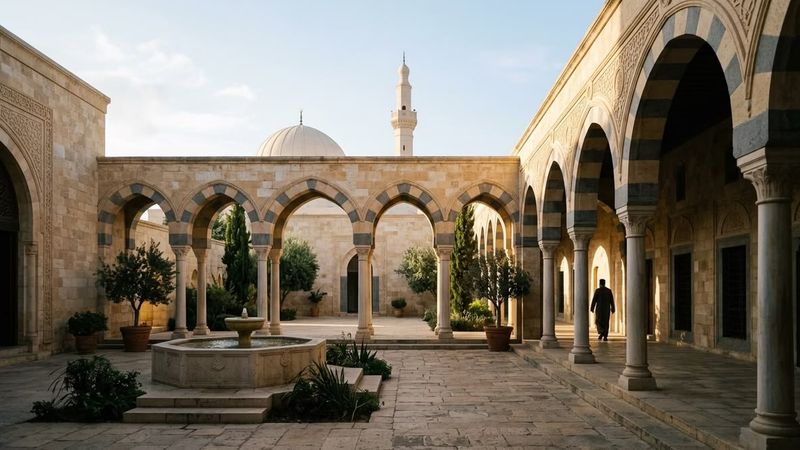
Islamic Architecture, Explained
Mosque types, domes, minarets and courtyard plans from Umayyad Jerusalem to Ottoman Istanbul, with five regional schools read through buildings you can visit
Islamic architecture is the building tradition of Muslim-ruled lands from the seventh century onward: hypostyle mosques, courtyard sahn, minaret towers and dome engineering shaped by prayer law, climate and regional craft. This guide maps Umayyad, Mamluk, Safavid, Mughal and Ottoman schools through named monuments, with muqarnas vaulting and decorative arts deferred to sibling pages in the series.