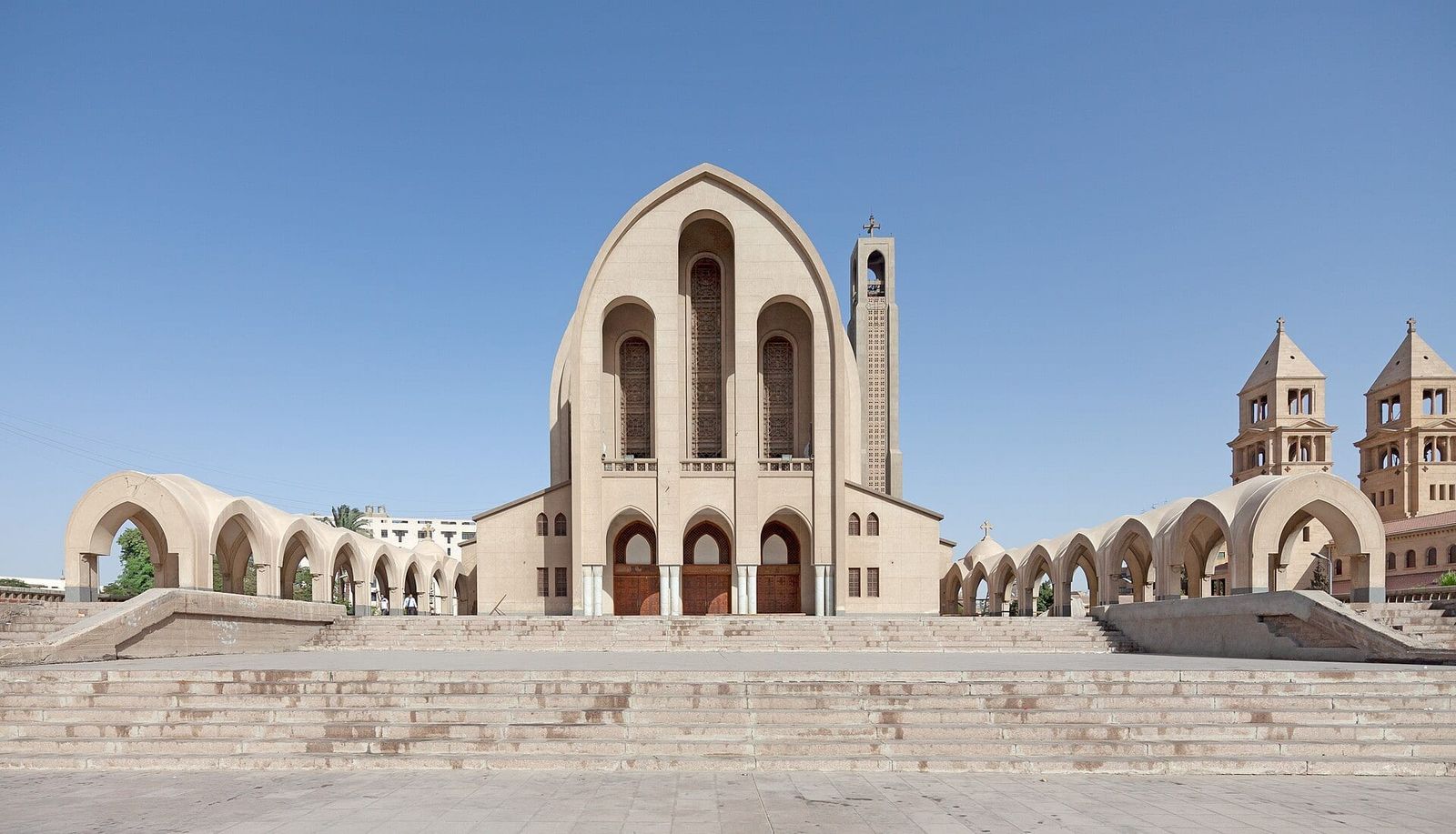
Saint Mark's Coptic Orthodox Cathedral, Abbasiya
The seat of the Coptic pope since 1968, holding relics of St Mark returned from Venice, one of the largest cathedrals in Africa.
The seat of the Coptic Church
Saint Mark's Coptic Orthodox Cathedral in the Abbasiya district of Cairo is the seat of the Pope of Alexandria and Patriarch of the See of St Mark, head of the Coptic Orthodox Church and one of the largest cathedrals in Africa and the Middle East. It was built under Pope Cyril VI to replace the older patriarchal cathedral of St Mark in Azbakeya, which had served as the seat of the Coptic popes since 1800 and it was inaugurated on 25 June 1968 in a ceremony hosted by Pope Cyril and attended by President Gamal Abdel Nasser and Emperor Haile Selassie of Ethiopia, together with delegates of churches from around the world. The papal residence moved here in the following years. The design is credited to the architects Awad Kamel and Selim Kamel, with the structural engineering of Michel Bakhoum.
The relics of St Mark
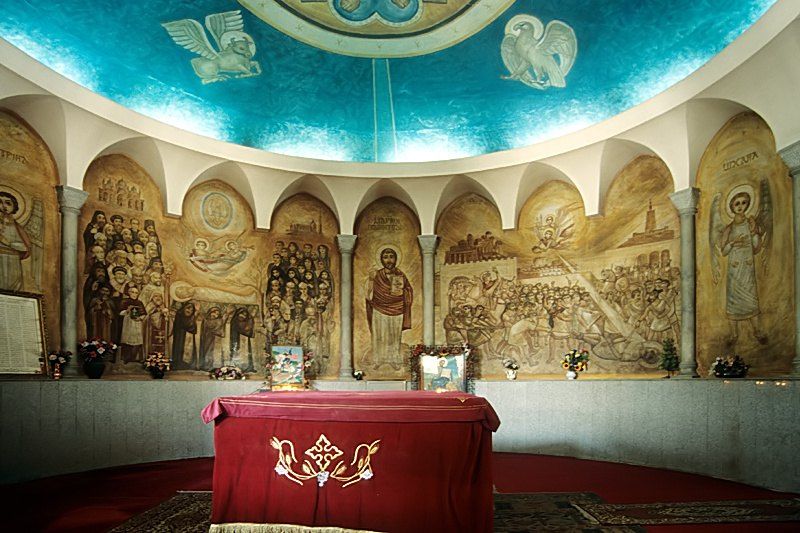
St Mark the Evangelist, author of the second Gospel, is honoured by Copts as the founder of the Church of Alexandria and its first patriarch. In 828 Venetian merchants carried most of his body from Alexandria to Venice, where St Mark's Basilica was built to house it; the Copts believe his head remained in Alexandria. In June 1968, for the 1,900th anniversary of his martyrdom, Pope Paul VI returned part of the relics to the Coptic Church and they were placed in a shrine decorated with icons beneath the new cathedral, where they remain a focus of pilgrimage.
The cathedral complex
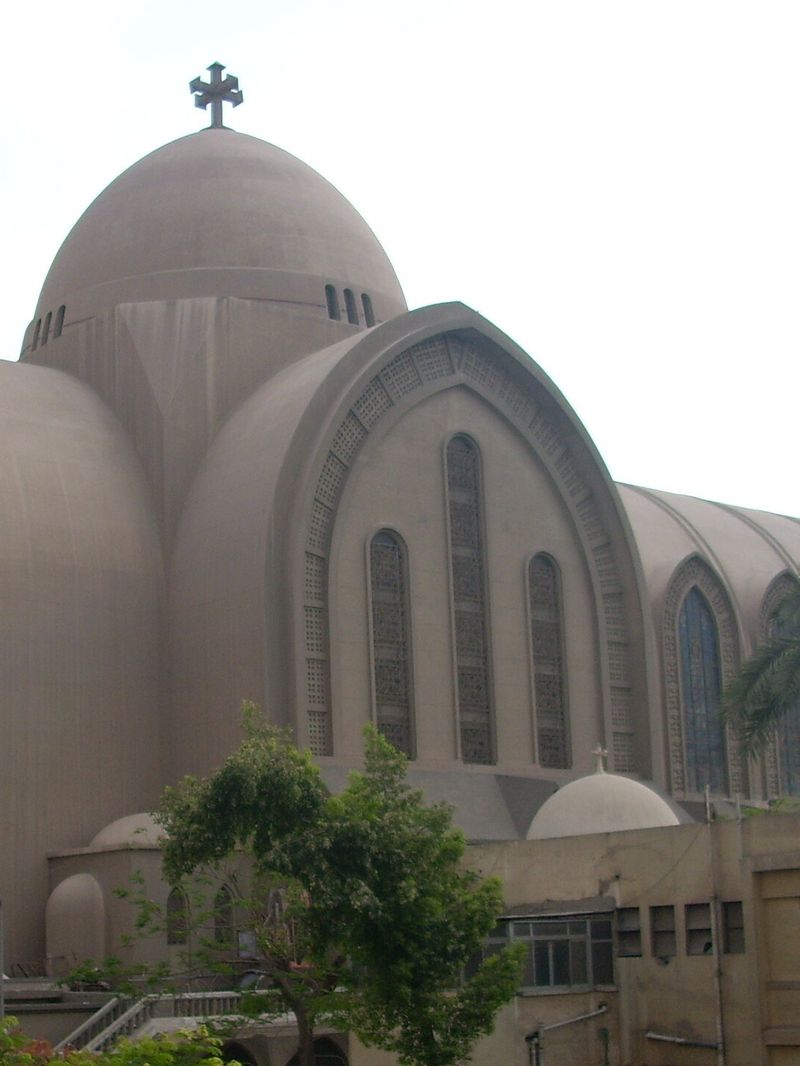
The cathedral, a vast domed building with a modern interpretation of Coptic architecture, stands in a large complex that includes the papal residence, administrative buildings and other churches. In December 2016, the adjacent Church of St Peter and St Paul (El-Botroseya) was struck by a suicide bombing that killed some 29 worshippers; it has since been restored and the victims are commemorated there. The cathedral was renovated and reconsecrated for its 50th anniversary in 2018.
Exhibo editorial
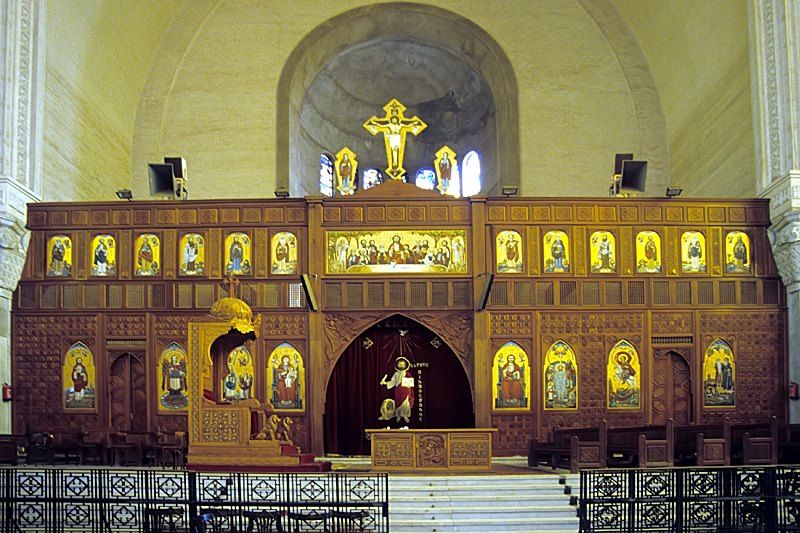
The scale is the first surprise: a great domed hall that seems built for a national congregation, which in a sense it is. This is the beating heart of the Coptic Church, the largest Christian community in the Middle East. On feast days the complex fills with families from all over Egypt.
Go down to the shrine of St Mark, where the relics returned from Venice in 1968 lie among icons and candles. Then pause at the restored church next door, where the 2016 bombing is remembered. Together they say more about the story and resilience of Egypt's Copts than any museum could.
Gallery
How to find it
In Abbasiya on Ramses Street, about 3 km north-east of Ramses Station. Enter through the gate on Ramses Street, where there are security checks.
Similar places
All places
News by Exhibo
Editorial coverage on Exhibo
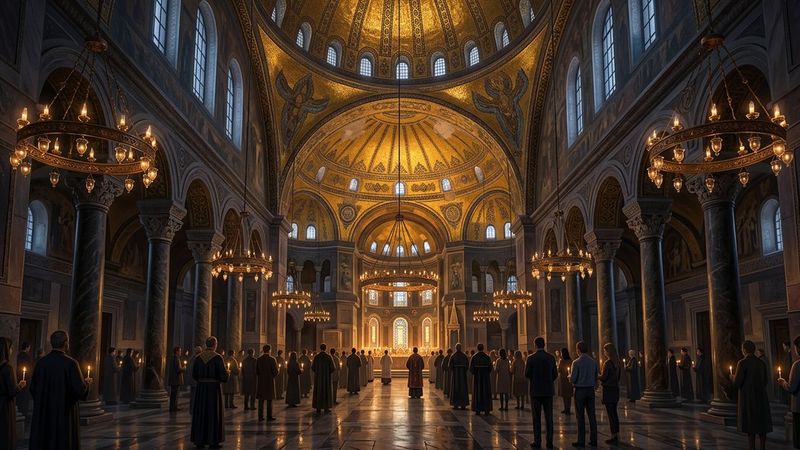
Byzantine Art, Explained
Constantinople to Ravenna: gold mosaics, icons and court craft that shaped Christian imagery for nearly a millennium.
Byzantine art was the Christian visual culture of the Eastern Roman Empire. This guide explains how mosaics and icons worked in liturgy and empire, follows the tradition from Constantinople across the Mediterranean, and points to works that still define the style after empire, conquest and modern museum display.
Agatha Christie's Egypt: Three Abu Simbels, a Pharaoh and a Murder on the Nile
Christie set one famous murder on the Nile and two lesser-known stories in ancient Egypt. The temples, letters and film sets behind all three.
The Abu Simbel of Death on the Nile has since moved up a hill. Christie's two other Egyptian stories lead to a pharaoh's dismantled temples at Karnak and a farmer's 4,000-year-old letters now in New York.
The Real Oasis of The Alchemist: Al-Fayoum and the Dream Coelho Borrowed
Paulo Coelho sent his shepherd to a real place in Egypt. What Santiago would have found there and where the story of the treasure at home came from.
Santiago's oasis is real. Al-Fayoum lies 100 km from Cairo, with Roman-era painted portraits, a temple on the caravan road and a dream story centuries older than Coelho.