
Qalawun Complex
A Mamluk hospital, madrasa and one of Cairo's most lavish mausoleums, built in thirteen months on al-Muizz Street.
A sultan's foundation in thirteen months
The Complex of Sultan al-Mansur Qalawun stands at the heart of Bayn al-Qasrayn, the stretch of al-Muizz Street where the two Fatimid palaces once faced each other. It was built for the sultan by his emir Alam al-Din Sanjar al-Shuja'i between 1284 and August 1285, in the astonishing time of about thirteen months, on the site of part of the Fatimid western palace. According to the chroniclers, Sanjar drove the work with forced labour, including Mongol prisoners of war and passers-by pressed into service. The complex combined three institutions linked by a long corridor: a hospital (bimaristan), a madrasa and the founder's mausoleum.
The hospital
Qalawun is said to have vowed to build a hospital after being cured of illness in the Nur al-Din bimaristan in Damascus and his maristan, completed first in less than six months, became the most famous hospital of medieval Cairo. It treated patients free of charge regardless of religion or status, with separate wards for different illnesses, a pharmacy, lecture halls for teaching medicine and endowments that funded doctors, food and even musicians to soothe the sick. Only parts of it survive today, behind the madrasa and mausoleum, but a hospital has continued on the site into modern times.
The mausoleum and madrasa
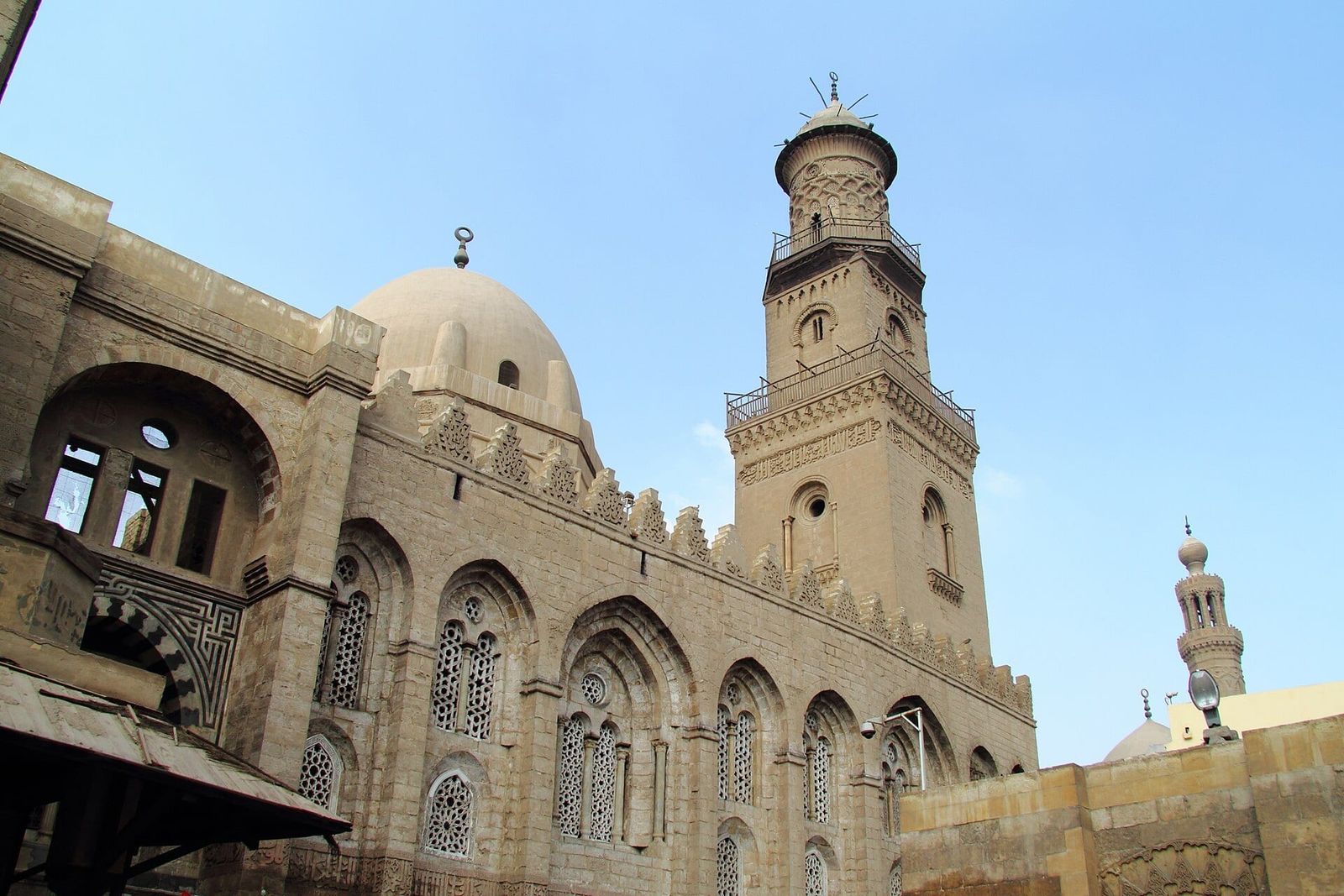
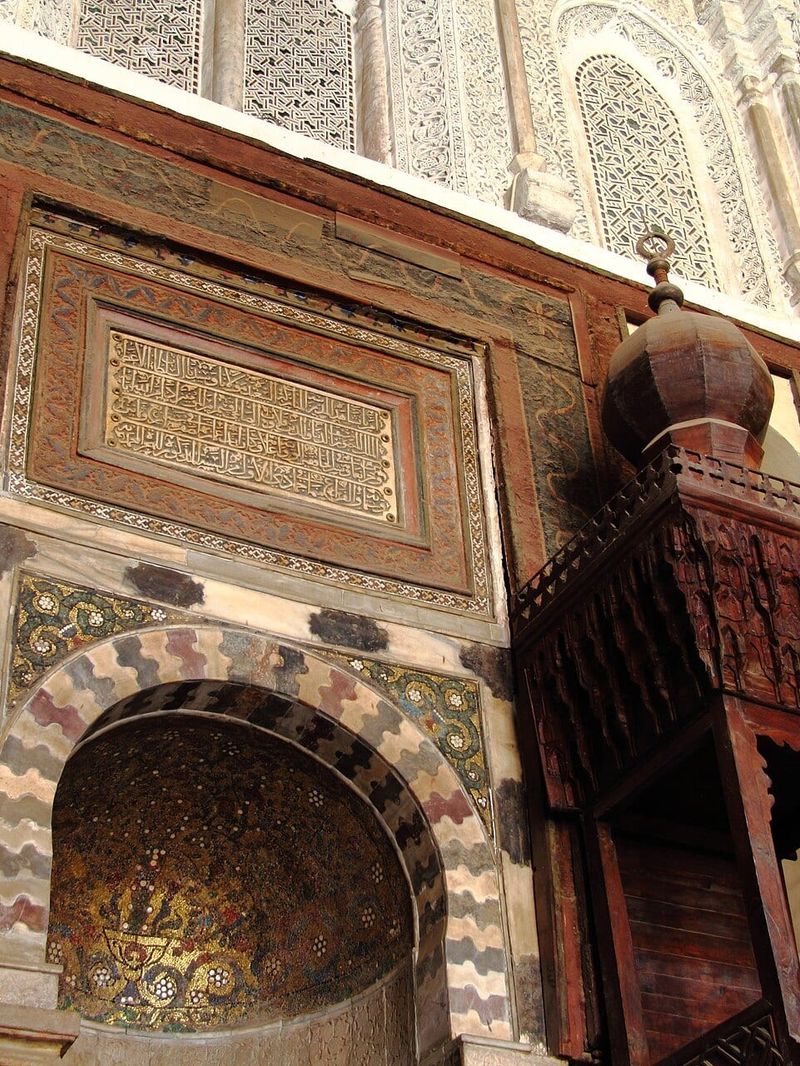
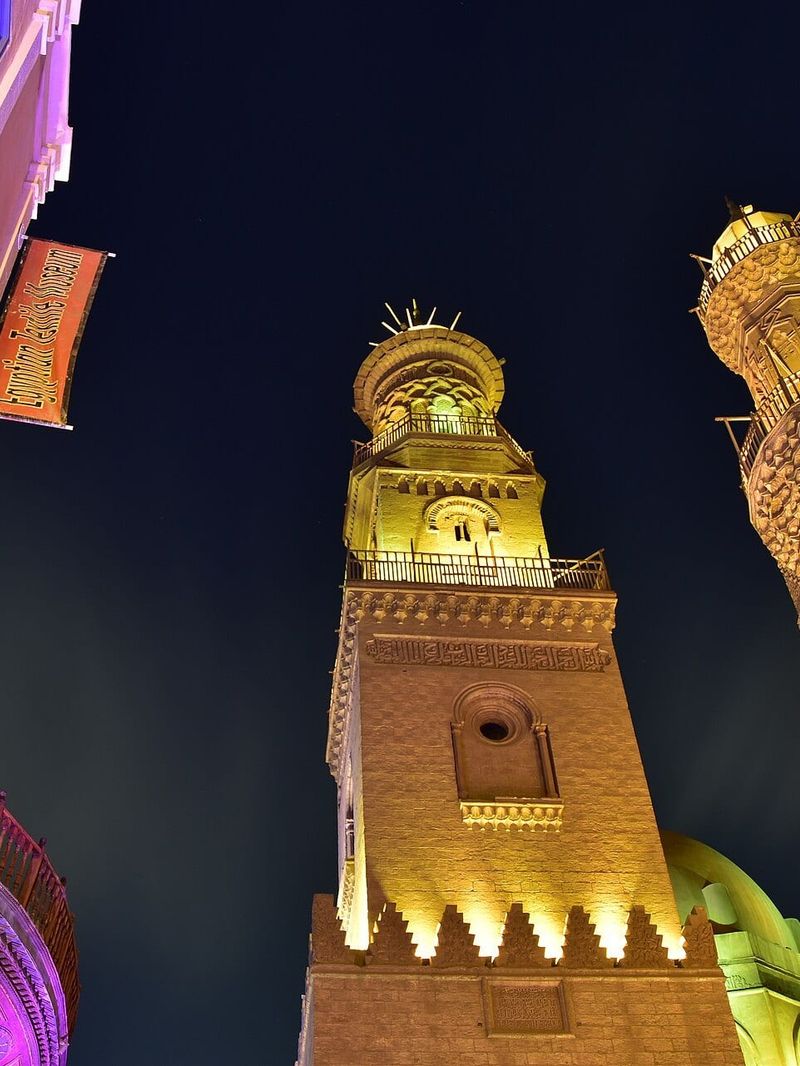
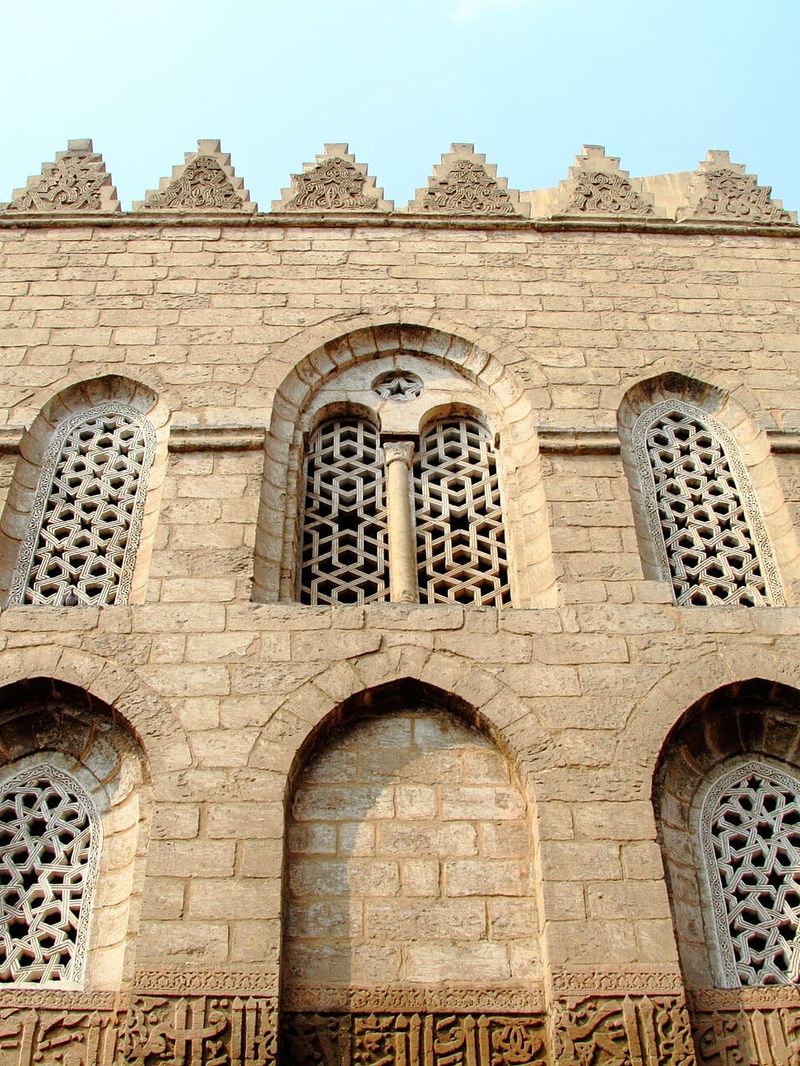
The mausoleum is the jewel of the complex and one of the most richly decorated interiors in Cairo. Its plan, an octagon of granite columns and piers within a square hall, recalls the Dome of the Rock in Jerusalem. The walls are clad in polychrome marble panels and mother-of-pearl mosaic, the windows filled with coloured stucco-and-glass grilles and the ceilings painted and gilded; a fine wooden screen encloses the cenotaphs of Qalawun and his son al-Nasir Muhammad. The original dome collapsed in the eighteenth century and was rebuilt in 1903 by Max Herz of the Comité de Conservation des Monuments de l'Art Arabe. Across the corridor, the madrasa has a large qibla iwan with a triple-arched façade and columns echoing Syrian Crusader-era architecture. The tall street façade, with its paired pointed-arch windows and the three-storey minaret, rebuilt by al-Nasir Muhammad after the earthquake of 1303, dominate the street.
Today
The complex was thoroughly restored in 2005–2006 as part of the al-Muizz Street project and is visited on the al-Muizz monuments ticket together with the neighbouring Madrasa of al-Nasir Muhammad and the Madrasa of Sultan Barquq. It is part of the UNESCO World Heritage Site of Historic Cairo.
Exhibo editorial
From the street, Qalawun is a wall of stone and windows; inside the mausoleum, it is a jewellery box the size of a church. Marble in six colours climbs the walls, mother-of-pearl catches the light and the coloured glass throws small patches of red and green across the floor. You find yourself whispering without being asked.
What stays with you, though, is the hospital you can barely see. A sultan who nearly died in Damascus came home and built, in little more than a year, a place where anyone in Cairo could be treated for free. There was even music for the patients. Seven centuries later, al-Muizz Street is packed with tourists photographing the façade. Walk round the back, find the fragments of the old wards and think about what the building was really for.
Gallery
How to find it
On al-Muizz Street in the Bayn al-Qasrayn stretch, the first of the three great facades as you walk north from the Muski crossing. The Madrasa of al-Nasir Muhammad and the Madrasa of Sultan Barquq follow next door.
Similar places
All places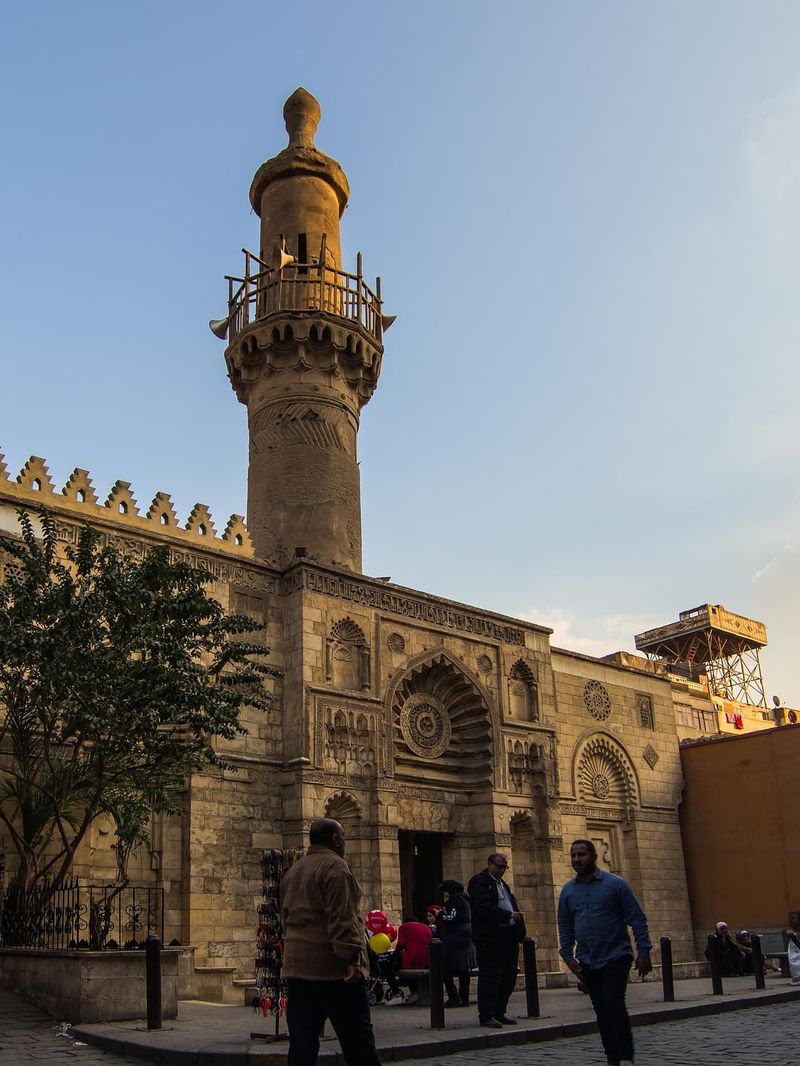
News by Exhibo
Editorial coverage on Exhibo
Where Is Agrabah? The City Disney Assembled From Real Places
Agrabah was going to be Baghdad. A war made it fictional — and then Disney built it back out of real places, from a tomb in Agra to a valley in Jordan that usually plays Mars.
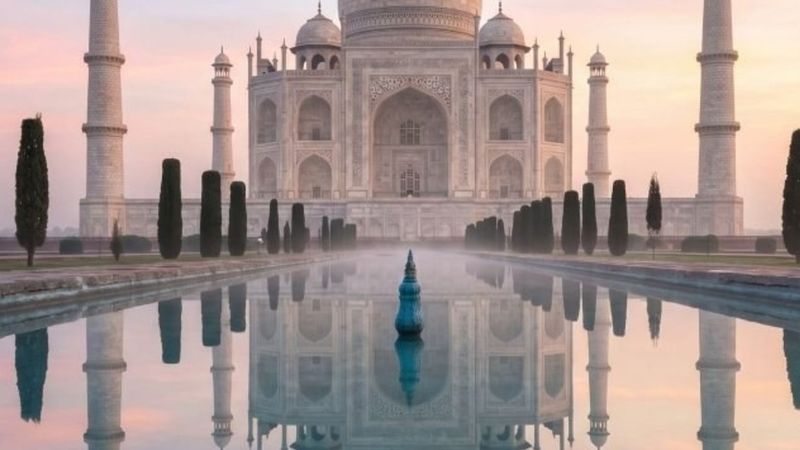
The Sultan's palace where Princess Jasmine feels trapped has the silhouette of the Taj Mahal — which is not a palace at all, but a tomb. That is how Agrabah works. Disney's fairy-tale city was going to be Baghdad, until the Gulf War made the name impossible; the studio invented a place that could not be found on a map, then quietly rebuilt it out of real ones — Isfahan and Agra, Marrakesh and Mandalay, a Jordanian desert that has played both Arabia and Mars.
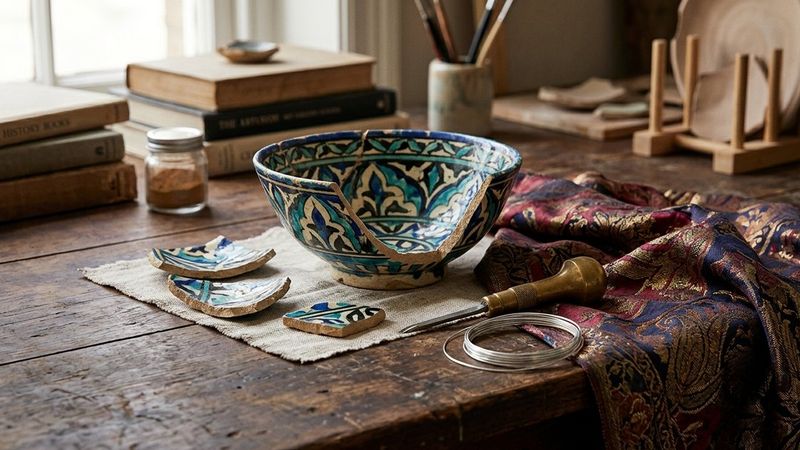
Islamic Decorative Arts: Ceramics, Metalwork, Glass and Textiles
From Kashan luster bowls to Mamluk mosque lamps and Safavid silks: a museum survey of four luxury media with named works in London, New York and Doha
Islamic decorative arts are the portable luxury crafts of Muslim-ruled lands: pottery and tile, inlaid brass, enamelled glass, woven silk and knotted carpet. This survey follows workshop conditions, techniques and trade from Abbasid Iraq to Ottoman Istanbul, with four close readings and a media comparison table, while Iznik depth, arabesque theory and building programmes sit in sibling articles on the series hub.
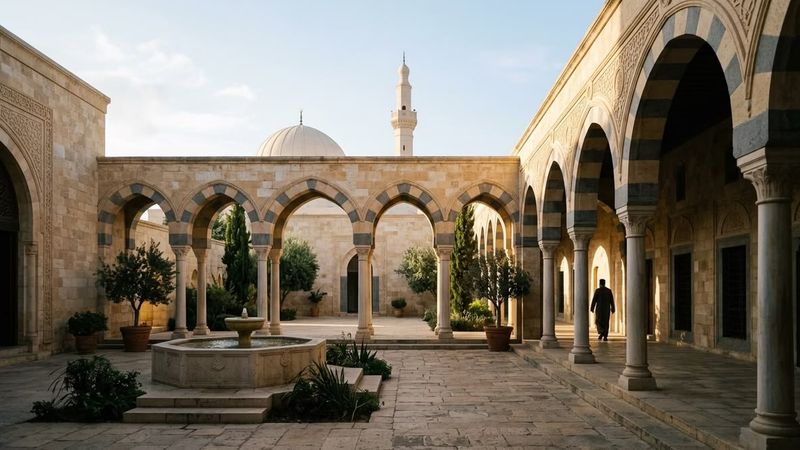
Islamic Architecture, Explained
Mosque types, domes, minarets and courtyard plans from Umayyad Jerusalem to Ottoman Istanbul, with five regional schools read through buildings you can visit
Islamic architecture is the building tradition of Muslim-ruled lands from the seventh century onward: hypostyle mosques, courtyard sahn, minaret towers and dome engineering shaped by prayer law, climate and regional craft. This guide maps Umayyad, Mamluk, Safavid, Mughal and Ottoman schools through named monuments, with muqarnas vaulting and decorative arts deferred to sibling pages in the series.