
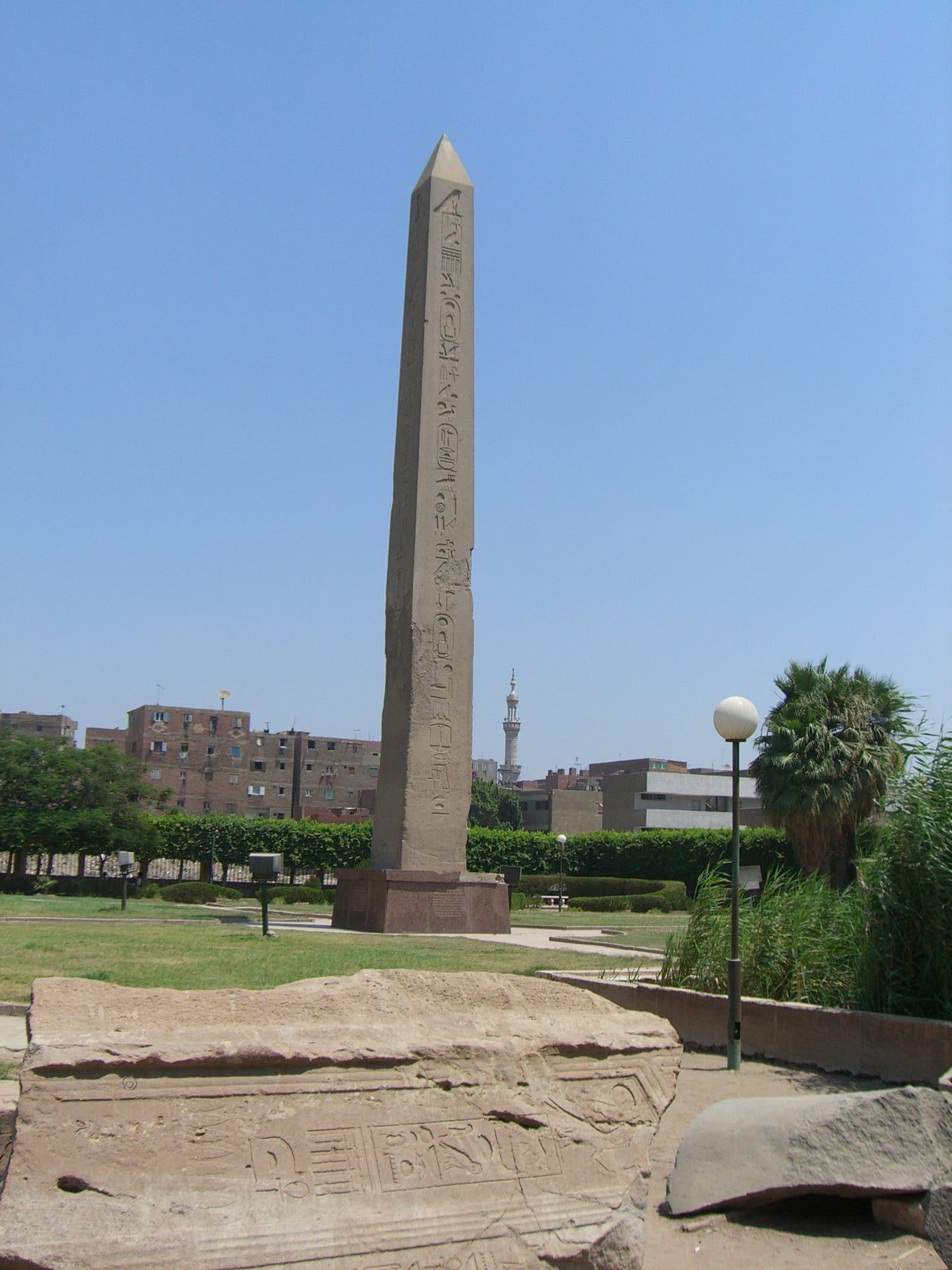
Obelisk of Senusret I, Matariya
The oldest obelisk still standing where it was raised, the last sentinel of ancient Heliopolis, city of the sun god.
The city of the sun
In the district of Matariya in north-eastern Cairo lie the remains of ancient Iunu, On in the Bible, Heliopolis ("city of the sun") to the Greeks. For some three thousand years it was one of the great religious centres of Egypt, home of the cult of the sun god Ra-Atum and of the priests whose theology of creation shaped Egyptian religion; the obelisk itself is thought to echo the benben stone, the primeval mound on which the sun first rose. Most of the city's temples were dismantled over the centuries, their stones and obelisks carried off to Alexandria, Rome, London and New York, Cleopatra's Needles among them and much of the site now lies under the modern city.
The obelisk
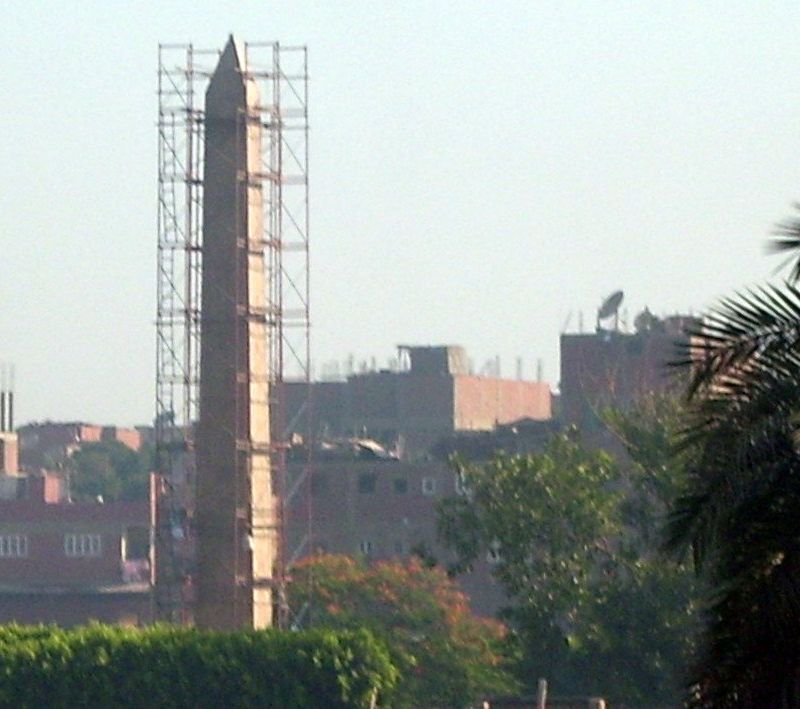
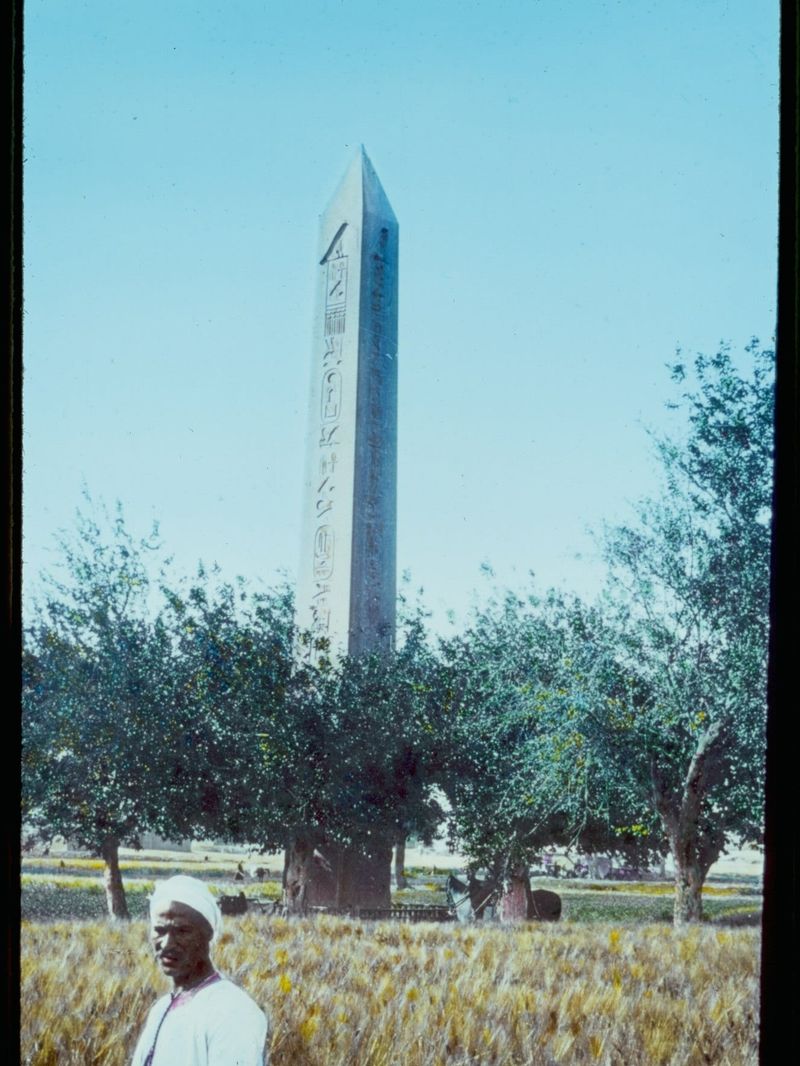
The Obelisk of Senusret I is the main surviving monument of Heliopolis. It was erected by Senusret I, a king of the Twelfth Dynasty in the Middle Kingdom, around 1950 BC, as one of a pair raised in front of the temple of Ra to celebrate his jubilee (Heb-Sed) festival. Carved from a single block of red Aswan granite, it stands about 20 metres high and weighs over 100 tonnes. Each face bears a column of hieroglyphs giving the king's names and titles and dedicating the monument to the gods of Heliopolis. It is generally regarded as the oldest obelisk in Egypt still standing in its original position.
Visiting
The obelisk stands in a small open-air museum on the site, with fragments of statues and architecture found in recent excavations at Matariya, where Egyptian and German archaeologists continue to uncover the remains of the temple of Ra, including, in 2017, fragments of a colossal statue of a king, now in the Grand Egyptian Museum. Nearby is the Virgin Mary's Tree, a site associated with the Holy Family.
Exhibo editorial
It stands alone in a garden in a crowded working-class district, a single shaft of red granite older than Tutankhamun by six centuries. Almost nobody comes. That solitude is the reason to go. This is all that remains above ground of one of the holiest cities of the ancient world, the place Plato and Herodotus came to learn from the priests.
Walk around it slowly and read the hieroglyphs running down each face, crisp after four thousand years. Then imagine its twin beside it, the temple of the sun behind and the long avenues of sphinxes, all gone. It is a quiet, strange, deeply moving place.
Gallery
How to find it
In the Al-Masalla garden in Matariya, in north-eastern Cairo. The nearest metro station is El-Matareyya on Line 1, a short taxi ride away. The Virgin Mary's Tree is nearby.
Similar places
All places
News by Exhibo
Editorial coverage on Exhibo
Colour Symbolism in Art History
Marian blue, imperial purple, gold ground and modernist hues as dated Western conventions you can check against named museum works.
Colour symbolism in Western art is a convention you can date: who wears the hue, which feast it marks, whether gold stands for light. This guide reads liturgical codes, Marian blue, Tyrian purple and gold ground through named museum works from San Vitale to Klein, then shows how to test a reading in front of the picture.
Fra Angelico's Earliest Altarpiece Returns to Fiesole Following Major Conservation
Conservation reveals hidden architectural designs and clarifies Renaissance interventions
The meticulous restoration of Fra Angelico's earliest preserved work uncovers concealed layers and structural innovations ahead of its return to its original Tuscan setting.
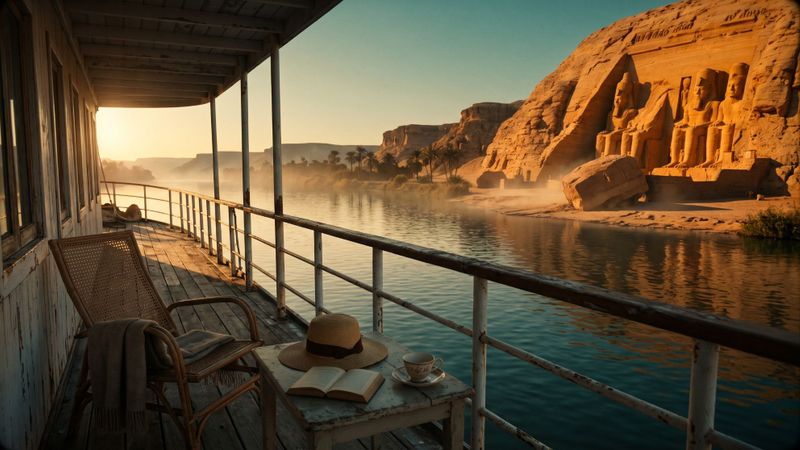
Agatha Christie's Egypt: Three Abu Simbels, a Pharaoh and a Murder on the Nile
Christie set one famous murder on the Nile and two lesser-known stories in ancient Egypt. The temples, letters and film sets behind all three.
The Abu Simbel of Death on the Nile has since moved up a hill. Christie's two other Egyptian stories lead to a pharaoh's dismantled temples at Karnak and a farmer's 4,000-year-old letters now in New York.