
Mosque of Sultan al-Mu'ayyad
Built on the prison where its founder once suffered, the last great Mamluk mosque, with minarets set on Bab Zuwayla.
A vow kept
The Mosque of Sultan al-Mu'ayyad Shaykh stands just inside Bab Zuwayla, at the southern end of al-Muizz Street. Al-Mu'ayyad, bought as a boy by Sultan Barquq and raised as a Mamluk soldier, had been imprisoned as an emir in the notorious Khizanat al-Shama'il prison on this site during the reign of Sultan Faraj. According to the historian al-Maqrizi, he vowed that if he survived and became sultan he would replace the prison with a mosque. He did both: he took the throne in 1412 and the mosque was built between 1415 and about 1421, the last of the great congregational mosque complexes of the Mamluk era.
Architecture and borrowings
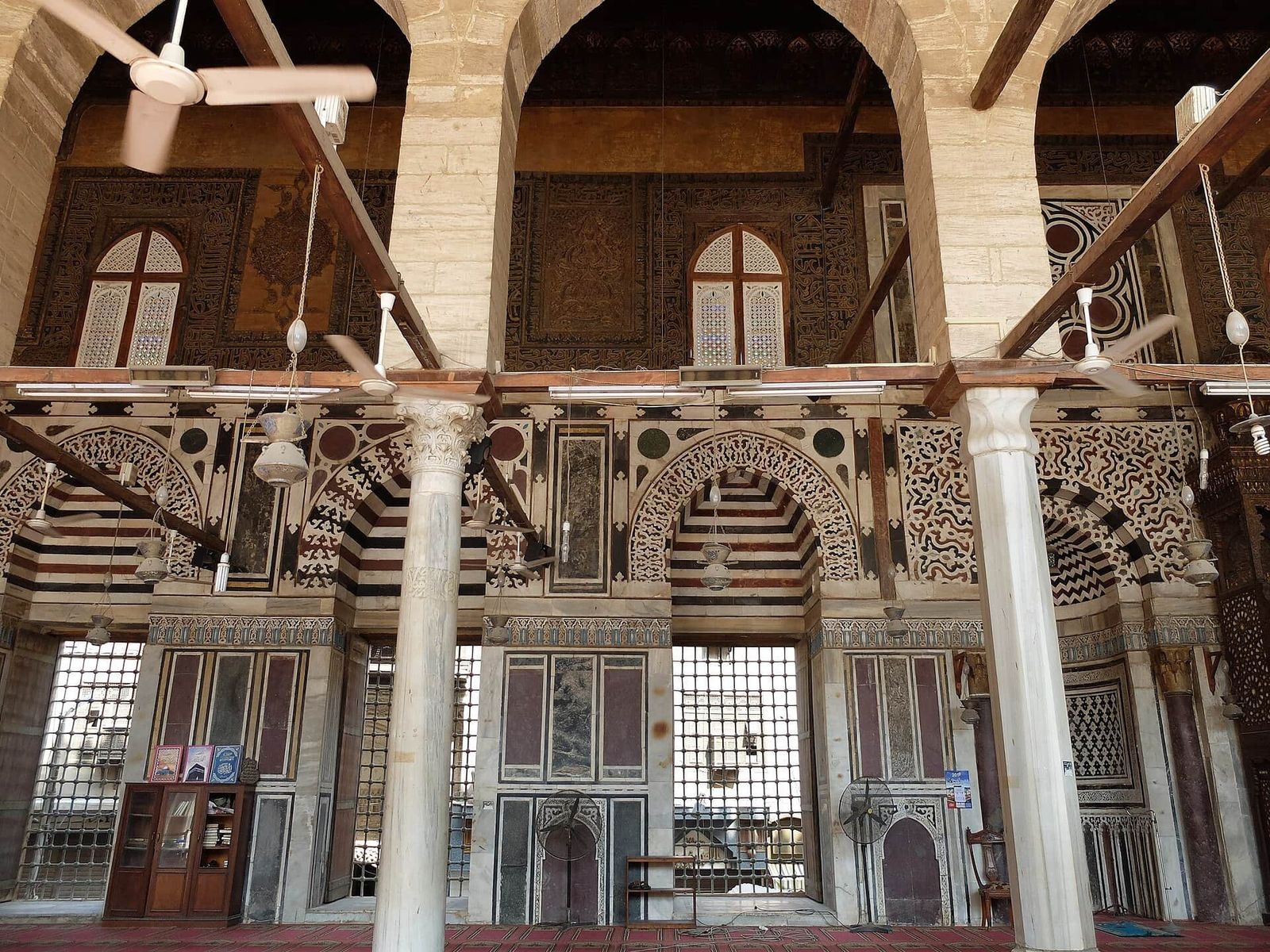
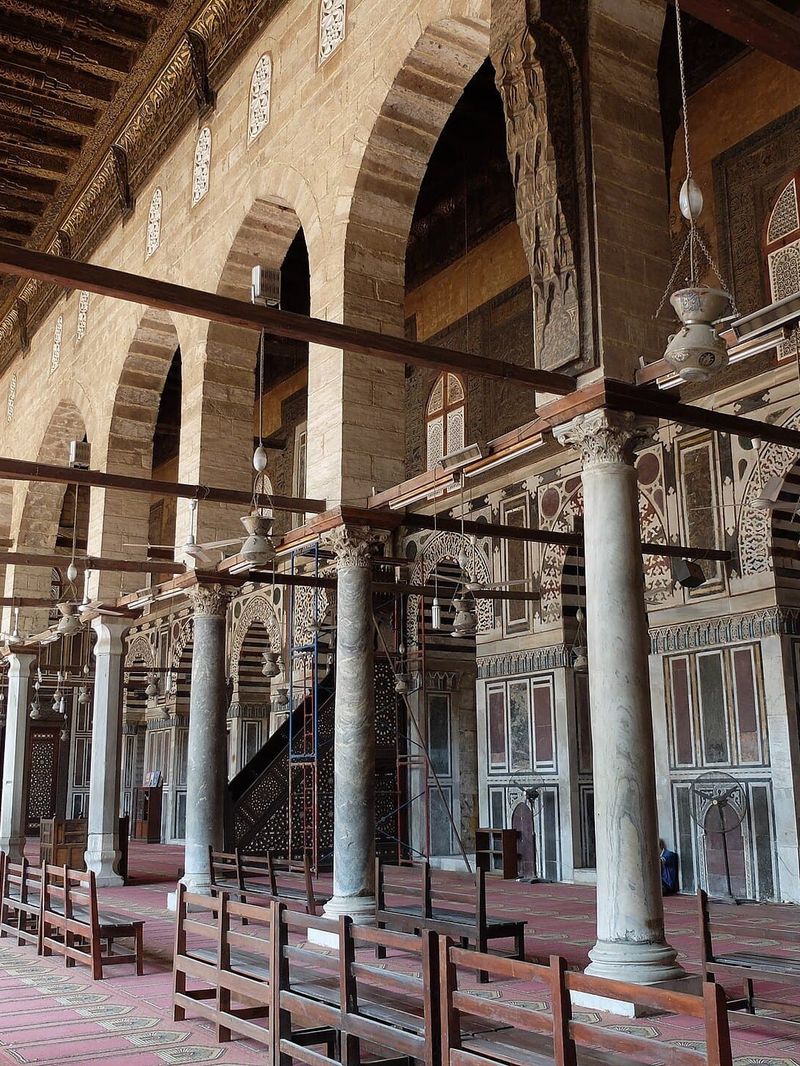
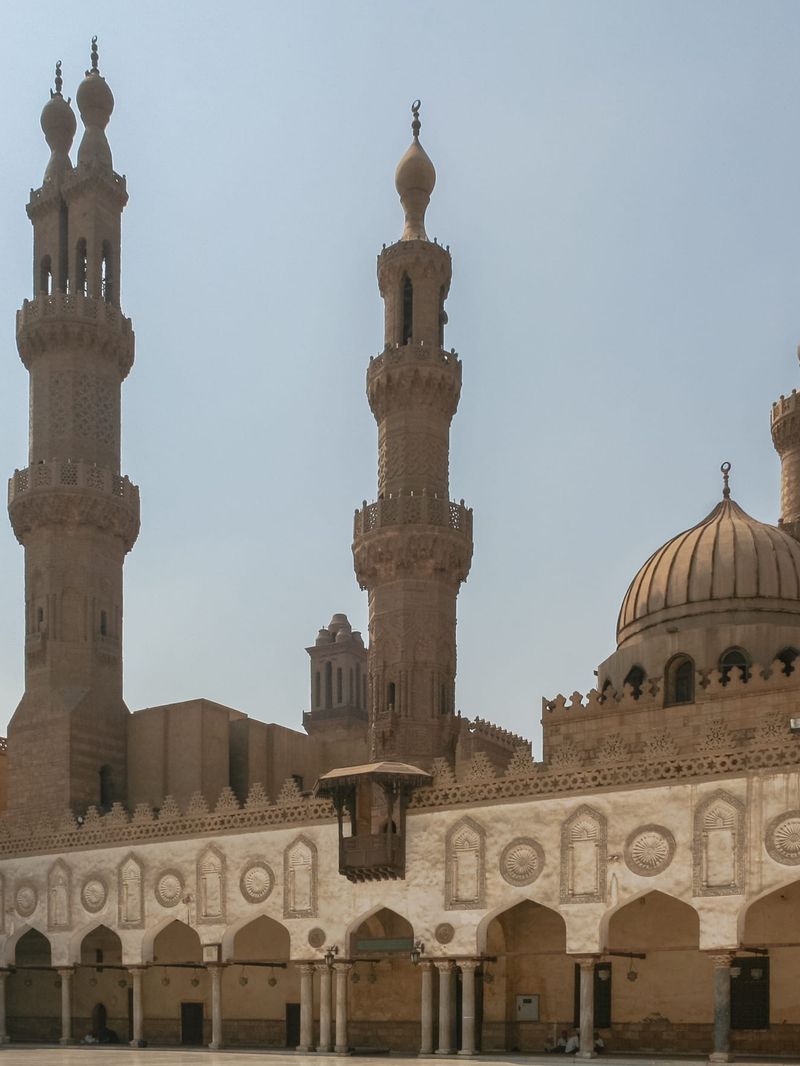
The complex combined a congregational mosque, a madrasa teaching the four schools of law, which, richly endowed, became one of the most prestigious academic institutions of fifteenth-century Cairo and a mausoleum in which al-Mu'ayyad and his son are buried. The mosque is entered through a tall portal faced with black-and-white marble and stalactite vaulting, closed by a magnificent bronze-plated door that, like a great bronze chandelier, was taken from the Mosque-Madrasa of Sultan Hassan: removing fittings from an existing mosque was forbidden and contemporaries regarded the transfer as little short of theft, despite the sultan's donations to the older foundation. Many of the columns and much of the marble were also reused from other buildings. The prayer hall preserves a richly decorated qibla wall of marble inlay and a gilded wooden ceiling.
The minarets on Bab Zuwayla
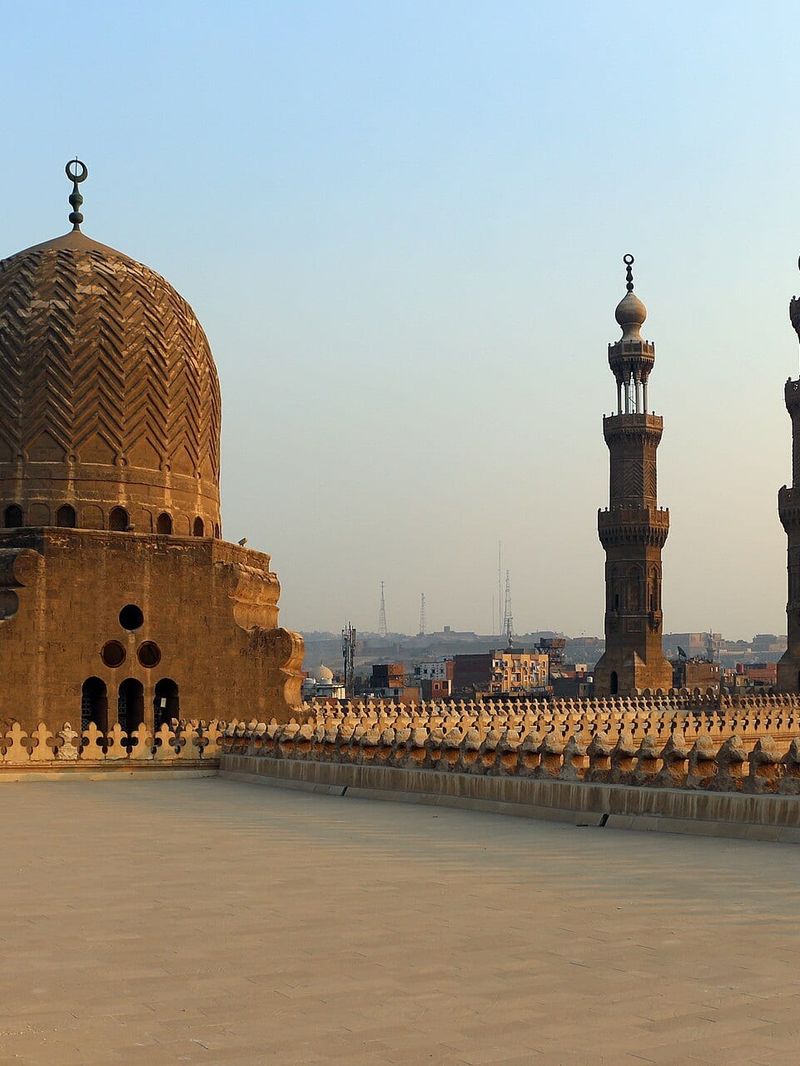
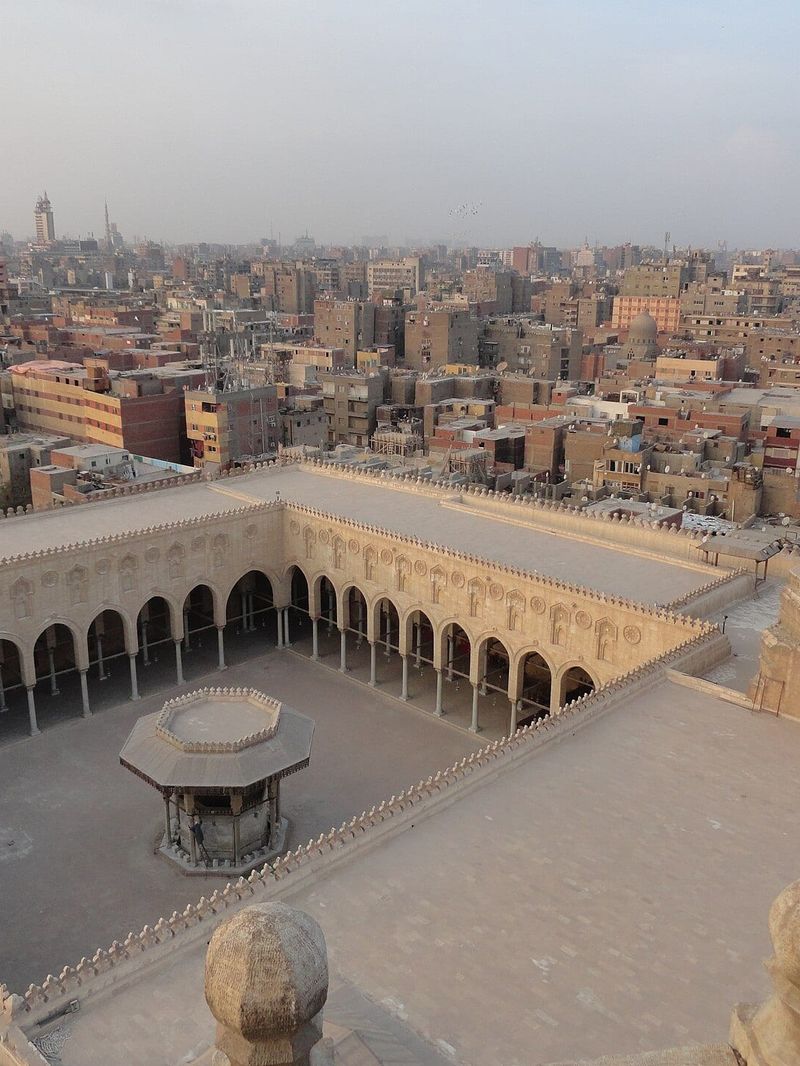
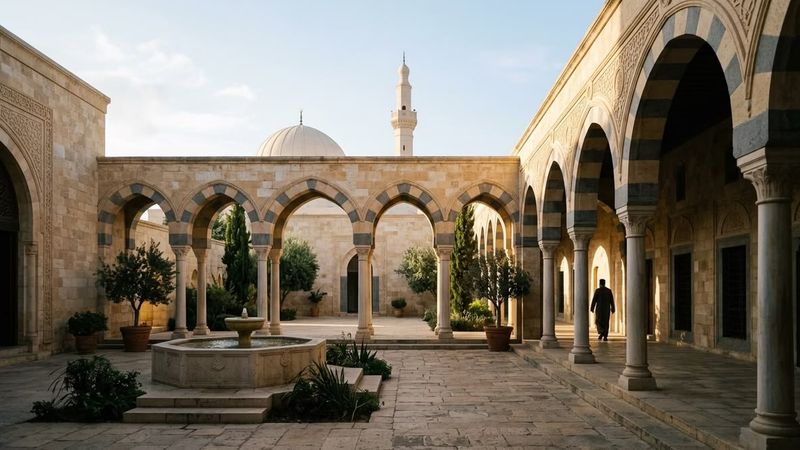
In a solution unique in Cairo, the mosque's two minarets were built on top of the two Fatimid towers of the neighbouring gate of Bab Zuwayla, giving the gate its famous silhouette; a third minaret over the western portal collapsed in 1427. Much of the original courtyard arcading has disappeared and the present courtyard is planted as a garden. The minarets are reached through the Bab Zuwayla visitor route and the mosque is part of the UNESCO World Heritage Site of Historic Cairo.
Exhibo editorial
There is a particular satisfaction in a building that is a grudge turned to stone. A sultan who once rotted in a prison cell on this exact spot came back as ruler of Egypt, knocked the prison down and put up one of the finest mosques of his century. Then he helped himself to the best door in Cairo, from Sultan Hassan, for good measure.
Inside it is calm, almost gentle: a garden courtyard, a qibla wall of marble inlay, a gilded ceiling, the city noise filtered to a hum. Then you climb the minarets from Bab Zuwayla and from the top you can look down into the courtyard where the prison once stood. Revenge, it turns out, can look remarkably like grace.
Gallery
How to find it
Just inside Bab Zuwayla at the southern end of al-Muizz Street. The minarets of the mosque stand on top of the gate.
Similar places
All places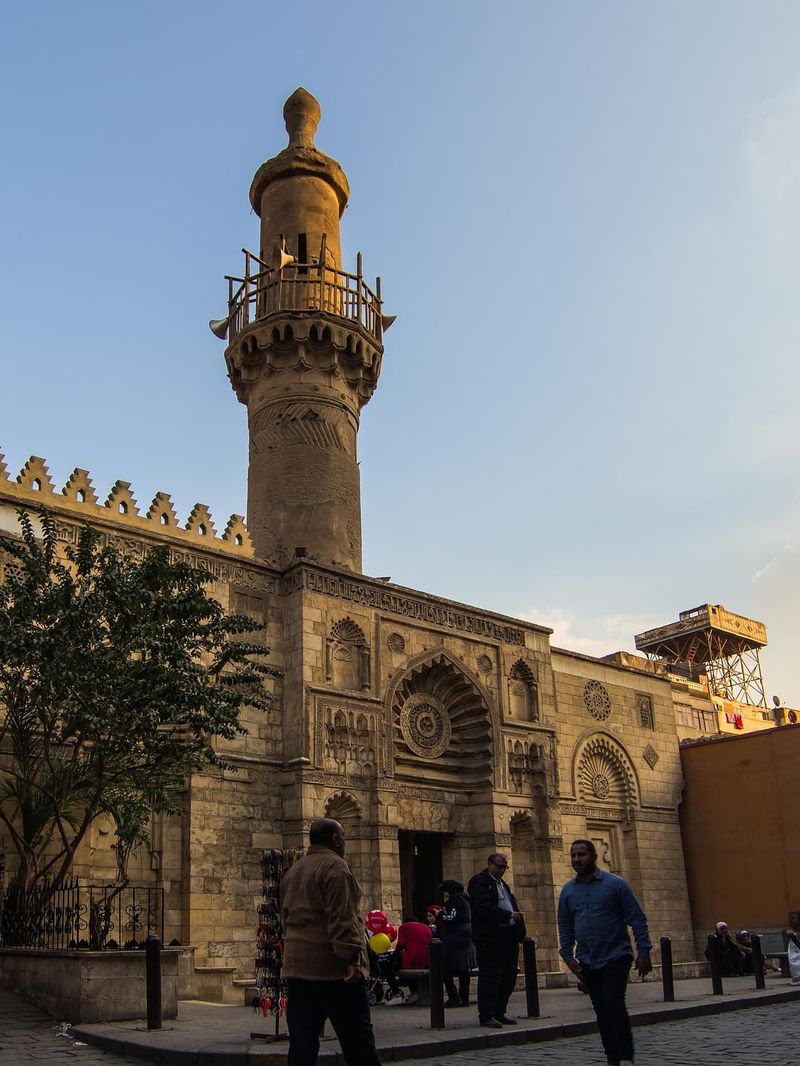
News by Exhibo
Editorial coverage on Exhibo

Where Is Agrabah? The City Disney Assembled From Real Places
Agrabah was going to be Baghdad. A war made it fictional — and then Disney built it back out of real places, from a tomb in Agra to a valley in Jordan that usually plays Mars.
The Sultan's palace where Princess Jasmine feels trapped has the silhouette of the Taj Mahal — which is not a palace at all, but a tomb. That is how Agrabah works. Disney's fairy-tale city was going to be Baghdad, until the Gulf War made the name impossible; the studio invented a place that could not be found on a map, then quietly rebuilt it out of real ones — Isfahan and Agra, Marrakesh and Mandalay, a Jordanian desert that has played both Arabia and Mars.
Islamic Decorative Arts: Ceramics, Metalwork, Glass and Textiles
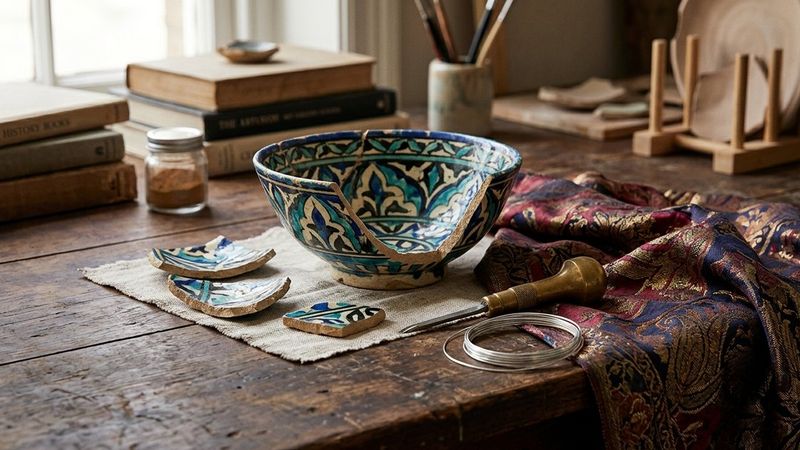
From Kashan luster bowls to Mamluk mosque lamps and Safavid silks: a museum survey of four luxury media with named works in London, New York and Doha
Islamic decorative arts are the portable luxury crafts of Muslim-ruled lands: pottery and tile, inlaid brass, enamelled glass, woven silk and knotted carpet. This survey follows workshop conditions, techniques and trade from Abbasid Iraq to Ottoman Istanbul, with four close readings and a media comparison table, while Iznik depth, arabesque theory and building programmes sit in sibling articles on the series hub.
Islamic Architecture, Explained
Mosque types, domes, minarets and courtyard plans from Umayyad Jerusalem to Ottoman Istanbul, with five regional schools read through buildings you can visit
Islamic architecture is the building tradition of Muslim-ruled lands from the seventh century onward: hypostyle mosques, courtyard sahn, minaret towers and dome engineering shaped by prayer law, climate and regional craft. This guide maps Umayyad, Mamluk, Safavid, Mughal and Ottoman schools through named monuments, with muqarnas vaulting and decorative arts deferred to sibling pages in the series.