
Mosque of Muhammad Ali (Alabaster Mosque)
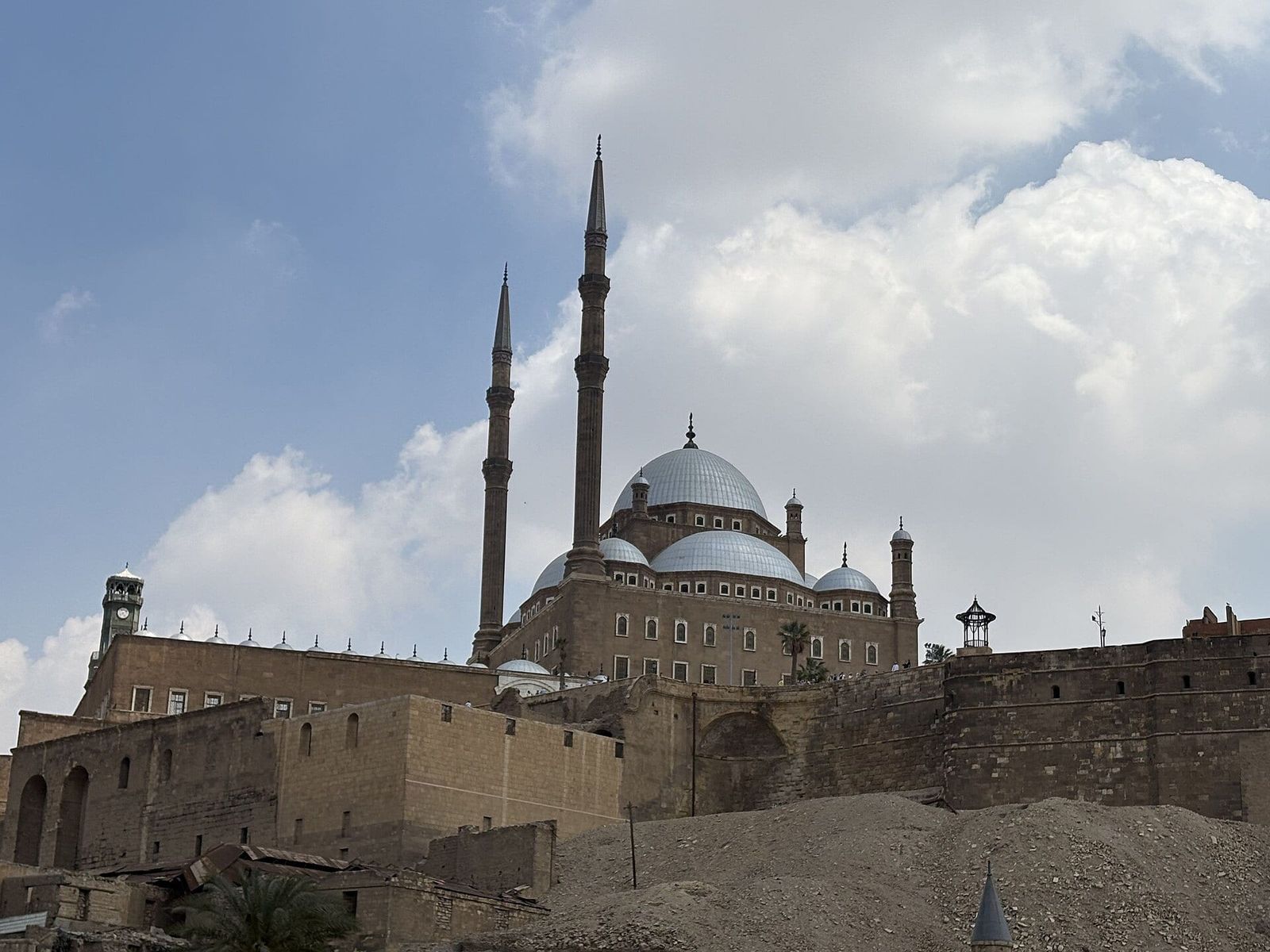
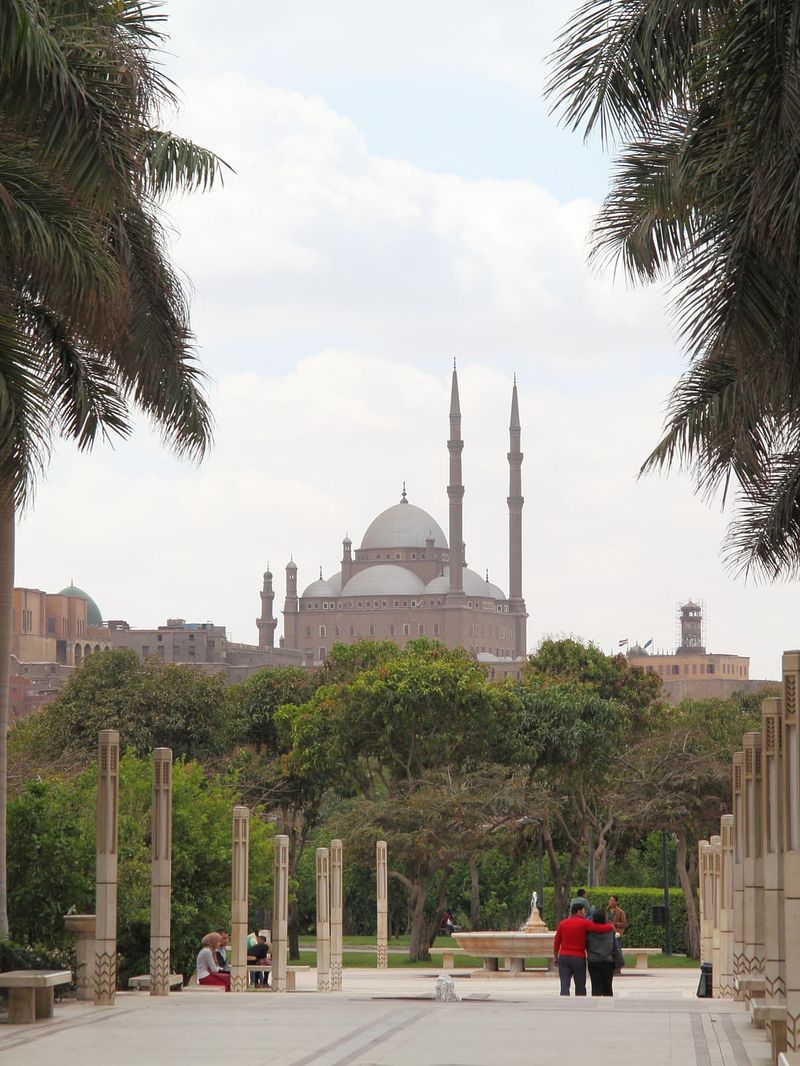
Cairo's skyline signature, an Istanbul-style imperial mosque in alabaster, crowning the Citadel with twin needle minarets.
An Ottoman mosque on Saladin's hill
The Mosque of Muhammad Ali, popularly called the Alabaster Mosque, stands on the highest point of the Cairo Citadel and is the most visible monument on the city's skyline. It was commissioned by Muhammad Ali Pasha, the Albanian-born Ottoman governor who seized power in 1805 and founded the dynasty that ruled Egypt until 1952 and was begun in 1830 on the site of Mamluk palaces he had demolished. The main structure was completed in 1848, the year before his death; decoration continued into the 1850s. The design is attributed to the architect Yusuf Bushnak, brought from Istanbul and follows the model of the imperial mosques of the Ottoman capital, in particular the Yeni Cami, rather than any Cairene tradition. That choice was itself a statement: a governor building a sultan's mosque, with two minarets, in the heart of the old Mamluk seat of power.
Architecture
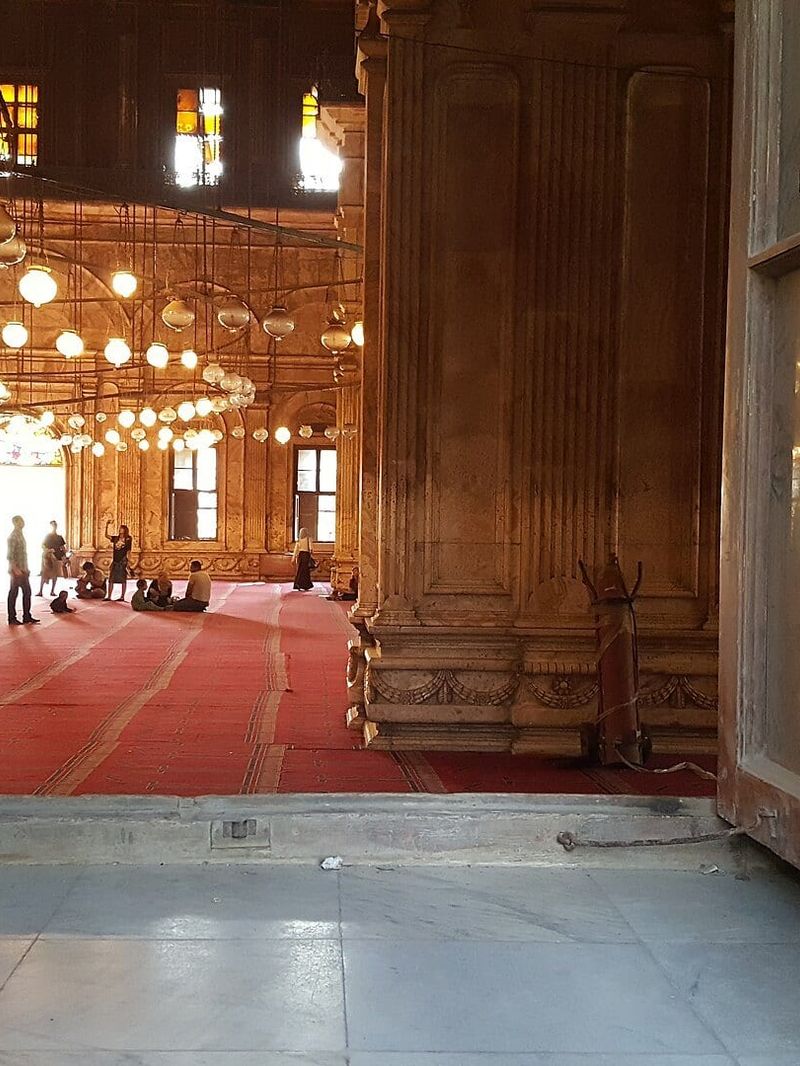
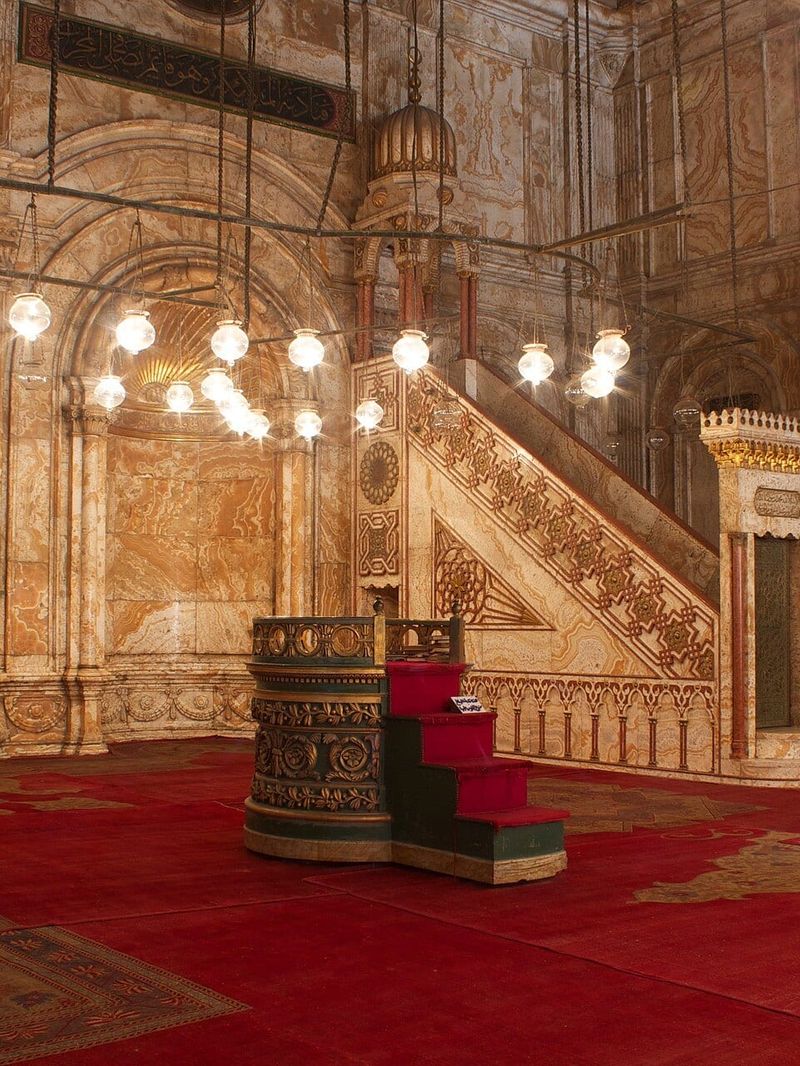
The prayer hall is a vast square covered by a central dome about 21 metres in diameter and 52 metres high, supported by four half-domes and four smaller corner domes, all lit by rows of windows and hung with glass lamps and chandeliers. The interior and lower exterior walls are clad in alabaster quarried in Upper Egypt, a material Muhammad Ali insisted on partly to revive a local industry. The two cylindrical Ottoman minarets, each about 82–84 metres high, are among the tallest in Egypt. The mosque has two minbars: the original in carved and gilded wood and a later one in marble.
The courtyard and the clock
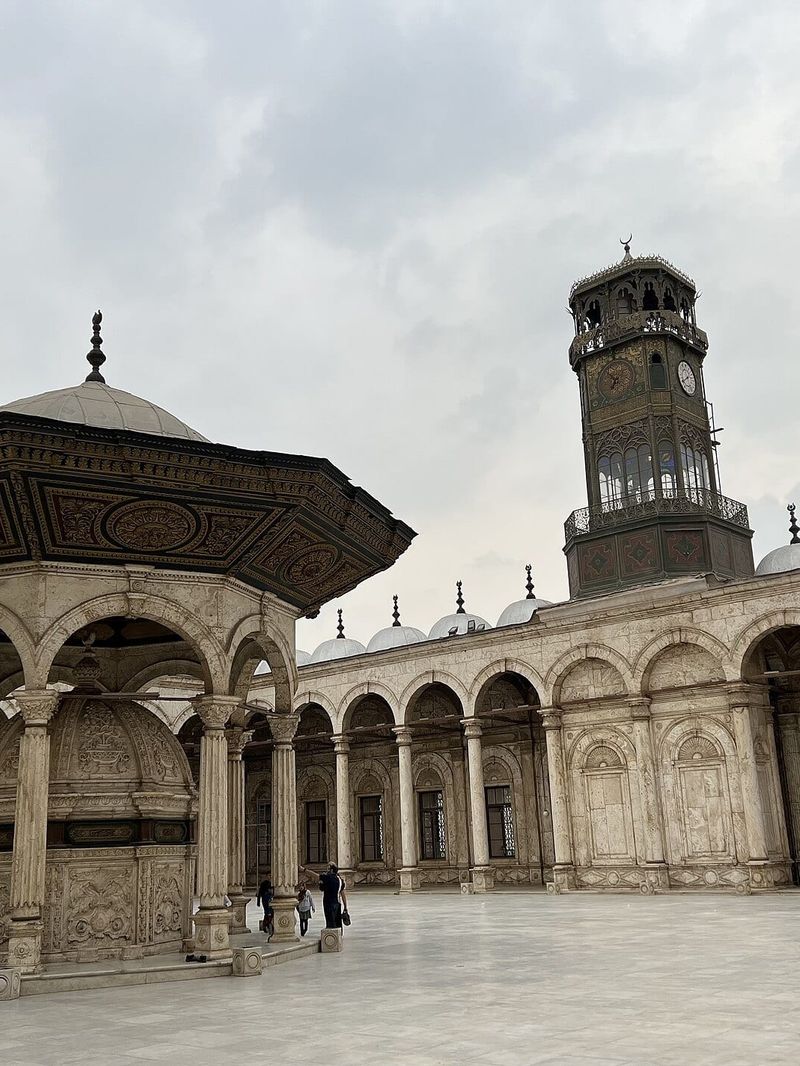
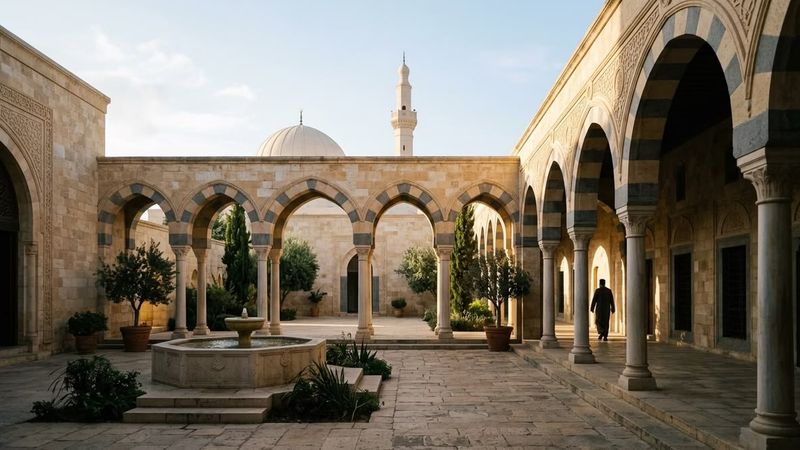
To the west lies an arcaded courtyard with an octagonal domed ablution fountain at its centre. Above its western arcade stands a copper clock tower presented to Muhammad Ali by King Louis-Philippe of France in 1845, in exchange for the obelisk from Luxor Temple that now stands in the Place de la Concorde in Paris. The clock has rarely kept time. Muhammad Ali himself is buried in a marble tomb behind a bronze screen inside the prayer hall. The mosque is visited on the Citadel ticket.
Exhibo editorial
Every postcard of Cairo has these two minarets in it, thin as knitting needles against the haze. Up close, the mosque turns out to be an argument: a man from the Balkans, nominally a servant of the Ottoman sultan, building himself an Istanbul imperial mosque on top of the Mamluks' palace and daring anyone to object. Nobody did.
Inside, the scale takes over. Lamps hang on long chains in rings, the dome floats on its half-domes and the alabaster glows faintly yellow, like a lit candle seen through skin. Then step out to the courtyard and look up at the clock, given by France in exchange for the obelisk from Luxor that now stands in Paris.
Gallery
How to find it
On the highest point of the Citadel. Enter the Citadel through the gate on Salah Salem Road and walk up through the grounds to the mosque.
Similar places
All places
News by Exhibo
Editorial coverage on Exhibo

Where Is Agrabah? The City Disney Assembled From Real Places
Agrabah was going to be Baghdad. A war made it fictional — and then Disney built it back out of real places, from a tomb in Agra to a valley in Jordan that usually plays Mars.
The Sultan's palace where Princess Jasmine feels trapped has the silhouette of the Taj Mahal — which is not a palace at all, but a tomb. That is how Agrabah works. Disney's fairy-tale city was going to be Baghdad, until the Gulf War made the name impossible; the studio invented a place that could not be found on a map, then quietly rebuilt it out of real ones — Isfahan and Agra, Marrakesh and Mandalay, a Jordanian desert that has played both Arabia and Mars.
Islamic Decorative Arts: Ceramics, Metalwork, Glass and Textiles
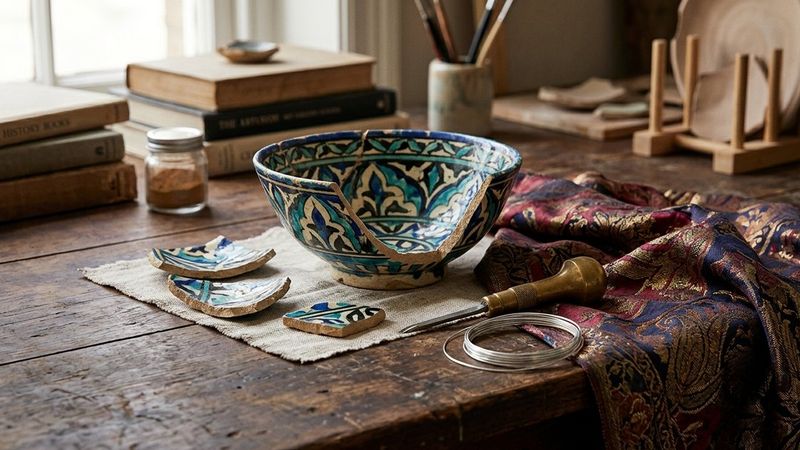
From Kashan luster bowls to Mamluk mosque lamps and Safavid silks: a museum survey of four luxury media with named works in London, New York and Doha
Islamic decorative arts are the portable luxury crafts of Muslim-ruled lands: pottery and tile, inlaid brass, enamelled glass, woven silk and knotted carpet. This survey follows workshop conditions, techniques and trade from Abbasid Iraq to Ottoman Istanbul, with four close readings and a media comparison table, while Iznik depth, arabesque theory and building programmes sit in sibling articles on the series hub.
Islamic Architecture, Explained
Mosque types, domes, minarets and courtyard plans from Umayyad Jerusalem to Ottoman Istanbul, with five regional schools read through buildings you can visit
Islamic architecture is the building tradition of Muslim-ruled lands from the seventh century onward: hypostyle mosques, courtyard sahn, minaret towers and dome engineering shaped by prayer law, climate and regional craft. This guide maps Umayyad, Mamluk, Safavid, Mughal and Ottoman schools through named monuments, with muqarnas vaulting and decorative arts deferred to sibling pages in the series.