
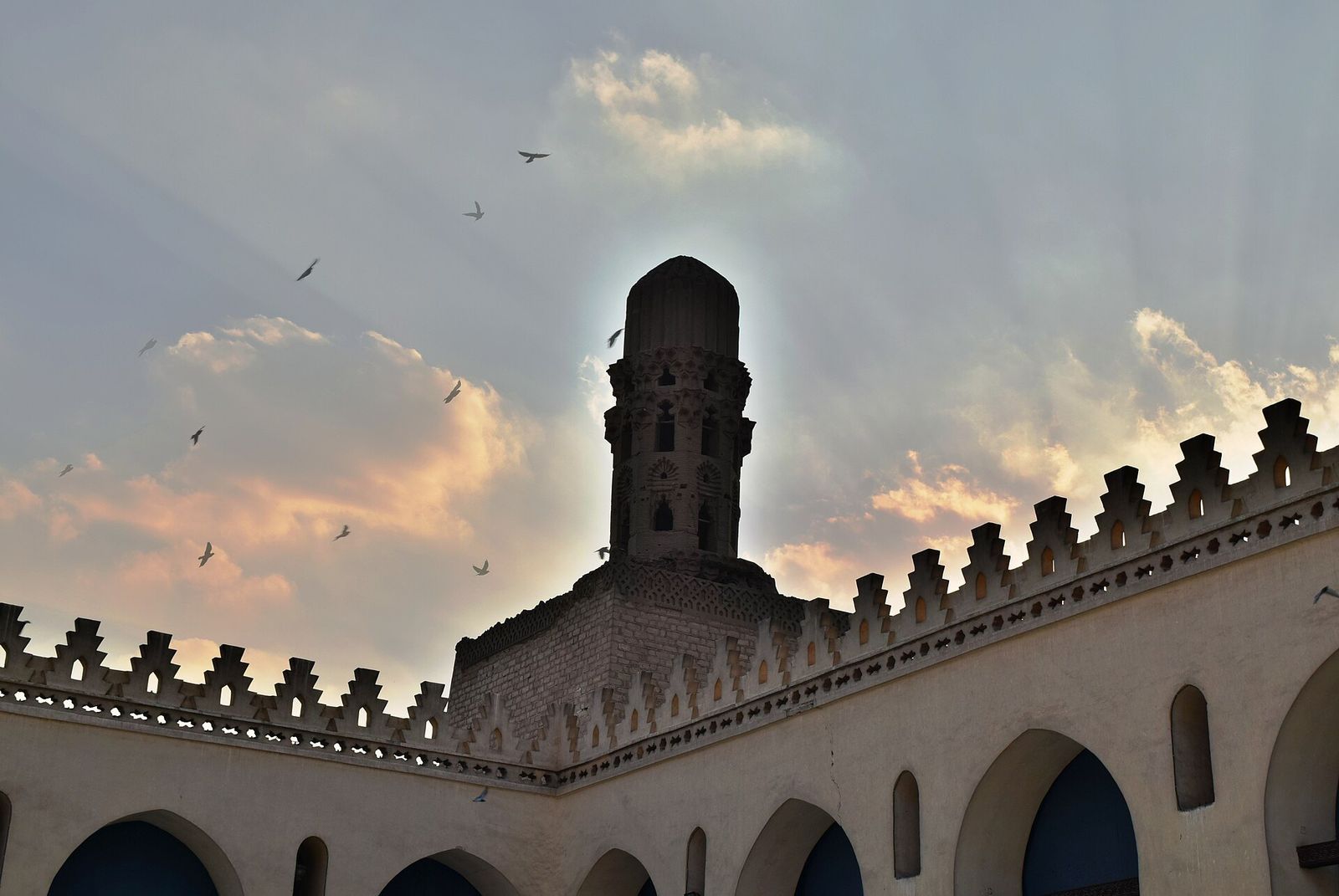
Mosque of al-Hakim
Fatimid Cairo's second-largest mosque by the northern walls, a vast courtyard rebuilt in white marble, beside Bab al-Futuh.
A Fatimid congregational mosque
The Mosque of al-Hakim stands at the northern end of al-Muizz Street, against the Fatimid city walls between Bab al-Futuh and Bab al-Nasr. It was begun in 990 by the Fatimid caliph al-Aziz Billah, outside the walls of the time and the first Friday prayer was held there a year later while it was still incomplete. Construction resumed in 1002–1003 under his son, the sixth Fatimid caliph al-Hakim bi-Amr Allah, with the overseer Abu Muhammad al-Hafiz Abd al-Ghani ibn Sa'id al-Misri and the mosque was finished in 1013. Originally known as al-Anwar, "the radiant", it is the second-largest mosque in Cairo after Ibn Tulun, a great rectangle of roughly 121 by 113 metres and when Badr al-Jamali rebuilt the city walls in stone in the 1080s and 1090s, he enclosed it within them.
Architecture
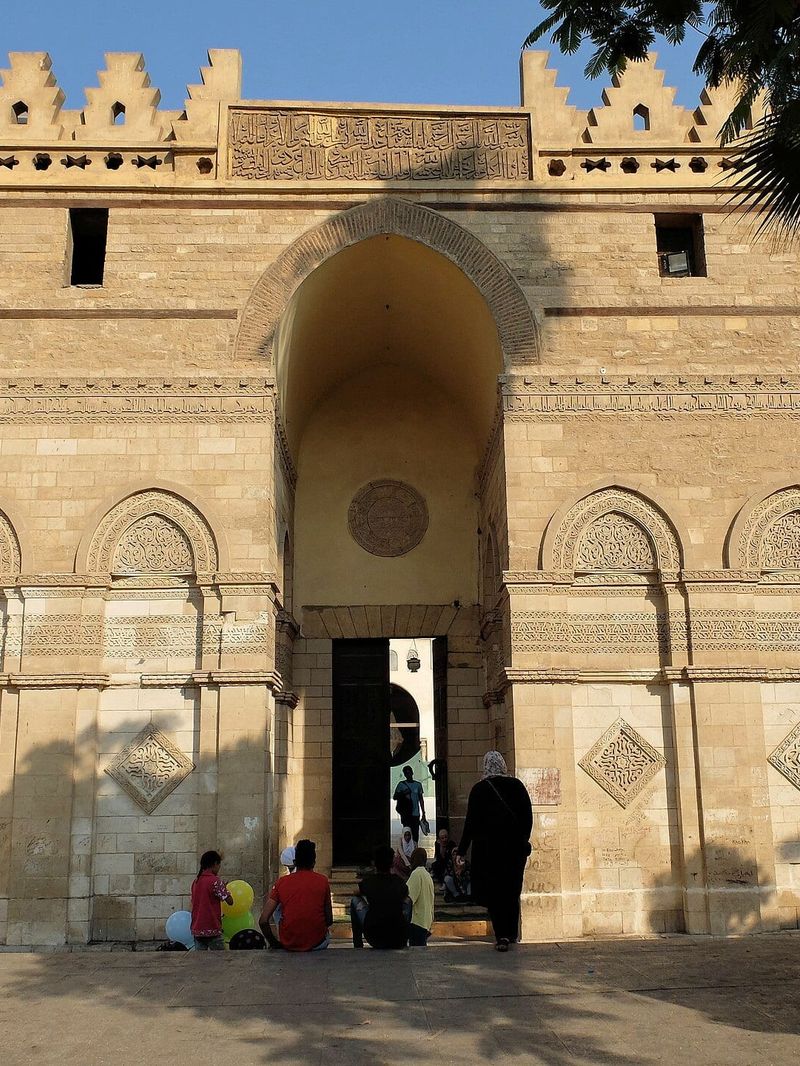
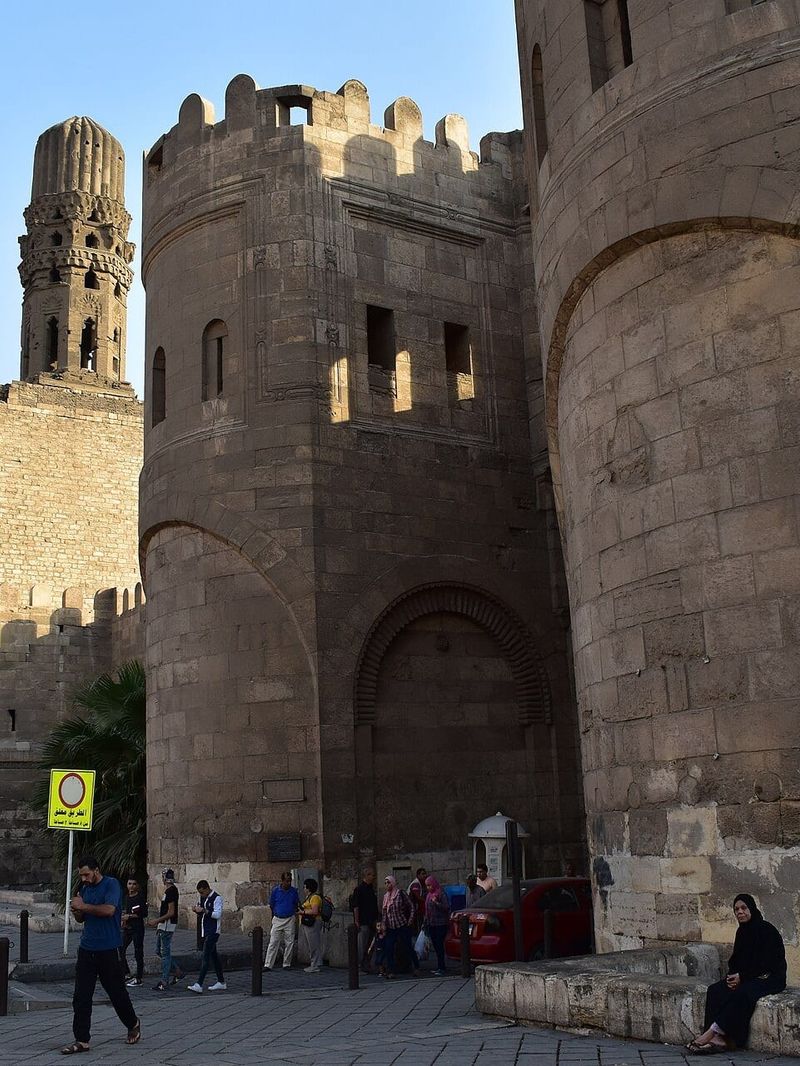
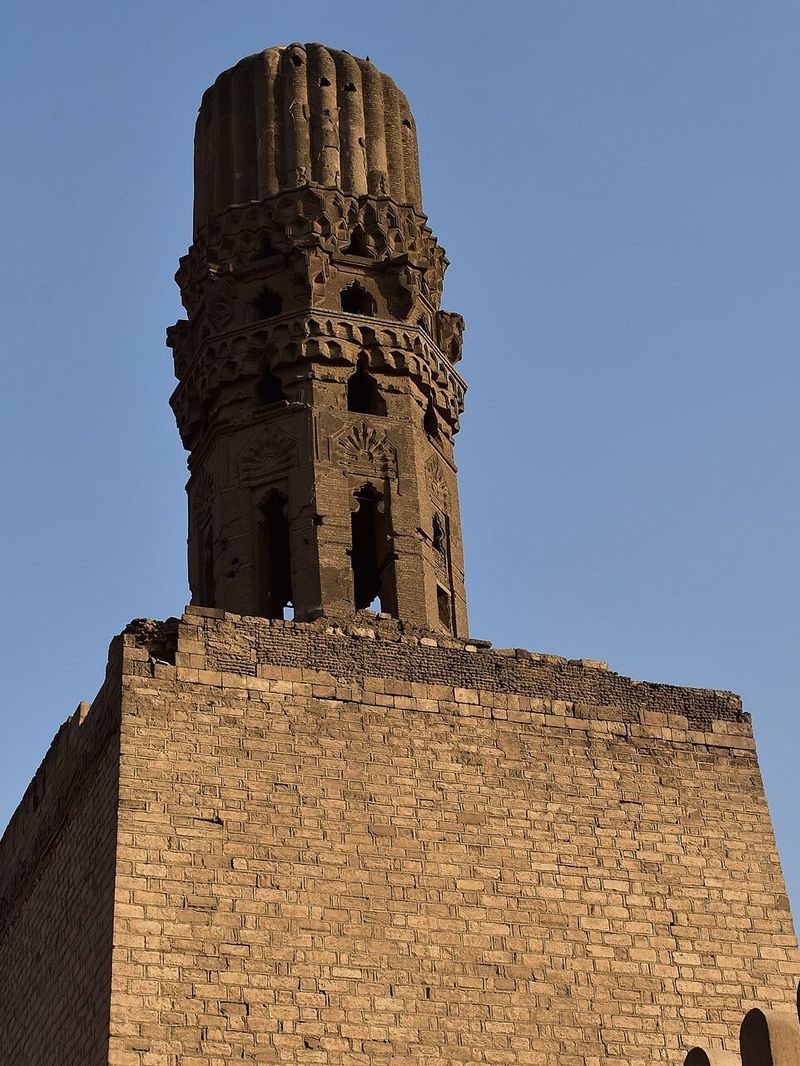
Like Ibn Tulun, al-Hakim is a hypostyle mosque: a vast open courtyard surrounded by arcades on brick piers, with a deeper prayer hall on the qibla side, crossed by a raised central aisle. Its monumental projecting portal was one of the first of its kind in Cairo. The two minarets, of cut stone, rise from the north and west corners on massive square bases; in 1010 al-Hakim had them encased in great salient towers and the upper parts were rebuilt by the Mamluks after the earthquake of 1303, giving them their distinctive profile beside the city walls. Remnants of the original decoration, carved stucco, wooden tie-beams and Kufic Qur'anic inscriptions, survive in the arcades.
Neglect and revival
After the Fatimid period the mosque declined and served many purposes over the centuries; it was repaired by the Mamluks, including under Sultan Hassan in 1358–1359, but by the twentieth century it was largely in ruins. In 1980 the Dawoodi Bohras, an Ismaili community based in India who regard the Fatimid caliphs as their imams, completed a 27-month reconstruction under their leader Mohammed Burhanuddin, refurbishing it in white marble and gold trim; it was reopened on 24 November 1980 in the presence of President Anwar Sadat. The restoration returned the mosque to active worship, though it remains debated among conservationists. A further government-backed conservation project was completed in 2023. The mosque is part of the UNESCO World Heritage Site of Historic Cairo.
Exhibo editorial
Arrive from the noise of al-Muizz and the courtyard of al-Hakim opens like a sudden clearing: a great field of white marble so bright at noon that you squint, ringed by arcades, with the old city walls rising just behind the minarets. Children chase each other across it while Bohra pilgrims in white caps and embroidered dresses pray in the shade.
The marble is new. You can argue for hours about whether it should be. But stand at the corner by the minaret, where Fatimid stone meets Badr al-Jamali's walls and the thousand years come back. Go on to Bab al-Futuh next door. The stretch of walls and gates here is one of the quietest corners of Historic Cairo.
Gallery
How to find it
At the northern end of al-Muizz Street, beside Bab al-Futuh. Walk north up al-Muizz from Khan el-Khalili and the mosque is on the right just before the gate.
Similar places
All places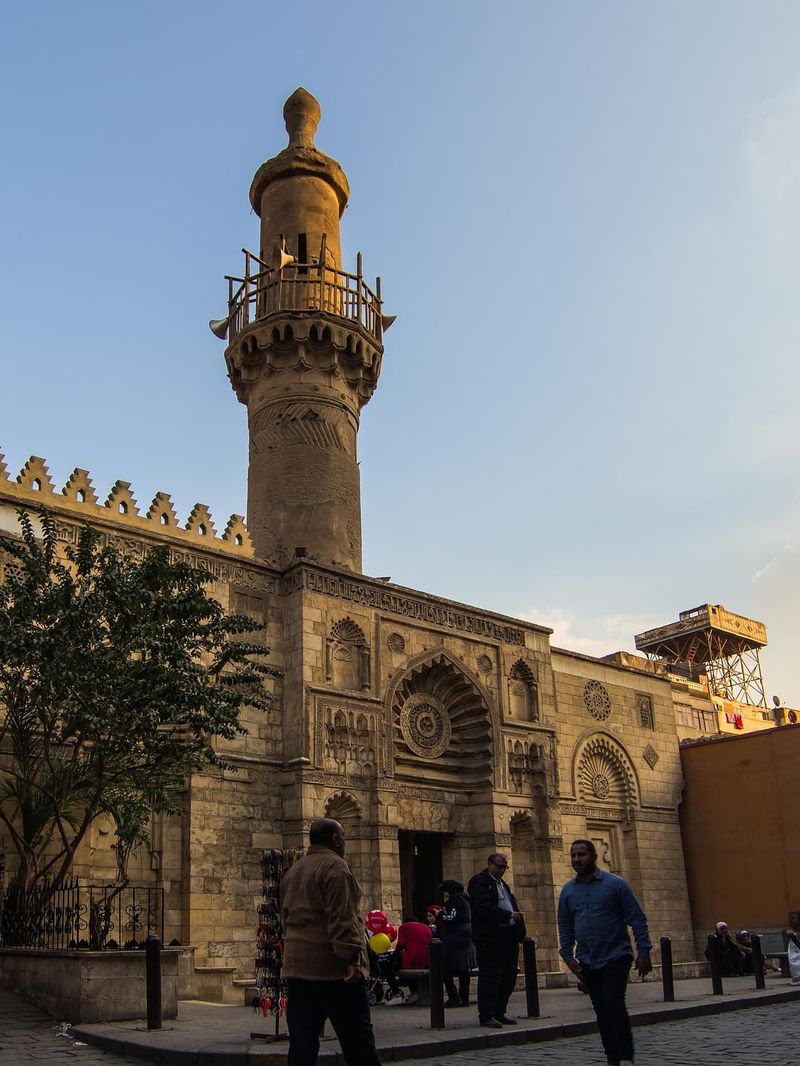
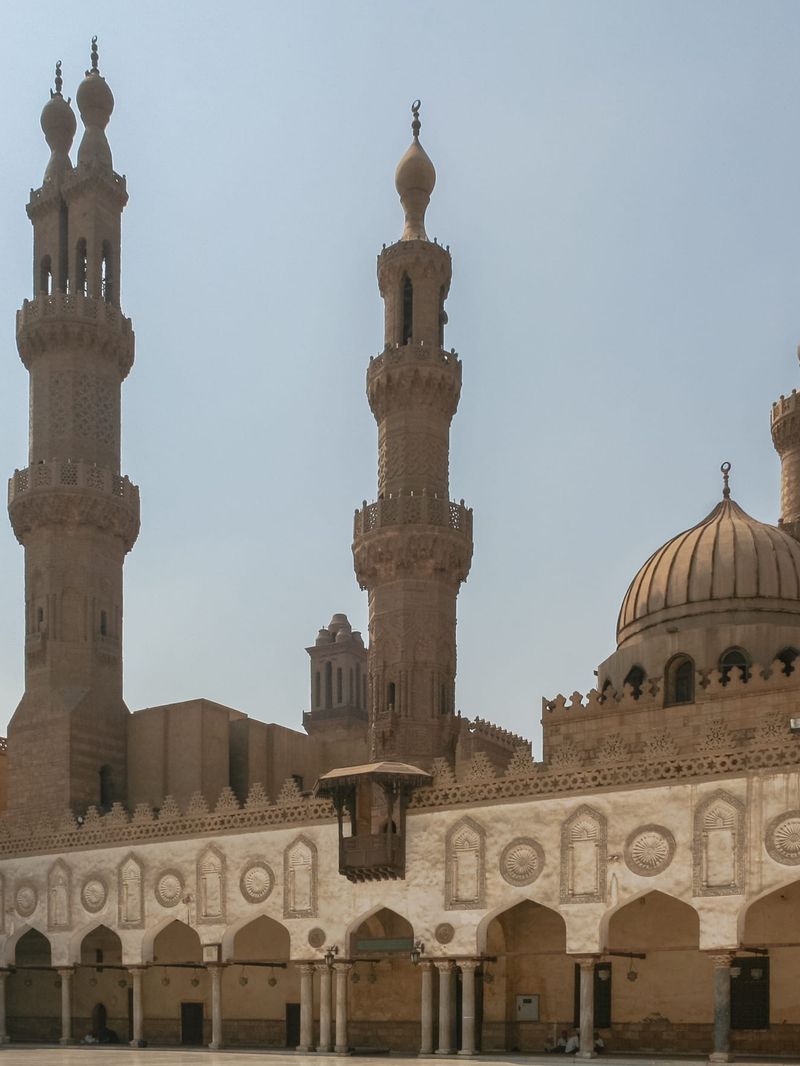
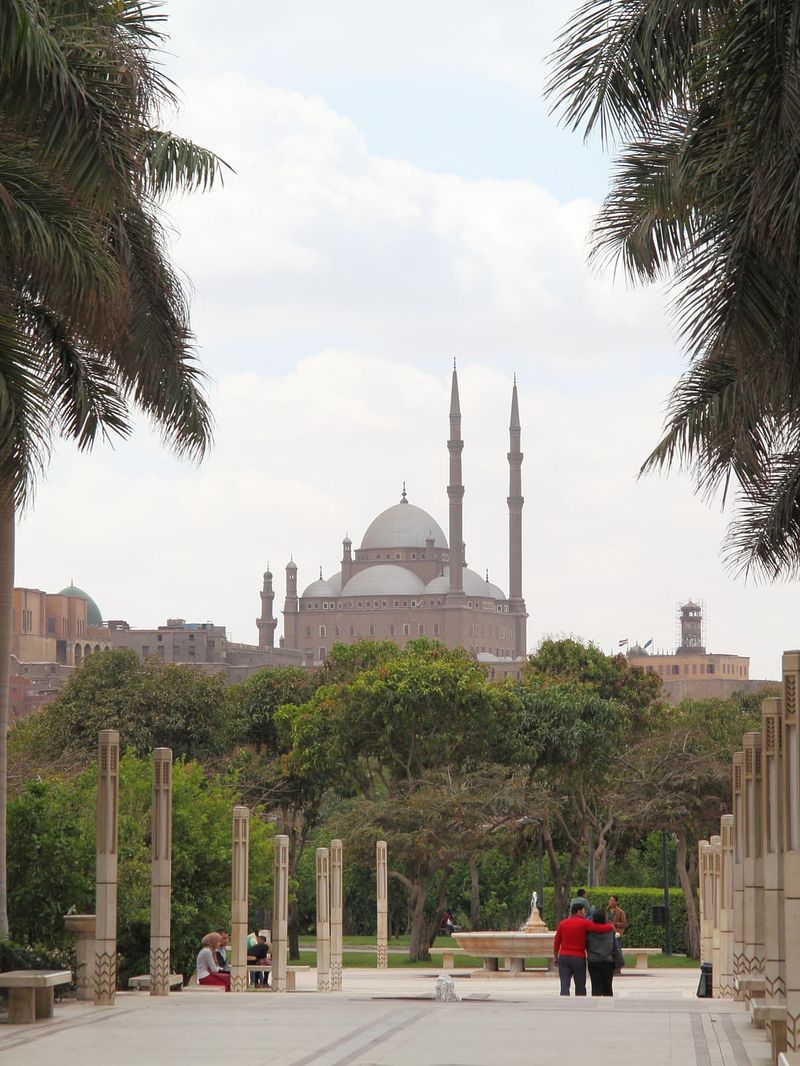
News by Exhibo
Editorial coverage on Exhibo
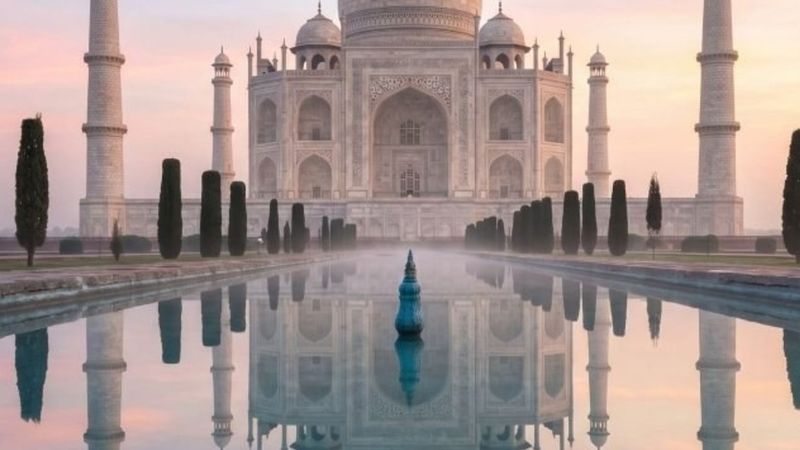
Where Is Agrabah? The City Disney Assembled From Real Places
Agrabah was going to be Baghdad. A war made it fictional — and then Disney built it back out of real places, from a tomb in Agra to a valley in Jordan that usually plays Mars.
The Sultan's palace where Princess Jasmine feels trapped has the silhouette of the Taj Mahal — which is not a palace at all, but a tomb. That is how Agrabah works. Disney's fairy-tale city was going to be Baghdad, until the Gulf War made the name impossible; the studio invented a place that could not be found on a map, then quietly rebuilt it out of real ones — Isfahan and Agra, Marrakesh and Mandalay, a Jordanian desert that has played both Arabia and Mars.
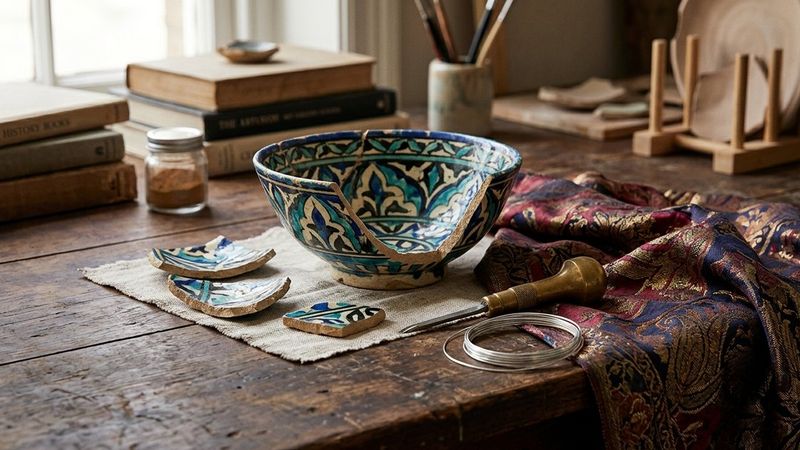
Islamic Decorative Arts: Ceramics, Metalwork, Glass and Textiles
From Kashan luster bowls to Mamluk mosque lamps and Safavid silks: a museum survey of four luxury media with named works in London, New York and Doha
Islamic decorative arts are the portable luxury crafts of Muslim-ruled lands: pottery and tile, inlaid brass, enamelled glass, woven silk and knotted carpet. This survey follows workshop conditions, techniques and trade from Abbasid Iraq to Ottoman Istanbul, with four close readings and a media comparison table, while Iznik depth, arabesque theory and building programmes sit in sibling articles on the series hub.
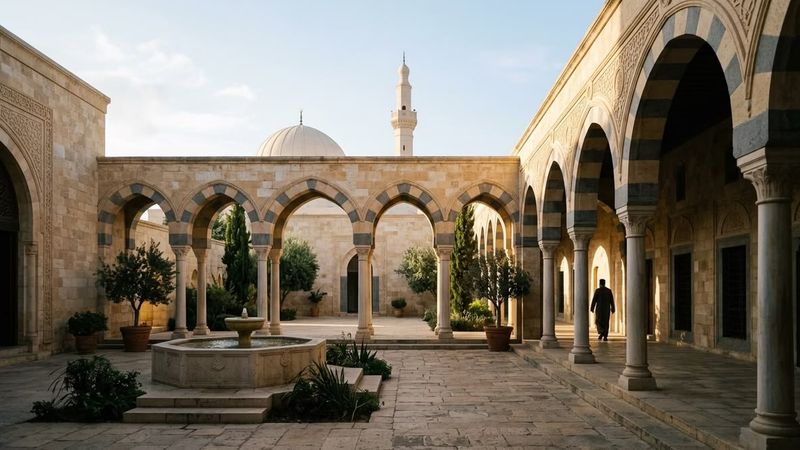
Islamic Architecture, Explained
Mosque types, domes, minarets and courtyard plans from Umayyad Jerusalem to Ottoman Istanbul, with five regional schools read through buildings you can visit
Islamic architecture is the building tradition of Muslim-ruled lands from the seventh century onward: hypostyle mosques, courtyard sahn, minaret towers and dome engineering shaped by prayer law, climate and regional craft. This guide maps Umayyad, Mamluk, Safavid, Mughal and Ottoman schools through named monuments, with muqarnas vaulting and decorative arts deferred to sibling pages in the series.