
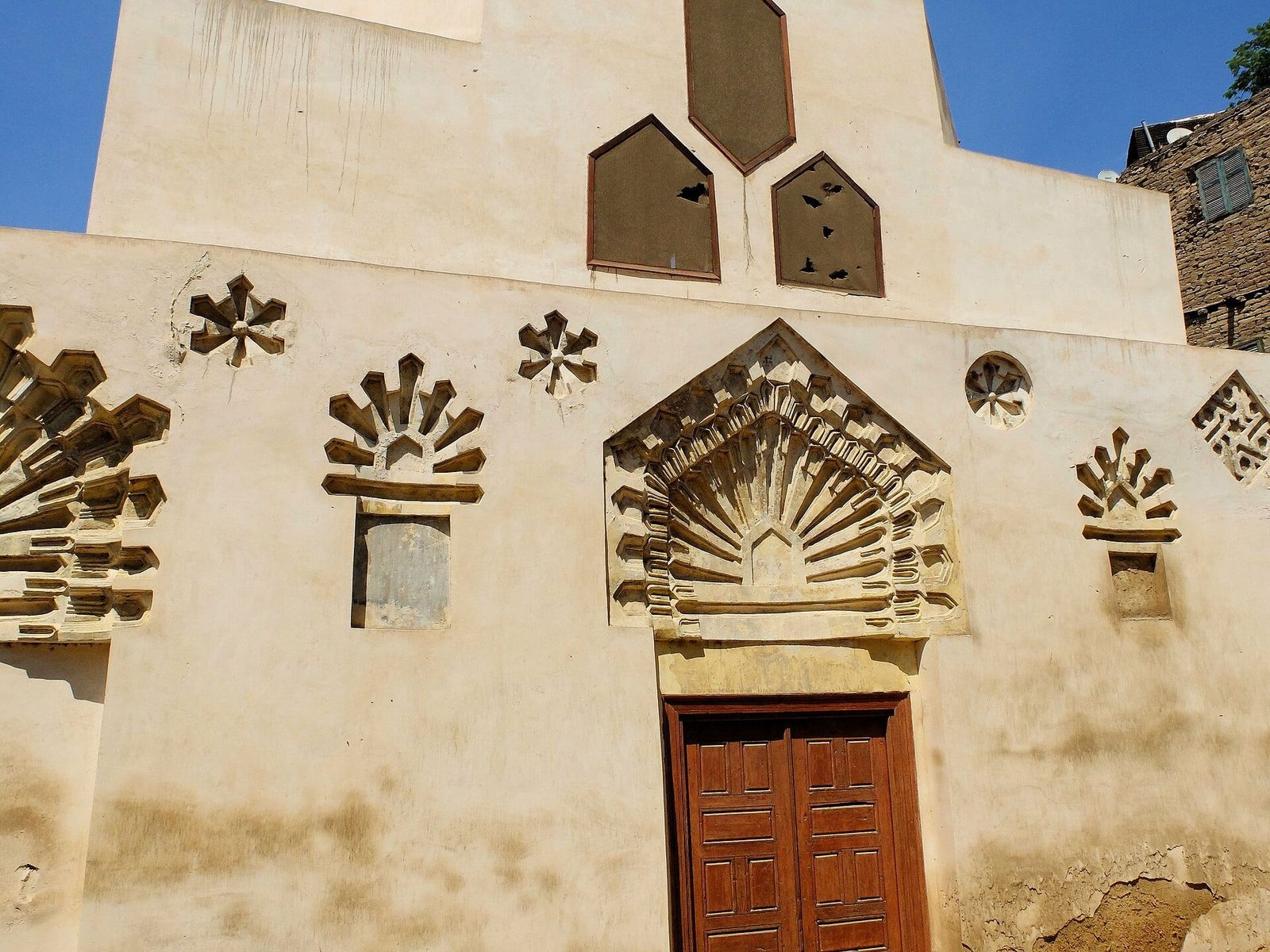
Mausoleum of Shajarat al-Durr
The tomb of Egypt's only woman sultan, on al-Khalifa Street, a small dome with a mosaic tree in its prayer niche.
The queen who ruled
Shajarat al-Durr, "Tree of Pearls", was the widow of the Ayyubid sultan al-Salih Ayyub and, in 1250, became the only woman to rule Egypt as sultan in the Islamic period. When her husband died during the Crusade of Louis IX of France, she concealed his death and directed the defence of the country until the Crusaders were defeated and the French king captured. Proclaimed sultan by the Mamluk army, she ruled for some three months before marrying the commander Aybak and ceding the throne to him, marking the transition from the Ayyubid to the Mamluk sultanate. She was killed in 1257 after Aybak's murder, in which she was implicated.
Her mausoleum
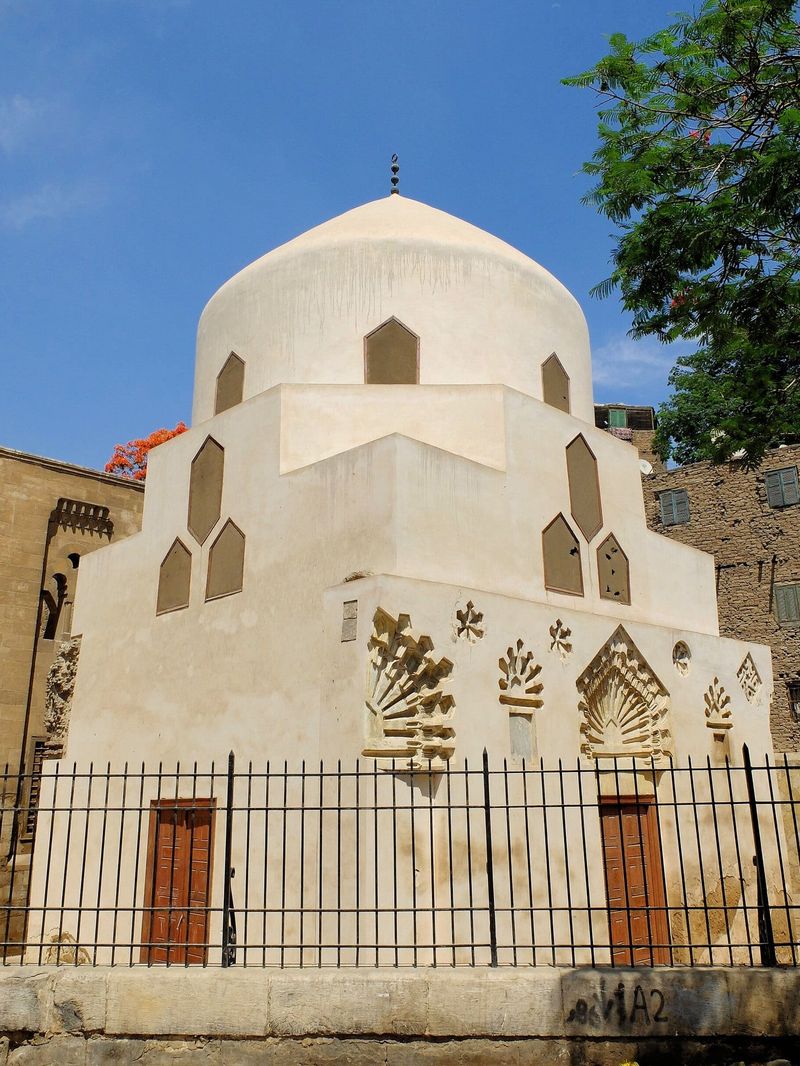
She built her own mausoleum in 1250 on al-Khalifa Street, in the cemetery south of the old city near the shrines of the Prophet's family. It is a small square chamber covered by a dome. Its most famous feature is the mihrab, decorated with a glass mosaic showing a tree with pearl-like fruit, a visual play on her name and one of the earliest examples of glass mosaic in Cairo. A carved wooden frieze with inscriptions runs around the chamber.
Al-Khalifa Street today
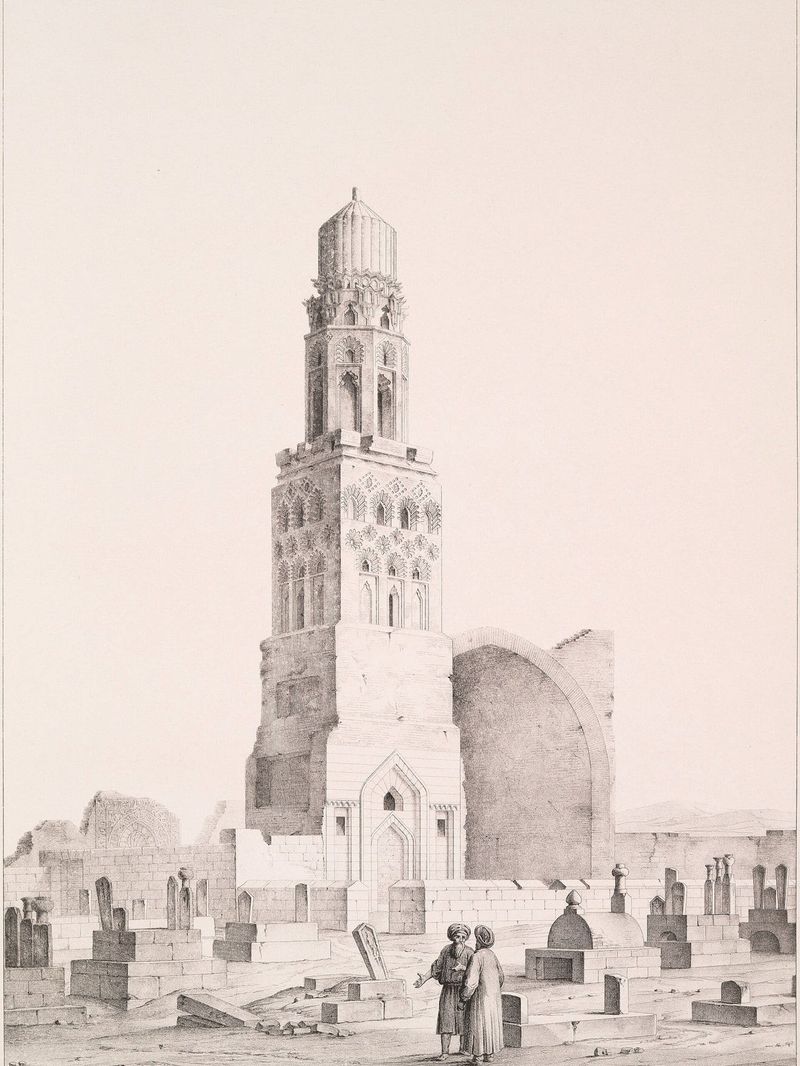
The mausoleum is one of a string of small medieval shrines along al-Khalifa Street, including those of Sayyida Ruqayya and Sayyida Atika, leading towards the Mosque of Sayyida Nafisa. Since 2012 the community initiative Athar Lina, working with residents and the antiquities authorities, has been conserving monuments in the street, including Shajarat al-Durr's mausoleum and running heritage and education programmes in the neighbourhood.
Exhibo editorial
It is a modest building for a remarkable woman: a small dome, a quiet room, a neighbourhood of washing lines and children playing football outside. But stand in front of the mihrab and look for the tree in the glass mosaic, the pearls she was named for, set into the most sacred wall of her own tomb. It is a signature, almost a self-portrait.
Shajarat al-Durr ruled Egypt in the middle of a Crusade, outmanoeuvred a French king and then was pushed aside by the men she had put in power. Al-Khalifa Street, with its neighbourhood-led restorations, is the right setting for her: a place where local people have decided their history is worth caring for. Walk the whole street, slowly, from one shrine to the next.
Gallery
How to find it
On al-Khalifa Street in the al-Khalifa district, between the Citadel and the Mausoleum of Sayyida Nafisa. Walk south from Sayyida Sukayna along al-Khalifa Street.
Similar places
All places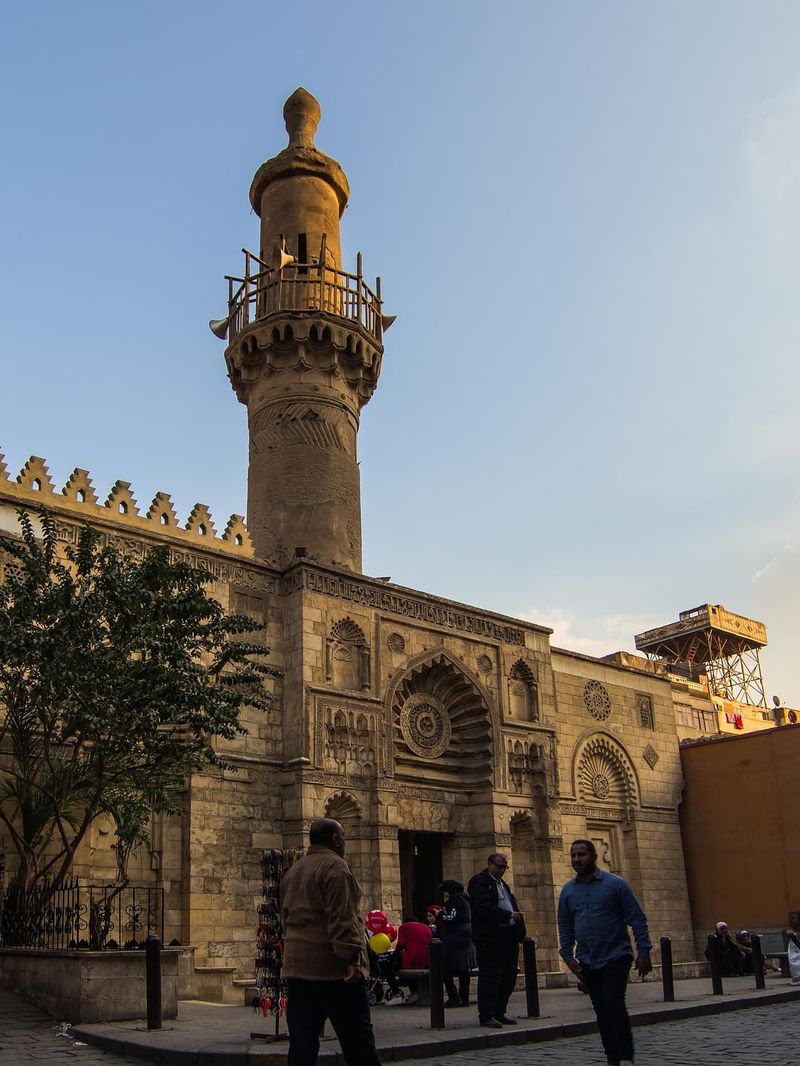
News by Exhibo
Editorial coverage on Exhibo

Where Is Agrabah? The City Disney Assembled From Real Places
Agrabah was going to be Baghdad. A war made it fictional — and then Disney built it back out of real places, from a tomb in Agra to a valley in Jordan that usually plays Mars.
The Sultan's palace where Princess Jasmine feels trapped has the silhouette of the Taj Mahal — which is not a palace at all, but a tomb. That is how Agrabah works. Disney's fairy-tale city was going to be Baghdad, until the Gulf War made the name impossible; the studio invented a place that could not be found on a map, then quietly rebuilt it out of real ones — Isfahan and Agra, Marrakesh and Mandalay, a Jordanian desert that has played both Arabia and Mars.
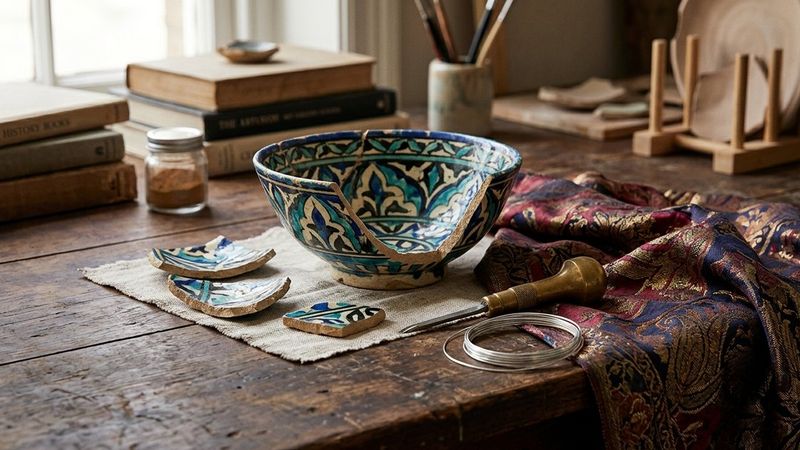
Islamic Decorative Arts: Ceramics, Metalwork, Glass and Textiles
From Kashan luster bowls to Mamluk mosque lamps and Safavid silks: a museum survey of four luxury media with named works in London, New York and Doha
Islamic decorative arts are the portable luxury crafts of Muslim-ruled lands: pottery and tile, inlaid brass, enamelled glass, woven silk and knotted carpet. This survey follows workshop conditions, techniques and trade from Abbasid Iraq to Ottoman Istanbul, with four close readings and a media comparison table, while Iznik depth, arabesque theory and building programmes sit in sibling articles on the series hub.
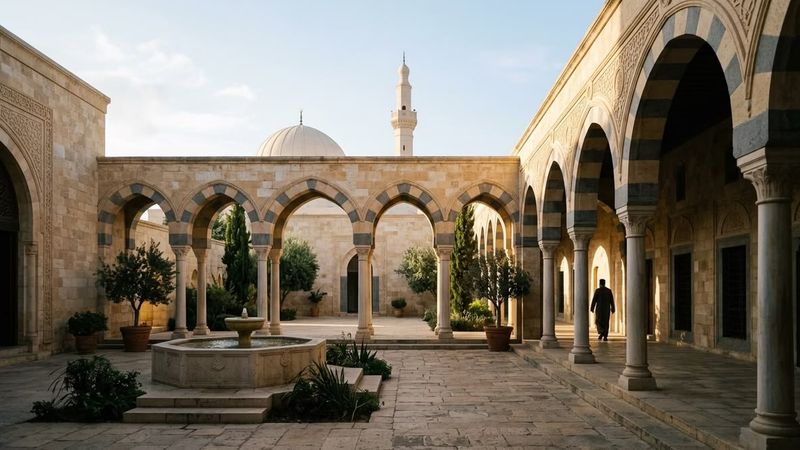
Islamic Architecture, Explained
Mosque types, domes, minarets and courtyard plans from Umayyad Jerusalem to Ottoman Istanbul, with five regional schools read through buildings you can visit
Islamic architecture is the building tradition of Muslim-ruled lands from the seventh century onward: hypostyle mosques, courtyard sahn, minaret towers and dome engineering shaped by prayer law, climate and regional craft. This guide maps Umayyad, Mamluk, Safavid, Mughal and Ottoman schools through named monuments, with muqarnas vaulting and decorative arts deferred to sibling pages in the series.