
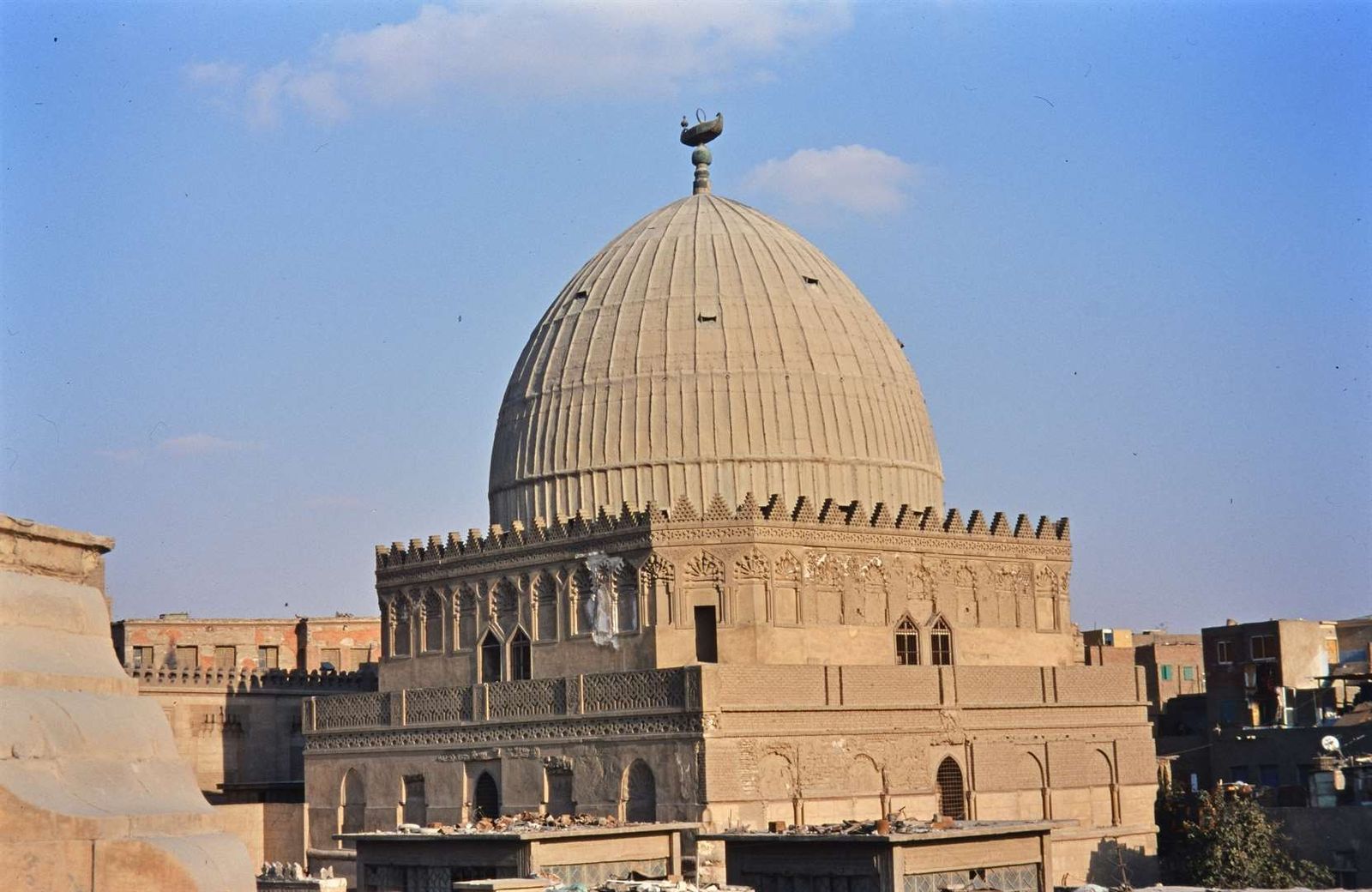
Mausoleum of Imam al-Shafi'i
Egypt's largest and oldest wooden dome, crowned by a copper boat, over the grave of one of Islam's great jurists.
The grave of a founder of Islamic law
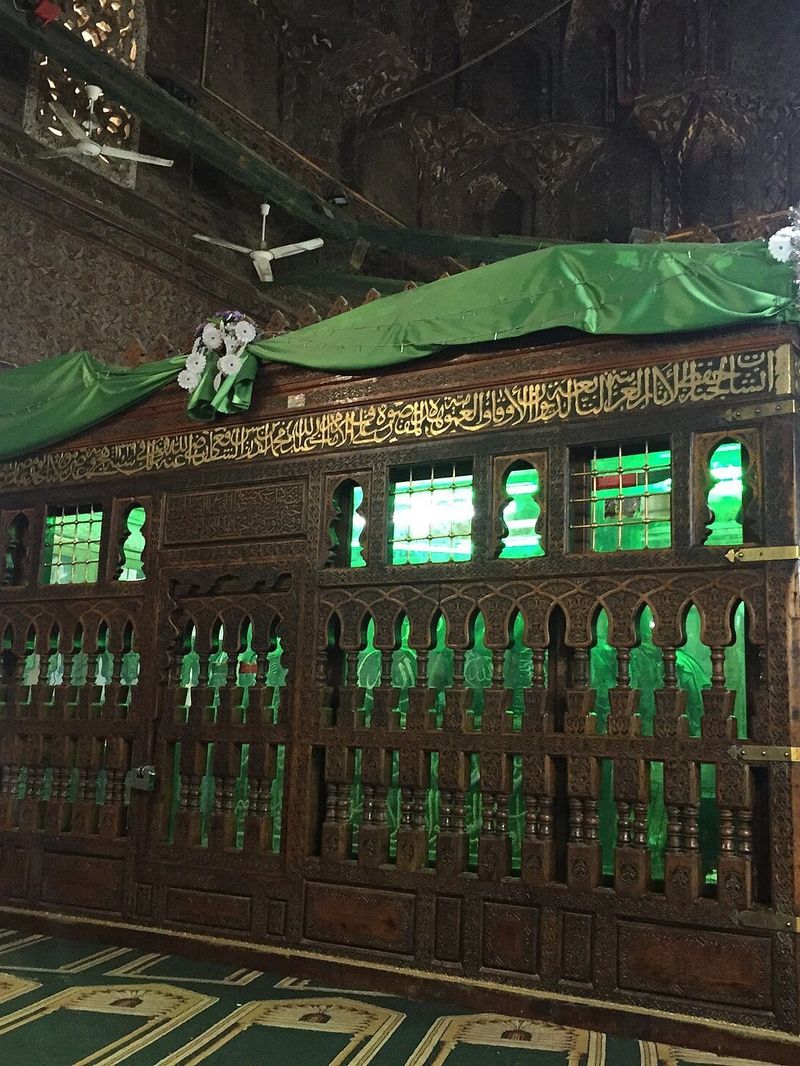
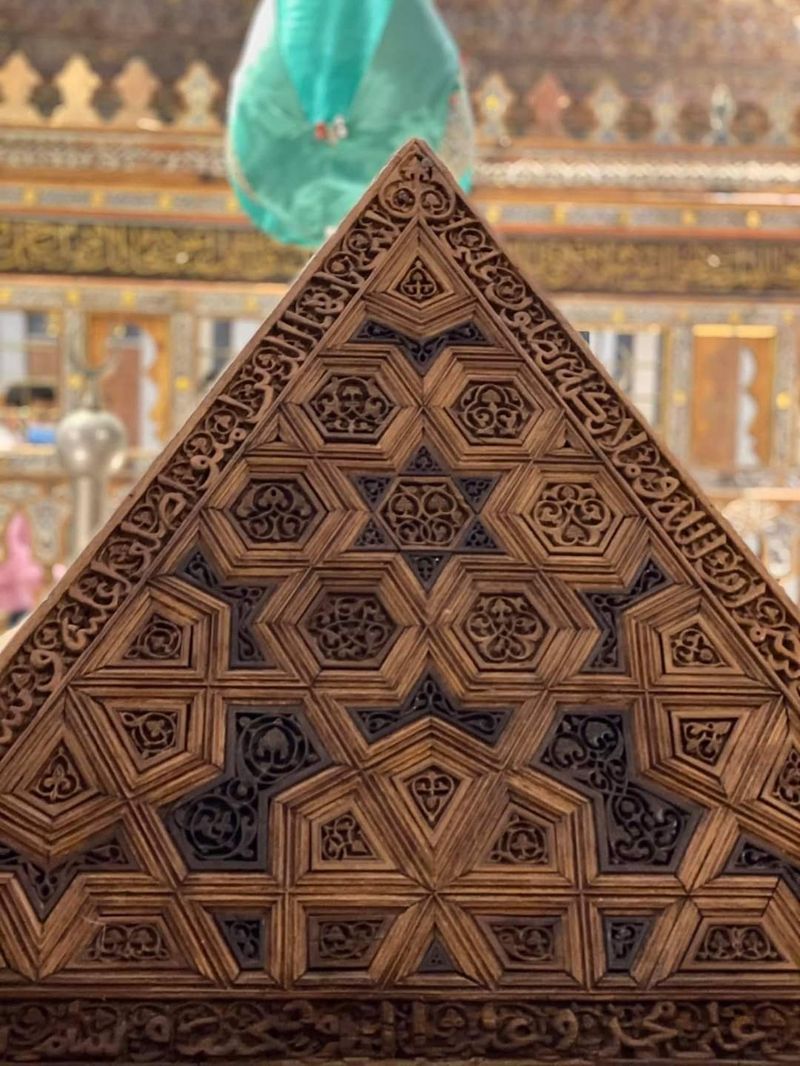
Muhammad ibn Idris al-Shafi'i, founder of the Shafi'i school of Sunni Islamic law and one of the most influential jurists in Islamic history, settled in Egypt in the early ninth century and died there in 820. He was buried in the cemetery of Fustat, in what is now the Southern Cemetery of Cairo and his grave quickly became a place of pilgrimage. In 1176–1180, after ending the Shi'i Fatimid caliphate, Salah al-Din built a madrasa beside the grave and a richly carved wooden cenotaph made in 1178–1179 by the carpenter Ubayd al-Najjar ibn Ma'ali still stands over the imam's tomb, a masterpiece of Ayyubid woodwork.
Al-Kamil's dome
In 1211, after the death of his mother, the Ayyubid sultan al-Malik al-Kamil built the present mausoleum: a stone square of about 15 metres a side carrying a great wooden dome sheathed in lead. It is the oldest and largest wooden dome in Egypt and in its day was surpassed among wooden domes only by the Dome of the Rock in Jerusalem. Al-Kamil's mother is buried under the same dome, a few steps from the imam. The exterior is decorated with keel-arched niches, fluted shell-hoods and a carved stucco parapet and the dome is crowned by a copper boat, traditionally filled with grain for the birds. Inside, one of the window recesses keeps a coffered ceiling of octagons dating from 1211, believed to be the first of its kind in Egypt.
Later embellishments
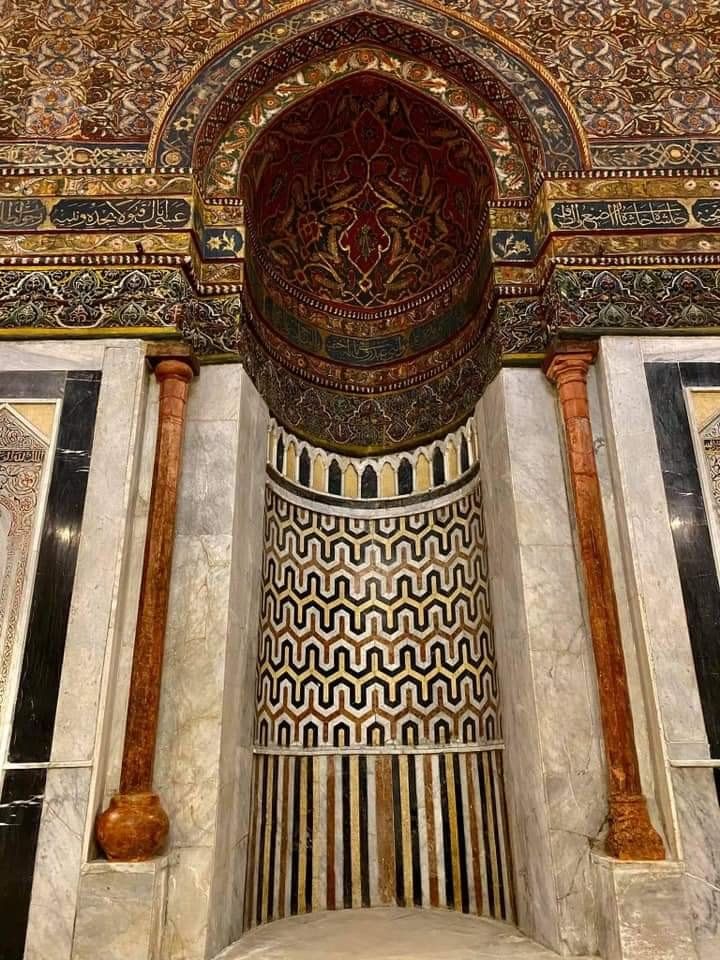
Later rulers honoured the shrine in turn. Sultan Qaytbay rebuilt the dome in 1480, adding the marble dado and the wooden muqarnas of its squinches and a fourth mihrab; Sultan al-Ghuri carried out further work in the early sixteenth century; and in 1772 the Ottoman-era ruler Ali Bey al-Kabir renewed the painted decoration of the walls, muqarnas and dome, which gives the interior its jewel-like colours. A rare Ottoman ceramic mosaic floor survives among the later additions.
Restoration
After years of subsidence and damage, the mausoleum was conserved between 2016 and 2021 by the Athar Lina initiative of the Megawra Built Environment Collective, with funding from the US Ambassadors Fund for Cultural Preservation, repairing the structure and roof, the masonry and stucco, the marble panelling and the painted woodwork. It was reinaugurated on World Heritage Day, 18 April 2021.
Exhibo editorial
From a distance, across the low roofs of the Southern Cemetery, you see the lead-covered dome first. On top of it sits a little metal boat, which the old Cairenes believed would turn to point the way of good fortune. It is a strange, charming crown for one of the most serious men in Islamic history.
Inside, the seriousness dissolves into colour. Painted beams, gilded inscriptions, muqarnas in red, blue and gold, all freshly cleaned after five years of patient work by a local initiative. In the middle stands the carved cenotaph of the imam, eight centuries old and still the object of whispered prayers. Few restorations in Cairo have been done with this much care. Come quietly and leave a little time to walk the cemetery lanes around it.
Gallery
How to find it
In the Southern Cemetery, about 3 km south of the Citadel. Take a taxi to the Imam al-Shafi'i mosque. The domed mausoleum stands beside it, with Hosh al-Basha a short walk away.
Similar places
All places
News by Exhibo
Editorial coverage on Exhibo
Where Is Agrabah? The City Disney Assembled From Real Places
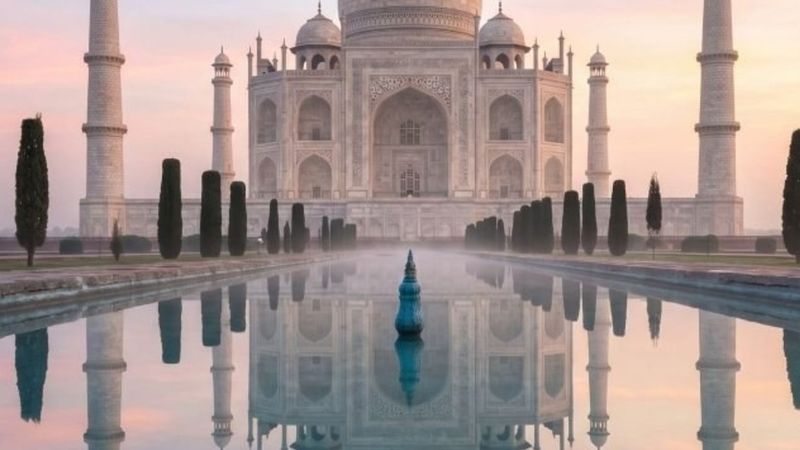
Agrabah was going to be Baghdad. A war made it fictional — and then Disney built it back out of real places, from a tomb in Agra to a valley in Jordan that usually plays Mars.
The Sultan's palace where Princess Jasmine feels trapped has the silhouette of the Taj Mahal — which is not a palace at all, but a tomb. That is how Agrabah works. Disney's fairy-tale city was going to be Baghdad, until the Gulf War made the name impossible; the studio invented a place that could not be found on a map, then quietly rebuilt it out of real ones — Isfahan and Agra, Marrakesh and Mandalay, a Jordanian desert that has played both Arabia and Mars.
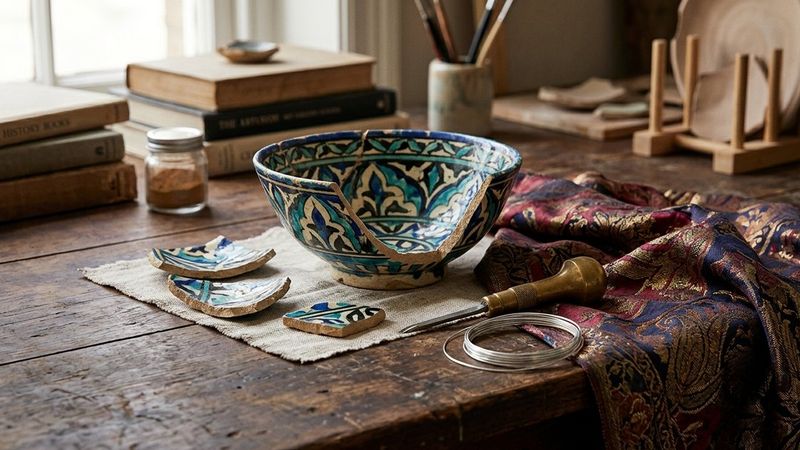
Islamic Decorative Arts: Ceramics, Metalwork, Glass and Textiles
From Kashan luster bowls to Mamluk mosque lamps and Safavid silks: a museum survey of four luxury media with named works in London, New York and Doha
Islamic decorative arts are the portable luxury crafts of Muslim-ruled lands: pottery and tile, inlaid brass, enamelled glass, woven silk and knotted carpet. This survey follows workshop conditions, techniques and trade from Abbasid Iraq to Ottoman Istanbul, with four close readings and a media comparison table, while Iznik depth, arabesque theory and building programmes sit in sibling articles on the series hub.
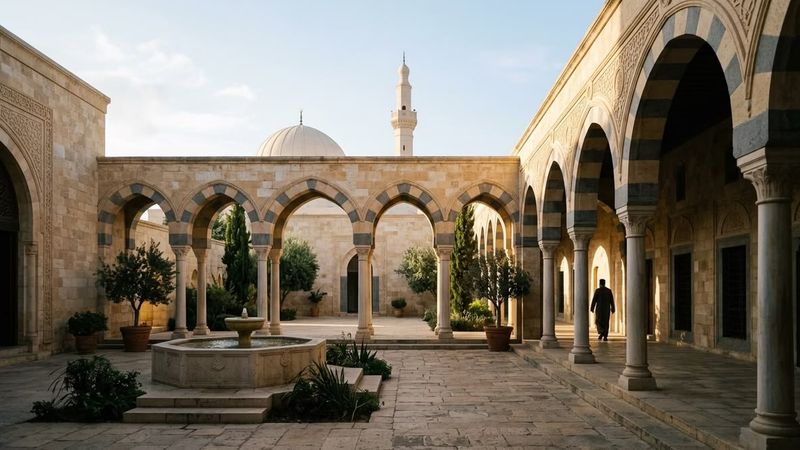
Islamic Architecture, Explained
Mosque types, domes, minarets and courtyard plans from Umayyad Jerusalem to Ottoman Istanbul, with five regional schools read through buildings you can visit
Islamic architecture is the building tradition of Muslim-ruled lands from the seventh century onward: hypostyle mosques, courtyard sahn, minaret towers and dome engineering shaped by prayer law, climate and regional craft. This guide maps Umayyad, Mamluk, Safavid, Mughal and Ottoman schools through named monuments, with muqarnas vaulting and decorative arts deferred to sibling pages in the series.