
Madrasa and Khanqah of Sultan Barquq
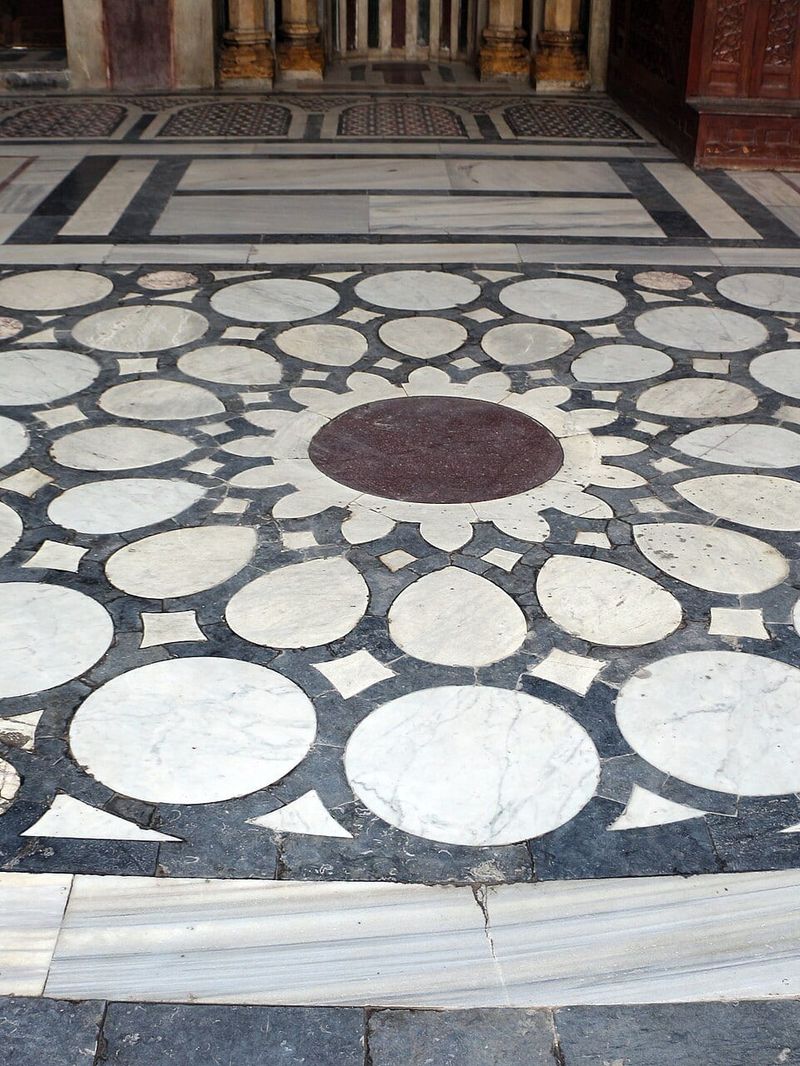
The first monument of Cairo's Circassian sultans, bronze doors, a painted ceiling and a marble-paved courtyard on al-Muizz.
A new dynasty on an old street
The Madrasa and Khanqah of Sultan al-Zahir Barquq completes the great row of Mamluk monuments at Bayn al-Qasrayn on al-Muizz Street, next to the Qalawun Complex and the Madrasa of al-Nasir Muhammad. Barquq, born in Circassia and brought to Egypt as a slave, rose through the Mamluk army to become in 1382 the first sultan of the Burji or Circassian line, which ruled Egypt until the Ottoman conquest of 1517. His complex, begun in December 1384 and completed in April 1386 according to the inscription on its façade, was the first great monument of the new dynasty. Its architect was Shihab al-Din Ahmad ibn Muhammad al-Tuluni. By choosing a site beside the foundations of Qalawun and his son, Barquq, who had married a widow of Sultan Sha'ban, one of Qalawun's descendants, set his own rule visibly in continuity with theirs.
A school and a Sufi hospice
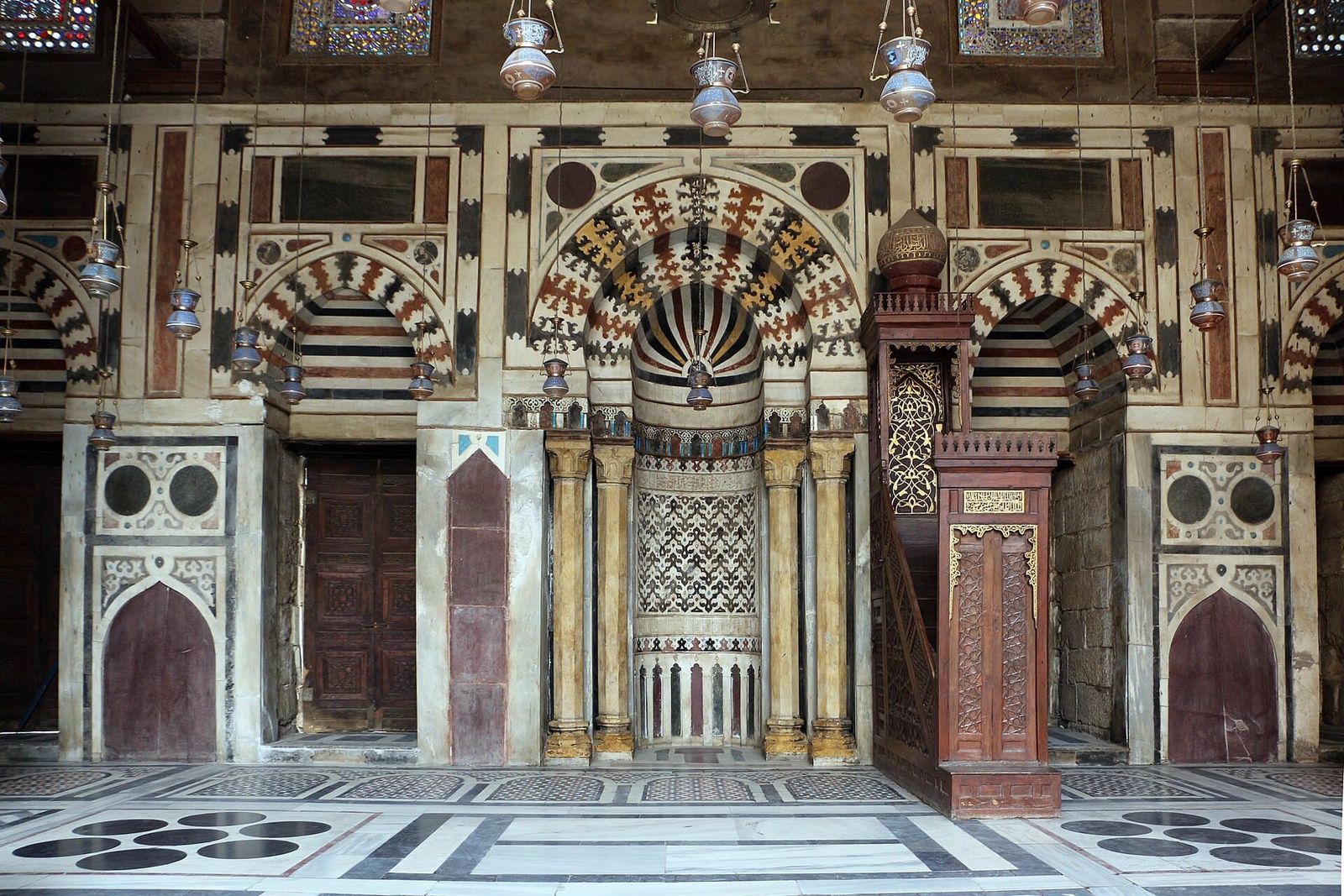
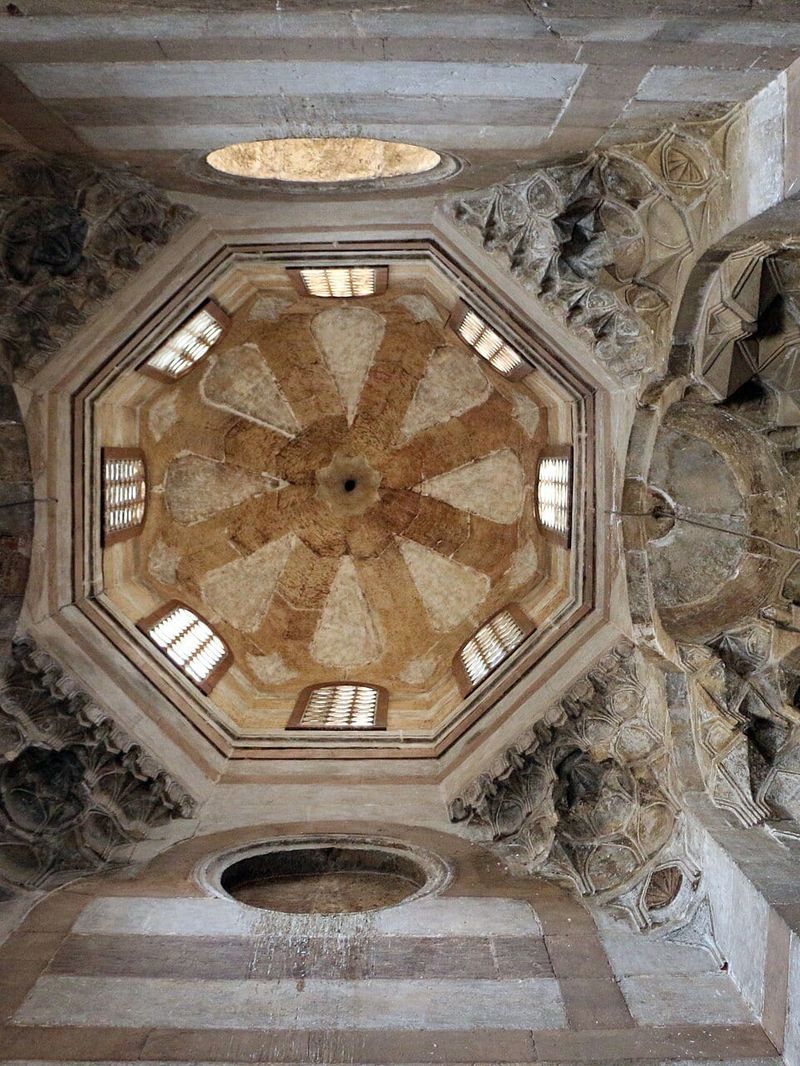
The building served at once as a mosque, a madrasa teaching the four Sunni schools of law and a khanqah, a residence for Sufis, with student and Sufi cells rising in several storeys around the courtyard. Its plan of four iwans around a central courtyard follows the model of the Mosque-Madrasa of Sultan Hassan on a smaller scale. The entrance passes through a portal with bronze-plated doors decorated with geometric patterns of twelve- and eighteen-pointed stars and a panel of inlaid marble in the vestibule. Inside, the qibla iwan is divided into three aisles by reused ancient granite columns and its gilded and painted wooden ceiling was restored to its original brilliance in the twentieth century. The domed mausoleum holds members of the sultan's family, including his wife Sitti Hajar; Barquq himself asked to be buried in the Northern Cemetery, where his son Faraj built the great khanqah that bears his name.
Façade and minaret
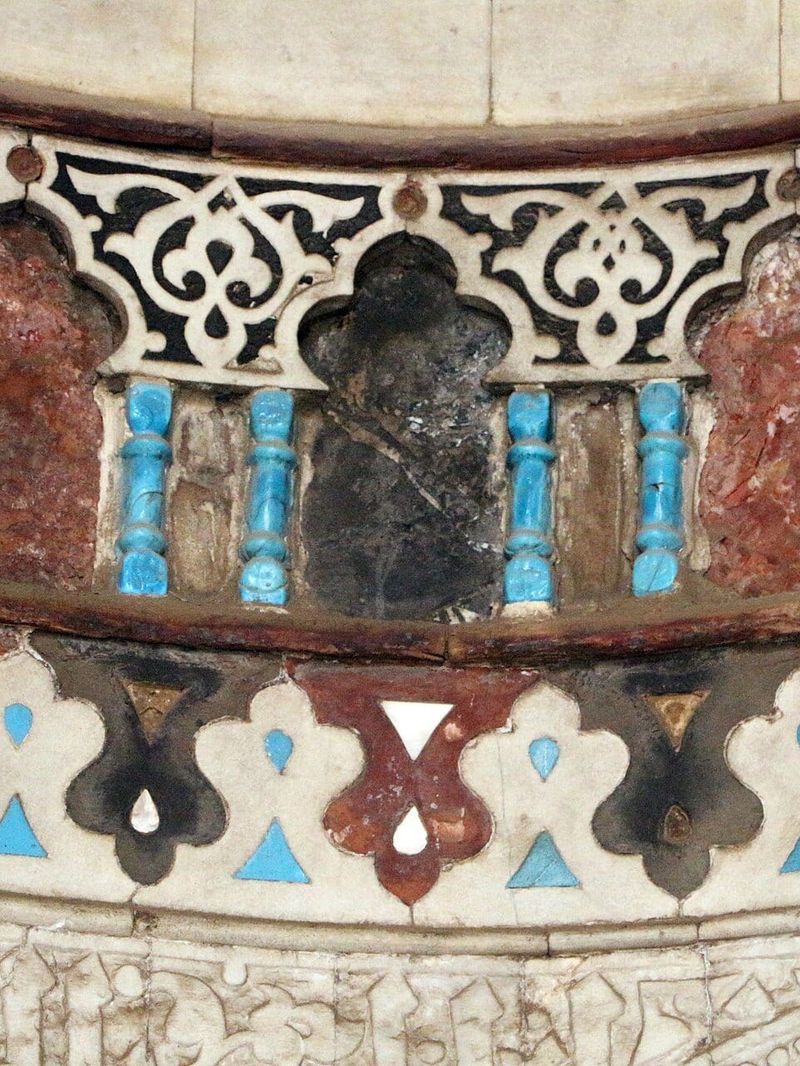
The street façade, with its tall recessed panels and windows, continues the line of its neighbours and the octagonal minaret, decorated with inlaid marble, is one of the landmarks of al-Muizz Street. The complex is visited on the al-Muizz monuments ticket and is part of the UNESCO World Heritage Site of Historic Cairo.
Exhibo editorial
Barquq is the quietest of the three great buildings on this stretch of al-Muizz and the one people tend to remember afterwards. The courtyard is smaller and calmer than Qalawun's theatre next door. Step into the prayer hall and look up: the ceiling, deep blue and gold, coffered and painted, feels like a secret the building has decided to tell you.
There is a politics in the stone, too. A Circassian slave-soldier who seized the throne built his foundation shoulder to shoulder with the dynasty he had replaced, copying its plans and borrowing its prestige. Then he chose to be buried elsewhere. Look closely at the bronze stars on the doors on the way out. This is one of the best places in Cairo to feel how power dresses itself up in piety.
Gallery
How to find it
On al-Muizz Street in the Bayn al-Qasrayn stretch, the northernmost of the three great buildings after the Qalawun Complex and the Madrasa of al-Nasir Muhammad. Enter through the bronze doors from the street.
Similar places
All places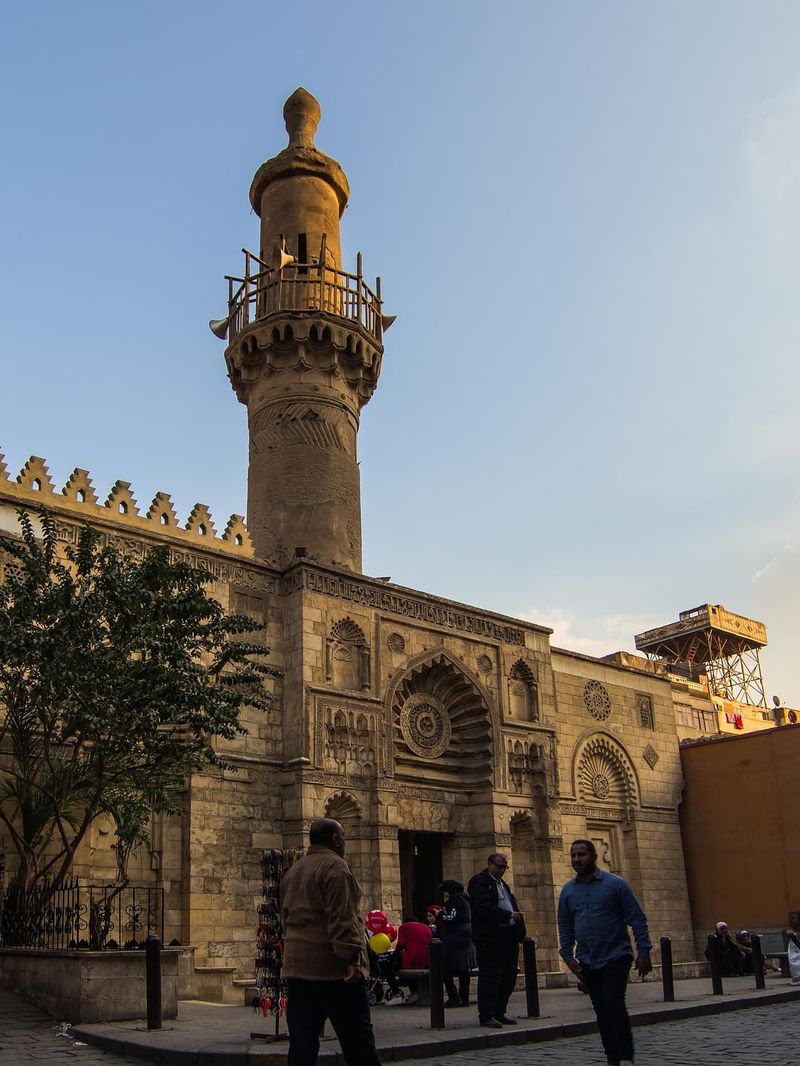
News by Exhibo
Editorial coverage on Exhibo
Where Is Agrabah? The City Disney Assembled From Real Places
Agrabah was going to be Baghdad. A war made it fictional — and then Disney built it back out of real places, from a tomb in Agra to a valley in Jordan that usually plays Mars.
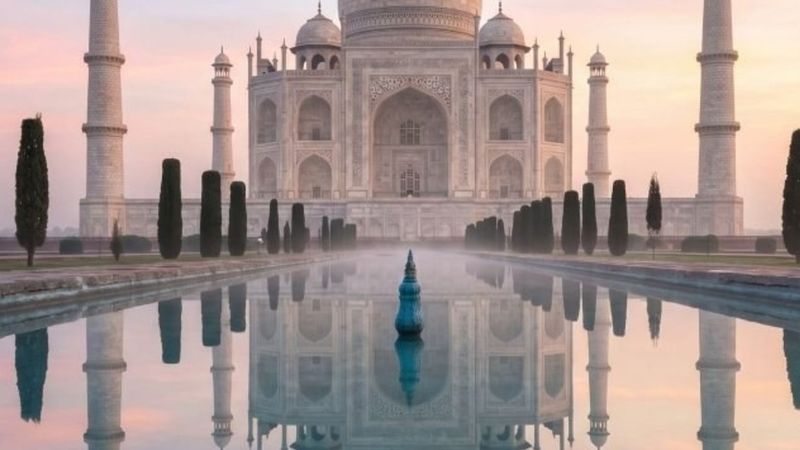
The Sultan's palace where Princess Jasmine feels trapped has the silhouette of the Taj Mahal — which is not a palace at all, but a tomb. That is how Agrabah works. Disney's fairy-tale city was going to be Baghdad, until the Gulf War made the name impossible; the studio invented a place that could not be found on a map, then quietly rebuilt it out of real ones — Isfahan and Agra, Marrakesh and Mandalay, a Jordanian desert that has played both Arabia and Mars.
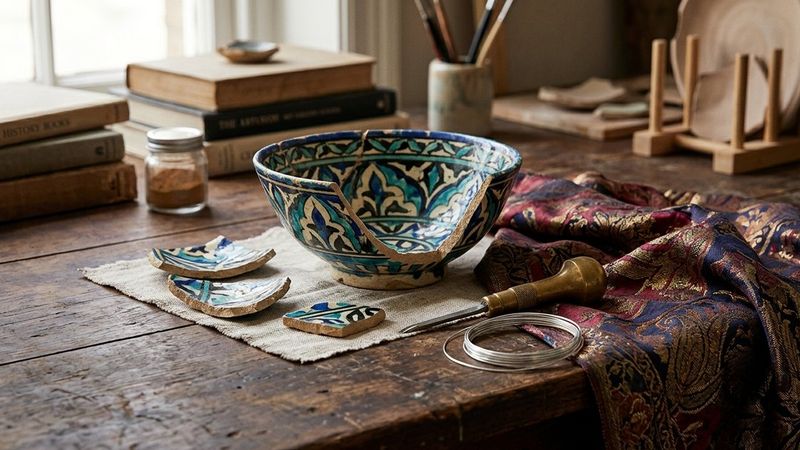
Islamic Decorative Arts: Ceramics, Metalwork, Glass and Textiles
From Kashan luster bowls to Mamluk mosque lamps and Safavid silks: a museum survey of four luxury media with named works in London, New York and Doha
Islamic decorative arts are the portable luxury crafts of Muslim-ruled lands: pottery and tile, inlaid brass, enamelled glass, woven silk and knotted carpet. This survey follows workshop conditions, techniques and trade from Abbasid Iraq to Ottoman Istanbul, with four close readings and a media comparison table, while Iznik depth, arabesque theory and building programmes sit in sibling articles on the series hub.
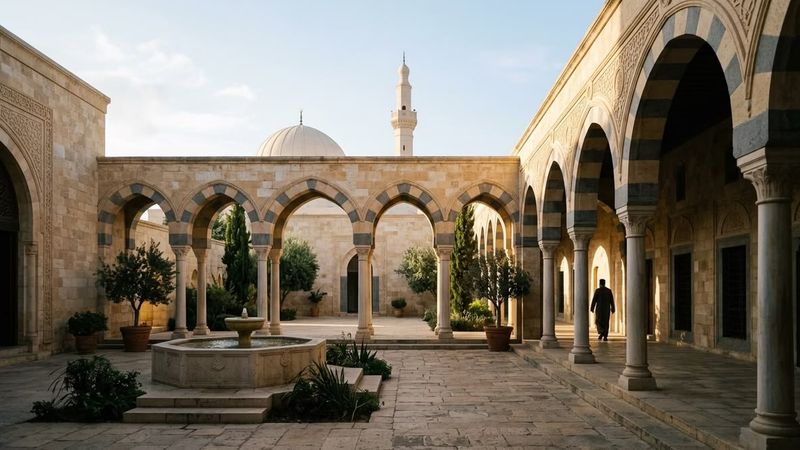
Islamic Architecture, Explained
Mosque types, domes, minarets and courtyard plans from Umayyad Jerusalem to Ottoman Istanbul, with five regional schools read through buildings you can visit
Islamic architecture is the building tradition of Muslim-ruled lands from the seventh century onward: hypostyle mosques, courtyard sahn, minaret towers and dome engineering shaped by prayer law, climate and regional craft. This guide maps Umayyad, Mamluk, Safavid, Mughal and Ottoman schools through named monuments, with muqarnas vaulting and decorative arts deferred to sibling pages in the series.