
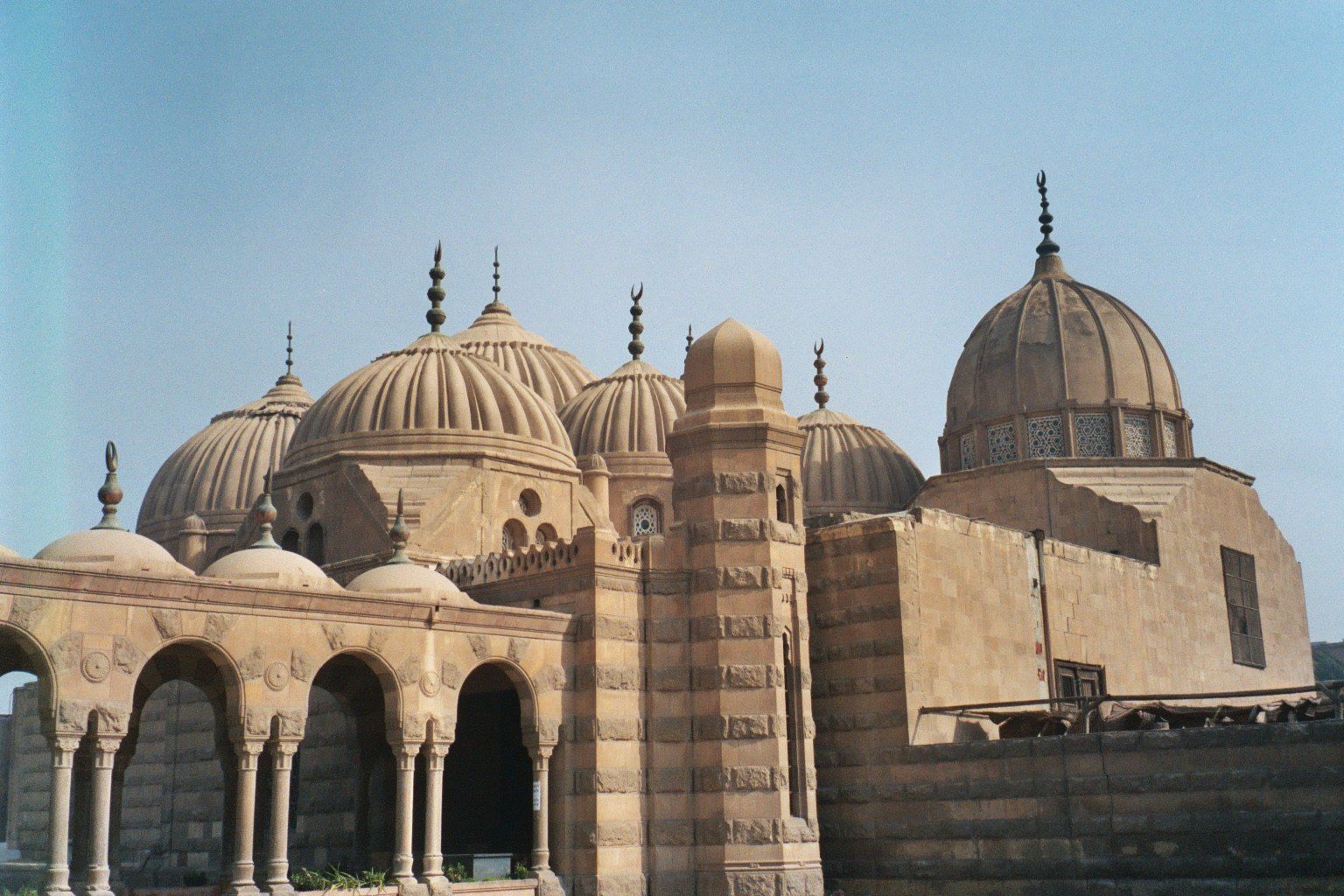
Hosh al-Basha
The private cemetery of Muhammad Ali's dynasty, marble tombs carved like Ottoman jewellery boxes in the Southern Cemetery.
A dynasty's burial enclosure
Hosh al-Basha, "the Pasha's enclosure", is the family cemetery of Muhammad Ali Pasha, the Ottoman governor who seized power in Egypt in 1805 and founded the dynasty that ruled the country until 1952. It stands in the Southern Cemetery, next to the Mausoleum of Imam al-Shafi'i and was built in the early nineteenth century as a walled complex of domed halls and courtyards. Muhammad Ali himself was buried in his mosque in the Citadel, but members of his family, wives, children and members of his household and court were laid to rest here.
The tombs
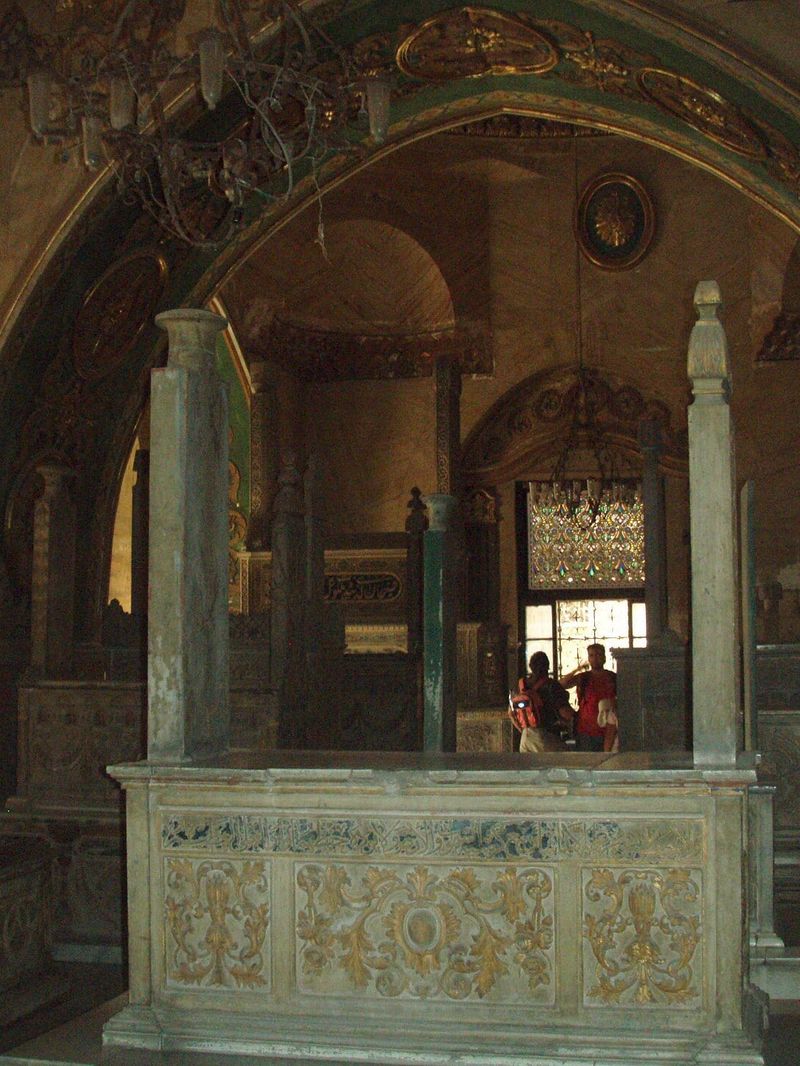
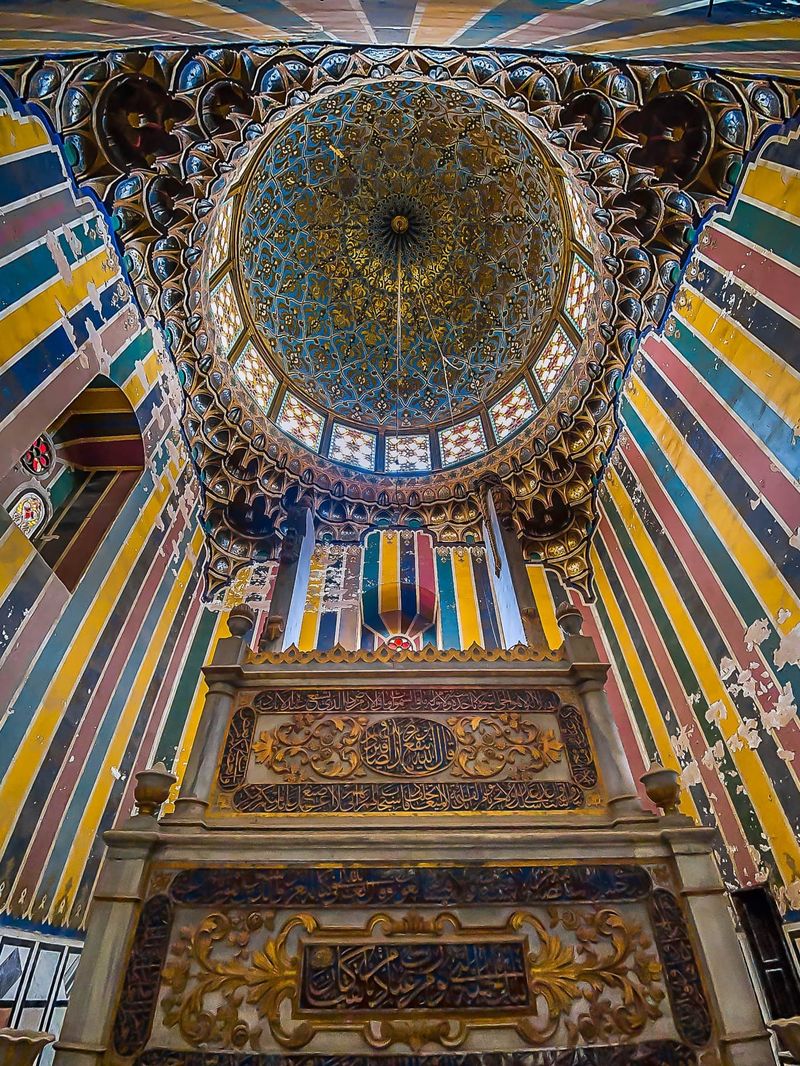
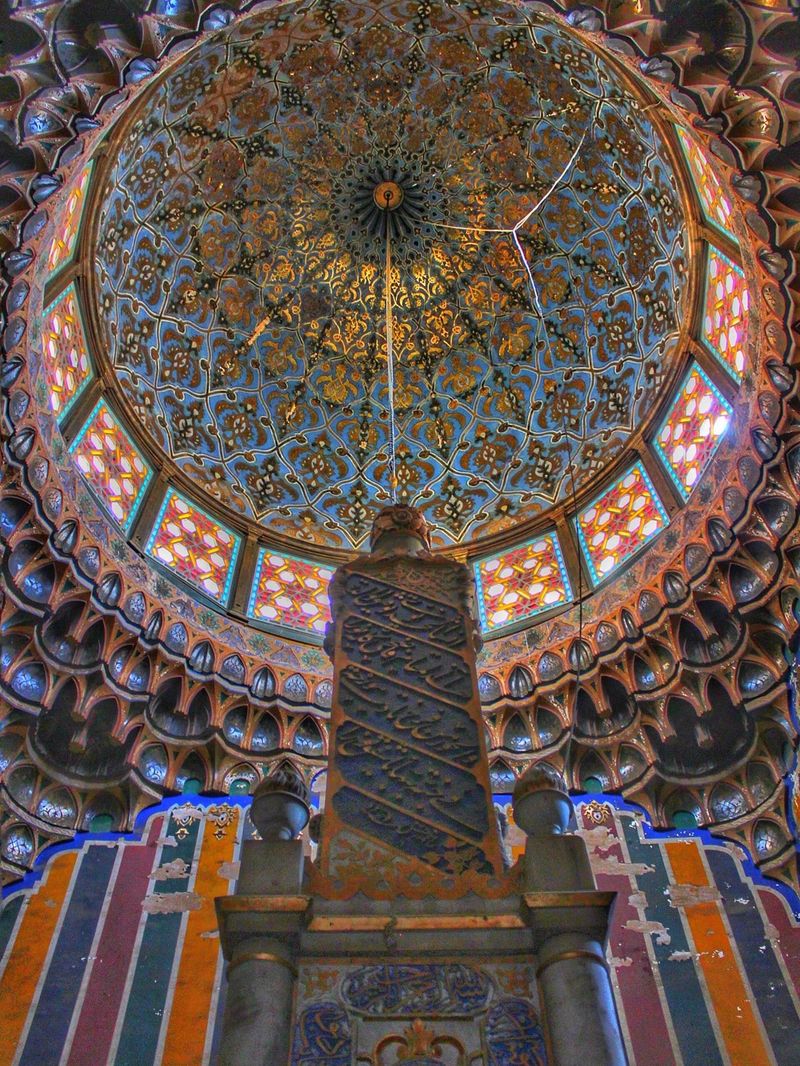
The interiors hold dozens of cenotaphs in white marble, carved, painted and gilded in the Ottoman Baroque style that Muhammad Ali's court brought to Cairo: garlands, flowers, vases, scrolls and calligraphic inscriptions in Ottoman Turkish and Arabic, often topped with carved turbans or fezzes indicating the rank of the deceased. Together they form one of the finest ensembles of Ottoman funerary art in Egypt and a portrait of the ruling household in stone.
Visiting
The complex is managed by the antiquities authorities and is visited on its own ticket. Because the surrounding historic cemeteries have been heavily affected by road construction since 2020, the setting has changed considerably; the tombs themselves remain a rare, quiet glimpse of the early dynasty's taste.
Exhibo editorial
Most of Cairo's royal tombs are grand and public; this one feels like walking into a family's private room. Under the domes, the marble cenotaphs crowd together: tall ones carved with turbans and fezzes, small ones for children. Every surface flowers with garlands and gilded lettering, like a cabinet of Ottoman jewellery boxes.
It is a melancholy place, more now than ever, with the old cemetery around it torn up for flyovers. That makes the visit more urgent, not less. Combine it with the Imam al-Shafi'i next door, go in the morning and take your time with the carving: it is some of the finest marble work of nineteenth-century Egypt and almost nobody sees it.
Gallery
How to find it
In the Southern Cemetery, beside the Mausoleum of Imam al-Shafi'i. A taxi to the Imam al-Shafi'i mosque is the simplest way; the entrance to Hosh al-Basha is a short walk away.
Similar places
All places
News by Exhibo
Editorial coverage on Exhibo

Where Is Agrabah? The City Disney Assembled From Real Places
Agrabah was going to be Baghdad. A war made it fictional — and then Disney built it back out of real places, from a tomb in Agra to a valley in Jordan that usually plays Mars.
The Sultan's palace where Princess Jasmine feels trapped has the silhouette of the Taj Mahal — which is not a palace at all, but a tomb. That is how Agrabah works. Disney's fairy-tale city was going to be Baghdad, until the Gulf War made the name impossible; the studio invented a place that could not be found on a map, then quietly rebuilt it out of real ones — Isfahan and Agra, Marrakesh and Mandalay, a Jordanian desert that has played both Arabia and Mars.
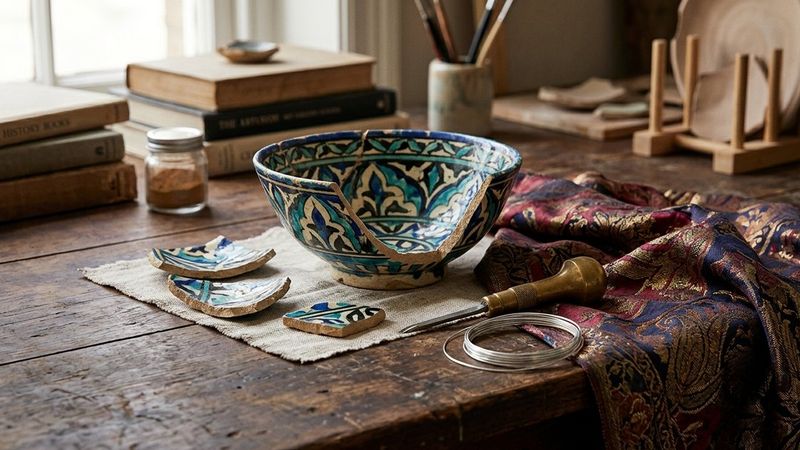
Islamic Decorative Arts: Ceramics, Metalwork, Glass and Textiles
From Kashan luster bowls to Mamluk mosque lamps and Safavid silks: a museum survey of four luxury media with named works in London, New York and Doha
Islamic decorative arts are the portable luxury crafts of Muslim-ruled lands: pottery and tile, inlaid brass, enamelled glass, woven silk and knotted carpet. This survey follows workshop conditions, techniques and trade from Abbasid Iraq to Ottoman Istanbul, with four close readings and a media comparison table, while Iznik depth, arabesque theory and building programmes sit in sibling articles on the series hub.
Islamic Architecture, Explained
Mosque types, domes, minarets and courtyard plans from Umayyad Jerusalem to Ottoman Istanbul, with five regional schools read through buildings you can visit
Islamic architecture is the building tradition of Muslim-ruled lands from the seventh century onward: hypostyle mosques, courtyard sahn, minaret towers and dome engineering shaped by prayer law, climate and regional craft. This guide maps Umayyad, Mamluk, Safavid, Mughal and Ottoman schools through named monuments, with muqarnas vaulting and decorative arts deferred to sibling pages in the series.