
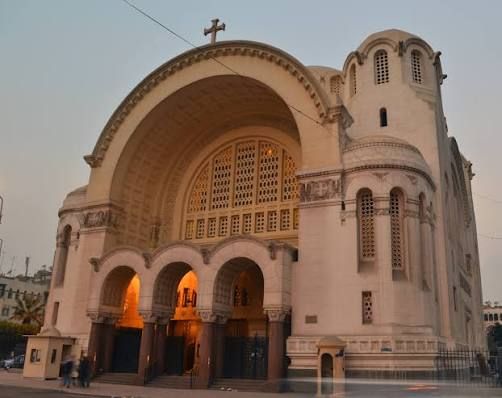
Basilica of Our Lady of Heliopolis
The Byzantine-style basilica at the heart of Heliopolis, where the district's founder Baron Empain is buried.
The church of the new city
The Basilica of Our Lady of Heliopolis — Basilique Notre-Dame d'Héliopolis — is the Roman Catholic church at the centre of Heliopolis, the garden city founded north-east of Cairo by the Belgian industrialist Baron Édouard Empain in the early twentieth century. Like Empain's own palace, it was designed by the French architect Alexandre Marcel, and it was built in the years just before the First World War as the spiritual centre of the new town, close to the arcaded commercial streets of the Korba district. It serves today as the co-cathedral of the Latin Catholic Apostolic Vicariate of Alexandria.
Architecture
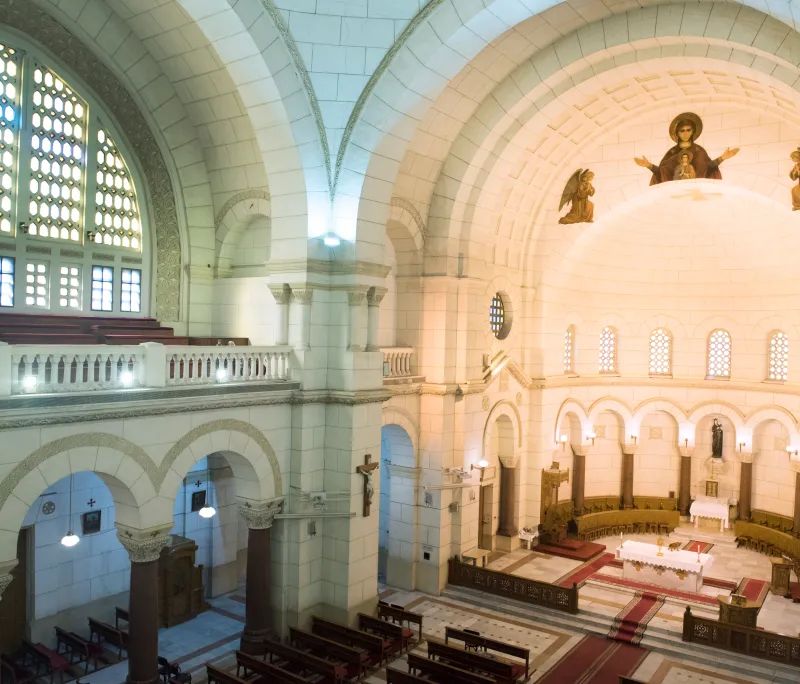
The basilica is built in a neo-Byzantine style inspired by the great domed churches of Constantinople, with Hagia Sophia as an evident model: a central dome over a centralised plan, half-domes and smaller cupolas, arched windows and a richly decorated interior with marble, mosaics and painted decoration. Its silhouette, rising above a landscaped square, remains one of the landmarks of Heliopolis, framed by the district's arcaded buildings.
The baron's tomb
Baron Empain died in Belgium in 1929 and, according to his wishes, his body was brought back to Heliopolis and buried in the crypt of the basilica he had commissioned, at the heart of the city he had created. The church remains an active parish serving Cairo's Catholic community, with services in several languages.
Exhibo editorial
Heliopolis was designed as a complete small world — a palace, a hotel, a racecourse, a tram line, arcades for shopping — and this basilica was its soul. It rises over a leafy square like a small Hagia Sophia, domes stacked on domes, a Byzantine dream in the middle of a Cairo suburb.
Go inside if a service isn't on, sit for a moment under the dome, and remember that the man who imagined all of this — the arcades outside, the palace down the road, the whole neighbourhood — chose to be buried here, beneath your feet. Then walk out into Korba for a coffee under the arcades he built.
Gallery
How to find it
The basilica stands on Al-Ahram Street in the Korba district of Heliopolis, at the centre of a landscaped square surrounded by arcaded buildings. Taxis and ride-hailing drivers know it as al-Bazilika. The entrance faces the square; the Baron Empain Palace is a short drive to the east along Al-Orouba Street.
Similar places
All places
News by Exhibo
Editorial coverage on Exhibo
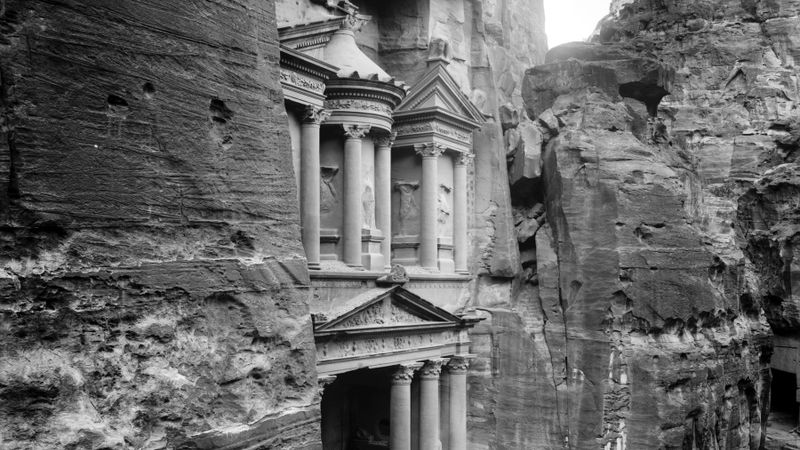
Filmed, but Not Recorded: The Arab World’s Missing Film Locations
Wikidata knows Gladiator was filmed in Morocco. It doesn’t know where.
Ouarzazate is the second most filmed place in the Middle East and North Africa, yet 25 of its 27 productions are recorded only in Wikipedia prose. We compared filming records worldwide and found that in the Arab world, Wikidata usually knows the country but not the place.
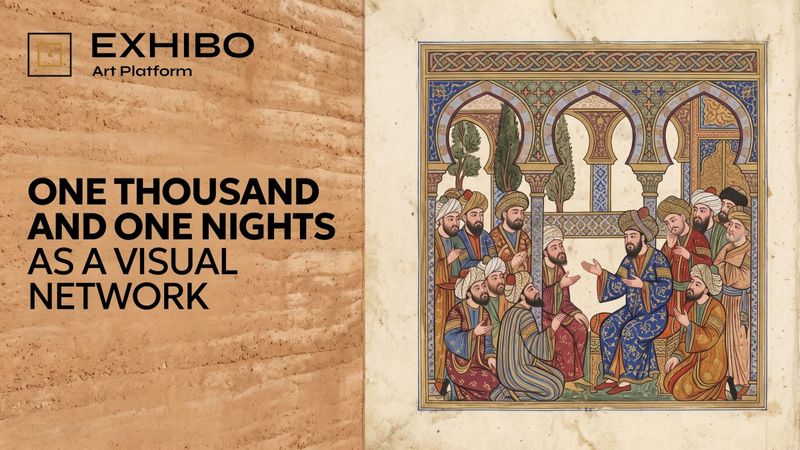
One Thousand and One Nights as a Visual Network
The book that taught Europe to picture the East arrived with no pictures at all. Three centuries of illustrators — Dutch, Egyptian, Persian, French, German, Iraqi — each gave it a face, and every face was a self-portrait.
Open Galland's Thousand and One Nights, the edition that conquered Europe, and there is nothing to look at: no genie, no lamp, not one illustration. The most visually imagined book in the world began blind — and because its text was never fixed either, no picture of it could ever be a copy.
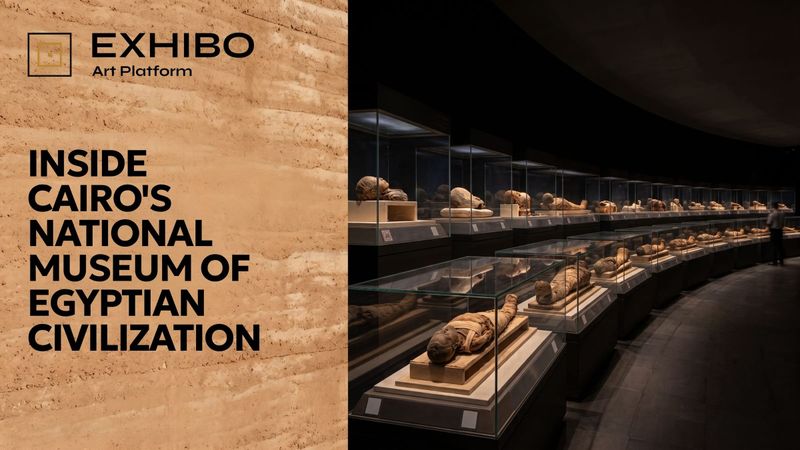
The Museum of Everything That Became a Tomb
Egypt built a museum to tell the story of an entire civilisation — seven thousand years of it, from flint tools to the present. The public knows it for one thing: the room where twenty dead kings lie in the dark.
In a black, hushed hall beneath the National Museum of Egyptian Civilization in Old Cairo lie the mummified bodies of Ramesses II, Hatshepsut, and eighteen other rulers of the New Kingdom — carried here in 2021 in a televised parade watched around the world.