
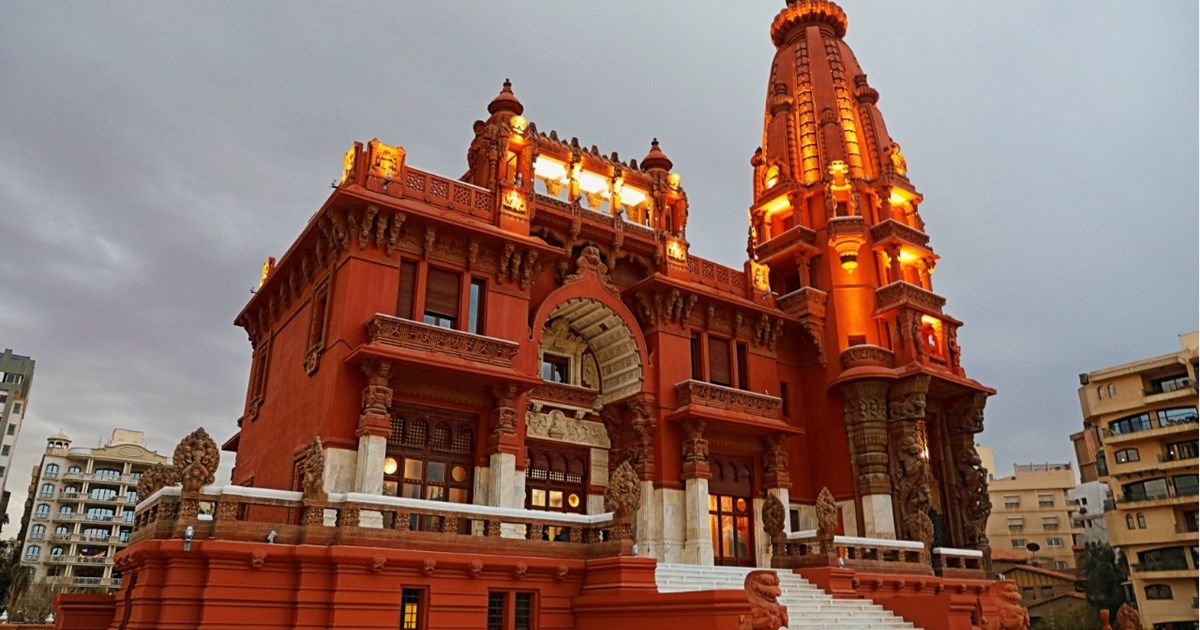
Baron Empain Palace
A Hindu-temple mansion in the middle of Heliopolis — the Belgian baron's Angkor-inspired dream, restored and reopened in 2020.
The baron who built a city
Édouard Empain, a Belgian engineer, industrialist and financier who made his fortune building railways and tramways across Europe — including work on the Paris Métro — arrived in Egypt at the beginning of the twentieth century. In 1906 his company acquired a stretch of desert north-east of Cairo and began to build a new garden city there, Heliopolis, named after the ancient sun city that once stood nearby, linked to the capital by an electric railway. In 1907 he received the title of baron. As his own residence he commissioned the French architect Alexandre Marcel, known for his fantasies of Indian and East Asian architecture since the Paris Exposition of 1900, who built the palace between 1907 and 1911 on the eastern edge of the new town.
A temple in concrete
The palace, also known as the Palais Hindou, is one of the most unusual buildings in Egypt. Built in reinforced concrete, it draws on the great Khmer temple of Angkor Wat in Cambodia for its massing and stepped central tower, and on the Hindu temples of Odisha (Orissa) in India for its carved figures and ornament: its façades are covered with elephants, serpents, Hindu deities, dancers and mythical creatures, while the interior combined European and oriental décor. Legend says that the central tower turned slowly on rails so that the house followed the sun all day; it is one of many stories that have gathered around the building. Empain lived here through the 1910s and 1920s; after his death in 1929 he was buried in the Basilica of Heliopolis nearby.
Abandonment and restoration
After the family's departure, the palace stood empty for decades. Its locked doors, overgrown garden and strange silhouette made it the subject of countless rumours of ghosts and secret rituals, and a magnet for Cairo's imagination. It was registered as a national monument in 1993. A restoration by the Ministry of Tourism and Antiquities, carried out with the support of the Belgian embassy and civil society, began in 2017; the palace was reopened by the Egyptian president on 30 June 2020 as a museum and cultural venue, with exhibitions on the history of Heliopolis and its founder. From the roof terrace there are views across the district.
Exhibo editorial
Heliopolis is a district of arcades, tramlines and Belle Époque balconies — and then, on a roundabout among villas and cafés, a pink-grey Khmer temple bristling with elephants and gods. Nobody who grew up in Cairo has a neutral feeling about this house: for half a century it was the city's favourite haunted mansion, locked, dark, whispered about.
Now you can walk in. Go up to the roof terrace in the late afternoon, when the carved figures throw long shadows and the light turns the concrete gold, and look out over the garden city the baron conjured from the desert. It is eccentric, theatrical and slightly absurd — and impossible not to love.
How to find it
The palace stands on Al-Orouba Street (the airport road) in Heliopolis, set back in its own garden; taxis and ride-hailing drivers know it as Qasr al-Baron. Enter through the garden gate, buy tickets at the kiosk and walk up to the main entrance; the stairs to the roof terrace are inside. The Basilica of Heliopolis and the arcades of the Korba district are a short drive or a longer walk to the west.
Similar places
All places
News by Exhibo
Editorial coverage on Exhibo
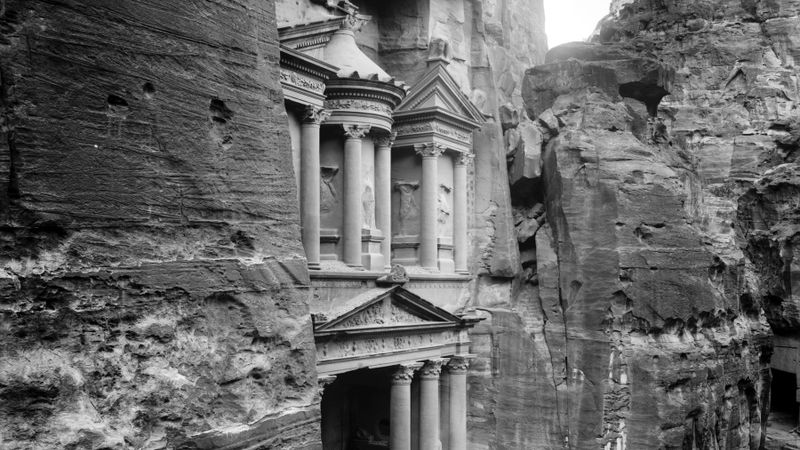
Filmed, but Not Recorded: The Arab World’s Missing Film Locations
Wikidata knows Gladiator was filmed in Morocco. It doesn’t know where.
Ouarzazate is the second most filmed place in the Middle East and North Africa, yet 25 of its 27 productions are recorded only in Wikipedia prose. We compared filming records worldwide and found that in the Arab world, Wikidata usually knows the country but not the place.
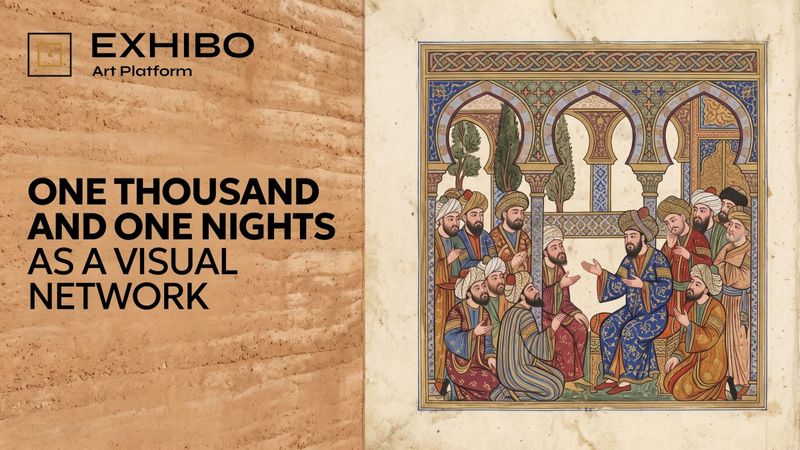
One Thousand and One Nights as a Visual Network
The book that taught Europe to picture the East arrived with no pictures at all. Three centuries of illustrators — Dutch, Egyptian, Persian, French, German, Iraqi — each gave it a face, and every face was a self-portrait.
Open Galland's Thousand and One Nights, the edition that conquered Europe, and there is nothing to look at: no genie, no lamp, not one illustration. The most visually imagined book in the world began blind — and because its text was never fixed either, no picture of it could ever be a copy.
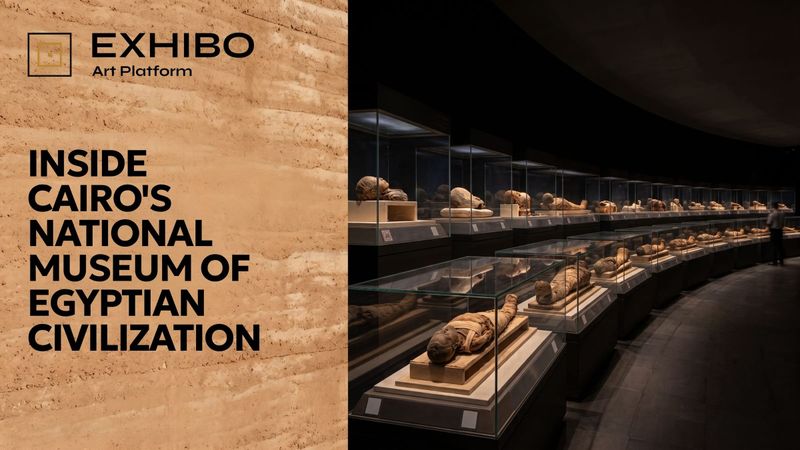
The Museum of Everything That Became a Tomb
Egypt built a museum to tell the story of an entire civilisation — seven thousand years of it, from flint tools to the present. The public knows it for one thing: the room where twenty dead kings lie in the dark.
In a black, hushed hall beneath the National Museum of Egyptian Civilization in Old Cairo lie the mummified bodies of Ramesses II, Hatshepsut, and eighteen other rulers of the New Kingdom — carried here in 2021 in a televised parade watched around the world.