Armenian Cathedral of St Gregory the Illuminator
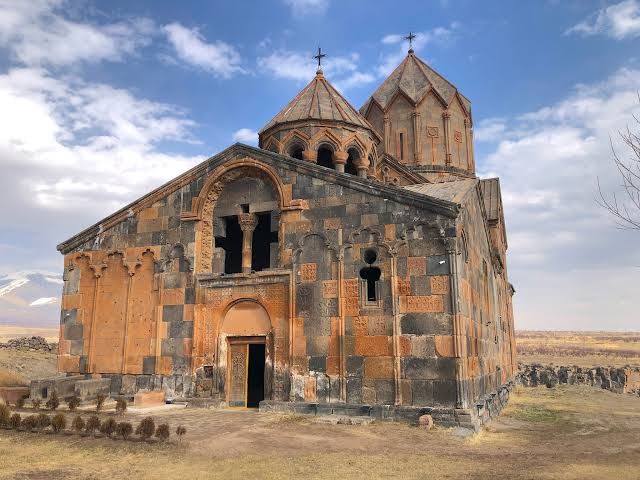
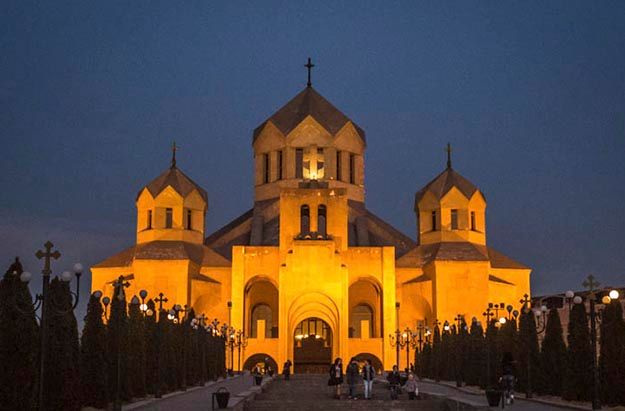
Cairo's Armenian Apostolic cathedral of 1928, with its conical dome and a memorial khachkar to the 1915 genocide.
The Armenians of Cairo
Armenians have lived in Egypt for many centuries, from the Fatimid vizier Badr al-Jamali, builder of Cairo's great gates, to the merchants, craftsmen, photographers and officials of the nineteenth and twentieth centuries — among them Nubar Pasha, Egypt's first prime minister. After the Armenian genocide of 1915, thousands of refugees found shelter in Egypt, and by the mid-twentieth century the community numbered tens of thousands, with its own schools, clubs, newspapers and churches, many of them in Cairo and Alexandria. The community is much smaller today, but remains an active part of the city's life.
The cathedral
The Cathedral of St Gregory the Illuminator — named after the saint who converted Armenia to Christianity in the early fourth century — is the principal church of the Armenian Apostolic Church in Cairo and the seat of its diocese. It was built in 1928 on Ramses Street to designs by the architect Levon Nafilian, in the classical tradition of Armenian church architecture: a stone building on a cross plan, with a central drum crowned by the distinctive conical dome of medieval Armenian churches. Its interior holds an altar raised on a stage, icons and paintings in the Armenian tradition.
Memory
In the courtyard stands a khachkar — a traditional Armenian carved cross-stone — dedicated to the memory of the victims of the 1915 genocide, around which the community gathers for commemorations each 24 April. Elsewhere in Cairo, the Armenian presence can be traced in the Armenian Catholic cathedral downtown, the Church of St Theresa in Heliopolis and the Armenian cemetery in Heliopolis.
Exhibo editorial
Ramses Street is all noise — traffic, flyovers, buses — and then, behind a gate, a small piece of the Caucasus: a stone church with a conical dome like the ones that rise above the gorges of Armenia, built by refugees and their children who had lost almost everything a decade before.
Stand by the khachkar in the courtyard, the carved stone lace around its cross, and think of how many of the faces in old Cairo photographs, how many of its photographers and jewellers and architects, belonged to this community. It is a short visit and a quietly powerful one.
Gallery
How to find it
The cathedral stands on Ramses Street in the Abbasiya area, north-east of downtown, a short drive from Saint Mark's Coptic Cathedral; ask a taxi for the Armenian church (al-Kenisa al-Armaniya) on Ramses Street. Enter through the gate on the street into the courtyard, where the khachkar stands in front of the church.
Similar places
All places
News by Exhibo
Editorial coverage on Exhibo
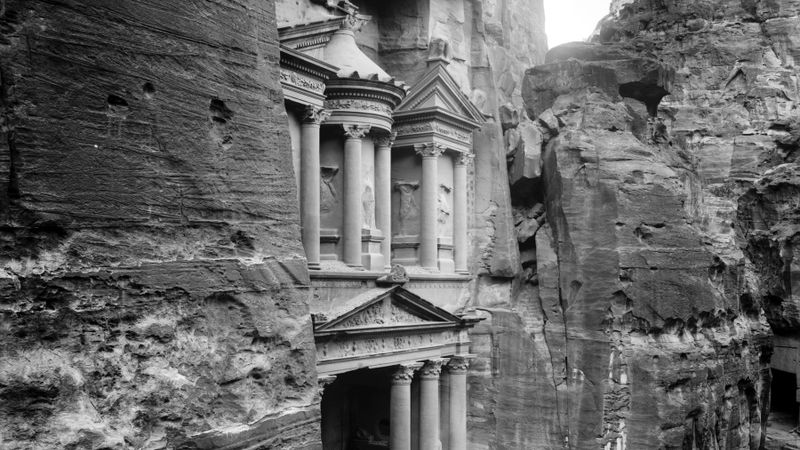
Filmed, but Not Recorded: The Arab World’s Missing Film Locations
Wikidata knows Gladiator was filmed in Morocco. It doesn’t know where.
Ouarzazate is the second most filmed place in the Middle East and North Africa, yet 25 of its 27 productions are recorded only in Wikipedia prose. We compared filming records worldwide and found that in the Arab world, Wikidata usually knows the country but not the place.
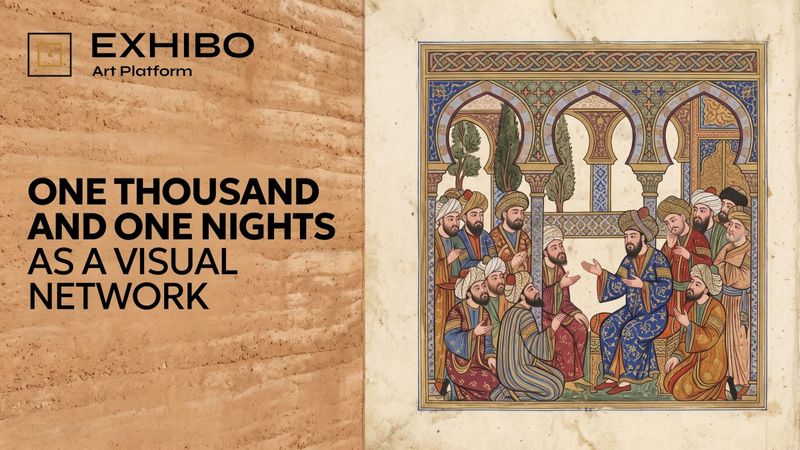
One Thousand and One Nights as a Visual Network
The book that taught Europe to picture the East arrived with no pictures at all. Three centuries of illustrators — Dutch, Egyptian, Persian, French, German, Iraqi — each gave it a face, and every face was a self-portrait.
Open Galland's Thousand and One Nights, the edition that conquered Europe, and there is nothing to look at: no genie, no lamp, not one illustration. The most visually imagined book in the world began blind — and because its text was never fixed either, no picture of it could ever be a copy.
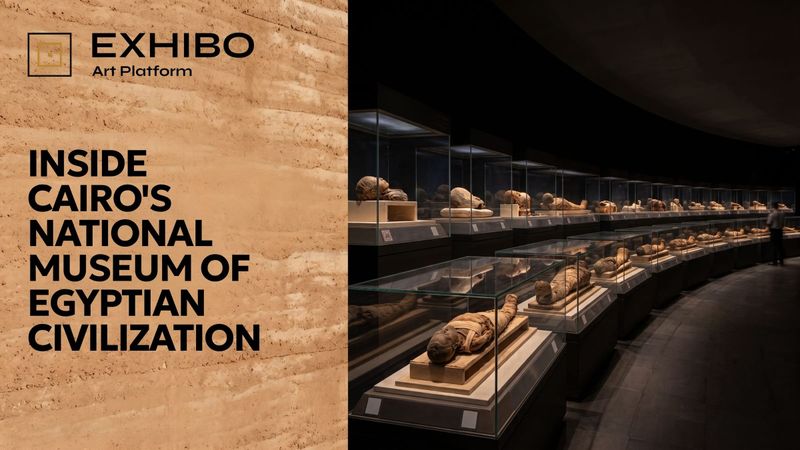
The Museum of Everything That Became a Tomb
Egypt built a museum to tell the story of an entire civilisation — seven thousand years of it, from flint tools to the present. The public knows it for one thing: the room where twenty dead kings lie in the dark.
In a black, hushed hall beneath the National Museum of Egyptian Civilization in Old Cairo lie the mummified bodies of Ramesses II, Hatshepsut, and eighteen other rulers of the New Kingdom — carried here in 2021 in a televised parade watched around the world.