
Kom el-Dikka (Roman Theatre)
Egypt's only Roman theatre, with marble tiers, lecture halls of a late-antique university and the mosaics of the Villa of the Birds.
A Roman quarter in the city centre
Kom el-Dikka lies in the heart of modern Alexandria, a short walk from Raml Station and Misr Station. Its name means "mound of rubble": until the mid-twentieth century the site was covered by a high mound, which was cleared in the 1960s for construction, revealing an extensive quarter of the Roman and late antique city. Since 1960, a Polish–Egyptian mission of the University of Warsaw has excavated and restored the site, making it one of the best-understood urban areas of Roman Alexandria.
The theatre
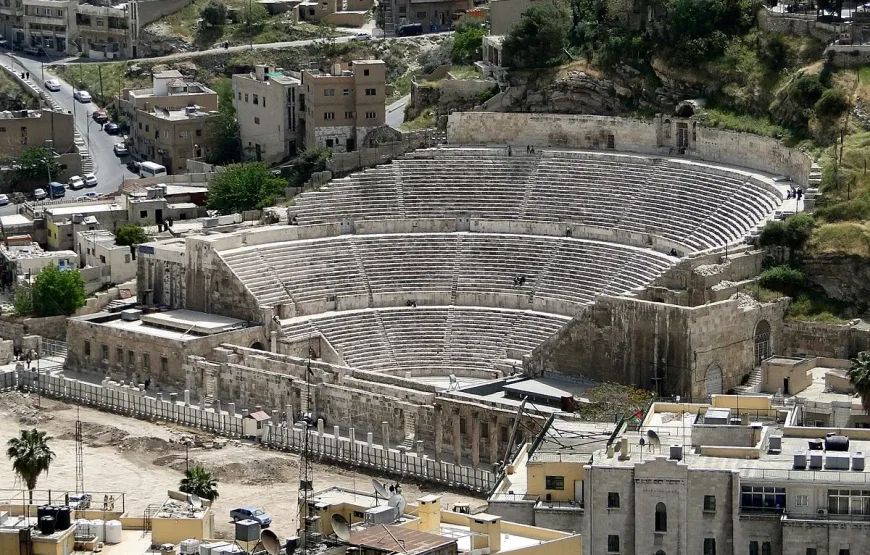
The centrepiece is a small theatre — the only Roman theatre found in Egypt — with thirteen tiers of white marble seats arranged in a horseshoe around a stage. Built in the fourth century AD and later modified, it may have served as an odeon for music and poetry, or as a council chamber. Graffiti scratched on the seats, including the names of supporters of chariot-racing factions, bring its audiences to life.
Lecture halls and baths
Around the theatre, archaeologists have uncovered a row of some twenty lecture halls (auditoria) of the fifth and sixth centuries, with tiered benches and a raised seat for the teacher — part of a late-antique centre of higher learning, perhaps the last great school of Alexandria. Nearby are the remains of large public baths, cisterns, a residential quarter and the Villa of the Birds, a Roman house of the first and second centuries AD with fine floor mosaics of birds and a panther, displayed under a protective shelter. Fragments of statues and architectural elements recovered from the sea are displayed in the grounds.
Exhibo editorial
Kom el-Dikka is a surprise: a few steps from the trams and traffic of downtown Alexandria, a sunken garden full of white marble — a perfect little Roman theatre, colonnades, baths, the benches of lecture halls where students argued philosophy in the fifth century. You can sit on the tiers where Alexandrians once sat.
Don't miss the Villa of the Birds, whose floor mosaics of pigeons, parrots and a panther are among the finest in Egypt. Then step out and get a coffee nearby — the contrast between the two Alexandrias is half the pleasure.
How to find it
Kom el-Dikka lies in central Alexandria between Raml Station and Misr Station, a 10-minute walk from the Corniche. The entrance is on the street on the site's eastern side; from there, paths lead down to the theatre, the lecture halls and the Villa of the Birds.
Similar places
All places
News by Exhibo
Editorial coverage on Exhibo
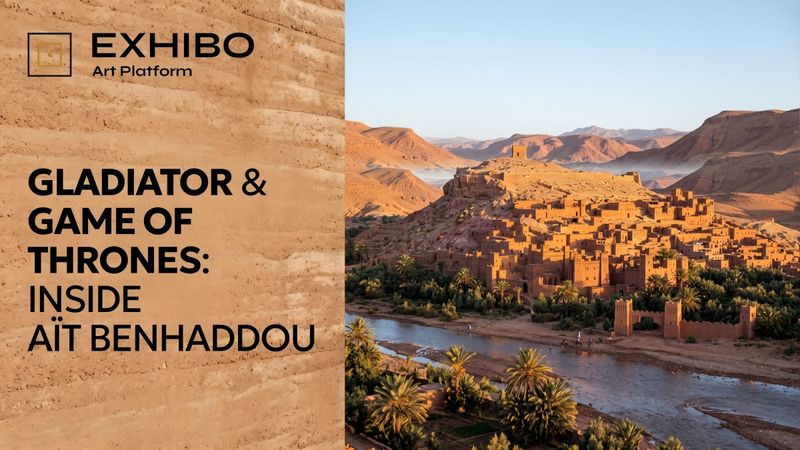
Gladiator and Game of Thrones: Inside Aït Benhaddou
The earthen ksar that has played Rome, Jerusalem and Yunkai survives only because people keep rebuilding it. What cinema films as eternity is, wall by wall, a work of constant repair.
Aït Benhaddou is cinema's favourite image of the ancient past, from Gladiator to Game of Thrones. But its earthen walls last only as long as someone keeps repairing them, so the set for eternity is the freshest mud in Morocco.
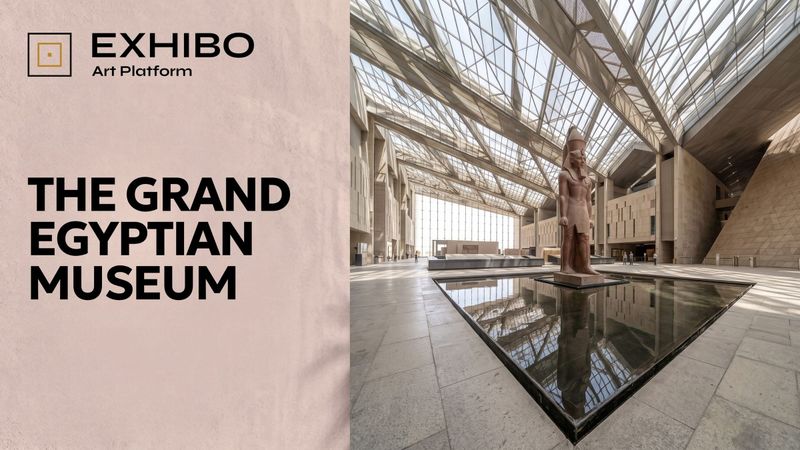
The Museum That Reflects Everything, Including You
How the world's largest single-civilisation museum gathers a nation's heritage, national story, tourism economy and repatriation claims under one reflective roof — and what those mirrored surfaces quietly ask of everyone who walks in.
Around the colossus of Ramses II, shallow pools mirror the floor so exactly that visitors keep stepping in. It is a small, faintly comic thing — and a way into a much larger question about the Grand Egyptian Museum. A civilisation is gathered here and made whole, while its three most famous faces stay abroad. A home for a nation's heritage opens, and the nation queues outside it. A monument to Egyptian sovereignty rises, financed largely from Tokyo.
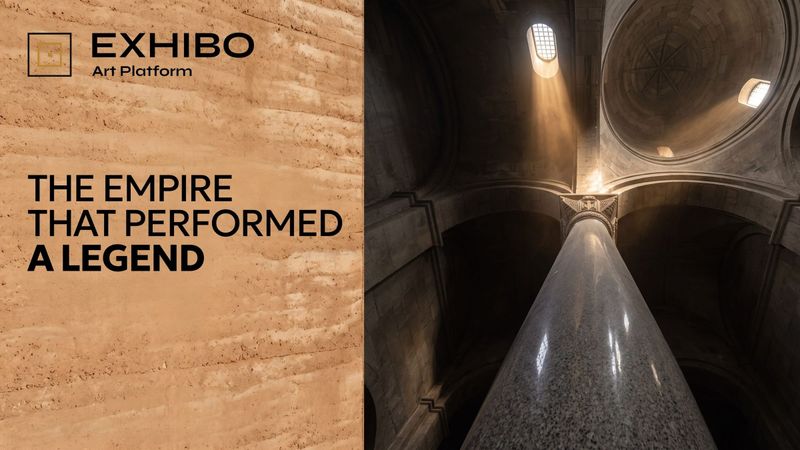
Seventy Thousand Solomons: The Empire That Performed a Legend
A demon catalogue in the conqueror's library, a sixteenth-century text where kingship is an office held seventy thousand times, and the columns a sultan dragged across three provinces to prove he held it.
Mehmed II kept a Greek catalogue of demons in his library at Topkapı. Seventy years later a sultan named for a prophet was rebuilding the walls of Jerusalem and hauling Roman columns out of Egypt and the Lebanon into a mosque above the Golden Horn. In between, Ottoman writers turned Solomon from a warning into a job — and the empire applied for it in stone.