Abu Mena
The ruined pilgrimage city of St Menas in the desert south-west of Alexandria — a UNESCO site of the early Christian world.
The pilgrimage of St Menas
Abu Mena lies in the desert about 45 kilometres south-west of Alexandria, near Borg el-Arab. It grew up around the tomb of St Menas, a Christian soldier of Egyptian origin martyred, according to tradition, in the late third or early fourth century. Legend tells that the camel carrying his body refused to go further at this spot, and that miraculous healings soon followed at his grave. From the fifth to the seventh centuries, Abu Mena became one of the greatest pilgrimage centres of the Christian world, drawing pilgrims from across the Mediterranean, who carried home small clay flasks, the famous "Menas ampullae", stamped with the image of the saint between two camels and filled with holy water or oil; they have been found as far away as France and Britain.
The city
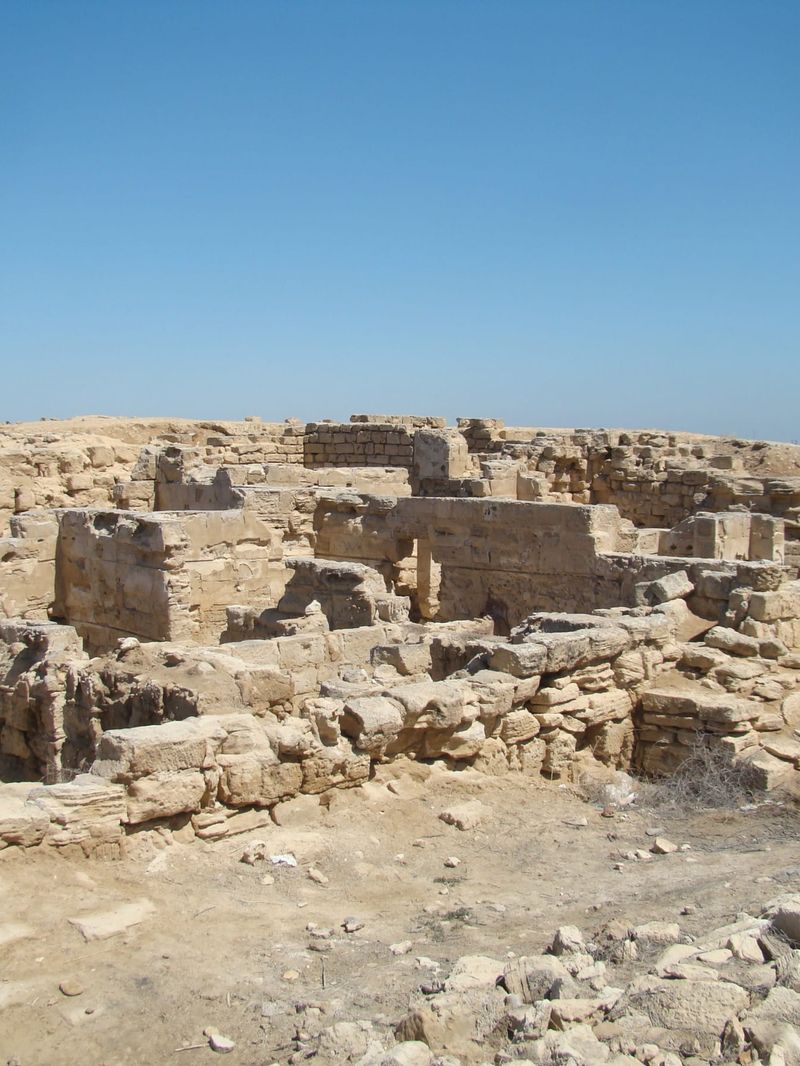
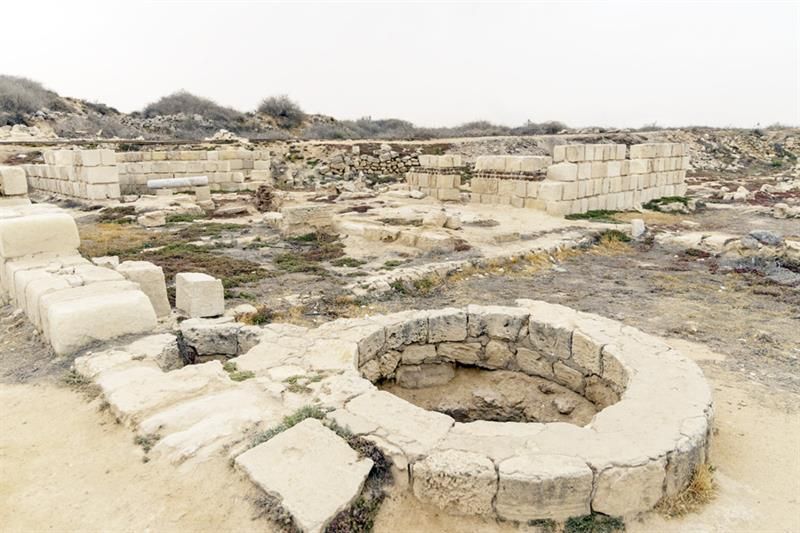
At its height, Abu Mena was a true city, with a great basilica — one of the largest in Egypt — built over the saint's tomb, a baptistery, churches, colonnaded streets, hostels for pilgrims, baths, workshops and houses. It declined after the Arab conquest and was abandoned by the ninth or tenth century. It was rediscovered by the German archaeologist Carl Maria Kaufmann in 1905, and excavations have continued since, notably by the German Archaeological Institute.
A site in danger
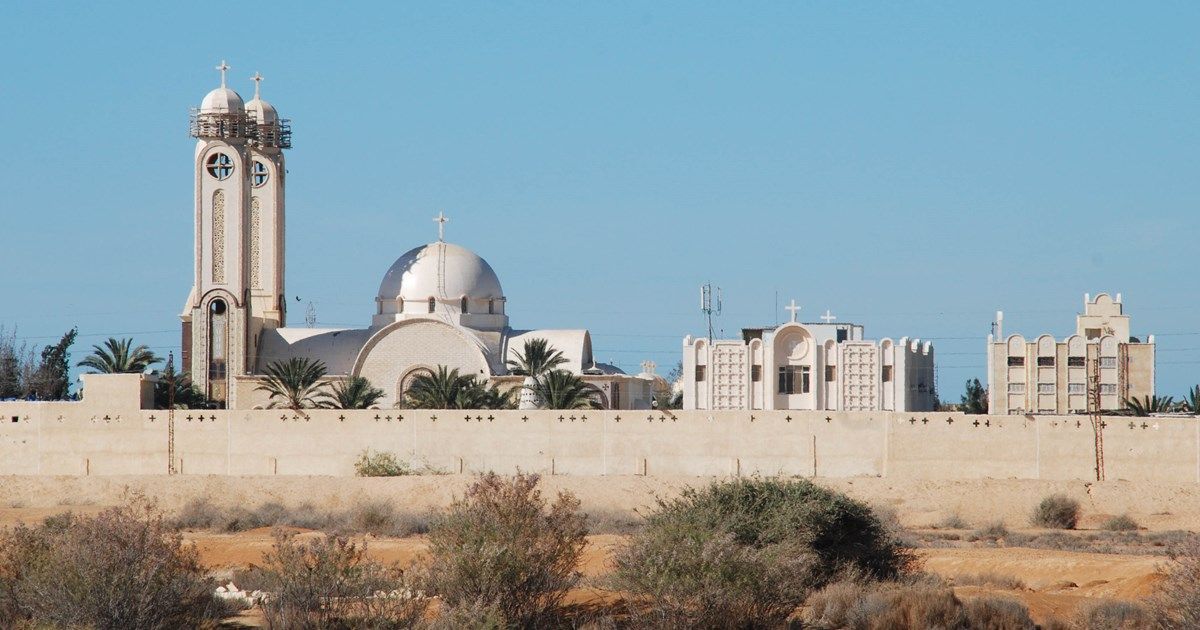
Abu Mena was inscribed as a UNESCO World Heritage Site in 1979. Since 2001 it has been on the List of World Heritage in Danger, after the rise in the water table caused by irrigation of the surrounding land led to the collapse of underground structures and threatened the ruins; measures to lower the water table have since been undertaken. Nearby stands the modern Monastery of St Mina, built from 1959 under Pope Cyril VI, a major Coptic pilgrimage centre.
Exhibo editorial
In the flat desert west of Alexandria, foundations and broken columns spread over a vast area: the remains of a city built for pilgrims, who came from as far as Gaul and Britain to pray at the tomb of a soldier-saint and went home with a little clay flask stamped with his image between two camels. You may have seen those flasks in a museum; this is where they came from.
Walk to the great basilica and the baptistery, and imagine the crowds. Then visit the modern monastery nearby, where the pilgrimage to St Menas lives on. If you have seen the camels with St Menas in the frescoes of the Red Sea monasteries, this visit completes the story.
Gallery
How to find it
Abu Mena lies about 45 km south-west of Alexandria, near Borg el-Arab, reached by car along the desert road. Follow the signs to the Monastery of St Mina; the archaeological site lies a short distance beyond the modern monastery.
Similar places
All places
News by Exhibo
Editorial coverage on Exhibo
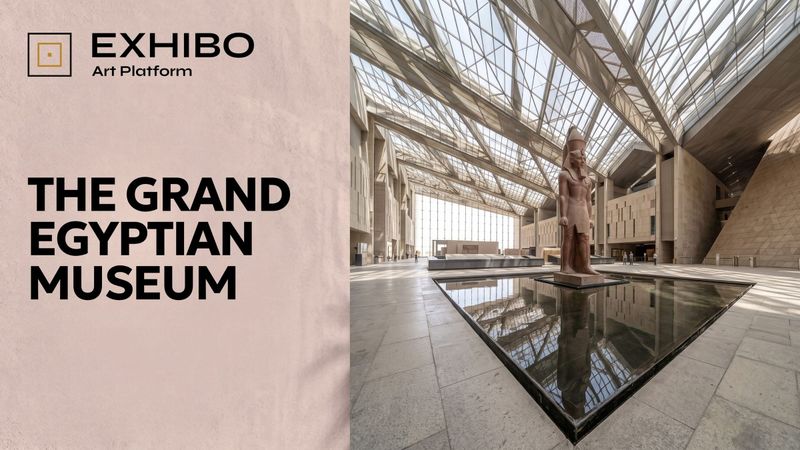
The Museum That Reflects Everything, Including You
How the world's largest single-civilisation museum gathers a nation's heritage, national story, tourism economy and repatriation claims under one reflective roof — and what those mirrored surfaces quietly ask of everyone who walks in.
Around the colossus of Ramses II, shallow pools mirror the floor so exactly that visitors keep stepping in. It is a small, faintly comic thing — and a way into a much larger question about the Grand Egyptian Museum. A civilisation is gathered here and made whole, while its three most famous faces stay abroad. A home for a nation's heritage opens, and the nation queues outside it. A monument to Egyptian sovereignty rises, financed largely from Tokyo.
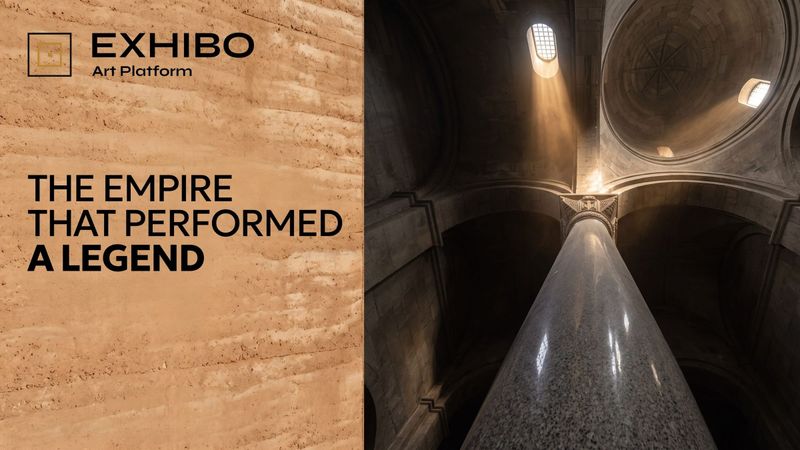
Seventy Thousand Solomons: The Empire That Performed a Legend
A demon catalogue in the conqueror's library, a sixteenth-century text where kingship is an office held seventy thousand times, and the columns a sultan dragged across three provinces to prove he held it.
Mehmed II kept a Greek catalogue of demons in his library at Topkapı. Seventy years later a sultan named for a prophet was rebuilding the walls of Jerusalem and hauling Roman columns out of Egypt and the Lebanon into a mosque above the Golden Horn. In between, Ottoman writers turned Solomon from a warning into a job — and the empire applied for it in stone.