
Hudayriyat & Al Bateen MarinaAbu Dhabi
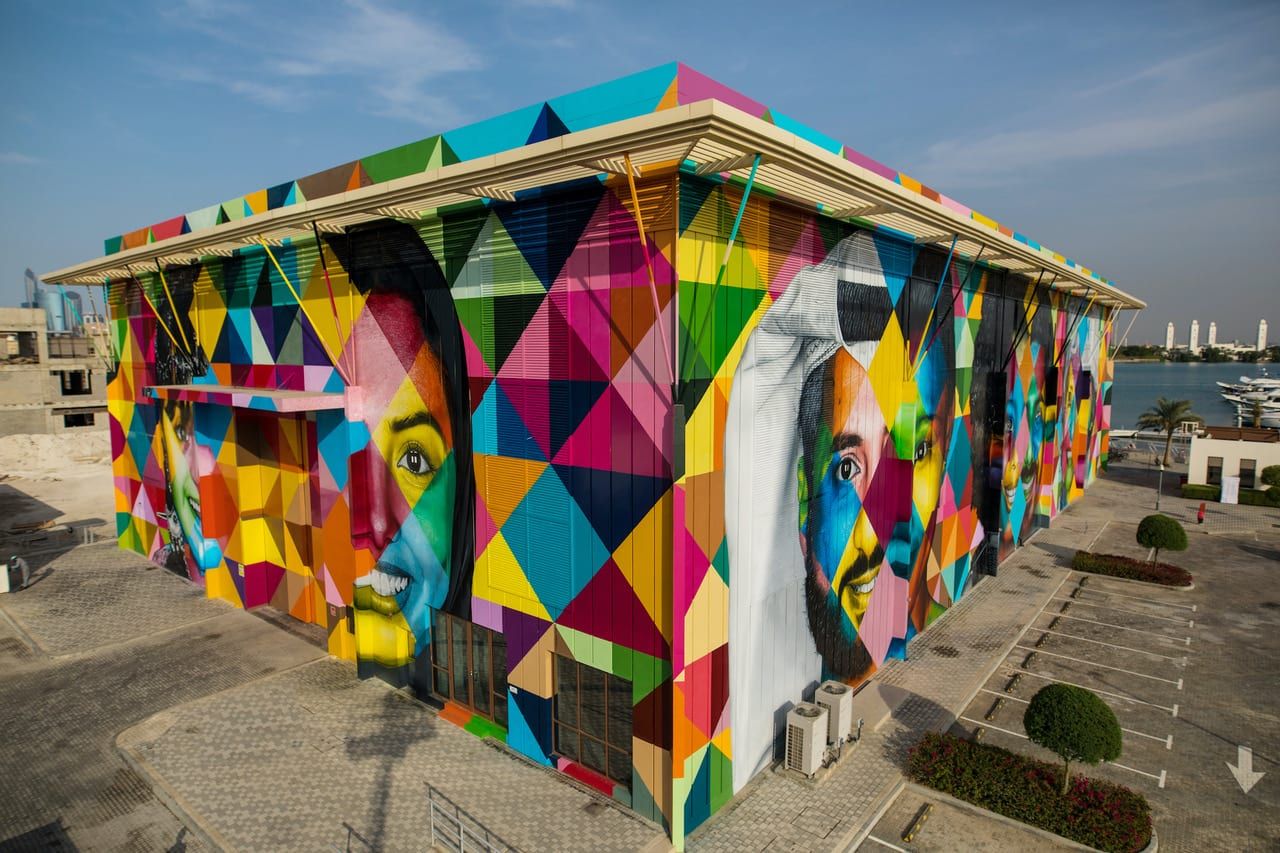
Tolerance by Eduardo Kobra
Two thousand square metres of kaleidoscopic portraiture wrapped around a building — the largest mural in the region.
Tolerance — Tolerancia — is a mural by the Brazilian artist Eduardo Kobra at Marsa Al Bateen marina, unveiled on 21 December 2019. At more than 2,000 square metres and 14 metres high, wrapping one of the district's buildings, it was described at unveiling as the largest public mural of its kind in the region, and remains among the largest works in Kobra's own body of thousands of murals across more than 40 countries.
It was commissioned by Abu Dhabi's Department of Municipalities and Transport as the first artwork in the 'For Abu Dhabi' initiative, part of the wider Ghadan 21 programme — a city-wide activation intended to create contemporary artistic landmarks across the capital and the start of a sequence of commissions that later brought Elian Chali, MadC, Tarsila Schubert and others to the city's walls.
The work carries Kobra's signature idiom: kaleidoscopic colour, harlequin patterning and larger-than-life portraiture, with half-portraits set side by side. The faces are of real people living in Abu Dhabi, drawn from an earlier Department of Community Development campaign called This Is Abu Dhabi, which had photographed residents of different backgrounds, ethnicities and ages in black and white. Kobra saw the campaign online and found it aligned with his own long-running preoccupations. Made for the UAE's Year of Tolerance, the mural sets out to embody diversity, respect and peace between cultures.
Kobra spent close to a month in the capital, with the painting itself taking almost four weeks on the ground alongside two assistants. His process involves extended planning around the host building's structure before any paint is applied.
The mural is on a building at a publicly accessible marina and can be viewed free at any hour.
Exhibo editorial
The faces are of people who live here. Not celebrities, not archetypes — actual Abu Dhabi residents, photographed in black and white for a government campaign about who the city's population actually is, then handed to a Brazilian who paints in kaleidoscope.
That transfer is what makes it more interesting than its own statistics. Kobra's style is enormously recognisable and, frankly, applies the same visual treatment to Gandhi in São Paulo and to a nurse in New York; the risk with a commission like this is that Abu Dhabi becomes another surface for a house style. What stops it is the source material. He did not invent these faces or select them for photogenic diversity — he inherited them from a campaign that had already done the difficult part. So the mural is a portrait of a specific population rendered by someone who paints strangers for a living, and at fourteen metres you can stand underneath a half-face and work out that its owner is probably somewhere within a few kilometres.
How to find it
At Marsa Al Bateen marina on Arabian Gulf Street in the Al Bateen district, on the western side of Abu Dhabi island. The mural wraps a building within the marina complex and is visible from the promenade — walk the waterfront rather than approaching from the car park, as the full 14-metre height only reads from a distance. The marina promenade also has cafés and restaurants and is a well-known sunset spot. Free to view at any hour; go in the late afternoon when low sun brings out the colour.
Similar places
All places
News by Exhibo
Editorial coverage on Exhibo
Why Every Sci-Fi Desert Looks Arab
From Arrakis to Tatooine, when a film wants a desert to feel ancient, prophetic and alien, it reaches for an Arab and Berber vocabulary — and reveals more about the West that built it than the region it borrows from.
The wrapped faces, the trilling women, the barely-displaced Arabic: cinema's alien deserts keep sounding Arab. But the vocabulary was assembled in the West — from Orientalist painting to Lawrence to Dune — and it says more about who is looking than about anyone being looked at.
Why Wadi Rum Keeps Playing Mars: A Desert That Is Right About the Wrong Planet
A valley in southern Jordan has become cinema's favourite Mars — not because it is like the planet, but because it looks like the one we carry in our heads.
Put Wadi Rum beside a rover photograph and you can't tell which is Mars. But the desert shares almost nothing with the real planet except its colour — and lately, the illusion has grown powerful enough that real space missions have come to Jordan to rehearse.
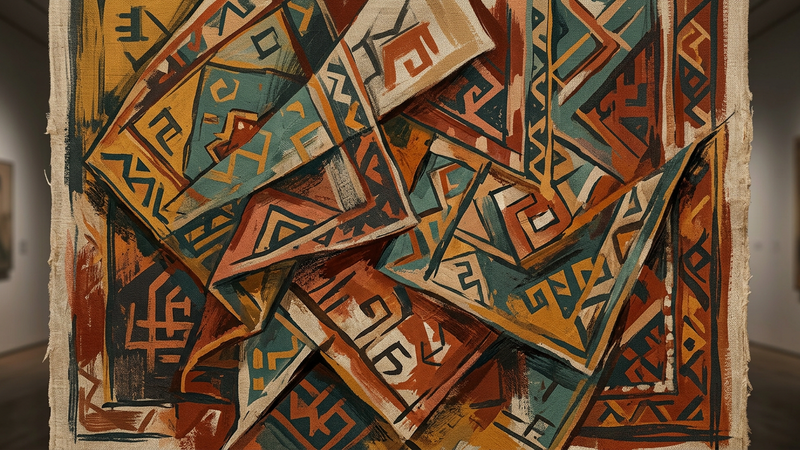
Threads of Heritage: Batima Zaurbekova's Woven Legacy
A survey of Kazakh tapestry pioneers redefines fibre art at Almaty's Kasteyev Museum
Eight decades after her birth, Batima Zaurbekova's textile innovations take centre stage in a major retrospective that bridges Central Asian craft and contemporary visual culture.