Qasr Al Hosn & Al MarkaziyahAbu Dhabi
The Wisdom Garden, Umm Al Emarat Park
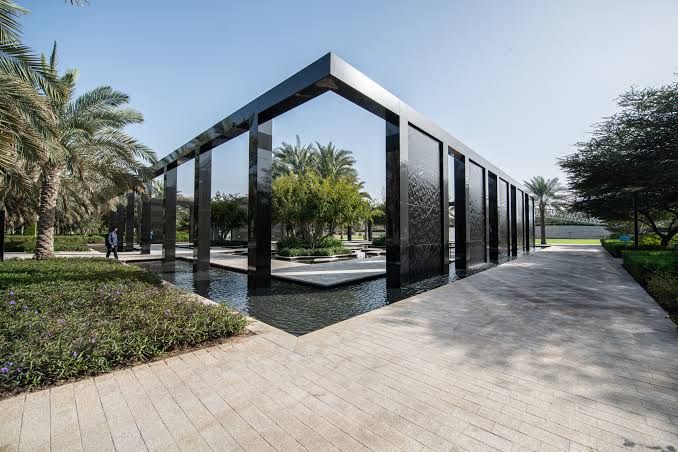
Thirty of Sheikh Zayed's sayings cut into ten marble walls, in a garden of native planting and water.
The Wisdom Garden is a 1,230-square-metre garden within Umm Al Emarat Park in Al Mushrif, dedicated to the legacy of Sheikh Zayed bin Sultan Al Nahyan. It displays 30 of his quotations across 10 marble walls, set among water structures and carefully maintained indigenous planting.
The quotations are organised by subject, covering ground including education and economic development, and gender issues — a selection that reflects the founder's stated priorities rather than only ceremonial statements. The garden as a whole is conceived around his documented commitment to nature and environmental conservation, which is also the organising idea behind the wider park's redesign.
Umm Al Emarat Park was formerly Mushrif Park, first opened in 1982 and originally admitting only women and children. It reopened after redevelopment in 2015 with a design honouring Sheikh Zayed's vision of preserving the country's cultural and natural history; the US engineering consultant S. A. Miro acted as lead consultant from concept design through delivery, with ArtHouse Design producing the bilingual signage and wayfinding programme. The park spans roughly 14.5 hectares and drew over 700,000 visitors in its first year after reopening.
Elsewhere in the park are the Jewels of Abu Dhabi — five life-sized bronze sculptures of the emirate's iconic species including the dugong and greater flamingo, gifted by Sheikh Hamdan bin Zayed Al Nahyan to Sheikha Fatima bint Mubarak — along with a Shade House, botanic garden, animal barn, a 1,200-metre running track and an open-air amphitheatre.
Umm Al Emarat Park charges a modest admission, typically around AED 10 booked online, and is open daily from morning until midnight. Camera permits are arranged at the ticket desk. The garden is at its best in the evening, when low light works across the marble.
Exhibo editorial
Ten marble walls and thirty sentences, and the surprise is what the sentences are about. You expect the ceremonial register — nation, destiny, the usual masonry of official memory. What you get includes economic development and the position of women, which is a considerably more specific set of claims to carve into stone and leave standing in a public park.
Visitors describe the place as meditative and that reading is earned, but it is worth noticing what the garden is doing structurally. Umm Al Emarat opened in 1982 as a park for women and children only; it reopened in 2015 open to everyone, with a garden at its heart quoting the founder on exactly that question. Whether you read that as commemoration or as argument probably depends on what you brought with you. Come in the last hour of light, when the marble warms up and the water is working, and read a few of them properly rather than photographing the wall.
How to find it
Inside Umm Al Emarat Park on 15th Street in Al Mushrif, between Airport Road and Karamah Street, minutes from Abu Dhabi City Golf Club and easy to reach from anywhere in the city. Buy a ticket at the gate or online — admission is around AED 10 — and arrange a camera permit at the desk if you plan to shoot. The Wisdom Garden sits within the wider park; follow signs from the main entrance. While there, look for the Jewels of Abu Dhabi bronzes, the Shade House and the botanic garden. Open daily from 8am until midnight; the garden reads best in the hour before sunset.
Similar places
All places
News by Exhibo
Editorial coverage on Exhibo
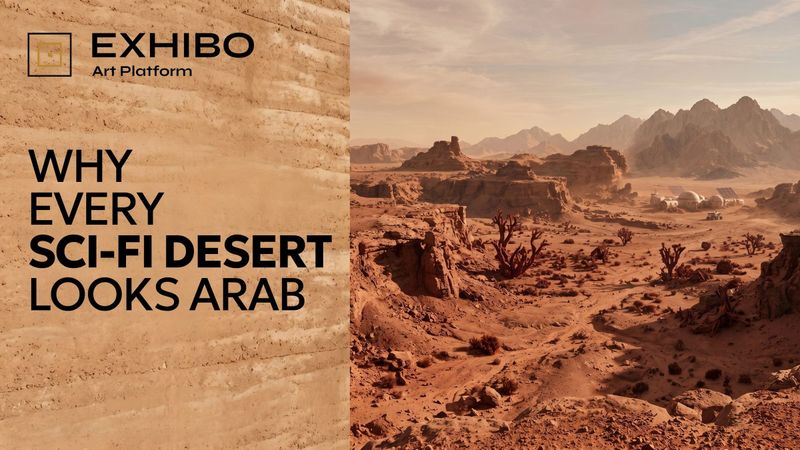
Why Every Sci-Fi Desert Looks Arab
From Arrakis to Tatooine, when a film wants a desert to feel ancient, prophetic and alien, it reaches for an Arab and Berber vocabulary — and reveals more about the West that built it than the region it borrows from.
The wrapped faces, the trilling women, the barely-displaced Arabic: cinema's alien deserts keep sounding Arab. But the vocabulary was assembled in the West — from Orientalist painting to Lawrence to Dune — and it says more about who is looking than about anyone being looked at.
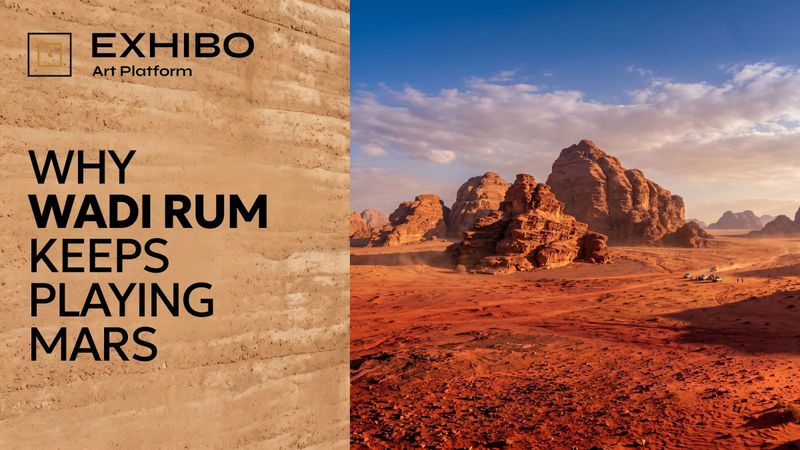
Why Wadi Rum Keeps Playing Mars: A Desert That Is Right About the Wrong Planet
A valley in southern Jordan has become cinema's favourite Mars — not because it is like the planet, but because it looks like the one we carry in our heads.
Put Wadi Rum beside a rover photograph and you can't tell which is Mars. But the desert shares almost nothing with the real planet except its colour — and lately, the illusion has grown powerful enough that real space missions have come to Jordan to rehearse.
Threads of Heritage: Batima Zaurbekova's Woven Legacy
A survey of Kazakh tapestry pioneers redefines fibre art at Almaty's Kasteyev Museum
Eight decades after her birth, Batima Zaurbekova's textile innovations take centre stage in a major retrospective that bridges Central Asian craft and contemporary visual culture.