
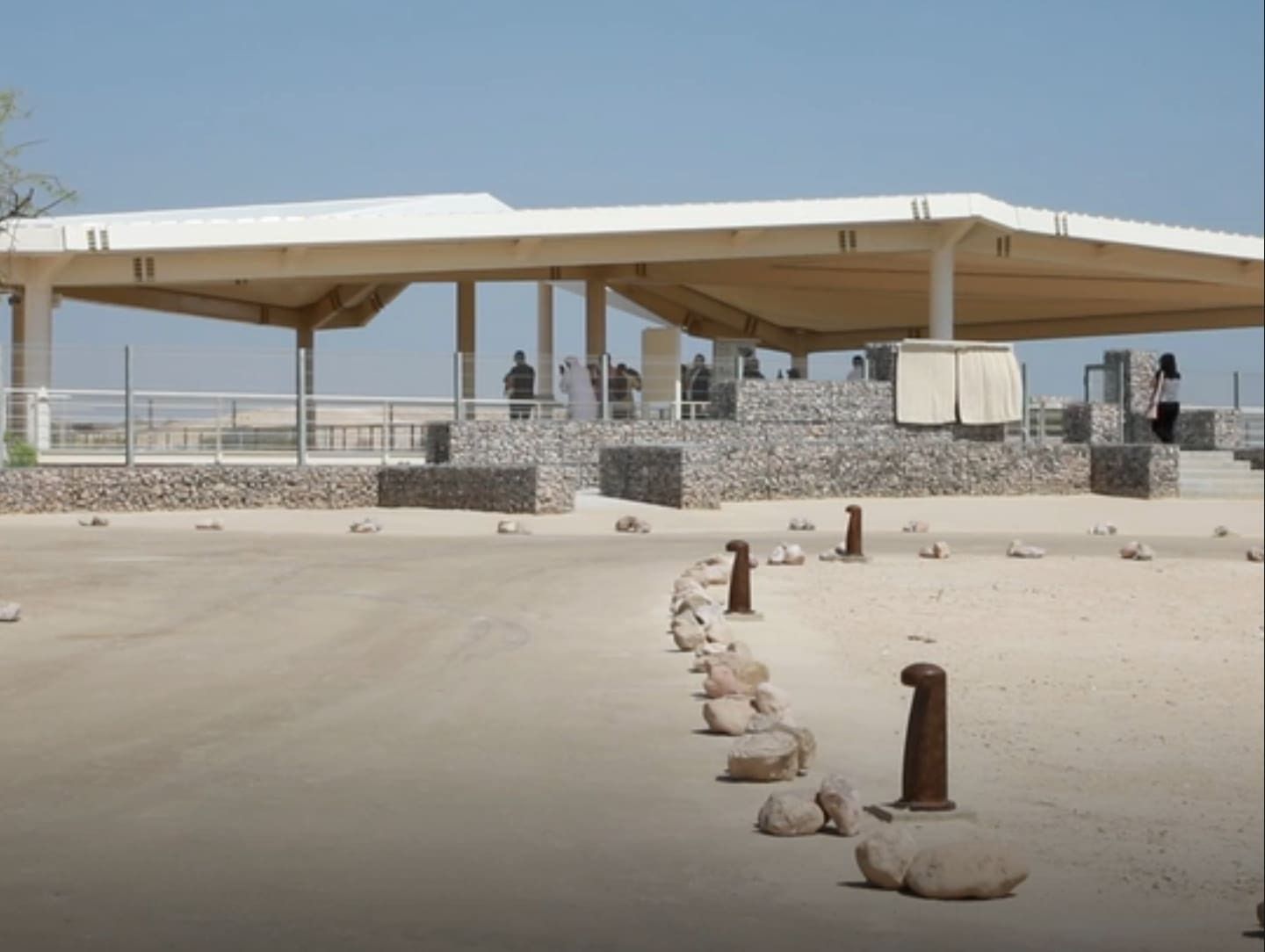
Sir Bani Yas Church and Monastery
The only early Christian site found in the UAE: a 7th-century church and monks' quarters on a desert island off Al Dhafra.
Christians on a Gulf island
Sir Bani Yas is a desert island off the coast of Al Dhafra, the western region of Abu Dhabi, about 250 km from the capital. On its eastern side lie the remains of a church and monastery of the 7th and 8th centuries. It is the only early Christian site yet discovered in the UAE.
The site was found in 1992 by the Abu Dhabi Islands Archaeological Survey, working with the permission of Sheikh Zayed bin Sultan Al Nahyan. The team found the remains of several buildings with pottery and fragments of plaster. Excavation began the next year and went on for several seasons. Fine plaster crosses showed that the central building was a church.
The monastery
The monks belonged to the Church of the East, the eastern Christian church with its roots in ancient Iraq. In late antiquity it founded monasteries along the shores of the Gulf, from Kuwait to Iran and Saudi Arabia. The community on Sir Bani Yas flourished from around 600 to 750 CE, well after Islam had spread through the region.
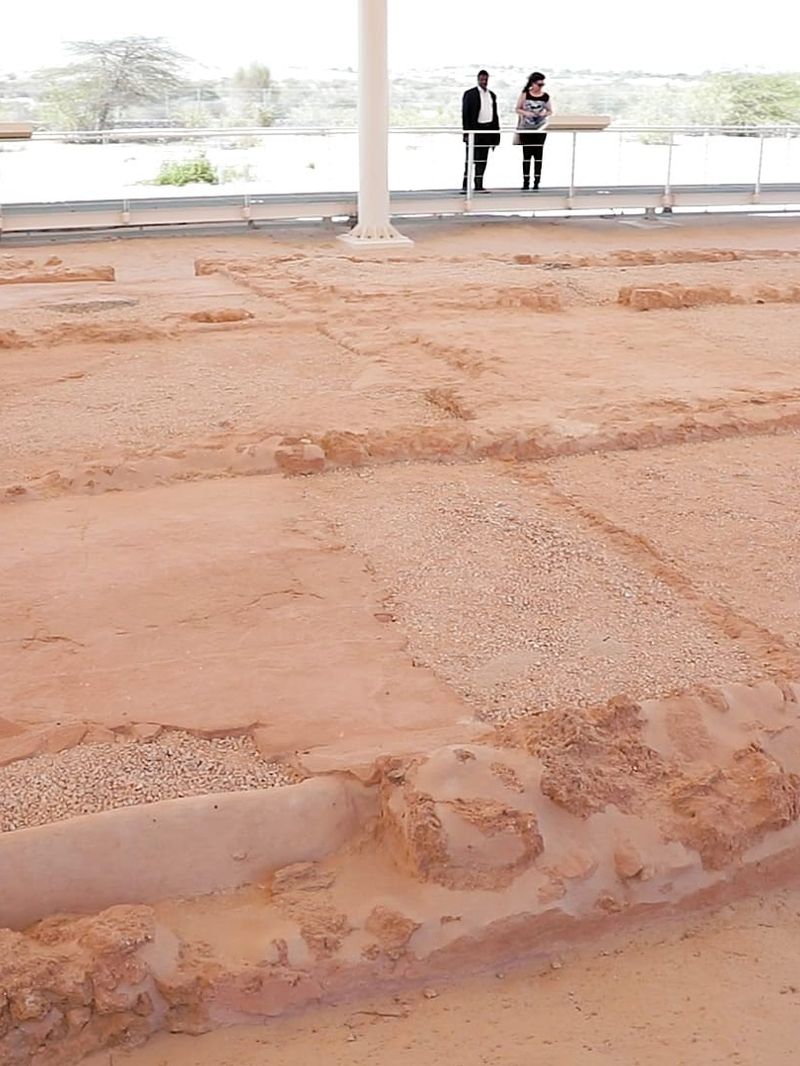
The church stood at the centre of a walled compound. The monks lived in quarters on its eastern and northern sides. Nearby the archaeologists found several courtyard houses and a water cistern, all part of the monastic settlement. Finds from the site show that the community lived on food from the sea as well as cattle, sheep and goats. In the end the monastery was abandoned. None of its buildings show signs of violent destruction, so it seems the monks simply left.
Conservation and new finds
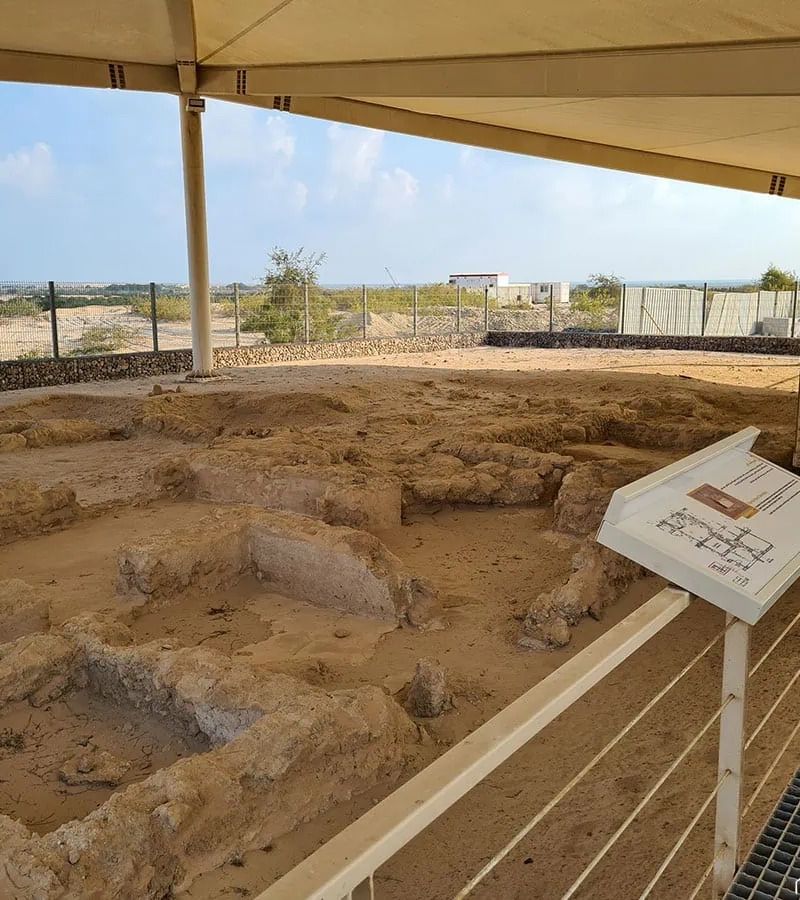
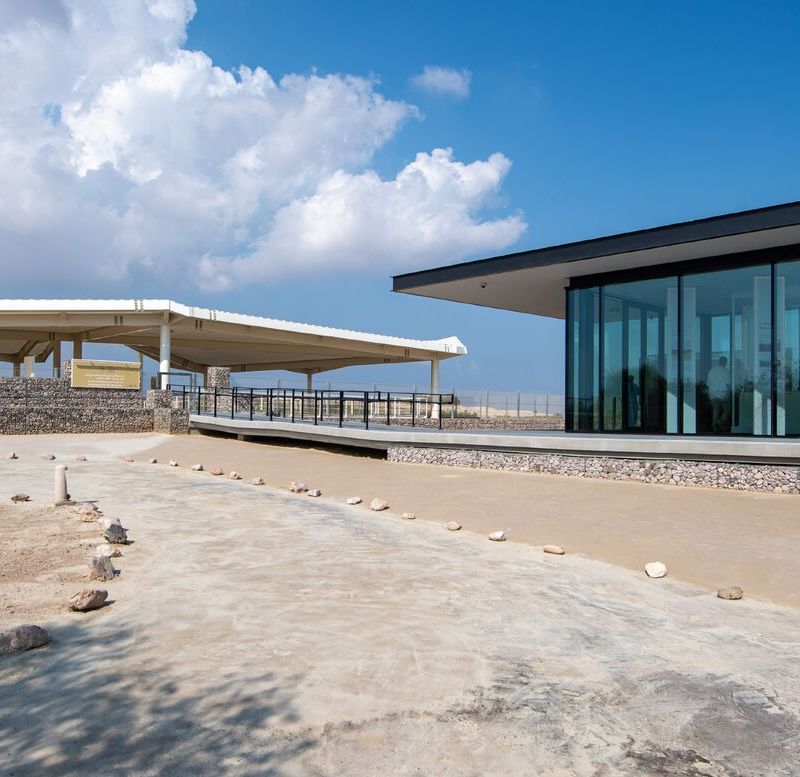
In 2010 a shelter was built over the church, while most of the monastery was reburied to protect it. In 2019 the Department of Culture and Tourism Abu Dhabi reopened the site with new shelters over the church and monastery, raised walkways and information panels. A visitor centre shows finds from earlier digs, among them glass chalices, a cross-shaped piece of stucco and a stamp seal with a scorpion.
In January 2025 excavations resumed for the first time in about three decades. In the courtyard of one of the houses north of the church, archaeologists found a cross moulded on a stucco plaque, about 30 cm tall. It stands on a stepped base, with foliage rising from below. Its style matches crosses found in Iraq and Kuwait. It was probably hung on a wall for prayer and contemplation.
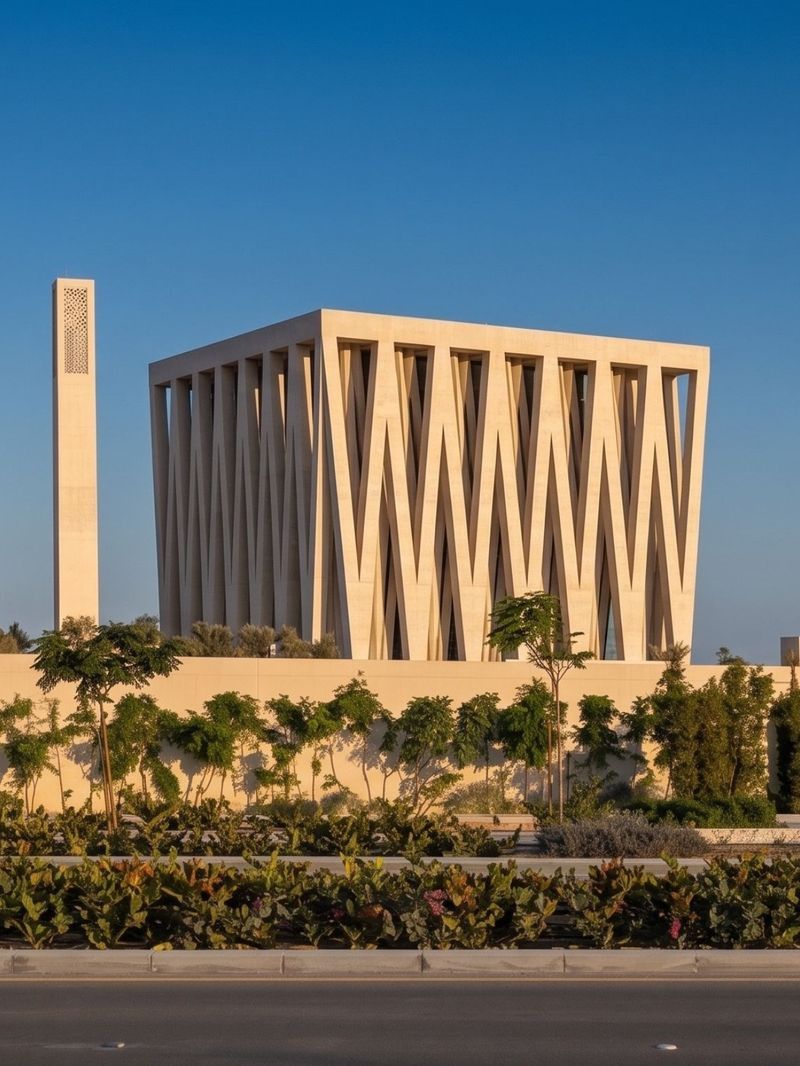
For the UAE's modern meeting place of faiths, see the Abrahamic Family House in Abu Dhabi.
Exhibo editorial
There is not much to see at first: low walls under a white canopy, on a flat island of sand and scrub. Then the plan comes into focus. Here is the nave, here the monks' rooms, here the courtyard where someone hung a cross on the wall to pray in front of it.
It is a quiet place and it asks for a slow visit. Fourteen centuries ago a community of monks chose this island to live apart from the world. Standing in the heat and the silence, you begin to see why.
Gallery
How to find it
Sir Bani Yas lies off the Al Dhafra coast, about 250 km west of Abu Dhabi city. Boats run to the island from the Jebel Dhanna jetty. The church and monastery are on the east side of the island. A road leads to the visitor centre. Walkways run over the ruins under the shelters. Check access with the island's operators before you travel.
Similar places
All places

News by Exhibo
Editorial coverage on Exhibo
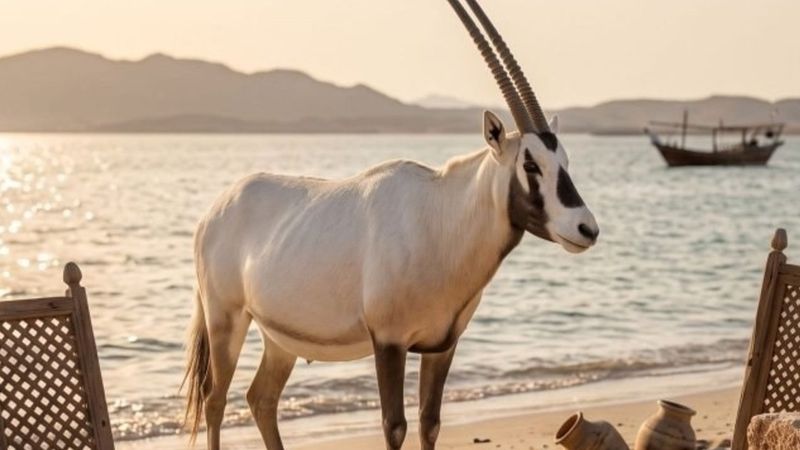
The Animal We Drew Everywhere Once It Was Gone
From Neolithic rock to airline tailfin — how the Arabian oryx vanished from the desert, came back from nine animals, and multiplied everywhere as a symbol in the very decades it was gone.
The last wild Arabian oryx was shot in 1972. By then it was already a picture — carved on Bronze Age tombs, mistaken by the ancients for a unicorn, praised by poets as the eyes of the beloved. This is the story of an animal that went extinct in the wild and was brought back from nine survivors, and of the strange gap between the creature and the emblem it became: fast, sharp and ascendant on a nation's tailfin, while the animal itself survives by standing still in the shade.
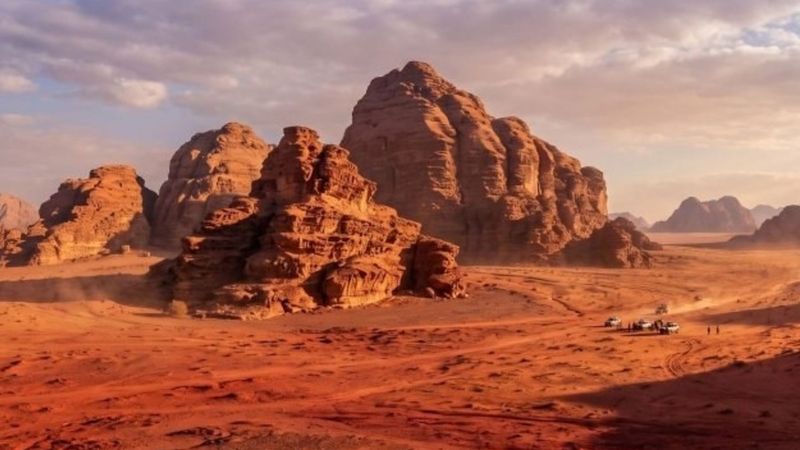
Why Wadi Rum Keeps Playing Mars: A Desert That Is Right About the Wrong Planet
A valley in southern Jordan has become cinema's favourite Mars — not because it is like the planet, but because it looks like the one we carry in our heads.
Put Wadi Rum beside a rover photograph and you can't tell which is Mars. But the desert shares almost nothing with the real planet except its colour — and lately, the illusion has grown powerful enough that real space missions have come to Jordan to rehearse.
Why Liwa Is Red
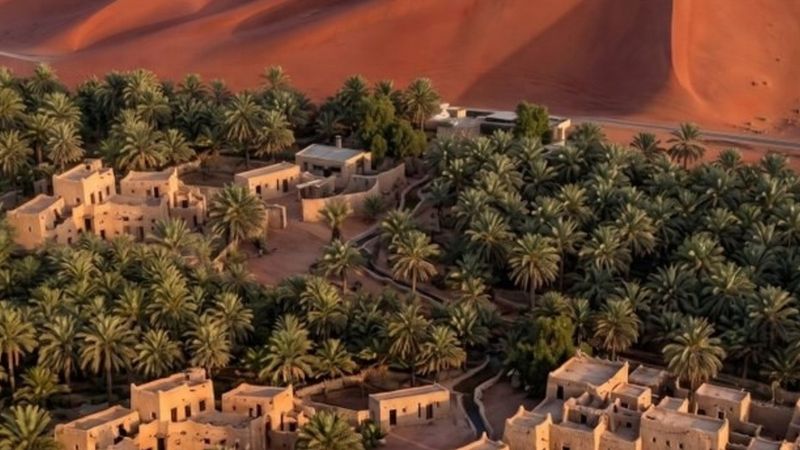
The red of the world's tallest dunes isn't a fact about the sand — it's a record of everywhere the sand has been. A drowned sea, an ice-age wind and a buried green Arabia, all pressed into a single colour.
Everyone knows why Liwa is red: iron in the sand. It's true the way "the Gulf is white to reflect heat" is true — the first sentence of a much longer story. The red is a microscopically thin coat of rust on grains of clear quartz, and where those grains came from is almost impossible to picture from the dunes: the floor of a sea that no longer exists, lifted grain by grain and stacked three hundred metres high.