
Hudayriyat & Al Bateen MarinaAbu Dhabi
Hudayriyat Bridge
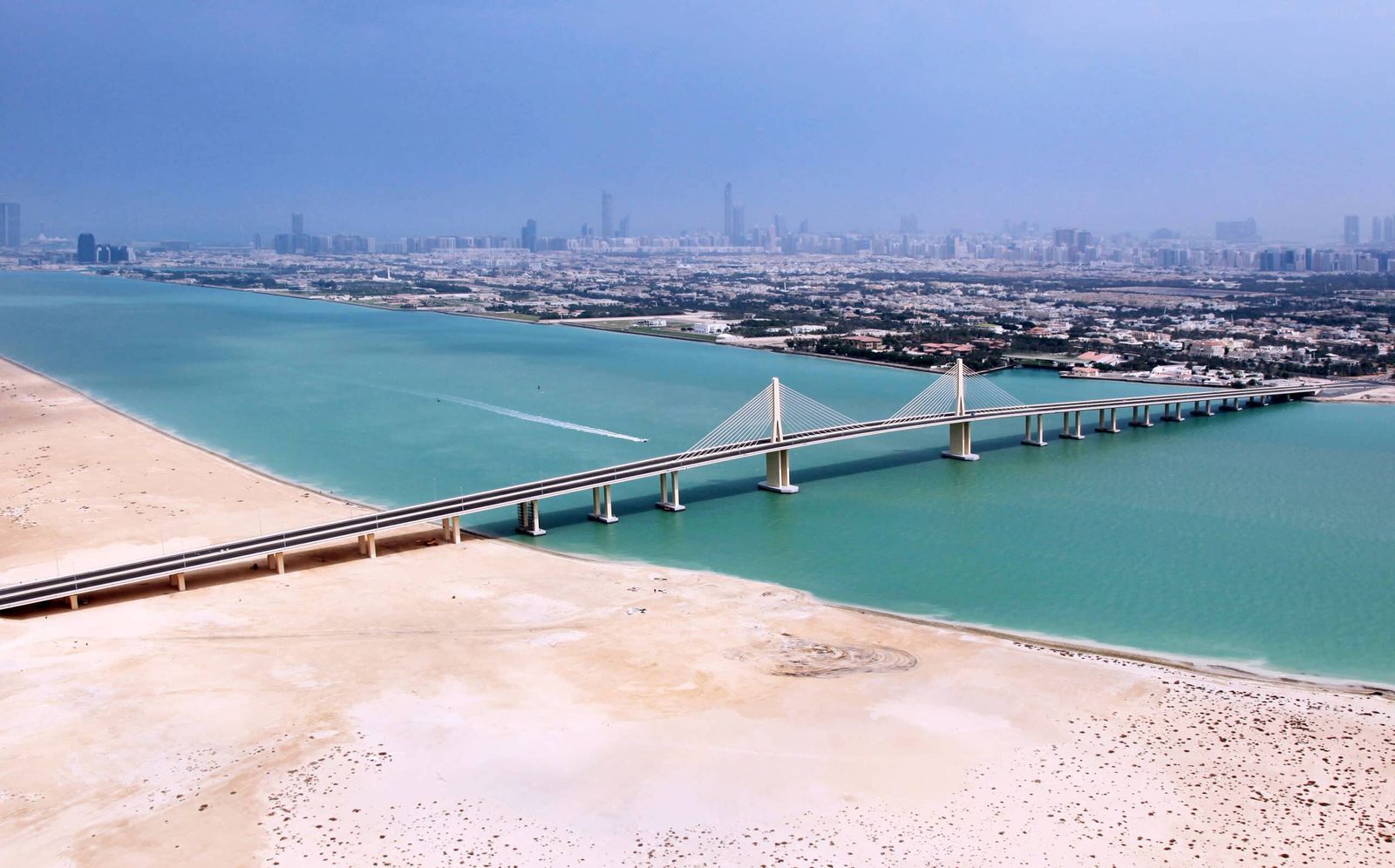
The UAE's first cable-stayed bridge — 1.3 kilometres out to an island that was closed to the public until it opened.
Hudayriyat Bridge — often spelled Hodariyat — links Abu Dhabi's western coastline to Hudayriyat Island across the Mussafah channel. At 1.3 kilometres it was, on completion, the largest cable-stayed bridge in the UAE, and the first cable-stayed bridge ever built in the country.
The bridge was developed by the Tourism Development and Investment Company and delivered by a joint venture of Overseas AST and VST Middle East. Work began in October 2009 and concluded in March 2012, six months ahead of schedule, after roughly five million man-hours and more than 650 workers on site; it opened to the public in May 2012 and was handed to Abu Dhabi's Department of Transport. Of the total length, a 400-metre section is cable-stayed over the channel. The contractors developed innovative methods to manufacture and place the large pre-cast elements. It won Infrastructure Project of the Year at the Construction Week Awards in December 2012.
The deck carries six lanes of traffic plus two walkways, and gives 29 metres of vertical clearance so that ships can pass beneath — the reason for its height and, in practice, the reason it reads as a landmark from the western Corniche rather than as a low causeway.
The bridge is the main gateway to Hudayriyat Island, which has since developed into one of the emirate's principal leisure destinations under Modon, with the Marsana waterfront, Circuit X adventure parks, Surf Abu Dhabi, a velodrome, cycling and mountain-bike trails and a heritage trail. Free to cross at any hour by car, and there are pedestrian walkways on the deck.
Exhibo editorial
For most of its life this bridge went nowhere in particular. It opened in 2012 to an island that was, for years afterwards, largely empty — a very expensive cable-stayed structure with 29 metres of clearance built to serve sand, mangroves and a few construction compounds.
That is the interesting part. Abu Dhabi built the infrastructure first and waited, and about a decade later the island filled in with surf lagoons, skate parks and a velodrome, and the bridge turned out to have been the right call all along. Cross it at sunset heading west, when the light is behind the pylons and the city is receding in the mirror, and you can feel the sequence: a road that arrived before the destination did, and had the patience to be premature.
How to find it
Crossing the Mussafah channel from Abu Dhabi's south-western coastline to Hudayriyat Island — the island's main gateway, signposted from Al Bateen and the western end of the city. There are walkways on both sides of the six-lane deck, and the 29-metre clearance gives a genuine vantage point over the channel and back towards the Abu Dhabi skyline. Best crossed westbound at sunset. Free at any hour; abundant free parking once on the island, near Marsana and the main beach areas.
Similar places
All places
News by Exhibo
Editorial coverage on Exhibo
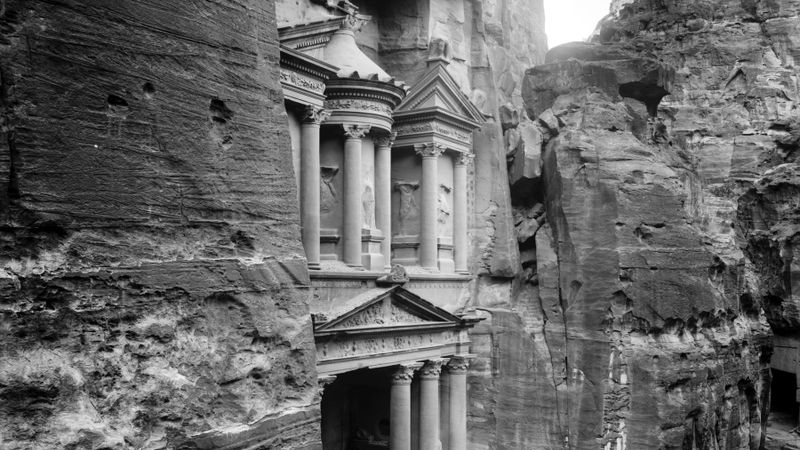
Filmed, but Not Recorded: The Arab World’s Missing Film Locations
Wikidata knows Gladiator was filmed in Morocco. It doesn’t know where.
Ouarzazate is the second most filmed place in the Middle East and North Africa, yet 25 of its 27 productions are recorded only in Wikipedia prose. We compared filming records worldwide and found that in the Arab world, Wikidata usually knows the country but not the place.
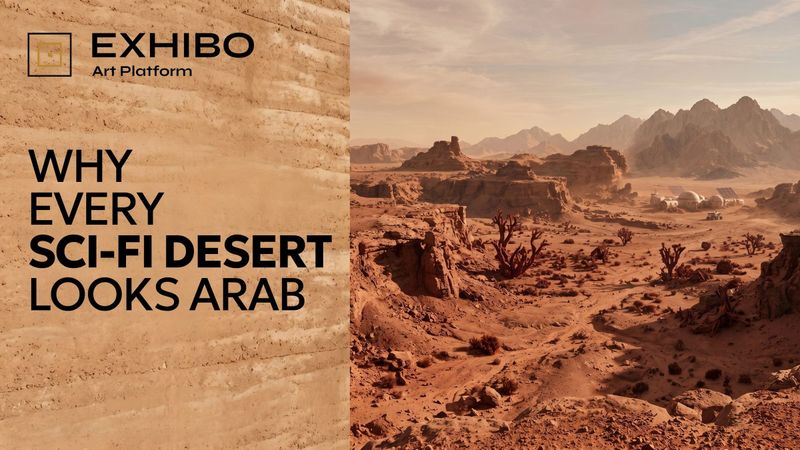
Why Every Sci-Fi Desert Looks Arab
From Arrakis to Tatooine, when a film wants a desert to feel ancient, prophetic and alien, it reaches for an Arab and Berber vocabulary — and reveals more about the West that built it than the region it borrows from.
The wrapped faces, the trilling women, the barely-displaced Arabic: cinema's alien deserts keep sounding Arab. But the vocabulary was assembled in the West — from Orientalist painting to Lawrence to Dune — and it says more about who is looking than about anyone being looked at.
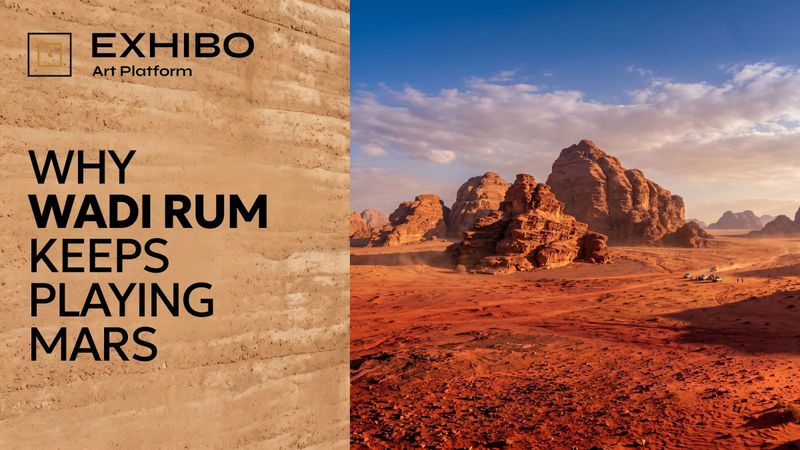
Why Wadi Rum Keeps Playing Mars: A Desert That Is Right About the Wrong Planet
A valley in southern Jordan has become cinema's favourite Mars — not because it is like the planet, but because it looks like the one we carry in our heads.
Put Wadi Rum beside a rover photograph and you can't tell which is Mars. But the desert shares almost nothing with the real planet except its colour — and lately, the illusion has grown powerful enough that real space missions have come to Jordan to rehearse.