Qasr Al Hosn & Al MarkaziyahAbu Dhabi
Capital Gate (The Leaning Tower of Abu Dhabi)
An 18-degree lean, four times Pisa's — a skyscraper built deliberately off-balance and held there by steel.
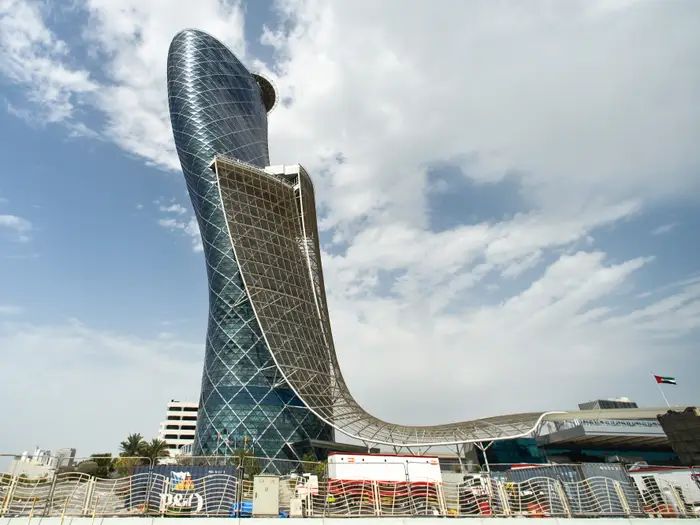
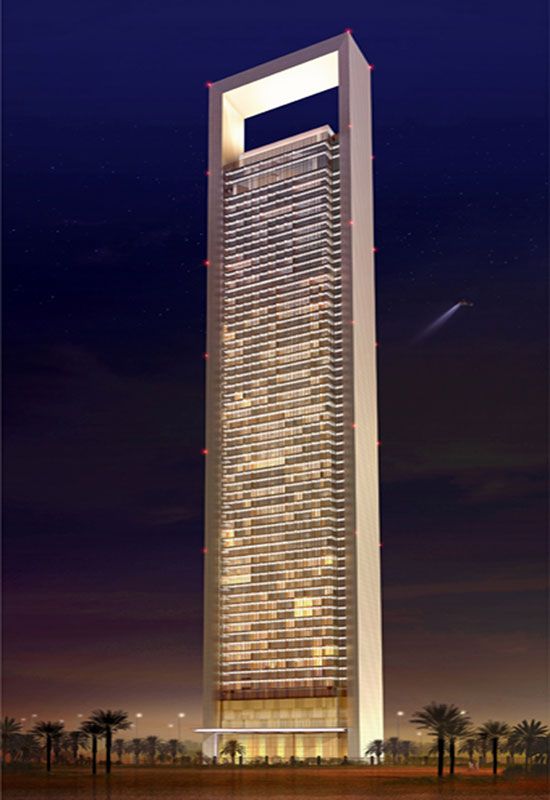
Capital Gate is a 160-metre, 35-storey tower beside the Abu Dhabi National Exhibition Centre, and holds the Guinness World Record as the world's furthest leaning man-made tower. It inclines 18 degrees westward — more than four times the tilt of the Leaning Tower of Pisa, whose lean is roughly 3.9 degrees and entirely accidental. Capital Gate's is designed.
The tower was designed by RMJM for the Abu Dhabi National Exhibitions Company (ADNEC), which also served as structural and services engineer on the project. Construction began in September 2007 and completed in 2011. The form is a shallow S-curve: near-vertical at the base, kinking about a quarter of the way up, then straightening again towards the top, with upper floors overhanging the ground-floor footprint by tens of metres.
Holding that overhang up required two unusual moves. The concrete core was pre-cambered — built leaning in the opposite direction to the final tilt, then post-tensioned on the side opposite the lean so it straightens as load accumulates. Outside, a steel diagrid exoskeleton of roughly 8,500 structural beams wraps the building, absorbing gravitational and wind forces; it was the first tower in Abu Dhabi to use the technique. Around 21,500 tonnes of steel went into the structure, and the foundations comprise a dense reinforced mesh above 490 piles drilled 20 to 30 metres down. An internal diagrid creates a tapered 60-metre atrium.
RMJM cited the wind-shaped forms of desert sand and the movement of the sea as the sources for the curve. Floors 18 to 33 house the Andaz Capital Gate hotel, operated by Hyatt, giving the building a publicly accessible interior; lower floors hold offices and conference facilities. The tower was the subject of a National Geographic Megastructures documentary.
Exhibo editorial
Buildings that lean by accident are tragedies. Buildings that lean on purpose are arguments. Capital Gate is Abu Dhabi in 2007 saying, in structural steel, that it could do the thing Pisa did wrong four times over and do it deliberately — and the argument only really lands when you are underneath it, on the ADNEC forecourt, and your inner ear starts filing a complaint.
The honest pleasure here is the drive-by. You come in from the airport along Al Khaleej Al Arabi, the skyline sorts itself into the usual verticals, and then one of them is simply wrong, tipping out over the road like a wave that forgot to break. Locals stopped noticing years ago. That is its own kind of achievement — a Guinness World Record absorbed into the daily commute, filed under ordinary.
Gallery


How to find it
Beside the Abu Dhabi National Exhibition Centre (ADNEC) on Al Khaleej Al Arabi Street, roughly ten minutes from Zayed International Airport on the road into the city. The lean is most legible from the ADNEC forecourt and the approach roads — stand well back on the north-eastern side to read the full overhang against the sky. For an interior view, the Andaz Capital Gate hotel occupies floors 18 to 33; the lobby and restaurants are open to non-residents.
Similar places
All places
News by Exhibo
Editorial coverage on Exhibo
Filmed, but Not Recorded: The Arab World’s Missing Film Locations
Wikidata knows Gladiator was filmed in Morocco. It doesn’t know where.
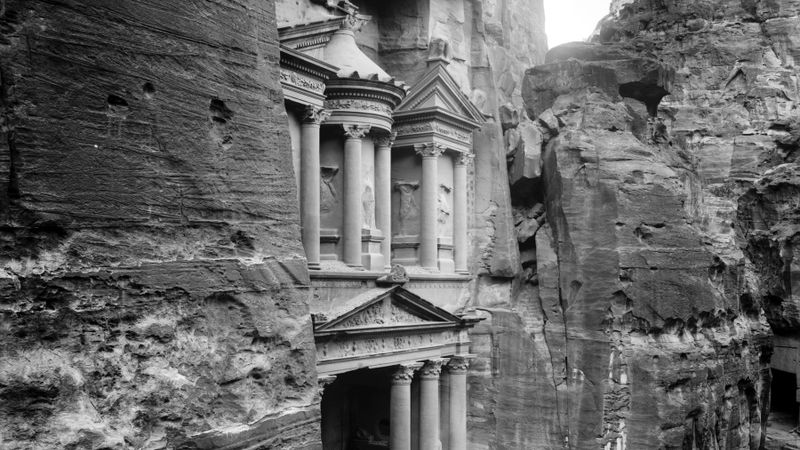
Ouarzazate is the second most filmed place in the Middle East and North Africa, yet 25 of its 27 productions are recorded only in Wikipedia prose. We compared filming records worldwide and found that in the Arab world, Wikidata usually knows the country but not the place.
Why Every Sci-Fi Desert Looks Arab
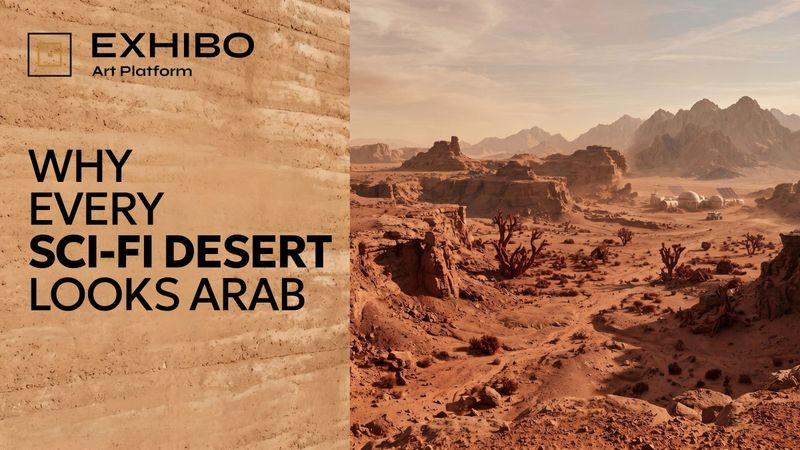
From Arrakis to Tatooine, when a film wants a desert to feel ancient, prophetic and alien, it reaches for an Arab and Berber vocabulary — and reveals more about the West that built it than the region it borrows from.
The wrapped faces, the trilling women, the barely-displaced Arabic: cinema's alien deserts keep sounding Arab. But the vocabulary was assembled in the West — from Orientalist painting to Lawrence to Dune — and it says more about who is looking than about anyone being looked at.
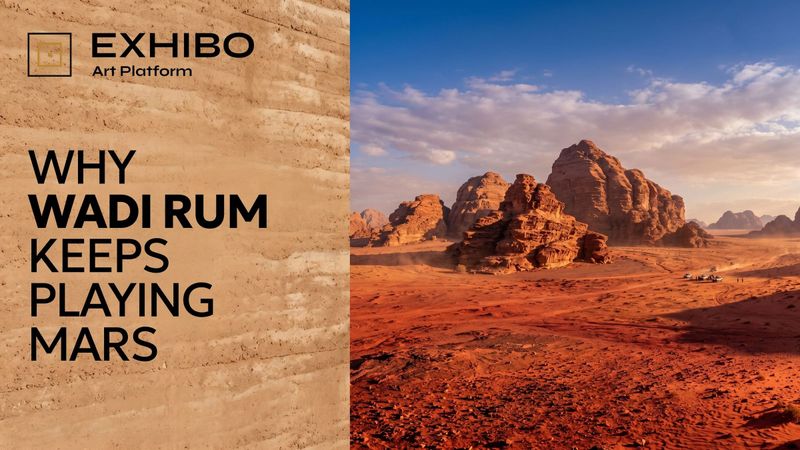
Why Wadi Rum Keeps Playing Mars: A Desert That Is Right About the Wrong Planet
A valley in southern Jordan has become cinema's favourite Mars — not because it is like the planet, but because it looks like the one we carry in our heads.
Put Wadi Rum beside a rover photograph and you can't tell which is Mars. But the desert shares almost nothing with the real planet except its colour — and lately, the illusion has grown powerful enough that real space missions have come to Jordan to rehearse.